Evolving & Staying Relevant To Be A Force For Good

People around the world are constantly looking for opportunities to improve their lives. The chance to live healthy, to look younger and to do better for themselves and their families.

The Nu Skin business helps people earn leveraged income, it offers time flexibility and provides premium beauty and wellness products that are effective and backed by science.*

With more than 35 years of operations in nearly 50 markets around the world, Nu Skin has been ranked the World’s #1 At-Home Beauty Device System Brand for 2017 and 2018 by Euromonitor International.**

In a rapidly changing world, we evolve, adapt and emerge stronger. One thing we have always kept in mind is our corporate mission to be a force for good throughout the world by empowering people to improve lives. We help transform lives via our business platforms and product innovations.

Find Out How These Nu Skin Sales Leaders Face Challenges And Discover Opportunities To Be Their Best Selves During The Challenging Economic And Health Circumstances

“Have the right mindset and surround yourself with positivity.”

–Pichet & Pattarawan Sukkanivast

During crises, people fear the unknown. We think the key to overcoming this fear is to change the mindset and move away from negative thoughts. When we understand the online behavior of customers, we can select the right channel to share this Nu Skin opportunity. We found that our beauty device products are perfect for people who work from home. They can pamper their skin at home and even grab this opportunity to share with others!

“Master new skills to embrace changes.”

–Daniel Jr & Ella Laogan

The fear of failing and letting our team down made us really prepare and brace ourselves for changes. While some became paralyzed with fear of the unknown, we pushed ourselves to work even harder. We tapped the support available through Nu Skin to improve our use of digital tools. Besides mastering online skills, it is more important to master our fear and emotions to deal with change. We did our best to manage what we can control and left the rest to God.

“Success is about staying relevant, being professional and having the ability to help others.”

–Derrick Tia & Frann Ng

Each challenge is an opportunity to learn new skills. These past few months, many in my team have become more IT-savvy. The learned to present, organize, and manage online meetings. We had to learn new skills and upgrade. This business has given me the opportunity to meet people and learn about their lives, their trials and motivations. Helping to make a difference and improving their lives is really an inspiring process. This is my contribution to be a force for good.

“Embracing change with a team is easier than facing it alone.”

–Hendra Ramli

When you are so used to doing things a certain way, it can be difficult to see that there are other available options to deal with change. I tell myself and my team not to rest on past glories and those proven methods done in the past but restart anew like it is their first time in the business, with drive and hunger to succeed. We sell innovative health and beauty products and an opportunity that transforms lives—something that everybody needs now. Embrace this change!

“Make time for all the important things in life.”

–Jack Kerk

All of us have the same 24 hours a day. By leveraging technology, we can maximize these 24 hours and save time spent on traveling or being stuck in traffic. I now conduct online trainings almost daily and even though I find myself working more, I still have time to be a father and a son. With time flexibility, I prioritize what is important for me and my work. Now with a few clicks, I can meet with my partners all around the world! Nu Skin can be your truly seamless global business, from your home.

“Move away from your comfort zone and digitize your business fast.”

–Tram Ngo

Previously we conducted our Nu Skin business face to face. In the new norm, we have shifted all our prospecting and training online. This worked out well as we were able to organize a systematic online schedule that allowed more people to join and learn about the business. I think there is always a solution for any situation. We just need to have the belief and the want to do it.

*Generating meaningful compensation as a Brand Affiliate requires considerable time, effort and commitment. This is not a get rich quick program, there are no guarantee of financial success and results will vary widely among participants. A complete summary of earnings at each level in the Sales Compensation Plan can be found at: http://bit.ly/38iUBwd

**Source: Euromonitor International Ltd; Retail Value RSP terms; all channels, 2017 and 2018. Includes at-home Skin Care Devices exclusively paired with topical consumable of same brand. Based on Euromonitor custom research methodology, Jan/Feb 2019. Includes electric facial cleansers as defined in Passport database; does not include hair care/removal, body shavers, or oral care appliances.

 

Fuji Xerox’s Bold Transformation

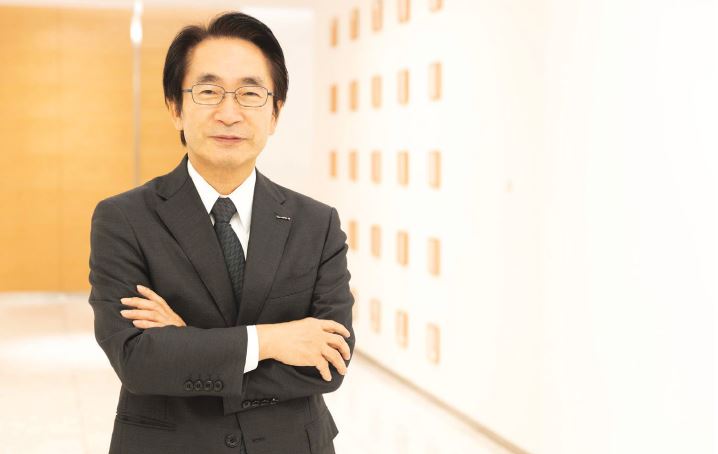
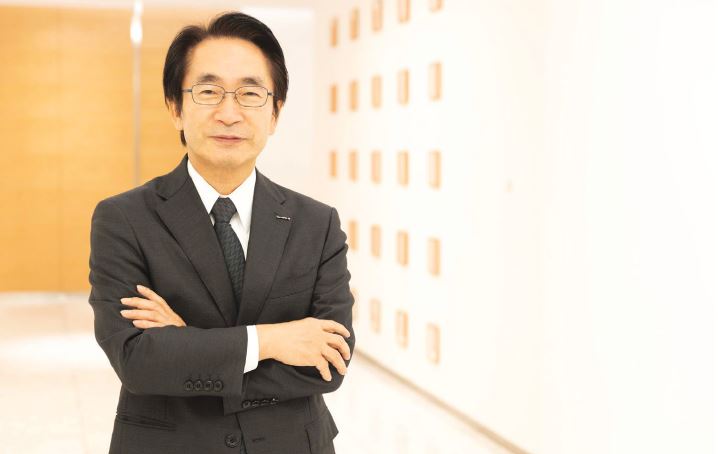
Kouichi Tamai, President and Representative Director, Fuji Xerox

Fuji Xerox is undergoing the biggest change in the company’s history. After its half-century-old technology agreement with Xerox Corporation ends next year, the Tokyo-based firm plans to embark on a dynamic growth strategy and expand to new markets under the Fujifilm brand.

Fuji Xerox reached record profits in fiscal year 2018 and says it expects to post strong results in fiscal 2019. “Our employees have worked incredibly hard. I would like to share the fruit of those results with our customers,” says Kouichi Tamai, who has been President of Fuji Xerox since June 2018. Over the past two years, he has addressed management issues and established a corporate structure to generate profits through various initiatives.

Going Global With Fujifilm Brand

Fuji Xerox was established in 1962 in Tokyo as a joint venture between Rank Xerox and Fuji Photo Film, now Xerox and Fujifilm, respectively, to bring to Japan and to the Asia-Pacific the technology that revolutionized business communications—xerography, which is widely used in photocopying and printing. From the start, Fuji Xerox had the technology agreement with Xerox that provided for technology/brand licensing and sales-territory coverage. That agreement is set to expire at the end of March 2021. Pursuant to its expiry, Fuji Xerox will change its name to “Fujifilm Business Innovation,” the company announced in January.

“The first thing I want to say is that we will continue providing the same services to our customers. By improving the speed and the level of technology and product development within Fuji Xerox, we are innovating products with our own original technology. I would like all of our valued customers to be assured that there will be no change in the products and services we already offer,” Tamai says.

Ending the technology agreement with Xerox will bring three major changes for Fuji Xerox. The biggest is the expansion of its sales territories worldwide. The firm’s sales coverage is currently limited to Asia-Pacific and Oceania. But after April 2021, the restrictions will be lifted, paving the way for Fuji Xerox to pursue global expansion under a new brand.

Tamai holds a doctorate degree in engineering from the University of Tokyo. He joined Fujifilm in 2003, then Fuji Xerox in 2017 as Deputy President, before assuming his current position of President and Representative Director in June 2018.

Next, the company will be in position to move quickly to invest in new businesses as well as seek mergers and acquisitions in line with strategic goals. Fuji Xerox will also be able to provide customers with innovative new products and solutions by strengthening collaboration within the Fujifilm group. Fuji Xerox will have exclusive use of technology patents that it retains after the expiration of its agreement with Xerox.

Finally, Fuji Xerox will no longer have to pay approximately ¥10 billion (US$95.3 million) annually to Xerox for use of the Xerox brand. The money instead will be reinvested in new businesses.

Innovating Constantly

The decision to disclose the changes in January was also significant. “Sure, it will be more than a year before the company name will actually change. However, Xerox is a brand that employees have affection for and customers are extremely familiar with. So we opted to make the announcement early to take plenty of time to explain the background of our decision,” Tamai says.

The company plans to accelerate its synergies with Fujifilm group companies to further promote innovative solutions and services using technologies such as the cloud, AI and the Internet of Things.

“For example, in the area of AI, there is synergy with Fujifilm’s medical field. Combining Fujifilm’s image-processing technology with our language-processing technology will expand the possibilities of new IT solutions. We must continue to focus on building an effective and efficient development system that leverages the strengths of both companies by fusing the technologies of Fuji Xerox and Fujifilm,” Tamai says.

Expanding to Europe and America

To break into new overseas markets, including Europe and the U.S., “we will first look into manufacturing products for other brands. In other words, we’ll start as an OEM [original equipment manufacturer] supplier,” Tamai says.

He received requests from both domestic and foreign manufacturers seeking OEM supplies from Fuji Xerox after the company became a wholly owned subsidiary of FUJIFILM Holdings in 2019. “When asked why they wanted to partner with us, clients responded unanimously that in side-by-side comparisons of the world’s major multifunction printers, the best products were made by Fuji Xerox. Even in challenging environments, there hardly were paper jams or malfunctions. In the case of cyberattacks, data remains safe,” Tamai says. “Careful consideration should be given on whether to invest in fixed costs, so in highly competitive European and American markets, we will keep a close eye on the OEM situation while considering whether to launch our own brand there.”

In Asia-Pacific countries where Fuji Xerox’s sales channels already exist, the company will pursue M&As that will increase market share or accelerate the development of solutions and services. In February, Fuji Xerox acquired Australian office IT services company CSG to leverage CSG’s relationships with small and midsize businesses in Australia and New Zealand. Fuji Xerox, whose main customers are large corporations, aims to capture a broader client base through the mutually complementary business structures of the two companies.

Tamai, who holds a doctorate degree in engineering, takes a precise approach to strategy development, much like a mechanical engineer designing sophisticated machinery. His goal is to raise the company’s sales to ¥1.3 trillion (US$12.4 billion) from approximately ¥1 trillion (US$9.5 billion) by fiscal 2024. The company is also working on developing new game-changing models that will contribute to the company’s growth. Fuji Xerox is set to become a key force in driving innovation in global business.


Tamai has been growing roses as a hobby for the past 10 years—precisely, he says, because they are “difficult to grow.”

“Just like with work, you have to put a lot of effort into it, but it gives me so much pleasure to see others enjoy their beautiful blossoms,” he explains.

Kraft Heinz: A Recipe For Success In Asia-Pacific

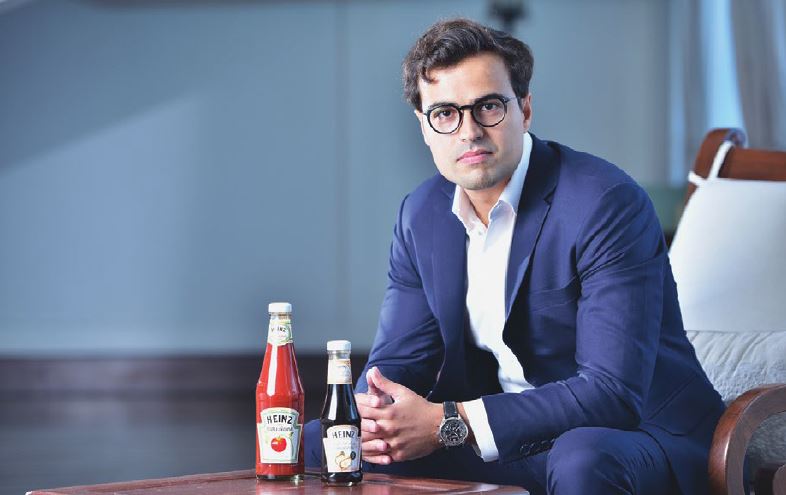
Joao Leitao, Managing Director of ASEAN, India, Hong Kong and APAC Exports

Already one of the world’s leading food companies, Kraft Heinz is expanding its business in Southeast Asia and India to realize its long-term vision of becoming “The Best Food Company, Growing a Better World.” Kraft Heinz products have graced dining tables for more than 150 years.

Joao Leitao, Managing Director of ASEAN, India, Hong Kong and APAC Exports—the business unit established to drive expansion in the region—shares the company’s plans.

What are your goals for the region?

Our business unit was set up to achieve annual double-digit growth in Southeast Asia, India, Hong Kong and Taiwan. On top of that, we are also responsible for exporting our portfolio of authentic Asian brands to the U.S., Europe and other geographies globally.

Apart from the flagship Heinz and Kraft offerings, the company is also responsible for other market-leading brands in the region, including Lea & Perrins, A1 sauce, Australia’s Golden Circle and New Zealand’s bestselling Watties brands.

Our goal is to be the fastest-growing FMCG (fast-moving consumer goods) company in the region, and we also aspire to be the fastest-growing business unit in Kraft Heinz.

Why has Kraft Heinz decided to expand in the region?

The food Industry has been continually growing, especially in the so-called Kitchen of the World, Southeast Asia and the Indian subcontinent. These markets each have their own characteristics, so in 2019, we launched relevant products in top categories that are relevant to the local palate, such as authentic Asian sauces like Heinz Oyster Sauce in Thailand and ABC Soy Sauce in Malaysia.

What are some of your key markets in the region?

Hong Kong, Thailand and Malaysia are our current core markets, while India, the Philippines and Vietnam are the fast-growing markets in our portfolio. We have great plans for the whole region.

In Thailand, for example, the company is aiming to become a “top-of-mind brand” for Thai consumers through key products such as Heinz ketchup and Heinz Oyster, which has garnered sizable market share, with steady year-on-year growth.

What do you view as your company’s key success factor?

People are the key factor to our success. We have rigorous selection processes to identify the right owners to join us, and we invest heavily in our talent pool.

We also foster transparency and trust between the employees—and it all starts with the environment we built. We brought the entire team into the center of the office in an open environment. That way information flows easily and we ensure that we have a flat organization, which we believe is one of the key factors for us to grow further. We have a startup environment with the unique advantage of being backed by a strong brand with significant resources.

How has Kraft Heinz built diversity into the organization?

An important part of the company’s strategy is fostering diversity among its teams by ensuring a robust mix of talent from different nationalities, genders and experiences. Reflecting this commitment, we have a higher ratio of female leaders in senior management positions in our region.

We strive to create a work environment that encourages people in the organization to have respect for others and to work together regardless of their differences. We believe this unique corporate culture is the secret ingredient that can help us succeed.

www.kraftheinzcompany.com

Handa Watch World X Dustin Hoffman

Dustin Lee Hoffman was born in 1937 in California. After a year at Santa Monica City College, he moved to New York to pursue acting in the 1960s. His film debut “The Tiger Makes Out” (1967) was followed by his breakthrough role in “The Graduate” the same year. Hoffman has appeared in numerous films and won an Academy Award for Best Actor for “Kramer vs. Kramer” (1979) and “Rain Man” (1988).

Last December, renowned American actor Dustin Hoffman made a guest appearance at the Tenkomori Art Exhibition hosted by the Tokyo Art Foundation and cosponsored by Misuzu Corp. Before the event, Hoffman discussed his life in the arts.

By the 1990s, Dustin Hoffman was a household name following his acclaimed performances in a string of hit films, including “The Graduate” (1967), “Midnight Cowboy” (1969), “Kramer vs. Kramer” (1979) and “Tootsie” (1982). In addition to two Academy Awards for Best Actor, he has earned numerous honors as a performer, including four British Academy of Film and Television Arts, six Golden Globes and two Emmys. No one can doubt his contribution to the art of cinema.

As many Hollywood movies are made with overseas audiences in mind, premier screenings featuring the leading actors and executives are major events around the world. Although Hoffman receives countless invitations, he rarely attends events outside his home country.

Naturally, there’s a reason. When he first decided to become an actor, he vowed to dedicate all of his time to his art and his family, and at the age of 82, he continues to live by this philosophy.

“I want to be with my family when I’m filming. If I am shooting in Japan, I’d want them to stay here for a few months with me, but unfortunately that kind of opportunity is hard to come by,” he says.

As an actor who follows strict routines to improve his performances, Hoffman values time with his family above all else. Why, then, did he decide to squeeze a few days into his extremely busy schedule for his third visit to Japan at the end of the year?

“Japan is one of my favorite countries,” Hoffman explains. “I’m very impressed by Japanese courtesy and the culture of respect for others. When I was studying drama in my 20s, there were two actors I admired: One was Marlon Brando, and the other was Toshiro Mifune [the star of several films directed by legendary Japanese filmmaker Akira Kurosawa]. I’ve seen a lot of Kurosawa films and I’m always impressed by his way of directing.

“My reason for coming to Japan this time is to meet someone who’s been called ‘a modern-day Renaissance man,’ a businessman who sings Italian opera and is renowned as an artist,” he says.

The person Hoffman wanted to meet is Haruhisa Handa, President of Misuzu Corp., which runs Handa Watch World. The actor says he strongly empathizes with Handa’s dedication to social contribution.

The Tenkomori Art Exhibition, cosponsored by Misuzu Corp., took place in Tokyo Dec. 6-10. Traveling with his wife, Hoffman made a special guest appearance at the show.

The True Meaning of Charity

“In recent years, terrorist attacks have become more common all over the world. Natural disasters caused by climate change have increased, killing many. We hear about all of this on the news, but once things calm down, we forget. Some of the survivors of these tragedies have been seriously injured and need help. Haruhisa Handa understands that it takes time to come to terms with these events. He has set up hospitals in conflict zones to care for those in distress and supports the injured through sports-related activities. It’s amazing,” Hoffman says.

Handa is the Chairperson of the International Sports Promotion Society (ISPS), which supports a variety of sporting activities worldwide. One of the most famous ISPS events is the PGA “Pro-Amateur” golf tournament, which gives blind and disabled golfers the opportunity to play with top golfers.

Hoffman has supported similar charity work and describes establishing a camp for children with cancer as one of his greatest achievements.

“A long time ago, my wife’s cousin got leukemia at the age of six,” Hoffman says. “Although she was forbidden from playing outside, she longed to go to camp, but there was no camp for kids with leukemia at that time. That memory stayed with me, so I founded a campsite for children with cancer. There was a hospital nearby, and helicopters were on hand to take the children there in case of an emergency.

“Visitors were allowed, but I didn’t have the courage to go at first because I didn’t know if the children were enjoying it. I was worried that they might be sad. But when I went, it was completely different to what I’d imagined. By feeling close to death, the children probably understood the importance of living in the moment. The children were communing with nature and learning how to live. The place was full of vitality. Being with other kids in the same situation created a sense of camaraderie and they encouraged each other. It’s something I’ll never forget,” Hoffman recalls. “I realized that I was stupid to doubt the strength of those kids. They’re much smarter and stronger than me.”

Inhabiting a Character

Hoffman is a method actor who believes that actors must fully inhabit the experiences and emotions of a character to play the part effectively. For his role as Raymond Babbitt in the 1988 film “Rain Man,” Hoffman spent two years getting to know people with autism. He used insights gained through observations and interviews with one individual in particular—a man with savant syndrome—to develop Raymond’s character.

“An actor has to condense a life of 10, 20 or 50 years into the span of two hours. It’s never easy. Sometimes it takes more than a year to learn a part, and every film is a big challenge. Once I am given the role, I research every angle about the character to understand how his personality developed from birth. I have to understand the character’s thoughts and motivations for his behaviors,” he says.

In all endeavors, Hoffman never fails to get to the heart of the matter. He concludes the interview with a few words of wisdom: “No one is perfect. Everybody has their strengths and weaknesses. But accepting yourself is no easy task. At least in my case, even though I want to be a great person, I’m still struggling to become my ideal self. It’s the effort that counts, and I’ll keep trying for the rest of my life.”

Contact information:
Misuzu Corporation
81-3-3247-5585
www.misuzu.com

Japan 2020: Positioned For Growth

With the enthronement of a new emperor in May 2019 and the successful hosting of Asia’s first Rugby World Cup, optimism in Japan has been running high in recent months. This enthusiasm is expected to carry over this year, as the country takes center stage again with the Tokyo Olympic Games, which is scheduled to take place this summer. Meanwhile, Japan’s government in December raised its economic growth forecast for the next fiscal year to 1.4% on the back of improving domestic demand.

Despite the bright spots, there is no getting away from an uncertain macro environment plagued by trade tensions, a broader retreat from globalization and geopolitical tensions. For some of Japan’s most successful corporates, however, the current bout of volatility is just another short-term challenge in their long and successful track record of overcoming adversity.

Indeed, a focus on the long term and the ability to adapt to ever-changing conditions have been the hallmarks of leading companies such as Canon, Kikkoman and THK.

Yuzaburo Mogi, Honorary CEO and Chairman of the Board of Kikkoman Corporation, is one who is no stranger to taking bold steps in the face of uncertainty. He led the traditional soy sauce maker to set up a factory in the U.S. back in the early 1970s, a daring move that was decades ahead of its time. Looking ahead, he believes that companies need to look beyond just technology and focus on developing their human capital in order to succeed.

Fujio Mitarai, Chairman and CEO of Canon Inc., is another Japanese corporate leader concentrating beyond the immediate turbulence to position his company for future growth well into the middle of this century. Canon is in the midst of a major transformation that aims to foster synergies in new business areas, even as it continues to pursue a strategy of mergers and acquisitions.

As for Akihiro Teramachi, CEO and President of THK, the aim is to capitalize on the megatrends of digital technology, aging populations and globalization to fuel the company’s growth. He likens running a business to a marathon rather than a sprint, stressing the need to keep a long-term view in order to reap efficiencies. In 2020, THK will launch a new service known as OMNIedge—a solution to predictive failure detection. It works by installing sensors on existing THK components embedded in client machines that collect and analyze data and provide alerts.

In an era marked by disruption and change, it will be companies such as these that will emerge stronger from the immediate challenges ahead to prosper for many more generations to come.

One Bangkok: Breaking New Ground In Thailand

As Thailand’s largest private-sector property development, One Bangkok is poised to break new ground in design, smart-city living and sustainability. When completed, the integrated district will become a global landmark, attracting leading businesses, tourists and locals by seamlessly connecting offices, retail, luxury hotels and residences as well as cultural and social spaces. 

A joint venture between TCC Assets Co., Ltd. and Frasers Property Holdings (Thailand) Co., Ltd., the THB 120 billion (US$4 billion) project’s rich mix of uses will ensure the district is buzzing with energy around the clock. The development is expected to open in 2023, with full completion slated for 2026.

“One Bangkok will reshape and redefine Bangkok’s urban landscape in a positive and lasting way as the largest private sector property development initiative undertaken in Thailand,” says Panote Sirivadhanabhakdi, Group CEO, Frasers Property Limited.

One Bangkok—Thailand’s largest private real estate development

One Bangkok’s masterplan proposes a set of four diverse precincts centered around a 10,000-square-meter, landscaped civic plaza. These precincts are connected on multiple levels, and each includes a retail and lifestyle element at lower levels to create a vibrant streetscape, with towers for working and living rising above. The integrated development will be easily accessible as it is directly connected to Bangkok’s MRT train network.

Five Concepts in One

With a combined office net lettable area of almost 500,000 square meters, One Bangkok is able to house more than 500 local and international organizations at what will be the city’s most prestigious corporate address.

Leading brands, meanwhile, will have a new and exciting platform to engage their customers with fresh concepts and spaces across four connected retail precincts, which will encompass about 450 stores over 180,000 square meters. 

All towers at One Bangkok are designed to maximize views of Lumphini Park.

With five hotels, One Bangkok will also cater to all tastes of travelers, whether they are seeking a luxury experience or a boutique offering. The first luxury hotel, The Ritz-Carlton, Bangkok is scheduled to open in 2023.

Those seeking the finest residences in Bangkok, meanwhile, will have their pick of three luxury residential towers located at the north end of the district, offering unprecedented views of Lumphini Park and the city beyond. The first residence, located atop The Ritz-Carlton, Bangkok on levels 26-49, will comprise just 110 ultra-luxury units of two to four bedrooms that will launch in early 2020.

Crowning the sprawling One Bangkok integrated development will be the 430-meter Signature Tower, which will feature office spaces and a super luxury hotel. Set to become one of ASEAN’s 10 tallest buildings when completed, the Signature Tower will offer visitors panoramic views of the city and become a stunning addition to the city’s skyline. One Bangkok will also be a hub of culture, featuring public art and learning spaces as well as performing arts events and concerts all year round. 

Says Sirivadhanabhakdi, “We believe One Bangkok is an offering worthy of what Thailand’s capital can deliver on the world stage, and our goal is to see the country become the very epicenter of ASEAN.”

For more information, please visit:

www.onebangkok.com


Looking For Gems In The Global Real Estate Market

Developers continue to redefine the Singapore city skyline.

Despite global economic headwinds, there is value to be found in Asia’s real estate sector if one knows where to look.

In terms of individual markets, Singapore’s residential market continues to be a safe haven for foreign buyers seeking not just profits, but also capital preservation. Looking to capitalize on this trend, developers are rolling out ultraluxury developments that cater to the region’s wealthy in some of Singapore’s most prestigious neighborhoods.

For instance, the upcoming 3 Orchard By-The-Park is a short stroll away from the UNESCO World Heritage site, Singapore Botanic Gardens, while luxury boutiques, five-star hotels, embassies and Michelin-starred eateries of the premier Orchard Road belt are just minutes away. Launched by the YTL Group, the development features the signature touch of world-renowned architect Antonio Citterio.

Meanwhile, Frasers Property is offering homebuyers a rare riverfront living experience along the historical Singapore River. When completed, the Rivière will form part of a highly attractive cluster of waterfront developments as well as food and beverage and lifestyle outlets.

Innovative players such as Guocoland are transforming the city-state’s central business district. The developer is behind iconic properties such as Singapore’s tallest building, Guoco Tower, a unique 5-in-1 integrated development located in the heart of the CBD.

Reflecting their global ambitions, Singapore’s real estate developers are extending their footprint abroad as well. For instance, Pontiac Land Group is part of the development team behind the upcoming 53 West 53 skyscraper in Midtown Manhattan in New York City. The 82-story building is designed by famed French architect Jean Nouvel.

Malaysia is also well-positioned for growth. The residential property market in the country recorded a higher value of transactions in the first nine months of the year for the primary market compared with the whole of 2018, according to international real estate federation FIABCI. Malaysia’s National Housing Policy 2.0, which was launched by the Housing and Local Government Ministry at the start of the year, has helped address affordability issues and boost demand in the housing market.

One company that has capitalized on this potential is UEM Sunrise Berhad, a leading property developer in Malaysia. UEM Sunrise has posted an uptick in revenue over the past few years and appears to be on track for another year of growth in 2019.

In the face of an uncertain and evolving landscape, there are bright spots to be found in the region’s real estate market for discerning buyers with an eye for value and quality.

Welcoming The World

www.forbesmiddleeast.com
info@forbesmiddleeast.com

The buzzing metropolises that have sprung from the deserts of the Gulf in a matter of decades have today become global hubs of innovation and investment. Saudi Arabia, Kuwait, the U.A.E. and Qatar now count among the richest countries in the world in terms of GDP per capita. And as governments and private sector players continue to plough money into the startups, infrastructure and new technologies that are set to further boost economies and change the world, the Middle East is determined to be a leader, not a follower, when it comes to the future of business and finance.

As youthful populations continue to grow, so does business for the wise investor and enterprising entrepreneur. Looking at recent data, the countries of the Middle East and North Africa (MENA) remain poised for growth in the coming years. MENA bagged foreign direct investment (FDI) of about US$32 billion in 2018, with the U.A.E. attracting the largest amount of FDI at US$10.4 billion, followed by Egypt at US$6.8 billion, and Oman at US$6.3 billion.

Real GDP in the region is expected to grow at 2.6% in 2020 and 2.9% in 2021, according to the World Bank, with the projected pickup largely driven by increasing infrastructure investment. But where exactly should global investors be looking in this fertile ground?

It’s a place of great change at the moment. Governments in the region have carried out a record number of reforms to improve the ease of doing business for domestic small and midsize firms, and the fruits of this are evident as four Arab countries now sit among the world’s top 10 business climate improvers, according to the World Bank’s Doing Business 2020 study. Saudi Arabia, Jordan, Bahrain and Kuwait account for almost half of the region’s reforms. Meanwhile, the U.A.E. remains the strongest performer overall in the World Bank’s ranking.

With MENA home to millions of long- and short-term working expats, a couple of the Gulf countries have also started to offer new residency visa options for the first time to encourage and reward long-term investment in their countries. Earlier this year, Saudi Arabia announced a new system that offers two types of visas: a permanent (premium) residency with a one-time fee of US$213,000 and a renewable one-year residency for an annual fee of US$26,700. The U.A.E. also made major changes to its visa system in May, including a new “Golden Card” system to grant permanent residency to investors and doctors, engineers, scientists and artists, as well as a long-term visa of up to 10 years and five-year retirement visas for residents that fulfil certain financial security criteria. This sends a powerful message in economies that have long been thought of as transient for workers.

The U.A.E. and Saudi Arabia are also preparing to host two major global events next year: Expo 2020 in Dubai and the G20 summit in Riyadh.

Riyadh, Saudi Arabia

According to a report by PwC, the Expo—which opens on October 20 and runs for nearly six months—will have a significant economic impact for Dubai, which is expected to be the second-most visited city in the world in 2020 and 2021. The emirate is already the fourth most-visited city globally, according to Mastercard’s Global Destination Cities Index, hosting 15.9 million tourists in 2018.

In November 2020, Saudi Arabia will hold the G20 Summit, with participant countries accounting for more than 80% of global GDP. The kingdom also has its own mega-investments in the works, with the planned smart city of NEOM in northwestern Saudi Arabia at the forefront. The project stretches over three countries with territory from Egypt and Jordan comprising a total area of 26,500 kilometers. NEOM will be backed by more than US$500 billion from the Public Investment Fund of Saudi Arabia as well as from local and international investors. Its contribution to the kingdom’s GDP is projected to reach at least US$100 billion by 2030.

This is just a snapshot of the business and infrastructure development currently underway in MENA. And as money continues to flow, the region has witnessed a sizeable improvement in IPO activity, both in terms of volume and value, in the second half of 2019. Six IPOs raised proceeds of US$2.8 billion, compared with a single IPO that raised US$57.6 million in the first half of the year, according to EY.

With net proceeds reaching about US$1 billion, Saudi Arabia led the IPO activity in the region, which was fueled by three listings on the main market, including the Arabian Centres Company that raised US$658.7 million. The Gulf country is also preparing to kick off what is expected to be the world’s largest-ever IPO for Saudi Aramco, the world’s leading producer of crude oil and condensate, which generated US$163.9 billion in revenue in the first half of 2019.

Looking to North Africa, Egypt also is working on an IPO program that will see multiple state-owned companies listed on stock exchanges locally and potentially abroad. This year, the country launched its first sovereign wealth fund. The US$12.4 billion fund aims to ensure the best use of Egypt’s wealth and natural resources.

Despite a big drive in the region to diversify economies, the oil and gas sector continues to grab significant investments, with new discoveries coming to light. Recently, BlackRock and KKR acquired a 40% stake in Abu Dhabi National Oil Company oil pipelines for US$4 billion, while the Carlyle Group acquired a 30% to 40% stake in Cepsa, which is wholly owned by the U.A.E.’s Mubadala Investment Company, for US$3.4 billion. Italian multinational oil and gas company Eni recently announced new discoveries in Egypt, including new resources in the Abu Rudeis Sidri development lease in the Gulf of Suez. In August, it also announced production from the Zohr field—the largest gas discovery ever made in Egypt and in the Mediterranean Sea—had reached more than 2.7 billion cubic feet per day.

Aside from the established big names, MENA economies are also getting a boost from widespread entrepreneurial activity. The startup scene is consistently gaining traction, with US$517 million invested in 354 deals during the first nine months of 2019, according to a report from startup data platform MAGNiTT. The U.A.E. continues to be the main hub for startups, grabbing 62% of the total funding, while Egypt accounted for 27% of deals during the same period. The region witnessed its largest-ever technology transaction in March 2019, when Uber acquired its Middle Eastern rival Careem for US$3.1 billion.

Investors are racing to fuel growth, and countries have welcomed new funds. Last February, Dubai-based Middle East Venture Partners raised an additional US$65 million for its third regional fund, the Middle East Venture Fund III. BECO Capital also closed its second fund with US$100 million in October. And most recently, Mubadala Capital—the financial investment arm of Mubadala—announced new tech funds with assets of about $250 million for MENA.

Overall, despite global headwinds and regional challenges, the Middle East’s economies are looking strong for the future, and investors should keep their eyes on this resilient and visionary meeting point between East and West.

Indonesia: Sustainable Success

Having won a second term in office, Indonesian President Joko Widodo and his new government will be looking to continue their mission to develop the country’s infrastructure and attract foreign investment. Jakarta announced a US$400 billion infrastructure plan following President Widodo’s re-election, including more than two dozen new airports and power plants, aimed at boosting economic growth.

Both large conglomerates and newer emerging firms are looking to capitalize on Indonesia’s continued economic growth, even as they seek to contribute back to society.

One company that has grown along with Indonesia is Astra Group. Since its founding more than 60 years ago, the leading diversified conglomerate has been committed to prospering with Indonesia, a journey that it continues on to this day. In order to realize this vision, the group has been working to promote sustainable growth in Indonesia that balances economic priorities with social and environmental concerns.

In the consumer sector, Indonesian companies have benefited from the growing ranks of middle-class consumers with higher purchasing power. One such success story is PT Nippon Indosari Corpindo Tbk, the leading bread company in the country that owns the top-selling brand Sari Roti. With an overwhelming 90% market share in Indonesia’s mass production of bread, the company is now looking to replicate its recipe for success in overseas markets such as the Philippines.

Retailers have also cashed in on the rising number of shoppers with fatter wallets. Alfamart has expanded over the past 20 years to become one of the largest minimarket chains in Indonesia, serving over 4.1 million customers every day.  Meanwhile, Kawan Lama Group grew from a single kiosk in 1955 to become a billion-dollar retail giant today boasting market-leading brands such as Ace Hardware.

Indonesia’s fast-growing technology scene is another bright spot in Southeast Asia’s largest economy. Indonesians are among the world’s biggest users of Facebook and Twitter, and a global leader in digital applications such as ride hailing and e-commerce. In 2018, the country’s digital economy had an estimated value of US$27 billion, and is expected to grow further on the back of government incentives including tax breaks.

Unsurprisingly, Indonesia’s startup scene is one of the most dynamic in Asia. During President Widodo’s first term, Indonesia saw the emergence of four startups, each with a value of more than US$1 billion, including ride-hailing service Gojek and online store Tokopedia.

With an aim to support the country’s newest entrepreneurs, Alpha JWC established itself as a leading venture capitalist in Indonesia in less than four years. With one of the largest VC teams in the country, Alpha JWC has a deep understanding of local market conditions.

Amid the country’s growing prosperity, Indonesia’s financial services sector is also stepping up to help manage the growing wealth of its people. For instance, Bank Mandiri, Indonesia’s largest financial institution, has been a leading player in managing and growing the assets of Indonesia’s affluent.

As uncertainty persists in the global economy, these and other dynamic Indonesian businesses will continue to prosper on the back of resilient and sustainable business models that have successfully delivered superior value.

Petronas: Banking On Sustainability

Dzafri Sham Ahmad, Vice President of Group Health, Safety, Security and Environment, PETRONAS

Since the second industrial revolution, the world has been dependent on the oil and gas industry to power economic growth. In the past decade, climate change concerns have accelerated the push for cleaner and sustainable energy solutions in a bid to reduce dependence on fossil fuel.

For PETRONAS, industry disruption—on the back of increasing energy demands, resource depletion and the push for sustainable solutions—is inevitable. It’s an ongoing challenge for all energy players, including PETRONAS, says Dzafri Sham Ahmad, Vice President of Group Health, Safety, Security and Environment, PETRONAS.

“In the energy business, change is becoming even more volatile today than ever before. Disruptive forces and emerging megatrends are pushing oil and gas companies to reinvent themselves and revisit their business strategies in order to remain relevant and sustainable.

“Climate change, air-quality concerns and government-driven initiatives are also fueling the rising demand for renewables. This spurs us to be more innovative and to invest in other sources of energy such as renewables for the security and sustainability of our supply.”

Dzafri says PETRONAS has been exploring the clean energy space since 2013 as part of the company’s long-term growth strategy. Today, this means the company is adopting commercial renewable energy technologies that use solar and wind for power.

The challenge in transitioning toward a low carbon future is ensuring a sufficient and affordable supply of energy to cater to fast-growing energy demands due to population growth and rapid urbanization. Energy companies such as PETRONAS find themselves walking a fine line when it comes to energy security, affordability and sustainability.

While fossil fuels remain core to the global energy mix, PETRONAS is redefining its energy offerings by pushing for the increased use of natural gas, which it sees as complementary to renewables. Its efforts to ensure a sustainable supply of natural gas is evident in its Canadian venture; PETRONAS and four global joint venture participants reached a final investment decision last year to build a LNG export facility in Kitimat in British Columbia, Canada.

The multibillion-dollar LNG Canada project, which will initially comprise two LNG liquefaction processing units, aims to produce a total of 14 million tons per annum, with the potential to expand to four units.

PETRONAS is among the top five LNG sellers in the world with positions in Australia, Egypt and Sarawak. The company is also a significant supplier to Japan, Korea, Taiwan and China, and it recently expanded its customer positions in Thailand and India. Investing in Canada provides the company a long, sustainable business for the future.

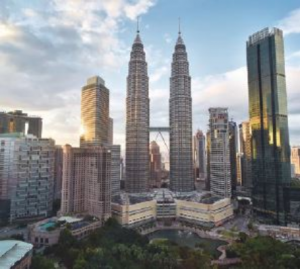
PETRONAS Twin Towers, home to Malaysia’s premier energy solutions company.

As for renewable energy, the company is currently focusing on solar and wind power and has established a new division called Gas & New Energy, which is aimed at growing a substantial business in delivering clean energy solutions to customers.

In line with its strategies in new energy, PETRONAS in April acquired Amplus Energy Solutions Pte Ltd (Amplus Solar), which is headquartered in India, to expand its renewables portfolio to include rooftop solar, ground-mounted solar and other distributed energy solutions such as storage.

In Malaysia, PETRONAS is collaborating with Universiti Teknologi MARA to jointly develop the On-Campus Energy Optimization and Solar Rooftop projects. The company plans to be a significant contributor to the Malaysian government’s renewable energy target of 6 GW by 2025.

“We are exploring new ideas and technologies that go beyond oil and gas as we witness the emergence of new disruptive business models, products and ideas. For PETRONAS, we view technology as a differentiator—the key to unlocking new opportunities and driving growth for our business,” says Dzafri.

Making Sustainability a Key Strategy

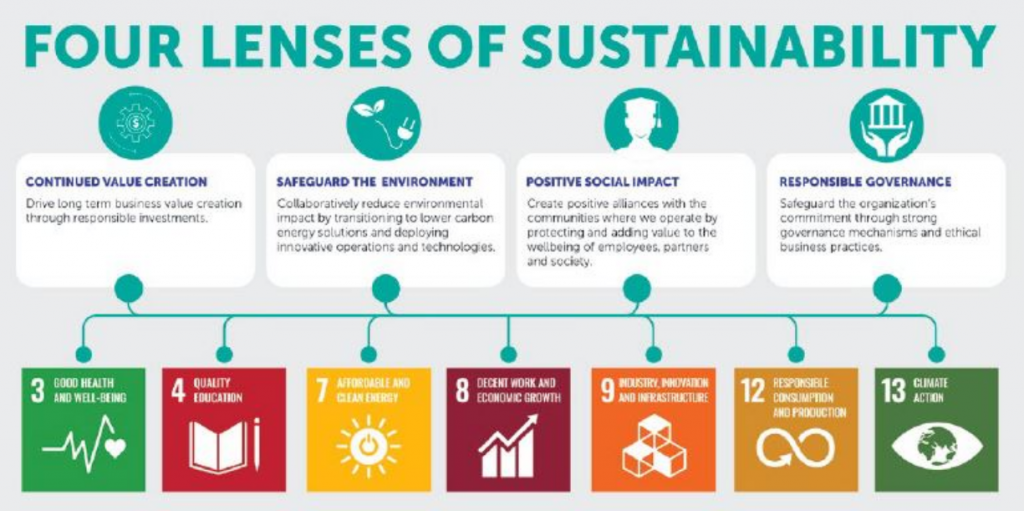
PETRONAS has been on its sustainability journey for nearly two decades now, says Dzafri, “but looking at future trends and rising expectations, we realize that we cannot afford to continue managing sustainability the same way anymore.”

Sustainability at PETRONAS today is driven by a clear agenda for a more effective orchestration of programs to immerse it into every aspect of the company’s business strategy and work processes, he adds.

When it comes to community development, he says PETRONAS is consistent in upholding its responsibility in providing sustainable value to enrich the lives of people in the areas it operates in, focusing on three pillars: education, community wellbeing and development, and the environment. With the launch of Yayasan PETRONAS, the company’s philanthropic arm, in March, PETRONAS continues to extend its four-decade involvement with communities and the environment in a more strategic manner and direction.

PETRONAS’s education sponsorship has helped 80 South Sudanese students since 2000.

In education, it supports several initiatives in areas where the firm operates. In Malaysia, PETRONAS has been sponsoring more than 36,000 students to pursue tertiary studies in Malaysia and abroad, investing more than US$790,000 to date. In South Sudan, PETRONAS has sponsored 80 South Sudanese students since the year 2000 to continue their studies, of which 23 attended Universiti Teknologi PETRONAS in Malaysia, investing US$4 million in the program so far. Efforts are also in place to train South Sudanese geologists, operators and technicians.

“Through these initiatives, we are helping them to become experts and leaders, so that they can one day rebuild what was lost during war,” says Dzafri.

He points out that the education initiatives are geared toward creating access to education and providing the infrastructure to support these programs. In East Malaysia, the company has built hostels for children living in remote areas of Sabah and Sarawak so they can live near their schools. Halfway around the world, in Iraq, PETRONAS has over the past decade established several long-term educational projects, including refurbishing schools in Al-Rifa’I a district located in the south of Baghdad to support 900 students.

Its community projects include creating access to clean water to rural communities, such as the villages around Pitas and Kota Marudu in Sabah where clean water is supplied thanks to the gravity-fed, water system project.

In South Sudan, PETRONAS’s Water for Life initiative provides portable water supply through wells and boreholes—delivering access to clean water to more than 40,000 local communities—with the first phase completed in 2018. Using a solarpowered motorized system, the company built six water wells in five locations, producing 162,000 liters with 72 public taps. This initiative is in collaboration with a local nongovernmental organization, Nile Hope, and the Ministry of Petroleum.

The company’s flagship environmental project is the conservation of a 27,599-hectare virgin rainforest in the Imbak Canyon Conservation Area in Sabah. To promote environmental conservation and research in biodiversity, the company constructed the Imbak Canyon Studies Centre, a state-of-the-art facility. PETRONAS has also been actively promoting the conservation of mangrove areas in Malaysia, particularly in the state of Terengganu.

www.petronas.com