
Japan has long attracted admiration from global investors for its political stability and rule of law, while deep domestic capital markets provide a reassuring foundation. Yet the real obstacle has historically been execution on the ground—coordinating stakeholders, navigating local regulations and meeting international governance standards.
The new era of real estate investments—as planned and executed by Post Lintel Investment Management (PLIM)—is designed to resolve that friction. Each development is selected not only for location quality, but for its ability to become an institutional-grade asset: resilient cash flow, scarcity value and long-term appreciation potential. Beyond development oversight, PLIM operates as a fiduciary investment platform, structuring transactions, coordinating lenders and managing lifecycle performance on behalf of overseas capital.
“Our responsibility is fiduciary,” says Joey Yang, who heads the investment management arm. “We are structuring and managing these projects as long-term capital stewards, not short-term developers.”
“In many cases the challenge is not the asset itself, but the complexity around it,” says Akane Konomi, Managing Director and Head of Sales of Post Lintel Investment Management. “Our role begins at the sourcing stage—identifying opportunities, understanding the seller’s situation, and then structuring the transaction so the right international investor can participate with confidence.”
The firm’s portfolio includes three diverse projects that all share a common promise: prime location, professional oversight and the elimination of operational headaches that can deter overseas investors.
A Core Urban Trophy Asset
The first project centers on a premier site in Asakusa, one of Tokyo’s most established metropolitan districts. Land of this caliber is intrinsically scarce. Transactions are infrequent, and ownership is typically concentrated among long-term domestic institutions. That scarcity alone underpins long-term value stability.
Such a core urban asset in Japan offers a rare equilibrium: strong tenant demand, global corporate presence and infrastructure density that sustains occupancy even during cyclical downturns. PLIM’s development strategy focuses on elevating the site into a modern, mixed-use property aligned with evolving tenant expectations and lifestyle patterns.
“What matters most is curating an asset that will remain relevant 10 or 20 years from now,” Yang explains. “Design, tenant mix and operational planning are being calibrated to global institutional standards, not just local benchmarks.”
“Many properties in Japan have extraordinary locations but have yet to be optimized for today’s market,” Konomi says. “By analyzing operational performance, design and changing usage patterns, we can reposition an asset so that both revenue potential and long-term value are significantly enhanced.”
She adds: “Prime location alone is not sufficient. The asset must function seamlessly for tenants and investors alike. Our role is to anticipate operational demands—maintenance regimes, tenant services and lifecycle upgrades—so the property continues to perform as a flagship holding over decades.”
The result is positioned as a true trophy asset, boasting a prestigious address, institutional resilience and long-term capital preservation potential for family offices and institutions building core allocations in Asia.
A Strategic Regional Gateway
While Tokyo often dominates investor attention, Japan’s regional hubs are increasingly compelling. They combine strong transportation connectivity, diversified economic bases and sustained policy support for development, with demand drivers that remain structurally robust rather than purely cyclical.
PLIM’s second project focuses on Hakuba, internationally recognized as one of Japan’s premier alpine destinations. What was once viewed primarily as a domestic ski area has evolved into a globally known resort market attracting sustained inbound demand. Prime land in such resort zones is finite, and development is constrained by geography and regulation—factors that reinforce long-term scarcity value.
“Hakuba has evolved into an international alpine destination with structural global demand,” Yang says. “For investors with a long-term perspective, that creates a compelling case for disciplined capital deployment.”
“Each region in Japan has its own dynamics,” Konomi explains. “Successful investment requires understanding local demand, infrastructure and community relationships. When those factors are aligned with the right investor strategy, regional assets can deliver remarkably stable performance.”
For investors, this project offers diversification within Japan itself—a gateway to a globally recognized leisure market backed by disciplined asset management and governance structures aligned with international expectations.
A Culturally Anchored Destination Asset
The third project takes a different angle, leveraging Japan’s enduring cultural and tourism appeal. Positioned in Kyoto, PLIM has conceived a destination-oriented asset that blends modern functionality with sensitivity to local character.
Tourism-related assets in Japan occupy a distinctive position. The country’s reputation for safety, hospitality and cultural depth supports consistent visitor flows, while domestic travel demand provides an additional stabilizing layer. When carefully designed and professionally managed, such properties can achieve both high occupancy and premium pricing power.
“Japan’s cultural destinations have an enduring global appeal,” Yang says. “The opportunity is to create assets that respect that character while operating at the highest commercial and operational standards.”
“Destination assets must deliver an experience, not just a building,” says Konomi. “Operational excellence, tenant curation and design continuity all contribute to creating a property that becomes synonymous with its location. That is what drives sustained value and investor confidence.”
For family offices especially, such assets offer more than financial returns—ownership carries symbolic prestige and a tangible connection to Japan’s cultural narrative, serving both portfolio diversification and legacy-building objectives.
Why Japan, Why Now
Japan’s macro fundamentals remain compelling, with currency dynamics and valuation differentials further enhancing entry appeal for long-term foreign investors. Meanwhile, structural shifts in work patterns and tourism flows are reshaping how different property types generate value.
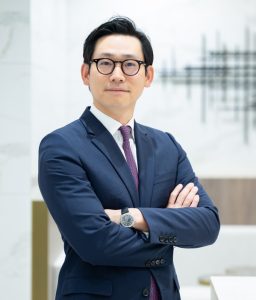
Representative Director, CEO,
Post Lintel Investment Management

Managing Director Head of Sales Department,
Post Lintel Investment Management
Across all three projects, PLIM’s central proposition remains consistent: complexity handled, value delivered. Japan’s regulatory and stakeholder landscape is transparent but intricate, and land rights structures, zoning coordination, lender conservatism and multi-party approvals can become significant barriers without experienced local execution.
“Japan’s banking environment rewards preparation and credibility,” Konomi says. “When structures are properly aligned, lenders respond with remarkable consistency. Many international investors remain interested in Japan but assume the market is difficult to navigate. Language barriers, unfamiliar regulations and limited access to local information can create hesitation. Our role is to bridge that gap so global investors can participate with the same clarity they expect in other major markets.”
“Our mandate is to remove uncertainty,” Yang explains. “Investors should be able to allocate capital with confidence, knowing governance, compliance and delivery are managed to international standards.”
For many overseas investors, the question is no longer whether to allocate to Japan, but how to do so in a way that is repeatable and scalable. PLIM’s approach is designed with that horizon in mind. Rather than treating each transaction as isolated, the firm structures investments with portfolio continuity—standardized reporting, lender relationships, governance frameworks and asset management processes that allow capital to be deployed consistently over time.
“Japan should not be approached opportunistically,” Yang says. “It rewards long-term discipline. Our objective is to build a platform where investors can allocate not just once, but repeatedly, with clarity, transparency and operational confidence.”
In an environment where certainty and quality are both scarce, that combination transforms Japan from an admired market into an actionable investment decision—one grounded not in speculation, but in disciplined execution and enduring value.