Innovation thrives in environments where trust, stability and world-class infrastructure converge. As the top-ranked economy in IMD’s World Competitiveness Ranking 2026, Singapore offers multinational companies a trusted and well-connected base from which they can innovate and expand.
Its innovation ecosystem ranks 2nd in Asia and 5th globally in the 2025 Global Innovation Index, while forward-thinking policies, public-private partnerships and a dense concentration of top-tier research talent are additional factors that make Singapore a launchpad for R&D and commercialization. Innovations led from Singapore have become market-ready products powered by next-generation technologies, from Dyson’s PencilVacTM to EssilorLuxottica’s pioneering myopia-slowing Essilor® Stellest® lenses. Companies in Singapore have continued to invest in research and innovation—committing over US$10.8 billion in the past five years.
Singapore: A Global Innovation Hub
Singapore is committing over US$28.7 billion in the next five years under its Research, Innovation and Enterprise (RIE2030) national blueprint. The investment will strengthen the nation’s core scientific capabilities and address key national challenges, while actively co-funding and de-risking corporate R&D. RIE2030 is targeted toward key domains: human health and potential; manufacturing, trade and connectivity; urban solutions and sustainability; smart nation and the digital economy—underpinned by a strong foundation of academic research and talent. Funding is also directed toward boosting Singapore’s capabilities in artificial intelligence (AI), data architecture and high-performance computing, to create a cutting-edge research and innovation base for global enterprises.
Singapore’s ecosystem connects companies, academia and research institutions such as A*STAR to co-develop cutting-edge technologies. Leading pharma companies such as GSK, Sanofi and Takeda actively partner with A*STAR to advance biologics and vaccine innovation, supported by world-class universities such as the National University of Singapore (NUS) and Nanyang Technological University (NTU).
Global firms are adopting diverse innovation models here, from corporate venture building and co-innovation labs to incubators and accelerators, while tapping into a network of more than 4,500 tech startups in Singapore, recognized as a major startup hub in Asia.
Reinventing Next-Generation Manufacturing: Hyundai
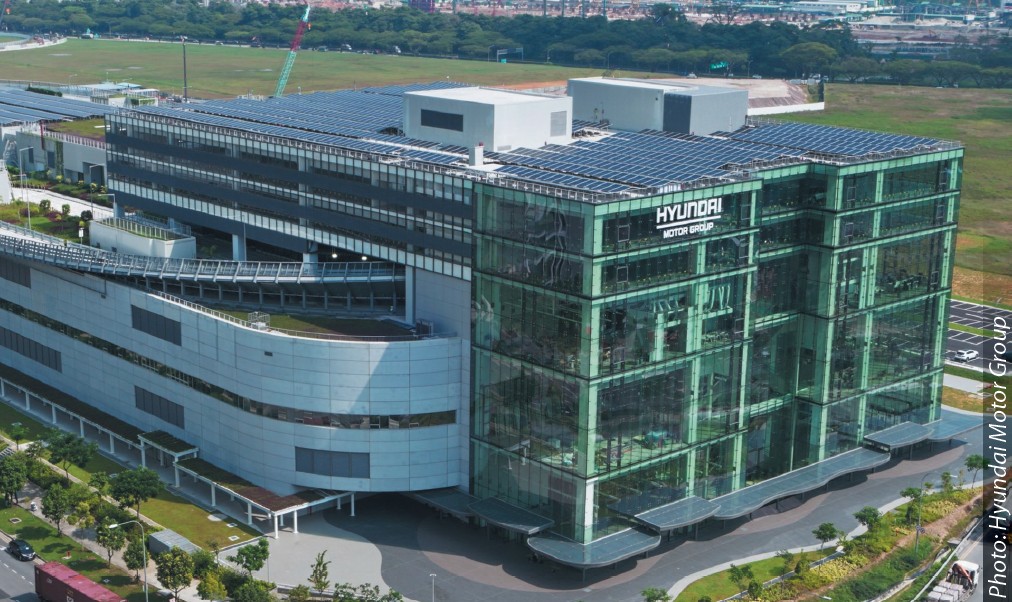
Hyundai Motor Group established the Hyundai Motor Group Innovation Center Singapore (HMGICS) in 2023, the company’s first global hub and testbed for future mobility solutions. Located in the Jurong Innovation District, the facility is the cornerstone of the group’s Software-Defined Factory vision, pioneering AI- and robotics-driven manufacturing. Beyond production site, HMGICS functions as a strategic testbed, developing next-generation manufacturing technologies for deployment across the group’s global operations. HMGICS also fosters a robust mobility manufacturing ecosystem through active collaboration with research institutions, universities and industry partners.
“HMGICS serves as a living lab for Hyundai Motor Group’s Software- Defined Factory vision, bringing together technology, talent and partnerships in Singapore to develop and validate next-generation manufacturing. Through close collaboration, we continue to set new standards for human-centered and innovative manufacturing.”
Dr. Hyun Sung Park
CEO of HMGICS
Most recently, Hyundai launched a Corporate Lab with NTU and A*STAR. As a first-of-its-kind collaboration in Singapore’s automotive manufacturing sector, it bridges academic research with industrial application while advancing the adoption of next-generation technologies such as AI, robotics and 3D printing.
 Driving Sustainable Materials Innovation: Lubrizol
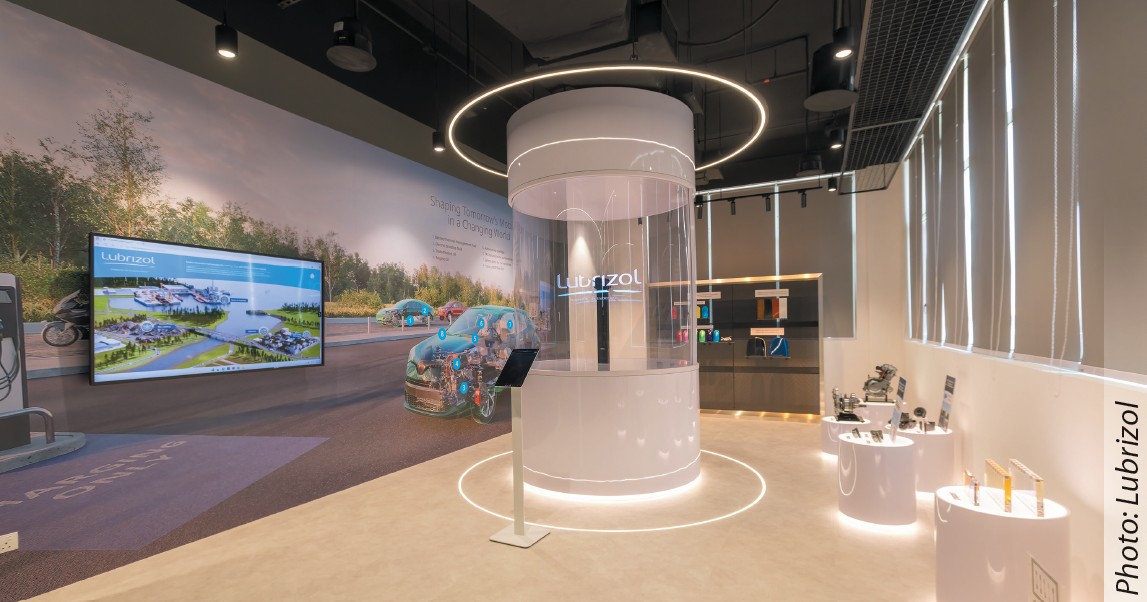
In 2025, Lubrizol established its Southeast Asia Innovation Center in Singapore. Equipped with advanced laboratories, immersive experience zones and technical training spaces, the center drives innovation in advanced materials and sustainable solutions across key industries such as mobility, digital technology, biomedical sciences and renewable energy.
Operating with a local-for-global approach, the center is an integral node of Lubrizol’s global innovation network, partnering with research institutions, industry players and customers to deliver solutions using science, data and AI.
Since its launch, Lubrizol has signed memorandums of understanding with companies including United Oil Company, Aster, PETRONAS and APP to advance joint innovation in areas such as specialty chemicals, lubricants, energy transition and sustainable solutions.
“Singapore plays a pivotal role in our global innovation network because of its robust R&D ecosystem and unique environment that enables innovation to thrive. This strategic Innovation Center provides proximity to key stakeholders and fosters collaboration to progress innovations that contribute to industry transformation and economic growth.”
Henry Liu
Vice President, Asia-Pacific at Lubrizol
 Scaling Asia-Ready Nutrition Innovation: FrieslandCampina
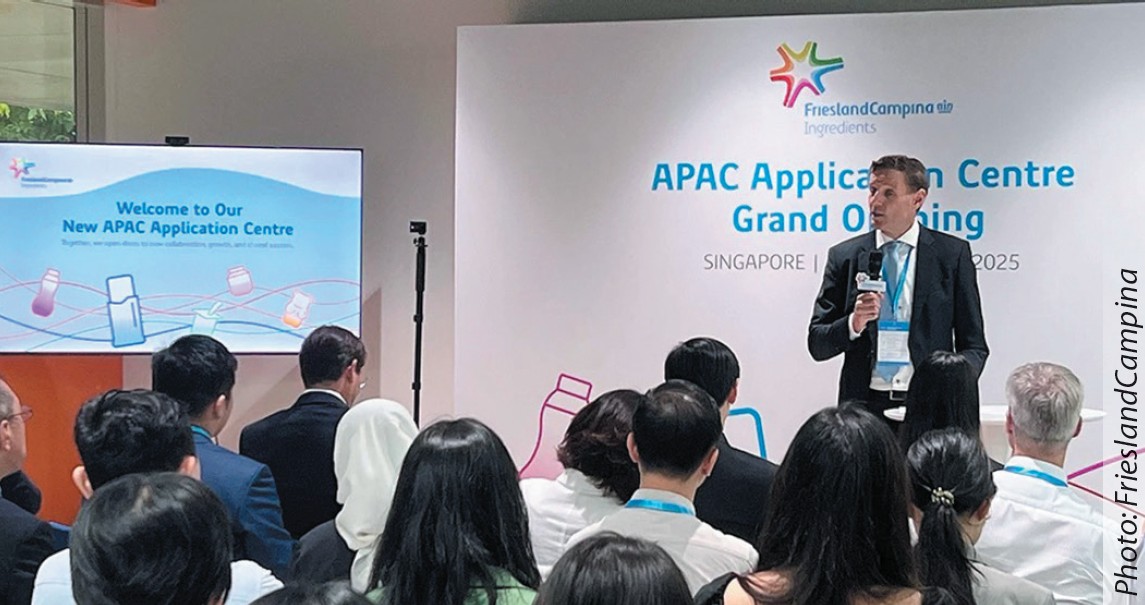
In 2025, FrieslandCampina opened its Asia-Pacific R&D Application Centre in Singapore. The facility translates advanced nutrition science into tailored ingredient solutions to meet the region’s diverse and growing nutritional needs.
Equipped with specialized laboratories for functional foods such as yogurts and ready-to-drink (RTD) beverages, and supported by on-site technical experts for product testing and development, the center enables FrieslandCampina to strengthen capabilities in high-demand areas, including performance nutrition, active nutrition and children’s nutrition.
The facility builds on FrieslandCampina’s longstanding presence in Singapore, home to its Asia-Pacific headquarters since 2011 and its only development center outside the Netherlands. Singapore acts as a strategic testbed, where its RTD portfolio was first conceptualized and later scaled across Thailand, Malaysia and Vietnam, with plans to expand beyond Asia.
Singapore’s microcosm of regional tastes allows FrieslandCampina to engage directly with evolving consumer preferences, regulatory requirements and customer needs across Asia-Pacific.
How Singapore Can Power Your Next Phase of Growth
Global companies can leverage Singapore’s world-class, public-private collaboration models to de-risk and scale innovations faster. This ecosystem enables firms to efficiently co-develop, test, launch and scale breakthrough solutions for global markets.
“The opening of our new application center in Singapore demonstrates our commitment to the APAC market and the strategic importance we place on the region. The APAC market is changing rapidly. Consumers are prioritizing daily health, emotional wellness and beauty-from-within. Our new application center will accelerate application development and enable closer collaboration to navigate these exciting opportunities together.”
Tjalling Bekker
Regional Director APAC at FrieslandCampina Ingredients
The Singapore Economic Development Board (EDB) partners with both established companies and startups to grow beyond their core businesses through specialized initiatives such as the Corporate Venture Launchpad 3.0.
For companies developing products and processes in Singapore, EDB offers the Research and Innovation Scheme for Companies and works with experienced founders to kickstart and scale new ventures from Singapore through the Global Founder Programme.
Whether you are pioneering advancements in AI, advanced manufacturing or medical technology, Singapore offers a trusted base to test, develop and scale breakthrough solutions for global markets. Partner with Singapore to power your next phase of global growth. Visit: https://www.edb.gov.sg/en/our-industries/innovation.html