Revitalizing Healthcare In The Region

Amid persistent economic challenges and geopolitical uncertainties, stress, burnout and deteriorating mental health are emerging as formidable challenges to global well-being and vitality. To address these obstacles, experts suggest that governments and organizations need to embrace a more comprehensive outlook on health to safeguard and enhance the welfare of their citizens and employees.

Indeed, the concept of health has evolved significantly in recent years, extending beyond physical wellness to encompass aspects of mental health, work and family life. In its latest global annual survey, health services company Cigna Healthcare surveyed more than 10,000 respondents across 12 diverse markets and covered a wider scope of factors impacting people’s sense of health and well-being, a concept it calls “vitality.”

The pandemic has clearly impacted people’s priorities, causing many to reevaluate what’s important to them.

Cigna Healthcare provides a range of health insurance and related products and services to individuals, companies and their employees, striving to enhance the health and vitality of those they serve. The company’s 2023 Vitality Study measured individuals across eight critical dimensions: social, occupational, financial, intellectual, physical, spiritual, emotional and environmental health.

The outcomes revealed a concerning trend. Developed economies, including Hong Kong and Singapore, reported lower vitality scores compared to the global average, contrasting with higher scores in mainland China, Africa and the Middle East. A mere 5% of respondents in Hong Kong and 10% in Singapore exhibited high levels of vitality, hinting at a potential linkage between the high demands of developed societies and decreased vitality levels.

Going Beyond Physical Health

The findings underscore a notable shift in how individuals perceive and prioritize various aspects of vitality including physical health. In Hong Kong and Singapore, while the majority placed physical health as their top priority, a significant portion felt ill-equipped with the necessary skills and tools to maintain a healthy life, pinpointing a crucial area for intervention by policymakers and employers.

In particular, mental well-being emerged as a pivotal yet threatened facet of vitality, with high vitality individuals reporting markedly better mental health compared to their low vitality counterparts. Stress and severe burnout remain prevalent in Hong Kong and Singapore, with 87% of people experiencing stress in both markets, outpacing the global average significantly. Financial concerns and uncertainties about the future are the major stressors, exacerbated by looming high global interest rates and geopolitical tensions.

Shifting Priorities

The pandemic has clearly impacted people’s priorities, causing many to reevaluate what’s important to them. The emerging trend of valuing personal health and close family relationships over well-paid jobs reflects this shift, with a notable proportion in Hong Kong and Singapore aspiring to early retirement, leading all the markets surveyed.

Employers are well-positioned to address many of these challenges. A significant portion of respondents from Hong Kong and Singapore expressed a desire for more support from their employers in living healthier lives. The vitality approach can act as a critical framework for employers to not only foster and protect employee health, but also align organizational objectives with the growing awareness and expectations surrounding holistic well-being.

As businesses seek to stay ahead of the competition in the face of substantial headwinds, they will need to prioritize their employees’ vitality as a means to retain and motivate talent. By providing employees with the support they need to be at their best and integrating this with organizational needs, companies can significantly improve their chances for success.

Innovating Healthcare Solutions

Jonathan Spiers, CEO, Cigna Healthcare Hong Kong, says the company is committed to not only upholding strong foundations that are built through a rich 90-year history of operations in Hong Kong, but it is also actively adapting to emerging trends and pushing the boundaries of innovation in the healthcare sector.

With a legacy spanning over 200 years globally, health benefits provider Cigna Worldwide General Insurance Company Limited (“Cigna Healthcare Hong Kong”) has become a key player in Asia-Pacific’s evolving wellness landscape. In Hong Kong, the company is celebrating 90 years of operations in 2023.

Having been recognized as one of the “Best Companies to Work for in Asia 2023 (Hong Kong)” for the fourth consecutive year and a “Most Caring Company” by HR Asia, Cigna Healthcare Hong Kong’s caring spirit is deeply ingrained in its culture. “We are a mission-led organization, dedicated to improving the health and vitality of those we serve, including our greatest asset—our people,” says Jonathan Spiers, CEO, Cigna Healthcare Hong Kong.

According to Cigna Healthcare’s 2023 Vitality Study, 72% of people in Hong Kong say that inflation is making it too expensive to stay healthy, and 66% of employees say they wish they had more support from their employer to live a healthier life.

To deliver on the company’s mission and support a community that is grappling with escalating healthcare costs, heightened by persistent inflation and rising demand for healthcare services through an aging population, Cigna Healthcare Hong Kong is investing more in key capabilities such as data analytics and clinical expertise. These investments will support continuous innovation in individual and group health plans, and help customers adopt a preventive health approach by detecting health problems early and improving health outcomes.

For individual customers, Cigna Healthcare Hong Kong offers a comprehensive range of healthcare services—from prevention and diagnosis to treatment and recovery. “Our health plans are designed to deliver value to our customers by maintaining best-in-market coverage, enabling them to receive unparalleled support and access to their preferred medical providers, as well as receiving timely care and support when they need it most,” says Spiers.

For group clients, Cigna Healthcare Hong Kong proactively promotes preventive care through its in-house wellness and clinical team, which regularly hosts events such as Wellness Days, based on their employees’ needs. A typical Wellness Day includes services such as health assessments, one-on-one clinician consultations and health-related workshops specific to the organization.

Cigna Healthcare Hong Kong’s care for its people and customers is recognized by different leading industry awards.

To help design and deliver the Wellness Days, Cigna’s Care Managers play an important role. Care Managers are Hong Kong-registered nurses with a wide range of clinical experience who will guide customers through clinical pathways. This includes identifying potential doctors for treatments, interpreting complex medical reports and delivering health education to help individuals improve their health and support their well-being.

Supporting the Healthcare System

Hong Kong is one of the longest-standing markets within Cigna International Health outside of the U.S., and the company is proud to have grown with the city throughout the years. Spiers says: “With a rich 90-year history in Hong Kong, we value our legacy of quality products and services, and our commitment to healthcare value and affordability through our customer focus, innovation and quality.

“As we look ahead, we are committed to not only upholding these strong foundations but also actively adding value to our services and products, adapting to emerging trends and pushing the boundaries of innovation in the healthcare sector. We are here for the long term.” www.cigna.com.hk

Advancing Healthcare Accessibility

In Singapore, Cigna Healthcare has also been leveraging innovation in order to provide comprehensive healthcare services that offer the most value to its clients. Since its establishment in 2011, Cigna Healthcare Singapore has developed a robust suite of healthcare solutions. In 2018, for instance, it piloted a telehealth solution that was aligned with Singapore’s Smart Nation vision of making healthcare more accessible to all.

Raymond Ng, CEO and Country Manager, Cigna Healthcare Singapore and Australia

In just over a decade since its inception, the company has already been recognized as one of the “Best Companies to Work for in Asia 2020 (Singapore)” by HR Asia, and was awarded the “Excellence in Women Empowerment Strategy” Gold accolade by HR Excellence in 2020.

To address the challenges of rising medical costs and an aging demographic, Cigna Healthcare Singapore works closely with its healthcare provider partners to negotiate better deals for its clients. The firm is also transitioning from its role as a claims payer to that of a health partner, enabling it to streamline the claims process and make it more cost-effective for its customers and patients in the long term.

“With the trend of rising medical costs likely to continue due to medical advancements and an increasingly aging population in this region, it is a huge priority for us to ensure that healthcare systems remain affordable and sustainable for everyone,” says Raymond Ng, CEO & Country Manager, Cigna Healthcare Singapore and Australia.

“We believe that preventive healthcare should be the future toward which we are all working. It helps in the early detection of potential health issues before they escalate into more severe conditions. Early intervention often leads to more effective and less costly treatments.”

Employing Technology for Better Outcomes

Cigna Healthcare Singapore is currently investing in healthcare innovation, particularly in data analytics and AI, given the opportunities to identify patterns and trends which can lead to potential cost-saving opportunities. For example, the company employs data analytics to make the underwriting process more efficient and deliver insurance pricing schemes that are better tailored to each individual.

Furthermore, Cigna Healthcare is currently exploring the use of AI-powered predictive analytics that can identify high-risk individuals, allowing the firm to proactively support them with preventive strategies, ultimately reducing long-term healthcare costs. To this end, the company continuously collaborate with other strategic players in the industry, such as digital health startups and telehealth providers, to further expand its reach and services.

Looking ahead, Cigna Healthcare Singapore is focused on expanding its product line to more effectively target local enterprises with a regional focus. “As we continue striving to be the health partner of choice for organizations and people around the world, we believe it is part of our role to inform and raise awareness among consumers about the changing healthcare landscape,” says Ng.

“This means working closely with our clients and partners to understand people’s needs, ensuring their healthcare demands are met, and helping organizations achieve better health and business outcomes.” www.cigna.com.sg


Disclaimer

The information contained in this article is for information only and does not represent the entire coverage or features of relevant insurance product(s). This article does not constitute a contract of insurance or an offer, invitation or solicitation to any person to enter into any contract of insurance. It does not constitute an offer to sell or solicitation to purchase or provision of any insurance product outside Hong Kong and Singapore. It does not purport to provide legal or other advice and should not be taken as such. No reader should act or refrain from acting on the basis of the content of this article without seeking professional advice. Issued by Cigna Worldwide General Insurance Company Limited and Cigna Europe Insurance Company S.A.-N.V. Singapore Branch.

ESG: Staying The Course

As businesses face increasing scrutiny of their impact on the world, Environmental, Social and Governance (ESG) considerations have risen to the forefront of the corporate strategy. Companies are now actively seeking ways to safeguard and grow their businesses while ensuring they are contributing to the greater good. Furthermore, against the backdrop of a deepening climate crisis, the imperative to advance ESG goals has never been more urgent, pushing organizations to navigate a course aligned with sustainability and social responsibility.

In a landscape where regulations, cultural norms and best practices vary globally, regions find themselves at different stages in contemplating and implementing ESG principles. In the Asia-Pacific region, the ESG framework is evolving and has yet to reach the maturity observed in Europe. Despite this, there’s a notable increase in shareholder engagement as a proactive approach to risk management. Larger organizations in this region are aligning their net zero commitments with government strategies. Furthermore, the focus on diversity, equity and inclusion (DE&I) is gaining ground. Organizations increasingly acknowledge the profound impact DE&I has on overall business and talent strategies, shaping their talent pipelines around these fundamental principles.

Great Strides in Aviation
Hong Kong International Airport (HKIA) has made great strides in recent years toward realizing its ESG ambitions amid the deepening climate crisis. The airport’s achievements in this space have contributed to its remarkable resilience in the face of extreme weather events in recent years. In particular, Airport Authority Hong Kong (AAHK), the statutory body that oversees HKIA, works closely with the airport community—including organizations such as the Hong Kong Observatory—to strengthen its ability to respond to such weather disruptions.

Beyond environmental concerns, HKIA is also focused on addressing social issues through various initiatives. For instance, it established the Hong Kong International Aviation Academy to offer people from all walks of life an opportunity to work in the aviation sector and provides training programs to upskill its staff, thereby building a sustainable talent pipeline for the industry. In terms of corporate governance, even though AAHK may not be a listed company, it prioritizes transparency and accountability, regularly disclosing information in compliance with the Corporate Governance Code issued by the Hong Kong Stock Exchange, as far as it is applicable.

Sustainability and Impact Investing

Within the financial services sector, investors are increasingly in pursuit of solutions that yield both financial returns and positive impacts with the rise of social and environmental challenges. UBS, one of the world’s largest managers of private and institutional wealth, is partnering with its clients to facilitate the mobilization of their capital toward a more sustainable world. The bank places a strong emphasis on the huge potential for strategic sustainable and impact investments across the APAC region.

The way UBS sets about doing this is through a multi-strand approach that integrates sustainability across its clients’ investment, corporate and philanthropic a host of green and climate tech innovations set to revolutionize the opportunities on offer to investors who want to bolster their sustainable portfolios. Among them are new renewable energy management solutions and low-carbon manufacturing materials, which are going to have particular applications within Asia and open up whole new impact investment fronts across the region, the bank says.

Leveraging Technology to Meet Net Zero Goals

In the dynamic landscape of global energy, Malaysia’s PETRONAS is harnessing cutting edge technologies to help the business accomplish its sustainability initiatives at scale. By strategically increasing its technology investment by 60% from 2021, PETRONAS has launched numerous projects, generating substantial value exceeding RM10 billion (US$2.1 billion). The company also continues to leverage its diverse arsenal of technological solutions to drive continuous value creation, enhance customer experiences and amplify purposeful impact.

“Our journey, though ambitious, is navigated with a keen awareness of global complexities. The history of our industry is marked by ever-evolving challenges and volatilities that demand adaptability and strategic agility. We also recognize that technology can address these challenges as well as be a force for good that can drive systemic change, all of which will support PETRONAS’ Net Zero Carbon Emissions 2050 Pathway,” says Aadrin Azly, Vice President for PETRONAS Group Technology & Commercialisation.

Paving the Way Toward Decarbonization

Meanwhile, decarbonization software leader Univers is tackling climate issues, particularly in the built environment, through its innovative solutions. The global technology firm helps enterprises, governments and cities to optimize energy systems and reduce carbon emissions with accurate, reliable and actionable decarbonization data through its comprehensive decarbonization software.

Univers also fosters strategic partnerships with financial institutions, offering companies access to green financing. This critical support empowers businesses to adopt sustainable practices and technologies more feasibly. “These strategic partnerships alleviate the financial challenges of adopting greener practices, accelerating businesses’ sustainable transformation,” says Michael Ding, Global Executive Director of Univers.

As industries evolve and global challenges persist, it’s clear that the journey toward a greener, more inclusive and sustainable world requires a collaborative endeavor.

Thailand’s Path To Responsible Tourism

Promthep Cape in Phuket

Thailand’s tourism sector is making a steady comeback, having welcomed over 15 million tourists between January and July 2023. The total revenue from tourism reached 1.08 trillion baht (US$29.38 billion), with international visitors contributing 638.16 million baht (US$17.37 million). This resurgence is primarily driven by tourists from Malaysia, China, South Korea, India and Russia.

To further bolster tourism, various initiatives have been implemented this year, including a temporary visa-free program for select target markets, a focus on promoting lesser-known cities in Thailand and an emphasis on longer stays.

Leading the charge in these efforts is Tourism Authority of Thailand (TAT). Under the stewardship of its new governor, Thapanee Kiatphaibool, who officially assumed office on September 1, TAT has set ambitious goals. It aims to generate 1.92 trillion baht (US$52.92 billion) from 35 million foreign tourists and an additional 1.08 trillion baht (US$29.38 billion) from 200 million domestic trips in 2024.

“Under my tenure,” says Kiatphaibool, “TAT will focus on creating and delivering meaningful experiences tailored to meet the diverse demands of discerning travelers.” The sector is shifting its attention from quantity to quality, both in terms of its target audience and the offerings it provides.

Leading Reopening Efforts 

Kiatphaibool played a pivotal role in Thailand’s post-Covid-19 reopening efforts. For example, she initiated the Special Tourist Visa (STV) scheme, which paved the way for subsequent entry programs such as Villa Quarantine, Yacht Quarantine, Golf Quarantine and the Phuket Sandbox, regarded internationally as a model for the country’s reopening.

She was also recognized for her leadership in initiating the Amazing Thailand Safety and Health Administration (SHA) certification program that enabled hotels and services to meet specific health and safety standards. The program subsequently became mandatory for hotels seeking registration as quarantine facilities during the period of stringent Covid-19 control measures.

Thapanee Kiatphaibool, Governor of Tourism Authority of Thailand

Building Strength From Within

Having been with TAT since 1999, Kiatphaibool has observed the evolution of Thailand’s tourism sector over the years. She says, “The sector now places a strong emphasis on building strength from within—uplifting and supporting local businesses and communities.” 

“Furthermore,” she adds, “there’s a growing commitment to the management of tourist attractions and destinations to ensure the preservation and conservation of our natural resources. Today, many attractions limit daily visitor numbers to align with their carrying capacity, and national parks are periodically closed to allow nature time to recover.”

For instance, Maya Bay, which gained international fame through the Hollywood film The Beach, was closed for nearly four years due to overtourism, resulting in the destruction of coral reefs and its marine ecosystem. Since the park reopened in 2022, it has capped tourist numbers to about 4,000 a day and swimming in the bay is no longer allowed.

Other attractions such as the Thi Lo Su Waterfall in Tak’s Umphang Wildlife Sanctuary will take advantage of the monsoon season from July to August each year to close, providing the ecosystem with an opportunity to heal.

Chiang Khan Walking Street in Loei Province

Shaping the Future of Tourism

During Kiatphaibool’s four-year term as governor, she will implement a strategic vision called PASS to shape Thailand’s tourism future. The strategy focuses on these four priorities:

P: Partnership 360—Foster collaboration with industry partners to enhance Thailand’s appeal to international and domestic travelers.
A: Accelerate Digital Access—Utilize innovation and technology for sustainable tourism growth, including leveraging digital content and virtual influencers to lure Generation Y and Z travelers.
S: Subculture Movement—Target influential subculture groups to drive impactful travel trends through online platforms.
S: Sustainably Now—Promote sustainability through the Sustainable Tourism Goals (STGs), aligned with the UN Sustainable Development Goals, featuring the STAR (Sustainable Tourism Acceleration Rating) system to certify businesses for sustainability.

Organic agriculture project in Sukhothai

Additionally, the Thai government’s Bio-Circular Green economy (BCG) model has found its way into various tourism segments, including health and wellness, responsible tourism and gastronomy. For instance, TAT partnered with the Thai Organic Consumer Association to establish a marketplace that connects farmers directly with mid-stream consumers, including hotels and restaurants that serve downstream consumers and tourists.

This not only reduces carbon emissions but also expands the benefits of the circular economy. Initially launched in Phuket, the project has since expanded throughout Thailand.

Local products made from native Papyrus trees in Chanthaburi

Balancing Tourism and Environmental Goals

Indeed, TAT has undertaken a commendable effort in advancing the cause of sustainable tourism throughout the country, spanning both its major and secondary cities. This endeavor stands as a pivotal force in the revitalization of Thailand’s tourism sector.

Kiatphaibool states, “Sustainability principles encompass environmental, economic and socio-cultural aspects of tourism development. Striking a harmonious balance among these three aspects is paramount for ensuring the long-term viability of tourism. Yet, the pursuit of sustainability in tourism must not compromise the overall satisfaction of tourists, but rather should enrich their experiences by fostering a heightened awareness of sustainability issues.”

Rock climbing at Railay Beach, Krabi

Notably, TAT has recently introduced 20 low-carbon routes across the country with the aim of reducing greenhouse gas emissions and the ecological footprint. The success story of Koh Mak, recognized as Thailand’s first low-carbon destination, serves as an exemplary model for promoting responsible and sustainable tourism practices. Nestled within the pristine expanse of Trat province, Koh Mak has preserved its idyllic charm by embracing development practices that have minimal impact on the environment and local community. Visitors to the island are actively encouraged to engage in activities that minimize their carbon footprint and support local businesses.

Ultimately, the balance between tourism and environmental stewardship remains a paramount goal, and Thailand, through TAT, is leading the way toward a more sustainable and enriching travel experience for all.


www.tourismthailand.org

Expanding Beyond Connectivity

Khairul Liza Ibrahim, Executive Vice President of TM Global

The global telecommunications landscape has been in a state of transition for the last decade. Once primarily associated with facilitating domestic and international connections, they now play pivotal roles in shaping our interconnected world, offering a myriad of services that encompass more than just bandwidth for voice and data.

TM Global, the wholesale business arm of Malaysia’s telecommunications company, TM, has long recognized this trend and has broadened its horizons in the last few years to become an integrated player in digital innovation and advanced connectivity. This has led the company to develop a comprehensive range of cutting-edge wholesale communications services and solutions for a global market.

“While maintaining and growing our connectivity infrastructure remains our core focus, we are centered on creating value for our stakeholders by developing new innovations. We also embarked into a new age of wholesale business where we expand our offerings toward enabling the diversification of edge and platform play services in supporting hyperscalers
and digital players for greater customer experience,” says Khairul Liza Ibrahim, Executive Vice President of TM Global.

TM Global’s transformational journey involved the company venturing into a holistic and comprehensive assessment of its current businesses. This included conducting due diligence exercises aimed at determining where the targeted business opportunities lay.

Concurrently, the company ensured it augmented desirable skill sets, particularly in new business ventures, so that it was able to understand and address customers’ needs effectively.

The company began focusing on how market conditions were evolving in the digital space and ensured that it remained up-to-date with the latest technologies so that it could accelerate the development of new digital solutions. Realizing no one company can do it all, it also fortified its market position by expanding its partnership ecosystems while providing mutual benefits to all parties involved.

A Trusted Wholesale Provider 

TM Global’s advanced connectivity and digital infrastructure solutions include a vast fiber cable network, submarine cable systems, points-of-presence, content delivery networks, TM Internet Exchange, Edge Facility, data centers, as well as its regional of fices worldwide to support these services.

Recognizing that gaming will largely benefit from edge and 5G technology, with APAC as the world’s largest gaming hub, TM Global has delivered a broader range of edge services that can be tailored to each vertical’s needs for low-latency and high-bandwidth utilization. The ultimate goal is to further strengthen its position through innovative approaches that foster exceptional customer experience, maximize cost-effectiveness, and drive profitability for its customers. 

“While maintaining and growing our connectivity infrastructure remains
our core focus, we are centered on creating value for our stakeholders by
developing new innovations.”

Khairul Liza Ibrahim

In Malaysia, TM Global will continue to play the role of the trusted wholesale infrastructure provider by driving the digital industry and 5G ecosystems through nationwide infrastructure deployment. Internationally, TM Global remains focused on positioning itself as the preferred digital hub for ASEAN via strategic collaborations with hyperscalers and global service providers.

“We are continually on the lookout for cutting-edge platform solutions that enable various type of applications, such as multiaccess edge computing, artificial intelligence, the Internet of Things and many more that will lead to our next phase of growth. This is parallel to market needs while enhancing the customer experience for all our stakeholders,” says Khairul Liza.


tmglobal.com.my

A Successful Energy Transition Begins With The Right Partner

Yaoyu Zhang, Global Head of LNG and New Energies, PetroChina International

As a wholly-owned subsidiary of PetroChina Company Ltd, PetroChina International (PCI) is the main supplier of gas to China. In 2022, PCI imported more than 80 billion cubic meters (bcm) of natural gas, which accounts for approximately 60% of the total gas import to China. It also reliably delivered 10 million tons per annum (MTPA) of liquefied natural gas (LNG) to its global customers.

“Ensuring security of supply is at the heart of what PCI does,” says Yaoyu Zhang, Global Head of LNG and New Energies at PCI. “Our global reputation has been built on the core value of honoring long-term relationships and contracts over short-term gains.”

PCI is committed to working with its partners through driving deep process simplification, utilizing automation and digital solutions and making its operating platform efficient and effective. It also continues to foster a culture of inclusiveness while investing in respectful business partnerships and focusing on customers’ needs.

In its journey to become a major player in the energy market, Yaoyu says having the right partner is one of its key success factors. This is where PETRONAS and its customer-centric solutions have played a key role in supporting the continued growth of PCI.

“Any attempt to address the energy challenges would require a global and multilateral approach. PETRONAS’ ability to innovate and its customer focused leadership are key in ensuring a sustainable and economic supply of LNG to PCI and our domestic and international customers.”
Yaoyu Zhang, Global Head of LNG and New Energies, PetroChina International

“PETRONAS has been operating in the Chinese market since 2009, providing energy for China’s rapid economic development. China’s natural gas demand is expected to grow, with a potential of reaching 550 to 600 bcm per annum by 2030, and this bodes well for our partnership,” Yaoyu says.

A Symbiotic Relationship

Today, PETRONAS is one of China’s largest LNG suppliers and one of the most recognizable brands in the gas market. In 2022, PETRONAS delivered 7.5 million tons of LNG to China, accounting for around 10% of the total LNG exports to China.

Building on their strong and stable relationship, PCI and PETRONAS collaborated closely under the Joint Commercial Committee, which extends the success of their spot trading partnership. This has led to the signing of a long-term LNG sales and purchase agreement, which will see PETRONAS delivering LNG to PCI well past 2030.

“In 2021, China imported close to 80 million tonnes of LNG, becoming the largest importer in the world. We expect LNG to continue to play a vital role in ensuring China’s energy security and economic stability,” says Yaoyu.

Despite the growing importance of LNG, the market has experienced some price volatilities and supply uncertainties in recent years, posing a threat to the recovery of both the Chinese and global economies.

Undeterred by the challenges of restricted travel during the pandemic, PCI was able to ensure that its entire LNG supply chain was uninterrupted, averting the risk of a major supply shock for both China and the global market.

Vessel berthing at Singapore Universal Storage

PCI also faced another challenge: it had insufficient capacity in its LNG terminal to fulfill annual contractual quantities and meet downstream gas demand in one of China’s southern provinces.

“PETRONAS’ commercial team identified a customized LNG vessel that would seamlessly fit our terminal requirements, and our operations team worked together to ensure the compatibility of the vessel,” says Yaoyu.

“Any attempt to address the energy challenges would require a global and multilateral approach. PETRONAS’ ability to innovate and its customer-focused leadership are key in ensuring a sustainable and economic supply of LNG to PCI and our domestic and international customers,” he adds.


International trading team in PCI America’s office

Gearing Up for the Future

As one of the world’s largest energy providers, PCI has transformed its portfolio with the supply of lower carbon energy sources such as natural gas, biofuel and green power, while working with its customers across different sectors to decarbonize their use of energy.

PCI has also built a world-class carbon portfolio that helps its global customers offset emissions. Since 2021, PCI has delivered more than 10 carbon-neutral LNG cargoes, making it one of the top carbon-neutral LNG suppliers globally.

PCI and PETRONAS, however, are not taking anything for granted and are forging deeper ties with the aim of addressing market challenges and contributing to the world’s sustainable energy solutions.

In the last few years, the increased fragility and interdependence of the energy systems have contributed to the rising cost of living globally. Consequently, there is a need to balance the goal of achieving net zero emissions while ensuring a secure and affordable energy supply.

“As growth is occurring across sectors, demand for natural gas—a relatively clean fossil fuel and a crucial bridge toward China’s dual carbon goals—is poised for a rebound. We must continue to evolve to protect and enhance our energy systems for supply security and, in the future, try to meet the objective of net zero emissions,” says Yaoyu.

To ensure success, all parties within the energy ecosystem must play their part, whether they are involved in supply, demand or policymaking. The transition to greener gases, such as ammonia and hydrogen, currently requires direct government support, and regions around the world are supporting this drive differently.

“The U.S. is offering favorable tax breaks under the Inflation Reduction Act, while the Europeans are offering Contracts for Difference. The partnership between PCI and PETRONAS is a good example of two capable and trusted partners working together to drive the changes that the industry needs,” says Yaoyu.

“In Asia, PCI and PETRONAS can collaborate to promote new energy sources such as ammonia and hydrogen as global and mainstream fuels, while keeping the cost competitive. We can also work more closely to decarbonize the gas supply chain and proactively look at how to reduce direct and indirect emissions. This includes working with our downstream partners to reduce emissions by using carbon capture and storage,” he adds.


PCI’s Business
PetroChina International Company Limited (PCI), established in 2002, functions as the international trading arm for PetroChina, which is responsible for China’s imports and global commodities trading, including crude, oil products and natural gas. With 59 branches globally, PCI’s business covers more than 120 countries and regions around the world; it has established three Energy Trading Hubs in Asia, Europe and the Americas.

www.petrochina.com.cn


www.petronas.com

Cathay Cargo: Delivering Know-How

With its diverse team of multi-racial, multi-generational staff, some striding purposefully, some with a more casual air, keeping its corridors perpetually alive with the rush of coordinated movement, it’s not difficult to see Cathay’s massive Hong Kong headquarters as a microcosm of the airline’s global operation. Located approximately three kilometers from Hong Kong International Airport, Cathay City is the headquarters of Hong Kong’s home carrier, an airline that, over its 77-year history, has emerged as one of the global leader in both passenger transport and cargo conveyancing.

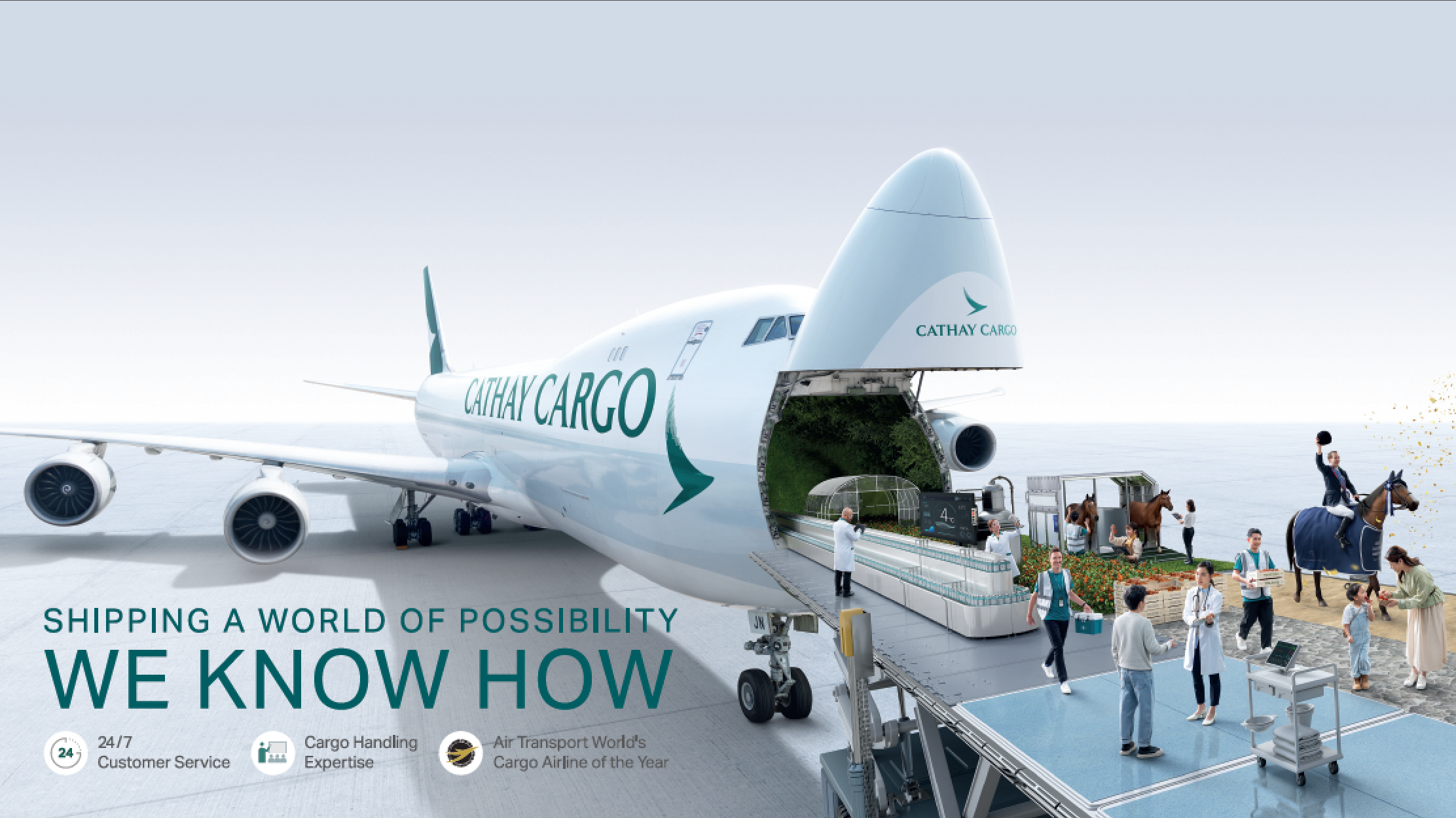
While its passenger flight services will be familiar to many who have visited Hong Kong (or any of the other 65 destinations around the world it serves), its cargo resource—recently rebranded from Cathay Pacific Cargo to simply Cathay Cargo—has true hero status, having played an essential role in keeping its home city stocked during its long Covid-prompted isolation. Now, with such necessity well in the rearview mirror, Cathay Cargo is firmly in expansionary mode, confidently laying out its claim to being one of the most competent, dependable and comprehensive operators in the air freight sector. It is an ethos neatly summed up in the new campaign tagline it rolled out in a rare burst of video advertising in June this year—“We Know How.”

Prime movers: From champion horses to fine fresh foods, Cathay Cargo can do.

Straightforward, to the point and quietly confident, the qualities inherent in its tagline are equally evident in Tom Owen, Director Cargo—the man charged with ensuring his division makes good on its aim of becoming, as he terms it, “the world’s most customer-centric air cargo services brand.” It is a lofty aspiration, but one that Owen believes the company is already well on course to deliver upon.

 “E-commerce has boomed over recent years, and as this trend looks likely to be a sustained uptick, we have added capacity on routes with the highest demand, most notably from the Greater Bay Area to the U.S. and Europe.”

Tom Owen

Serving Specialist Segments

Buoyed by the cargo carrier’s significant role in Hong Kong’s recognition as the world’s busiest cargo airport in 2022, Owen is confident that it is well-prepared to meet the many new demands it faces in the post-pandemic era. Outlining the moves the carrier has made to optimize its services across several key segments, he says, “E-commerce has boomed over recent years, and as this trend looks likely to be a sustained uptick, we have added capacity on routes with the highest demand, most notably from the Greater Bay Area to the U.S. and Europe.

“At the same time, we have also responded to the surge in demand for fresh produce delivery. In fact, we now operate a dedicated service called Cathay Fresh, which is specifically designed to rapidly deliver such items from places such as Australia to Hong Kong, mainland China or the U.S. This has been backed by the doubling of our cold storage capacity and the introduction of priority lanes. We ensure quick farm-to-table delivery, allowing customers in Hong Kong to enjoy fresh seasonal produce within two days of packing in most cases.”

Tom Owen, Director Cargo, Cathay Pacific

Another specialized area where Cathay Cargo has been keen to bolster its offerings is pharmaceuticals, the flow of which was truly a matter of life and death on a massive scale not too long ago. Detailing how this solution has evolved, Owen says, “We have always had the temperature-control facilities to handle pharmaceuticals, but now, with our Cathay Pharma service, we are really making a virtue of that. Essentially, our resources allow us to carry pharmaceuticals from any part of the world to any other safely and rapidly.”

In many ways, it is this intelligent expansion and consolidation of its existing services that characterize Cathay Cargo’s forward strategy, an approach exemplified by the rethinking of its core mail handling services. Explaining the changes here, Owen says: “Our relaunched Cathay Mail service has once again been influenced by the surge in e-commerce volumes. This enables post offices worldwide, all of which aim to build their e-commerce presence, to track and trace their mail, while also providing them with a simplified billing and reconciliation system.

“Our ongoing commitment to digitization has also allowed us to incorporate this same level of transparency and accountability into our activities across the board. Basically, we have integrated all our paper-based procedures relating to every component of the supply chain into one digital system. This provides users with an end-to-end track and trace capability, allowing them to monitor their cargo across a variety of metrics, including exact status and current temperature. The system can also be used to place initial bookings.”

Taking the GBA Truly Global

Aside from its expertise, Cathay Cargo’s other significant advantages are its geographical affiliations and connectivity, both of which it has adeptly harnessed as it looks to bolster its global offerings. Among the most notable of these is its extended home market of the Greater Bay Area (GBA), the massive priority development zone that encompasses nine mainland cities in Guangdong, as well as Macau and Hong Kong.

Given the sheer size of the GBA’s existing manufacturing base and the expectation of rapid expansion in the years to come, Cathay Cargo has understandably moved swiftly to position itself at the center of the zone’s logistics resources. Indeed, when the Airport Authority Hong Kong opened a cargo terminal in Dongguan, one of the mainland GBA cities, Cathay Cargo was the first to establish a dedicated on-site facility—Cathay Cargo Terminal Dongguan.

Cathay Cargo

Commenting on its significance and utility, Owen says, “This puts us right at the heart of the GBA manufacturing region. We can now transport cargo by barge, having been pre-cleared by customs and security upstream in Dongguan, directly to Hong Kong International Airport. This saves on handling costs and reduces transit time for customers, providing us with a seamless connectivity advantage in this dynamic region for both exports and, in the future, imports.”

Fortuitously, with Cathay Cargo clearly reinventing itself and looking to showcase the realities that underpin its “We Know How” tagline, there couldn’t be a better time for the IATA World Cargo Symposium—one of the industry’s most prestigious events—to take place in Hong Kong next year.

Clearly relishing the opportunity it represents, Owen says: “As the host airline for the biggest air cargo event of the year, I’m delighted that very senior people from the industry will be coming to see for themselves what we are capable of. We’ll be providing a very warm welcome for anyone who wants to know more about us.”


www.cathaycargo.com

Unleashing Innovation: How AI, Bio And Cleantech Keep LG Ahead Of The Curve

For the past five years, LG has quietly, but with great purpose, been laying the foundation for its future growth strategy, placing big bets on three key industries at the heart of the future global economy: AI, bio and cleantech.

The bold approach is led by the conglomerate’s Chairman and CEO of LG Corporation, Koo Kwang-mo, who took the helm in June 2018 and immediately sparked a transformative shift by calling on the company to build its future business portfolio with a proactive look to the future. Urging the company’s leaders to continue thinking long term, he pointed out that previous bases for the company’s industry-leading success in electronics, batteries and OLED displays were built on a solid foundation of innovation and planning.

Koo Kwang-mo, Chairman and CEO of LG Corporation

“Throughout our journey, LG has always been a pioneer, thinking decades ahead,” Koo says. “The investments we’re making in AI, bio, and cleantech are the building blocks of our future success, provided we stay dedicated to innovation and challenges.”

The Path to AI, Bio and Cleantech

Koo’s moves serve as a testament to LG’s focus on enhancing shareholder value in the long term. He has led investment in three business lines with strong growth potential that also undergird LG’s commitment to delivering strong value to consumers and long-term environmental sustainability.

All three areas call for strategic, long-term patience. The drive toward becoming a key player in AI is a nod to the forthcoming industrial transformations, as technology continues to redefine business paradigms in nearly every sector. In bio, LG seeks to deliver a brighter future for humanity, with investments aimed at developing treatments and cures for a range of diseases and conditions, including cancer, obesity and diabetes.

The company’s cleantech investments go beyond corporate responsibility, as LG looks to develop and leverage technologies designed to help companies and organizations achieve key sustainability goals, such as decarbonization and building a circular economy.

Laying the Groundwork for Future Growth With AI

LG has earmarked a substantial R&D investment of nearly US$3 billion in AI over the next five years. The LG AI Research, opened in 2020, is an AI hub for bringing the company’s vision to life. In July, scientists and engineers at the LG AI Research initiated EXAONE 2.0, a large-scale multimodal AI designed to work jointly with human intelligence in learning from some 45 million professional documents, including patents and papers, and 350 million pieces of image-text data. This will help LG to create new customer value by using AI to solve key challenges in various industries.

EXAONE 2.0’s three platforms—Universe, Atelier and Discovery—contribute significantly to research. Discovery, for example, incorporates molecular structures, formulas, charts, tables and images, aiming to reduce development time for various innovations, from new materials to new medications. This will significantly reduce trial and error during R&D.

LG has also formed strategic research alliances with top-tier institutions, such as the University of Michigan, Seoul National University and the University of Toronto, all with the aim of accelerating investments in large-scale AI and discovering blue ocean technologies. It is also partnering with leading players in IT, finance, manufacturing, telecommunications and healthcare. A recent tie-up with Qraft Technologies, a fintech startup, will release an innovative AI-based ETF on the New York Stock Exchange.

Blazing a Trail Toward a Transformative Bio Business

Following Koo’s appointment in 2018, the company moved quickly to strengthen its R&D capacity for new drug development, and the hard work is already paying off with an expanding pipeline of treatments in a variety of important areas such as cancer and diabetes. From a modest 10 candidates in 2018 to over 40 today, with half targeting cancer, LG’s researchers are already finding success.

The acquisition of AVEO Pharmaceuticals, a prominent player in the U.S. anti-cancer field, further highlights LG’s determination to be at the forefront of pharmaceutical innovation.

LG aims to achieve top-tier status in the global pharmaceutical industry by 2030. Cancer treatments are a crucial component of this strategy, and the company has established a task force with specialized researchers to spearhead the development of cell therapies.

Pioneering Cleantech Initiatives for a Sustainable Tomorrow

LG’s vision in cleantech encompasses three strategic pillars: developing eco-friendly plastics with biomaterials, harnessing recycling technologies for waste plastics and batteries, and bolstering carbon reduction technologies using renewable energy sources like solar and hydrogen. LG Energy Solution, a prominent player in the global EV battery market, is capitalizing on the surging global demand for electric vehicles.

LG Energy Solution currently operates a plant in Michigan and recently announced another standalone facility in Arizona. The company is also running a joint operation with GM in Ohio, and is building new plants with GM in Tennessee and Michigan. Additionally, LG Energy Solution has joint ventures with Honda in Ohio, Hyundai Motor Group in Georgia, and Stellantis in Ontario, Canada, and is rapidly strengthening its global supply chain for critical raw materials.

It has demonstrated its commitment to sustainability by working on investments in recycling and reusing waste batteries, including an innovative battery-as-a-service (BaaS) business to help customers manage their batteries efficiently.

The circular economy is another key part of the picture, as LG ventures into chemical recycling to boost sustainability. LG Chem will build South Korea’s first plant for pyrolysis oil, a renewable fuel extracted from used plastics, with an annual capacity of 20,000 tons by the first quarter of 2024. It also announced a US$2.3 billion investment in sustainability businesses centered on eco-friendly materials by 2050 to build the renewable energy industry into a future growth pillar.

The next chapter in the company’s history is currently unfolding, with AI, bio and cleantech taking center stage as the new stars. The story looks set to play out over the next two decades, and it promises to be a fascinating journey to witness.


www.lgcorp.com

Going Beyond Silk

From its humble beginnings in Bangkok during the 1950s, Jim Thompson has grown into an iconic lifestyle brand renowned for its exceptional silk fabrics, home furnishings, as well as food and beverage offerings.

Jim Thompson Group CEO Frank Cancelloni, who took over the helm in 2021, believes the brand has the potential to achieve greater heights. He says, “With all its unique attributes and roots in arts, fashion and hospitality, along with its distinctive heritage, Jim Thompson is on track to become, in the mid-term, the first truly global Asian lifestyle brand, akin to the status of Ralph Lauren in the U.S. or Giorgio Armani in Europe.” 

Jim Thompson has grown into an iconic lifestyle brand renowned for its exceptional silk fabrics, home furnishings, as well as food and beverage offerings.

Unique Attributes

Many successful global fashion and lifestyle brands have one thing in common: they have a rich history. In Jim Thompson’s case, the brand’s heritage can be traced back to 1951, when James H.W. Thompson, a former operative for the U.S. Office of Strategic Services (now known as the CIA), founded the Thai Silk Company. His vision was to support the traditional livelihoods, culture and dignity of local weavers and silk farmers.

The brand’s success was attributed to Thompson’s focus on creating designs that seamlessly blended both Asian and Western elements while maintaining an unwavering commitment to quality. The brand gained prominence when its silk fabrics were featured in the Broadway production of The King and I, and it earned early patronage from Queen Sirikit.

Despite Thompson’s mysterious disappearance in Cameron Highlands, Malaysia, in 1967, the company and the Jim Thompson brand of silk products continued to grow from strength
to strength.

Exponential Growth

Today, Jim Thompson has 21 stores under its fashion business unit spread across Thailand, with celebrities, politicians and diplomats counting as regular clients. The business is focused on the tourist market as well as the growing middle- and upper-class segments of the local population.

Its home furnishings business unit, on the other hand, has a presence in more than 60 countries worldwide, with showrooms in Atlanta, New York and Paris. The food and beverage arm of the company comprises Jim Thompson, a Thai Restaurant, Silk Café and Jim’s Terrace—all under one roof in the Jim Thompson House in Bangkok. The soon-to-open The OSS Bar will pay homage to Thompson’s affiliation with the Office of Strategic Services, embodying his legacy.

Beyond Silk

The company recently embarked on a “Beyond Silk” strategy to position itself as a dynamic and innovative lifestyle brand, offering a diverse product portfolio that goes beyond traditional silk products to include materials such as linen and cotton. It also employs innovative technologies to develop high-performance and “Easy Care” silk to cater to different customer needs and preferences.

Until recently, Jim Thompson was perceived as a tourist-oriented brand while locals see it as a gifting option. “With our renewed focus on contemporary design, a thoughtfully curated assortment of products and strategic collaborations, we are experiencing a significant shift in perception,” says Cancelloni. “Our well-targeted digital campaigns have played a crucial role in this transformation. As a result, we are now successfully attracting a growing number of local, younger customers who are purchasing our products for themselves, while still retaining a strong presence in the tourist market.”

This positive momentum is a testament to the brand’s adaptability and resonance with diverse audiences.


www.jimthompson.com

Found In Translation: Minor Hotels’ Winning Global Strategy

Anantara Palazzo Naiadi Rome Hotel

The Asia-born Minor Hotels is having a European moment. And if the recent launch of Anantara-branded hotels in Nice, Amalfi and Dublin, as well as several Avani-branded properties on the continent are anything to go by, that moment won’t be ending any time soon.

Across the world, a similar story is emerging, only in reverse, as two of Europe’s best-known hotel brands—NH Hotels and NH Collection—make inroads into Asia and the Middle East.

It’s a sign the global growth strategy of Minor Hotels, led by CEO Dillip Rajakarier and the group’s Founder and Chairman, William E. Heinecke, is bearing fruit.

Seeds of that plan were planted five years ago with the acquisition of Madrid-based NH Group, which added three brands with strong presence and consumer awareness in Europe—NH Hotels, NH Collection and nhow Hotels—to Minor Hotel’s portfolio. With eight distinct brands under its umbrella—including Anantara Hotels, Resorts & Spas, Avani Hotels & Resorts and Tivoli Hotels & Resorts—Minor is aiming at further growth.

“The NH properties have unlocked parts of the world that we never had access to before,” says Heinecke, who has been in the hotel business since 1978. “Importantly, it allows us to leverage the huge potential of the outbound Asian travel market to our brands in Europe, while also bringing some of Europe’s best-known hotel brands to Asia and the Middle East to capture inbound demand.”

Riding Asia’s Outbound Wave

Minor is not shy about its ambitions to become the world’s most profitable hotel company, aiming to open 50 new properties by 2024, adding more than 10,000 rooms.

The group opened Anantara Plaza Nice Hotel and Anantara Convento di Amalfi Grand Hotel this year, and now has eight Anantara properties in the region, while Avani expanded its European footprint in Madrid and Milan in July.

European brands NH Collection and NH Hotels debuted in the Middle East and Asia with the opening of NH Collection Dubai The Palm, NH Collection Maldives Havodda Resort, NH Boat Lagoon Phuket Resort and more to come.

This growth is likely to be buoyed by significant tailwinds, as emerging market conditions look to favor the group’s unique position as a major Asia-born global player. International tourism recovery is gaining momentum, and Asia-Pacific is well-positioned for a full-fledged resurgence by 2024.

“The exchange of brands and guest segments between Asia, the Middle East and Europe is one of the key drivers of Minor Hotel’s expansion strategy aimed to increase profitability for the group, grow brand awareness, and solidify its position as a truly global player,” says Rajakarier, a key architect of the group’s growth strategy.

Avani Palazzo Moscova Milan Hotel and NH Collection Maldives Havodda Resort

Beyond Hotels: An Emerging Lifestyle Ecosystem

Minor Hotels’ cross-continental expansion extends to more than just hotels, as it looks to cement its reputation as a creator of lifestyle experiences that include restaurants, beach clubs, luxury trains and wellness clinics, as well as branded residences.

The Wolseley, an iconic London eatery acquired by Minor in 2022, is a case in point. In April, Café Wolseley began a short-term residency at Anantara Siam Bangkok Hotel, one of the brand’s flagship hotels. Minor is exploring opportunities to grow The Wolseley.

“There is always growth opportunity in introducing well-recognized brands to new markets,” Heinecke says. “Part of staying nimble is listening to what customers are asking for, and our recent acquisitions are enabling us to meet those needs in new destinations worldwide.”

www.minorhotels.com


QSR Brands Charts A New Path

Business transformation has its challenges, but with the right organizational culture in place, the journey can be smoother. Nehchal Khanna, CEO and Managing Director of QSR Brands Holdings Bhd. (QSR Brands), a privately owned food-technology company in Malaysia, is resolute in his pursuit to lay down a fresh and robust foundation for the company.

As a franchisee of KFC and Pizza Hut in Malaysia, Singapore, Brunei and Cambodia, QSR Brands has established itself as a prominent food chain brand in the market.

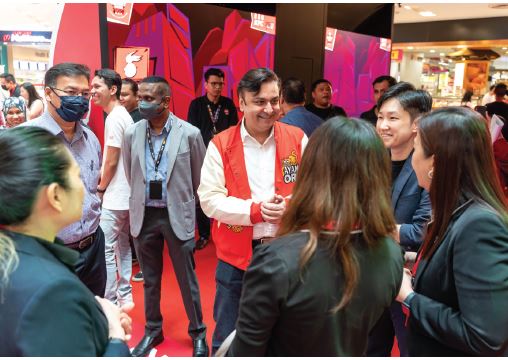
Nehchal Khanna at the launch of Kentucky Town at Sunway Pyramid in July.

The company introduced a new “flywheel” model a year ago, says Khanna, which sets the tone for the newfound culture and encapsulates the distinctive QSR approach to operations. This flywheel is underpinned by four core values: growing people as builders; daring to innovate boldly; never giving up; and putting customers first.

“One of the first priorities was to transform people and their attitudes,” Khanna says. “We knew we needed a set of principles and a culture to which everyone could subscribe. We wanted everyone to behave in a more entrepreneurial way by taking ownership.”

The transformation was imperative, says Khanna, as it would help the company scale and enhance its agility in tackling prevailing market challenges, such as hyperinflation, supply chain disruptions, rising interest rates and evolving consumer demands.

Catalyst for Change

Looking back at the events over the past few years, Khanna notes that the pandemic has played a pivotal role in reshaping the company’s perspectives, fostering better adaptability.

“In some ways, the pandemic has served as a springboard and a catalyst for change for QSR Brands,” he says.

The nationwide lockdowns in Malaysia and the rest of Southeast Asia had an impact on the company’s business, which derived on average 40% of its revenue from dine-in services. “We made a bold decision to pivot very early on, turning to e-commerce and digital channels,” says Khanna.

The decision paid off as QSR Brands successfully concluded the year 2020 with revenue that was “closely comparable” to that of 2019 despite the widespread challenges faced by numerous businesses. 

Khanna also emphasized that none of these changes could have taken off without the strong backing of the board, especially the Chairman, Tan Sri Jamaludin Ibrahim, and the shareholders. “I am really grateful that the board and shareholders gave me the support and confidence to carry these initiatives through. That made all the difference,” he says.

Nehchal Khanna, CEO and Managing Director of QSR Brands Holdings Bhd.

Growth Momentum

Today, QSR Brands has over 1,400 KFC and Pizza Hut restaurants across Malaysia, Singapore, Brunei and Cambodia, and employs over 30,000 people across these markets.

QSR Brands has seen positive growth momentum since the start of 2023, says Khanna, adding that the company has achieved double-digit growth in the first half of the year.

He attributes this success to three key drivers, namely, the company’s people and culture, its new business model and technology.

People at its Core

One of the key initiatives QSR Brands undertook was to further empower its employees, as the company believes that its future success depends on the “scalability of cultural change across the organization.”

Khanna says, “The leadership team is entirely empowered; they have a great deal of autonomy and they are able to pass that down through the ranks.”

The company also emphasizes continuous employee support, exemplified during the pandemic when it chose not to retrench any of its 30,000 employees, in contrast to industry trends.

The company has also set up a special talent development initiative—GROW— grooming around 100 high-potential individuals as next-generation leaders through an in-house MBA-like initiative.

Customers enjoyed Pizza Hut’s newest product range, Melts, at the Genshin Impact fan event.
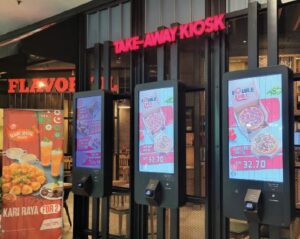
Take-away kiosks were installed at Pizza Hut to minimize contact post-pandemic

Continuous Innovation

As part of the efforts to refine its business model, Khanna has dedicated substantial time to crafting proprietary frameworks. Notably, the transaction velocity strategy, comprising eight levers, emerged as a standout framework. Khanna says, “Sales growth is really about transaction growth, serving as a direct sales indicator.”

Another lever is menu innovation, an area where QSR Brands excels. New menu items such as the Juicy Whole Chicken, Satay Burger and Melts have not only enticed new customers but also increased repeat visits.

To further enhance the customer’s digital experience, the company launched a new KFC Malaysia mobile app last year, offering e-commerce, gamification, loyalty programs and digital vouchers. Within 11 months post-launch, the app has garnered an impressive 1 million subscribers.

Customers at KFC’s self-ordering kiosks

Looking Ahead

Recognizing that QSR Brands plays an important role in the area of food sustainability, Khanna says the company takes Environmental, Social and Governance (ESG) matters seriously.

“Having a strong governance in place is crucial as it will be the key pillar that supports the group’s environmental and social initiatives,” he says. “We have a new head of governance, and he is taking the lead so that everyone is putting the firm first when making any decisions.”

Looking ahead, QSR Brands aspires to improve its ranking among restaurant operators worldwide, aiming to secure a spot in the top five within the next three to five years. This objective aligns seamlessly with its overarching vision of becoming the foremost food-technology company in ASEAN.


qsrbrands.com