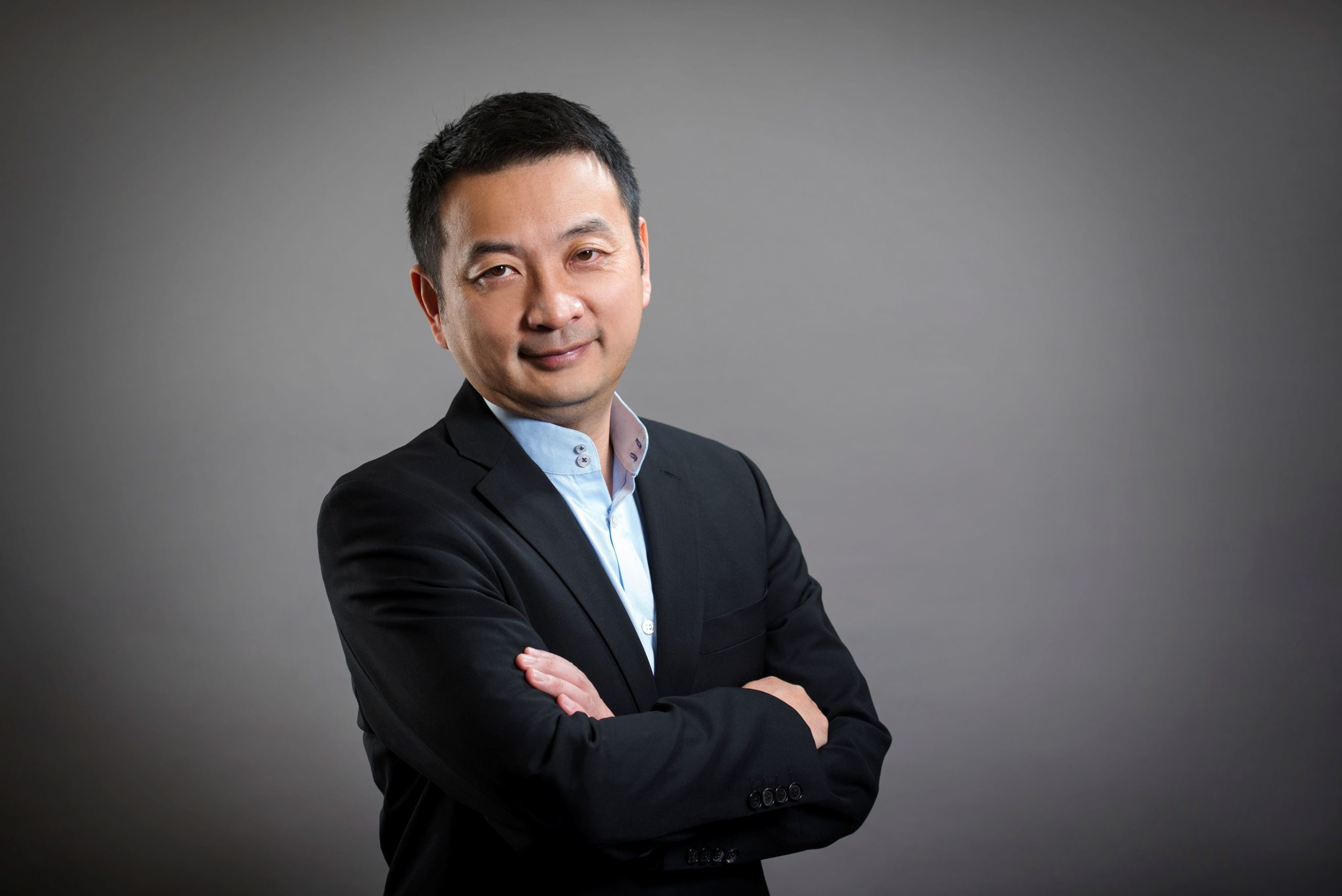
When AI Masters Work, Can Humans Master Meaning?

James Liang, Cofounder and Executive Chairman of Trip.com Group

In a world where artificial intelligence (AI) promises to reshape nearly every aspect of human life, one question looms larger than any technological milestone: What will give our lives meaning when machines do almost everything we do?

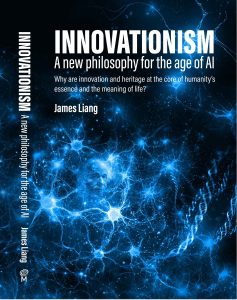
For James Liang, the answer lies not in resisting change but in reimagining humanity’s fundamental purpose. In Innovationism: A New Philosophy for the Age of AI, released earlier this year, he argues that creating new knowledge and ideas must become humanity’s central goal.

The Innovation Imperative

“Life needs a purpose,” Liang says plainly. “And innovation is the answer.”

It is a deceptively simple statement from a man whose career bridges Silicon Valley entrepreneurship and rigorous academic research. Beneath that simplicity lies a comprehensive philosophy that challenges conventional thinking about work, population and what living a fulfilling life means in an era of rapid technological change.

“Many experts, Elon Musk among them, believe a significant number of jobs will disappear within 10 years. And almost all jobs could eventually vanish,” Liang notes. “What does humanity do then?”

Such a question would have seemed absurd just a generation ago. Throughout most of human history, survival itself provided sufficient purpose. But as AI and robotics advance, the elimination of traditional work is no longer a distant scenario but a looming reality demanding a reconsideration of the foundations of human value.
Innovation as Compass

Liang’s response, detailed in Innovationism, is as philosophical as it is practical. He argues that innovation—the creation of new ideas, products, experiences and knowledge—should become the central organizing principle of both individual lives and society.

“Historically, R&D or creative work involved less than 1% of the workforce,” Liang explains. “But this has changed rapidly in recent years. Innovation is the source of wealth today. The wealthiest companies, nations and individuals derive their advantage from innovation.”

Liang’s observations, backed by years of research and publications in journals such as Nature and the Journal of Political Economy, underscore that innovation’s importance goes beyond economics—it shapes how we find meaning in work and technological progress. That search for meaning is reflected in the way individuals organize their lives over time.

Lifestyle Shifts in the Age of AI

Liang notes that many young adults start by chasing life’s simple pleasures—travel, new experiences and meaningful moments. “If you look at young people today, their lifestyle changes follow a clear pattern,” he notes. “At the most basic level, people seek experiences. When they imagine a good life, they picture one filled with rich, diverse experiences.”

That mindset helps explain the global travel boom, an industry Liang knows intimately through his leadership at Trip.com Group.

Yet a life organized primarily around consumption, even of experiences, has its limits. “After you’ve experienced many things, you may enter a creative phase, where you want to build something of your own—a business, art or an activity—and share that experience with others,” he says.

At this juncture, something interesting happens. Creation starts pulling focus away from self-expression and toward shared impact, raising a larger question of purpose. For some, that impulse deepens into a drive to contribute something greater—work that expands human knowledge, capability and potential.

This is where the core challenge of Innovationism emerges. In a world where making things is no longer the hard part, innovation isn’t just about novelty; it’s about judgment—choosing what’s worth making based on what genuinely enhances human happiness and fulfillment.

And according to Liang, only humans can make that call.

Population as Strategy

If innovation is humanity’s central purpose, population is its foundation. This connection anchors Liang’s demographic research and activism.

Liang sees innovation not as a sudden, mysterious spark but as a function of scale, skill and connections. A nation’s capacity to innovate depends on three factors: how many people it has, how capable they are and how freely knowledge flows within and across its borders—a process in which institutions and networks play a crucial role, keeping ideas moving both at home and internationally and shaping how effectively a nation can innovate.

The logic is unforgiving: weaken any one factor, and innovation falters. A large population without education or openness produces little progress. Small nations can thrive if they invest in capability and foster exchange. Population, in this context, becomes a strategic resource—the foundation on which talent, collaboration and connectivity build breakthrough ideas.

“At the national level, innovation determines competitive advantage,” Liang adds. “The rivalry between the U.S. and China ultimately comes down to innovation capacity, and a key driver of that capacity is population—the size of the talent pool able to contribute to innovation.”

Recent data paints a worrying picture. Official Chinese government statistics show only 7.9 million births last year, half the number from eight years ago and well below historical peaks. China is hardly an outlier. Fertility rates are plummeting across most developed nations.

“We’re in a demographic collapse and it isn’t accidental,” Liang states bluntly. “Before AI, fertility was already declining as societies urbanized and individuals—especially women—gained greater control over education, careers and reproductive choices. AI is simply speeding up that process.”

Cheap Dopamine and Delayed Careers

This acceleration is already visible in the early stages of working life. Entry-level jobs are disappearing as machines absorb the routine tasks that once allowed young workers to earn while learning.

As the skills threshold for stable employment rises, training periods consequently lengthen and the burden of becoming job-ready shifts from firms to individuals. The result is more years spent studying, credentialing and preparing—precisely during prime childbearing years. In this sense, AI raises the cost and extends the period of building a career.

Technology compounds the challenge in other ways. Digital pastimes deliver what Liang calls “cheap dopamine,” through addictive short-form videos and virtual relationships, which often compete with real social interaction and family life. At the same time, the cost of raising children has risen sharply. “Education takes longer, competition is more intense and parents bear increasing costs and pressure,” he adds.

These forces shape population trends, but numbers alone do not determine a society’s innovative capacity. How societal structures and incentives support—or fail to support—those capable of innovating ultimately determines whether potential translates into progress.

The Limits of Supply and Demand

The problem, Liang is careful to clarify, is not one of resources—it’s one of coordination.

“This is not a scarcity problem. It’s an alignment issue. Misalignment across time, generations and geography,” he explains. “Markets alone cannot correct this. Governments must intervene.”

The problem is simple: parents pay the costs now while society reaps the benefits later. Individual decisions to postpone or forgo children can make perfect sense in isolation but produce collective outcomes that threaten society’s future.

“What is misaligned,” Liang argues, “is not desire but values; we celebrate the benefits of future generations while asking individual families to absorb the costs alone.”

Policy Experiments

This insight has driven Liang from analysis into action. He recently launched the HK$500 million (US$64 million) Genovation Foundation to address low fertility through research and advocacy. At Trip.com Group, Liang has implemented pioneering policies including baby bonuses, flexible work-from-home arrangements, additional holidays and assisted reproduction benefits.

And while many leaders are calling employees back to the office, Liang doubled down on remote work. He ran randomized experiments within his company, tracking productivity and outcomes, and found that working from home didn’t just maintain performance. In some cases, it improved it.

“Not every measure will suit every company, but flexibility, especially remote work, is something many can adopt,” he explains, underscoring a commitment to policies that support both work and family life.

Beyond the role of governments and corporations, Liang insists that individuals must also take a long-term view of their own lives and decisions, especially when it comes to family. “The costs of having children are immediate and obvious while the benefits are long-term and easily dismissed, especially if you grew up as an only child,” he acknowledges. But as life expectancy rises, the enduring significance of family comes into sharper focus. “Children create extended circles of connection, shared memories and purpose that can linger across decades,” he says.
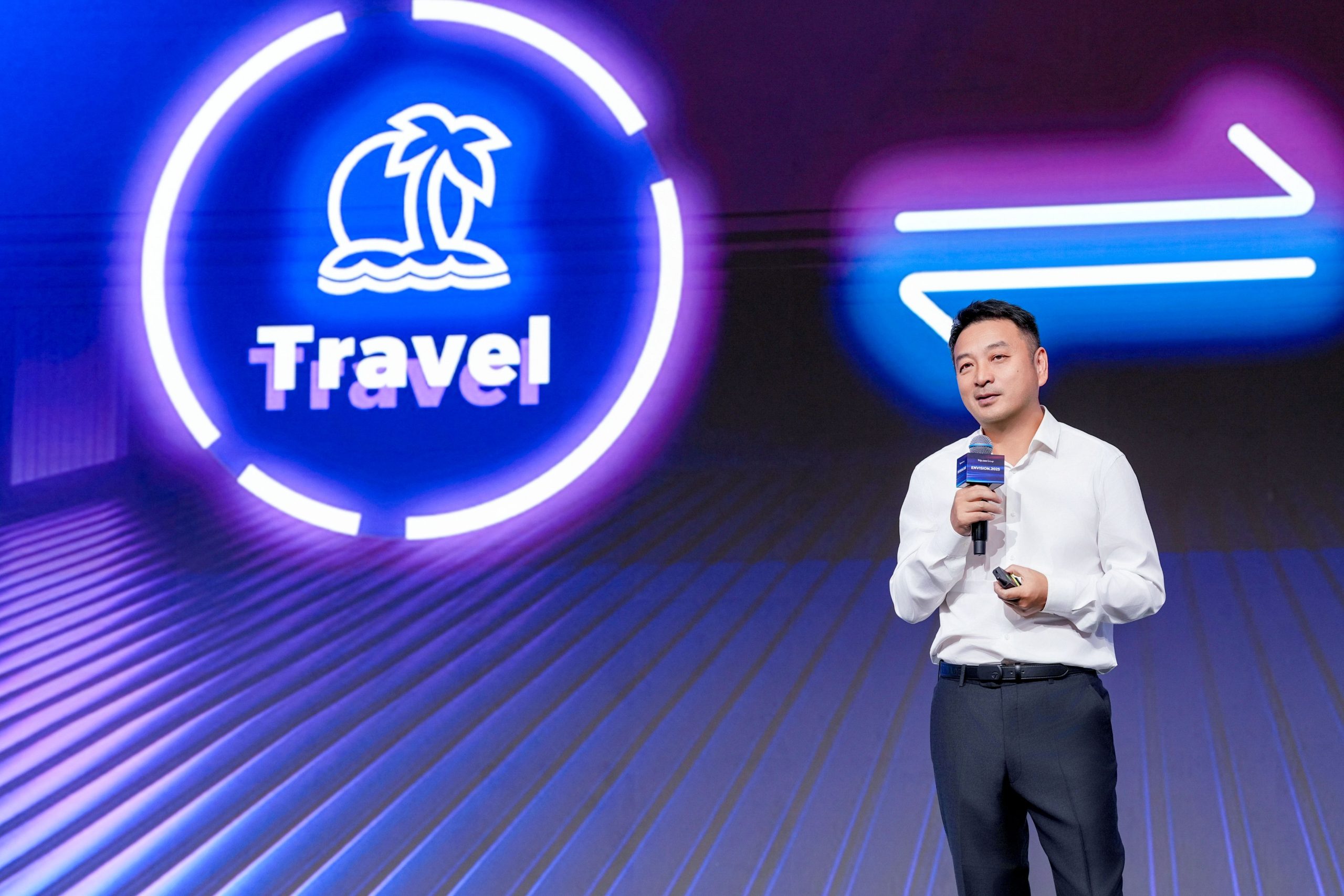
Innovation as Life’s New Frontier

For Liang, innovation is more than a driver of progress—it is a guiding purpose for human life, giving meaning to work, creation and personal contribution in ways previously unimaginable. Throughout most of human history, the world changed slowly enough that one generation’s experience mirrored the last.

“Before the Industrial Revolution, philosophers didn’t see meaningful change within their lifetimes. Innovation simply wasn’t part of philosophy or considered a life purpose. The term ‘innovationism’ would have been meaningless,” he explains.

That has changed dramatically. The number of PhD students in China has been skyrocketing, now standing at roughly twice that of the U.S., Liang says, and the number is still growing. “About 2% to 3% of the cohort population in China will be PhD students in the near future,” Liang adds.

That figure covers only PhDs. When master’s graduates and other research roles are included, a remarkably large portion of the workforce is already involved in innovation.

The Human Hand in an AI World

Underlying Liang’s philosophy is a more fundamental concern: who will control the future—humans or AI? The answer determines not just our economic trajectory but whether humanity retains agency over its own destiny.

“Geoffrey Hinton recently said humans may be destined to lose control to AI, and that the best we can hope for is that AI treats us like children,” Liang points out. “It’s a chilling idea. We can’t know if AI will be a benevolent parent or not.”

Rather than accept this fate, Liang proposes a different path: “We need more humans capable of understanding and steering innovation.”

Innovation cannot be reduced to computation alone. Questions of what is worth building—what is good, beautiful, ethical or ultimately fulfilling—require human judgment, not algorithmic optimization.

A Compass for Uncertain Times

Liang’s Innovationism arrives at a critical crossroads. As AI capabilities accelerate and demographic trends threaten long-term growth, Liang offers a framework linking individual meaning with civilizational survival.

The stakes go far beyond markets or GDP. Innovation shapes the way we live, the choices we make and the future we leave behind. In an age when work can no longer provide the purpose it once did, his message is simple and direct: innovation is not simply an economic imperative. It’s a source of meaning for individuals and for humanity.

The challenge for leaders, he argues, is connecting the dots and seeing the full picture. AI strategy, talent development, work models and demographic trends are too often viewed and addressed in silos. “The companies and nations that will thrive are those that develop integrated strategies that nurture a larger, more capable population within innovation-friendly ecosystems,” Liang says.

Seeing the full picture is merely the first step; acting on it is far harder, because the investments required now yield rewards only in the distant future. But surrendering purpose and control to machines isn’t an alternative—it’s no future at all.

For leaders navigating uncertainty, for individuals questioning their purpose and for societies confronting demographic decline, Innovationism provides both a diagnosis and a prescription even as it challenges readers to reframe their understanding of progress. Whether Liang’s philosophy becomes a guiding framework for the AI age remains to be seen. But the questions he raises about meaning, population and human purpose are ones we can no longer afford to ignore.
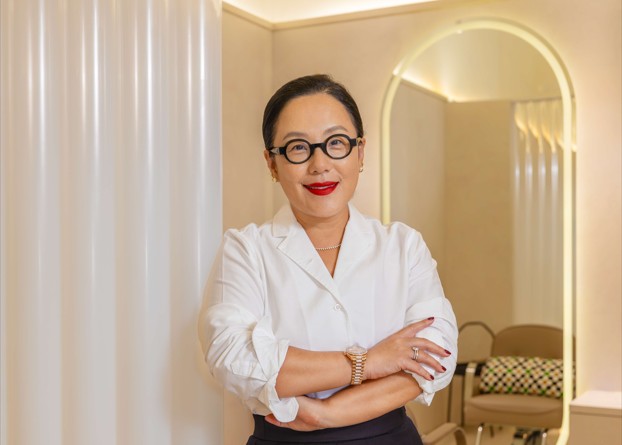



Makeup Artist Jung Saem-mool On Why Her Big Singapore Move Makes Sense

Jung Saem-mool

Song Hye-kyo, BoA and Tang Wei—these are just some of the Asian entertainment bigwigs that celebrity makeup artist Jung Saem-mool has worked with.

But she is more than makeup royalty for celebrities—Jung has more than 30 years of experience in the global beauty industry, bringing K-Beauty from Korea to the world.

Besides pioneering makeup trends, Jung also runs her own beauty salon, a makeup academy and a cosmetic line under the JUNGSAEMMOOL brand.

Her Choice of the Brand’s First Flagship Store? Singapore

There are clear business considerations for expanding her brand to Singapore—these include the city-state’s established position as a business hub in Asia, its diversity and its strong talent pool. However, Jung’s decision is also influenced by a longstanding relationship with Singapore.

“My connection with Singapore began over a decade ago. Initially, I thought of Singapore simply as a clean and warm city. Now, having spent more time here, I’ve gained a much deeper appreciation for it,” Jung says.

Drawing parallels between Singapore and the JUNGSAEMMOOL brand, she says: “Much like our brand philosophy to embrace each person’s unique beauty, Singapore’s harmonious multicultural society embraces individuality and diversity.”

“It’s exciting to witness the growing influence of Korean culture in Singapore,” Jung says. “The popularity of K-pop, K-dramas and Korean beauty trends here has created a receptive environment for our brand. This cultural openness, combined with Singapore’s position as a global hub, has allowed us to gain international reach and further develop our products.”

The professionalism and dedication of Singapore’s talent pool also stood out to Jung, who was consistently impressed by their genuine passion for creativity and ability to embrace new techniques. When combined with the efficiency synonymous with Singapore’s brand, the choice became clear.

Moving to Singapore on the ONE Pass Work Visa

Jung first relocated to Singapore in 2022 to establish the JUNGSAEMMOOL brand. In 2024, she obtained a ONE Pass work visa.

With the ONE Pass, individuals and families can relocate to the country with ease. The longer validity of five years brings added security, and ONE Pass holders can also apply for dependent passes, making it easier for households to initiate a move. ONE Pass holders also enjoy greater flexibility to start, operate and work for multiple companies within the country.

Jung described the journey of setting up her business here as “very straightforward and smooth”— setting up a business required only 1.5 days and the process was entirely digital.

“Singapore’s efficient approach to such processes made it much easier for me to focus on settling in and building both my family life and business here,” Jung says.

Her spouse and CEO of JUNGSAEMOOL Yoo Min Suk, and their two children have also settled in well. Jung praised the holistic education system, where her kids can engage in various extracurricular activities.

The seamless way in which the industry leader has embraced her adopted home also means Jung wanted to do more for the local community.

“Seeing Singapore as my second home has also inspired me to continue the charitable work I began in Korea. In 2022, I donated to HUG Community Services, and I am currently working with HCSA Community Services to support initiatives for single parents in Singapore. Giving back to the community has always been a priority to me, and I hope to make a positive impact through these efforts,” Jung says.

Global Plans, Local Inspiration

Jung’s outlook remains future-focused, and the latest step in establishing the brand’s flagship store is a leap toward a brighter, more fulfilling time to come.

“Singapore’s strategic position within Asia and diverse talent pool familiar with regional markets make it the ideal launch point for expanding our brand across the region. With its well-developed infrastructure and business friendly environment, Singapore serves as an ideal hub for businesses,” says Jung.

Mentorship remains a cornerstone of Jung’s work. “One of the most fulfilling aspects of my work is nurturing the next generation of artists,” Jung says. Her commitment to nurturing local talent and mentoring the next generation of artists while embracing the unique cultural landscape of Singapore aligns with her passion for fostering creativity and collaboration.

As Jung continues to inspire and innovate, Singapore stands as the ideal foundation for what promises to be an exciting and transformative journey ahead.


https://www.edb.gov.sg/

Trip.com Group’s Growth Momentum In Asia: Powered By Innovation, Partnerships And Trust

As Asia’s travel industry roars back to life, Trip.com Group is doing more than simply riding the recovery wave—it’s reshaping the region’s travel landscape. Under the strategic leadership of CEO Jane Sun, the company has leveraged innovation, technology and partnerships to not only surpass pre-pandemic performance but also redefine how travelers in Asia plan, book and experience their journeys.

Reclaiming Asia’s Travel Boom

The post-pandemic resurgence of travel in Asia-Pacific (APAC) has been swift and uneven, but the group has navigated that complexity with precision.

In the third quarter of 2025, the group reported net revenue of 18.3 billion yuan (US$2.6 billion), representing a 16% year-on-year increase. The group’s international online travel agency (OTA) platform, Trip.com, saw overall reservations jump by around 60% year-on-year during the quarter ended September 30.

“The resurgence of global travel signals a profound shift toward connection and discovery,” says Sun, who was named among Forbes Asia’s Power Businesswomen 2025. “At Trip.com, we are harnessing this momentum to expand access, enhance local experiences and deliver seamless, technology-driven journeys—strengthening our role as a trusted global platform connecting people, cultures and markets.”

As consumer preferences evolve, Trip.com’s regional strategy focuses on innovation, collaboration and trust—three pillars that continue to drive its growth.

Across APAC, Trip.com is turning the region’s strong rebound in travel into sustainable, inclusive progress. By localizing offerings, curating distinctive experiences and strengthening cross-border connectivity, Trip.com is deepening its relevance with travelers while empowering local partners. With Singapore as a strategic hub, Trip.com continues to broaden collaborations with airlines, tourism boards and hospitality stakeholders to capture Asia’s growing appetite for premium, experience-led journeys. This integrated approach—anchored in innovation, trust and shared prosperity—ensures that the region’s travel revival delivers lasting value for travelers, communities, destinations and partners alike.

Jane Sun, CEO of Trip.com Group

Innovation as a Growth Engine

Innovation is not just a buzzword for Trip.com, whose international headquarters is in Singapore; it is central to its growth story.

“We have been investing in technology and innovation to enhance user experience while promoting our partners’ offerings to their targeted consumers, including high-spending tourists and eco-conscious travelers,” Sun explains.

One of the company’s standout initiatives is Trip.Planner, launched in August 2025. The platform functions as an AI-powered, one-stop travel concierge that integrates flights, trains, hotels, restaurants and attractions into a single, dynamic itinerary with real-time updates. By streamlining the travel planning process, it delivers a frictionless experience for users and creates new opportunities for partners.

Another key tool is TripGenie, the group’s AI travel assistant which continues to see rising engagement across markets. TripGenie provides personalized recommendations, tailored itineraries and instant responses to traveler queries.

“Our AI capabilities extend across the entire customer journey—from trip planning to post-travel support,” says Sun. “By leveraging technology, we can provide relevant suggestions, generate actionable itineraries and deliver smarter, faster responses that enhance every part of the traveler experience.”

The group’s commitment to innovation also extends to its ecosystem of partners. In May 2025, at the Envision Global Partner Conference in Shanghai, it launched a US$100 million Tourism Innovation Fund. The fund supports destinations, organizations and entrepreneurs seeking to reimagine the travel experience— accelerating digital transformation across the tourism value chain.

“Through innovation and investment in technology, we will continue to unlock new value for our partners and empower our users with seamless, personalized experiences,” Sun adds.

As technology advances, Sun says, Trip.com is just as focused on people as it is on innovation. The company is continually upskilling its teams to collaborate with new technologies while holding onto the qualities which machines can’t replicate—empathy, creativity and cultural understanding. “We view technology as a powerful enabler—one that complements and augments human capabilities, rather than replacing them. That balance—tech-enabled, human-centered—is what allows us to innovate at scale without losing the soul of travel,” she adds.

Highlighting Trip.com’s strong investment in human capital—including a 400% increase in its Southeast Asia workforce over the past five years—Sun says the company remains focused on building local expertise. “We’re consistently identifying and recruiting top talent from both the public and private sectors across key markets such as Singapore,” she adds. “We will continue to bring on board talent that understands our customers and can create new value for them and our partners.”

Harnessing Partnerships to Strengthen Regional Presence

As Trip.com deepens its roots across Asia, partnerships have become a cornerstone of its regional expansion.

In October 2025, Trip.com was among the travel companies participating in Singapore Airlines’ “Time to Fly” Travel Fair—a three-day event that brought together travel agents and banks to offer exclusive travel deals and promotions. The collaboration underscored Trip.com’s commitment to deepening its relationships with leading industry partners, while enhancing its visibility among Asia’s growing base of affluent, experience-driven travelers.

In recent years, Trip.com has pursued collaborations across Asia with tourism boards and leading lifestyle, entertainment and hospitality partners, among others. One such key collaboration is with Jewel Changi Airport, aimed at promoting travel to Singapore and reinforcing its status as a global gateway for premium experiences. A recent partnership with Live Nation Asia further extends this vision, integrating live entertainment with travel and offering fans across major Asian markets seamless access to concerts, flights, hotels and curated local itineraries on the Trip.com platform—strengthening its position as the go-to one-stop shop for integrated, enriching journeys.

Trip.com has also forged collaborations with leading players in the banking and financial industry. One key partner is DBS, which is the presenting card partner for Trip.com Singapore’s signature double-double mega campaigns such as the 11.11 campaign. Citibank, DBS, HSBC and Standard Chartered have also partnered Trip.com at offline events, including the Singapore Airlines “Time to Fly” Travel Fair 2025 and NATAS Travel Fair, among others.

These alliances reflect the company’s “glocal” focus—global reach, local relevance. By leveraging insights from local partners, Trip.com can curate authentic experiences that resonate with travelers while supporting domestic tourism economies.

Success Built on Trust

In an industry defined by experiences, trust is currency.

Sun’s leadership philosophy is simple but powerful: “Customers first. Partners second. Trip.com third.”

That approach has translated into concrete actions. Trip.com has expanded its multilingual 24/7 customer support, grown its regional partner network and enhanced payment flexibility through collaborations with leading fintech firms across Asia, among others.

“Understanding cultural norms and customer preferences is critical, particularly in Asia,” Sun notes. “Every market is different—from payment methods and service expectations to communication styles. By staying close to our customers and delivering on our promises, we build lasting relationships that go beyond transactions.”

Pointing to the company’s customer service model—where automation now handles more than 80% of inquiries to deliver fast, round-the-clock support, Sun notes that when urgency strikes, human agents step in, typically responding within 20 seconds. “That level of responsiveness helps build trust in critical moments,” she adds.

Beyond service excellence, Trip.com recognizes that lasting trust is built through its people and shared values. The company continues to nurture a workplace culture rooted in empathy, flexibility and belonging—empowering employees to deliver their best for travelers and partners. Family-friendly initiatives such as hybrid work arrangements and enhanced childcare leave reflect a deep belief that professional success and personal well-being go hand in hand. Collectively, these efforts strengthen the culture of trust that connects teams, partners and millions of travelers around the world.

Outlook Ahead

Looking ahead, the company is positioning itself not just as an online travel agency but as a comprehensive travel ecosystem connecting travelers, partners and destinations globally.

“Asia remains one of the most diverse and opportunity-rich travel regions in the world,” says Sun. “We see enormous potential in providing more personalized, sustainable and technology-driven travel experiences to meet evolving customer needs.”

Yet, Sun remains pragmatic about the challenges ahead. “The pace of recovery varies widely across markets,” she says. “Regulatory changes, visa policies, safety perceptions and macroeconomic factors such as currency fluctuations and inflation are all challenges that we must navigate.”

As Asia’s travel sector enters a new era defined by data, personalization and sustainability, Trip.com is uniquely positioned to lead the transformation. Its continued investment in AI, partnerships and trust-driven relationships reflects a long-term strategy that goes beyond short-term market cycles.

For Sun, who has led the company through one of the most turbulent periods in modern travel history, the mission remains clear. “The future of travel is about talent, technology and trust,” she says. “Our goal is to make travel more accessible, seamless and meaningful for everyone.”

With its combination of innovation, strategic vision and deep regional understanding, Trip.com isn’t just facilitating Asia’s travel comeback—it’s shaping what the next generation of travel in the region will look like.

Leading Travel Forward: Innovation, Impact And Vision

Jane Sun, CEO of Trip.com Group

For over two decades, Jane Sun has been building a global travel powerhouse and a force for change.

Under her stewardship, Trip.com Group has become a global travel leader listed on both Nasdaq and HKEX. Yet beyond the numbers, Sun is driven by a larger purpose: to pursue the perfect trip for everyone and for a better world.

Scaling a Global Vision

Sun came on board as CFO in 2005, at a time when Trip.com Group was still finding its footing on Wall Street, valued between US$500 million to US$1 billion. “We were quite small then,” she recalls. “Few investors fully understood our potential, so I told the board we needed to prove ourselves—by building a strong reputation and becoming a respected global player.”

Sun pursued that vision with tireless dedication, packing her schedule with back-to back meetings and relentless travel. Hopping from a quarterly earnings call at the airport straight onto a cross continental flight to meet with investors was a normal day. She had no time for jet lag, often taking only a quick shower on arrival before a full day of meetings—and by evening, heading straight back to the airport to do it all again at her next destination.

That hard work paid off. Within a couple of years, Trip.com Group was high on the radar of most investors. Today, the company is worth around US$50 billion, with more than 40,000 employees worldwide. Its platforms connect travelers with more than 1.5 million hotels and over 600 airlines, serving customers worldwide in more than 30 languages.

Yet those numbers tell only part of the story. Sun is driven to create meaningful impact—across business, communities and society. From pioneering innovative programs to supporting education and community initiatives, she seeks to open doors for others and drive lasting change. And, as one of the few women at the helm of a technology company, she has championed inclusive leadership and policies that empower people to realize their potential. 

Two decades on, Sun’s journey inspires leaders everywhere—and she’s just getting started.

Bridging Cultures, Driving Innovation

At the age of 19, Sun moved to the U.S. for undergraduate studies at the University of Florida, where she also began her career. Early international experiences shaped her global perspective—an outlook that would later guide her in building and leading an international business.

“My background allows me to bridge diverse cultures with a scientific management style,” Sun says. “It has given our team the tools to thrive in a global environment.”

Drawing on this perspective, Sun has shaped a management approach that combines rigor with passion. Under her leadership, Trip.com Group adopted Six Sigma and other data-driven management methodologies early, continuously invested in technology and fostered a culture where employees are encouraged to challenge ideas and innovate. Programs like “Baby Tiger” empower young employees to pitch entrepreneurial ideas, with funding to bring the best initiatives to life.

This combination has helped the company remain at the cutting edge of innovation and retain talent throughout major transitions— from offline to online, desktop to mobile, and now, with the advent of AI, from booking to discovery.

For Sun, innovation is not simply about keeping up with the latest technologies, it’s about delivering better experiences for customers. That approach has underpinned Trip.com Group’s investments from day one.

“When I joined the company, we were pioneering a centralized call center model while others were still opening retail stores on major streets,” Sun recalls. As booking online became the norm, Trip.com Group quickly became the trusted companion for millions of travelers, its ease of use complemented by industry-leading customer support. A few years later, the company was at the forefront of making the travel experience more accessible and intuitive, pioneering a “mobile-first” approach that put planning, booking and managing trips seamlessly into travelers’ hands.

Today, Sun is yet again pioneering a next generation travel experience, harnessing AI across the entire journey to inspire, excite and open new possibilities. Groundbreaking features like TripGenie, Trip.Best and the all-new Trip.Planner are transforming the way people explore the world—guiding travelers to create their perfect trip whether they already know where to go or need help discovering it. Trip.com Group is more than a booking platform—it’s redefining travel as a personalized journey of discovery.

Service as Strategy

While Sun has taken Trip.com Group to new heights, she has also steered the company through challenging times. From emergencies like natural disasters to economic instability and even the Covid-19 pandemic, her leadership has steadily guided the company, its customers and partners, anchored by a clear set of principles.

No matter the challenge, Sun relies on a simple formula: “Our philosophy is always to put the customer first, partners second and the company third,” she says.

No matter how well prepared, there are moments when external forces test even the best-laid plans. “There are two things beyond our control: God and government,” Sun recognizes, citing the pandemic as an example. “It was very challenging because, to prevent the spread of the disease, people had to be isolated, but the travel business is about bringing people together.”

It was in such moments, when circumstances were beyond their control, that these principles were critical. During the pandemic, borders closed, and millions of travelers demanded refunds. Many had prepaid for bookings, but Trip.com Group had already paid its partners, including airlines and hotels, as is standard in the industry. Guided by that commitment, and despite the overwhelming uncertainty, the company advanced billions, without hesitation, to ensure customers were refunded.

“It was a nerve-wracking time. One wrong move could have seriously impacted the company,” Sun says. “But we stood by our values. In moments like these, putting the customer first isn’t just a slogan—it’s what defines us.”

For its partners, Trip.com Group set up a partnership fund to alleviate cash flow challenges. It also pioneered innovative business models, like in-destination livestream commerce, to keep travelers engaged and generate income for partners. Those efforts have paid off, earning the company industry-leading customer satisfaction and a constantly expanding network of trusted partners worldwide.

Internal solidarity was just as important to weathering the storm. Sun and the Group’s Chairman, James Liang, immediately decided to forgo their salaries during the pandemic, while other members of the management team volunteered to take a 50% pay cut. At the same time, front-line employees demonstrated remarkable dedication, working tirelessly to support customers and partners. This collective commitment helped the company emerge stronger from its biggest challenge yet, while retaining top talent.

“After the pandemic, we were able to retain and attract the best talent in the industry and move the industry forward,” Sun says. “These achievements would not have been possible without the trust and confidence of our customers, partners and team—and I’m proud of what we accomplished together.”

Beyond Transactions: Building Connections

That commitment to customers and partners endures today. Trip.com Group upholds industry-leading service standards that build trust and long-term brand loyalty. Calls to its service center are answered within 30 seconds, and resolutions are typically provided within two minutes.

When the unexpected happens—whether it’s a missed flight or natural disaster—the company goes above and beyond to take care of its customers.

Sun recalls one incident where a customer arrived at a hotel only to find it had oversold its rooms. “We immediately booked him into a five-star property next door at no additional cost and processed a refund from the original four-star property right away,” she says. “The entire issue was resolved in one short conversation with our agent—that’s the kind of service that wins hearts.”

That trust and loyalty are clearly reflected in the way customers respond. When it offered a once-in-a-lifetime 80-day tour around the world, taking travelers from the rolling hills of eastern Ireland to the pyramids of Egypt and the splendor of the Taj Mahal in India, Trip.com Group famously sold out the package—priced at US$200,000 per person—in just 17 seconds.

“Customers trust our brand, our service and our products. That’s why we always strive to uphold the highest standards when serving them,” says Sun.

Leading for a Better World

Sun’s vision for Trip.com Group reaches far beyond the business itself, embracing its people and the wider communities it touches. The same values behind its growth guide its efforts to nurture talent, build a resilient ecosystem and give back to society, all in pursuit of a more inclusive and sustainable future.

She describes this mission through four “friendly” pillars: Community Friendly, Environmentally Friendly, Family Friendly and Stakeholder Friendly—a framework that guides how the company innovates, cares for its people and engages with the world.

Within Trip.com Group, Sun is focused on empowering employees to excel in both their professional and personal lives through pioneering family-friendly policies. Among those measures are a generous cash subsidy of around US$1,500 per year for new parents until their child turns five, three days of additional childcare leave for parents of children under 18 years old and a groundbreaking hybrid work policy.

These policies are designed to help all employees balance their professional ambitions with family life—with demonstrable returns for satisfaction and productivity. Sun takes this further with targeted measures to support women—who make up more than half of Trip.com Group’s staff, including one third of its senior leadership—and who face unique challenges in managing this balance.

“We are constantly thinking about how we can better support highly successful women in the workforce,” says Sun. She notes that many high-performing women complete their postgraduate degrees by age 27 or 28, often creating pressure to choose between building a career and starting a family. Support for egg-freezing is just one of many measures she’s introduced to alleviate those pressures. The results speak for themselves: last year, almost 100% of women returned to work after maternity leave.

Beyond the company, Sun recognizes that the resilience of the entire travel ecosystem is fundamental to long-term success—from partners and destinations to the communities that rely on tourism. Central to that ecosystem is the environment, which must be preserved so that people can continue to discover and enjoy all that the destinations of the world have to offer.

Under Sun, the company is spearheading efforts across the ecosystem and aims to achieve carbon neutrality across its own business by 2050. On its platforms, customers are empowered with access to and information about more sustainable options, making more conscious travel decisions easy and attractive.

Giving Back, Moving Forward

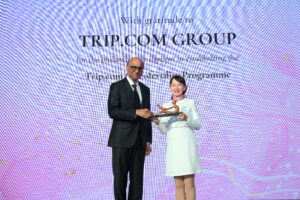
Jane Sun receiving a token of appreciation from Tharman Shanmugaratnam, President of the Republic of Singapore, at the KKH O&G Centenary Celebration Dinner 2024

Sun sees travel as a force for good—a way to connect people and uplift communities. But her commitment goes beyond enabling exploration; it includes initiatives designed to deliver meaningful, lasting impact where it’s needed most.

In partnership with KK Women’s and Children’s Hospital in Singapore, the Group launched the Trip.com Oncofertility Programme Fund—an initiative that supports fertility preservation for young women undergoing cancer treatment, offering them hope for starting families in the future. Sun explains, “We believe in supporting initiatives that create real and lasting impact in people’s lives. The challenges faced by women diagnosed with cancer are profound and, through the donation, we are committed to helping them preserve the opportunity to build a family.”

Trip.com Group has also partnered with various organizations to support programs that uplift children from low-income families. These initiatives include curated outings to attractions such as Christmas Wonderland during the festive season, Rainforest Wild Asia and the Singapore River Cruise, among others.

Employees also regularly volunteer with community programs, such as distributing care packs containing daily essentials to residents living in government-subsidized rental housing across Singapore.

Sun’s commitment to paying it forward was, to a large extent, shaped by her experiences as a student in the United States. During her time at the University of Florida, Law Professor Fletcher Baldwin and his wife, Dr. Nancy Baldwin, graciously offered her a place to stay and cared for her with exceptional kindness. Deeply moved by their generosity, Sun promised to one day repay them, vowing—in keeping with traditional Asian values of filial piety—to care for them in their old age. However, the Baldwins encouraged her instead to extend that goodwill by helping others in need. In 2016, Sun and her husband, John Wu, honored their legacy by donating US$3 million to the University of Florida’s Levin College of Law and Warrington College of Business.

“We firmly believe in the importance of paying it forward and supporting the less privileged members of the community. We want to do more to support women and children,” Sun says, “so that everyone can move forward together regardless of their background.”

Reimagining Travel, Inspiring the World

Jane Sun addressing more than 3,000 partners at Envision 2025 Global Partner Conference

Sun is at a pivotal moment in her journey. Having rebounded strongly from the pandemic, global travel and tourism is surging—with international arrivals and tourism receipts reaching record highs, and with no signs of slowing down. Under her leadership, Trip.com Group is at the forefront of this growth.

In the second quarter of 2025, Trip.com, the Group’s international OTA platform, reported an increase in overall reservations of over 60% year-on-year. This growth reflects both the resilience of established markets and the potential of untapped opportunities across new regions and segments. In key markets, the Group’s outbound booking numbers exceeded 120% of pre-pandemic numbers and inbound travel bookings were up by over 100% year-on-year.

Sun attributes this strong performance to Trip.com Group’s unwavering commitment to providing the best experience to its customers.

Looking ahead, Sun sees a horizon full of opportunity. As travelers seek more personalized experiences, and emerging destinations draw new interest, she is reimagining the entire travel experience, innovating to deliver seamless, engaging and tailored journeys, crafting the perfect trip for every customer.

“The next five to 10 years hold enormous potential for the global travel market,” says Sun. “With our strong brand and innovative services, we are proud to lead the way in shaping the future of travel.”

For Sun, the pursuit of the perfect trip is part of a broader vision—one where travel connects people, bridges cultures and inspires a better world.

She is deeply conscious of how she can use her own position to make a difference, both within Trip.com Group and beyond. “I’m one of the very few female CEOs in high-tech, and I feel passionate about paving the way for other women,” she says. “Imagine if half of our global leaders reflected the diversity of the population. Perhaps we could approach the world’s challenges with greater empathy and peace. We’ve made progress—but the potential is far from realized.”

Guided by this vision, Sun sees Trip.com Group not just shaping the next generation of travel, but contributing to a future where exploration, opportunity and discovery come together to create lasting, positive change.

“The perfect trip—for every traveler, every journey and a better world. That’s what we’re building.”

Singapore: Shaping The Next Decade And Beyond

As Singapore marks its diamond jubilee this year, the city-state stands at a pivotal juncture—reflecting on a remarkable nation-building journey while charting a course forward amid prevailing global uncertainty.

Singapore’s economy continued to grow in the second quarter of 2025, expanding 4.4% year-on-year despite persistent external challenges. This better-than-expected performance, following 4.1% growth in the previous quarter, was driven primarily by the wholesale trade, manufacturing, finance and insurance, and transportation and storage sectors.

Taking into account the positive performance of the first half of the year, the Ministry of Trade and Industry has upgraded Singapore’s GDP for the year to 1.5% to 2.5%.

Empowering a Future Workforce

As Singapore seeks to maintain its competitive edge, human capital remains its strategic advantage. With AI and advanced technology reshaping the workforce, the nation is investing heavily in job transformation and creation as part of its economic strategy, ensuring that its workforce is engaged in lifelong learning and upskilling. Businesses are encouraged to adopt a skills-first approach to hiring and development, with the ability to reskill, redeploy and redesign roles quickly.

Workforce Singapore (WSG) plays a leading role in helping employers plan and execute their job transformation strategy. Companies can tap into WSG’s job redesign initiatives and reskilling programs to redesign roles and processes, expand their talent pool and reskill their workers to enable more effective integration of both talent and technology. Initiatives such as the Career Conversion Programmes support firms in reskilling employees for evolving job scopes. Funding and advisory services further provide companies with a comprehensive pathway to workforce transformation. This structured approach ensures a future-ready workforce.

A Vibrant Tech Hub  

Singapore has established itself as a strong tech hub, attracting both startups and multinational corporations that are seeking to leverage the city-state’s thriving ecosystem of innovation and access to regional markets.

KDDI Asia Pacific (KDDI APAC), the regional arm of Japan’s KDDI Corporation, is one such multinational that has set up its headquarters in Singapore. One of Japan’s largest telecommunications companies, KDDI APAC delivers integrated cloud, cybersecurity and managed IT services.

The Singapore office plays a central role in KDDI’s ability to deliver its solutions at scale across the region. Singapore, serving as its technological and economic engine, presents KDDI APAC with a pivotal opportunity to be a cornerstone not only for the region but also for its entire global strategy, including Japan.

Recognized as a Global Financial Center

A global financial center, Singapore serves as a key node for Southeast Asia and beyond, supported by a robust regulatory framework that balances innovation with risk management. In 2024, the financial services sector accounted for about 14% of Singapore’s GDP. The sector grew by 6.8%, more than double the growth rate of the preceding year. Singapore’s assets under management surpassed S$6 trillion (US$4.675 trillion) in 2024, a significant milestone driven by strong performances in private equity, venture capital, hedge funds, real estate and real estate investment trusts.

Singapore has strengthened its position as a leading wealth management hub, recognized for its strong governance, pro-business policies and political stability. It continues to attract high net worth (HNW) individuals and families seeking a range of services—from investment management and succession planning to risk and insurance planning, family office setup and private banking.  

Standard Chartered Global Private Bank has seen growing demand in the region for holistic legacy planning. The bank works with ultra-high net worth individuals and families beyond formal planning sessions, offering ongoing support that extends outside traditional wealth and legacy discussions.

AIA Singapore is also helping wealthy families and individuals navigate complex legacy planning through its integrated ‘Wealthbeing by AIA’ proposition. In 2024, AIA Singapore launched AIA International Wealth (IW) and AIA Wealth Centre, two major initiatives under its broader ‘Wealthbeing by AIA’ proposition. These pillars are part of a bold, multi-million-dollar strategy to redefine legacy planning for Asia’s affluent families and elevate AIA’s standing as the region’s insurer of choice.

Meanwhile, Royal Bank of Canada (RBC), which has operated out of Singapore for 50 years, is building deeper capabilities to help clients in Asia navigate an increasingly complex global landscape. The bank’s Asia platform is anchored by two core businesses: capital markets and wealth management. The bank’s decision to base these operations in Singapore reflects the country’s strong regulatory environment, skilled workforce and connectivity to the rest of the region. RBC is working to deliver cohesive solutions, particularly for HNW clients whose needs span jurisdictions and asset classes.

Demand in Premium Real Estate

Singapore’s real estate market continues to attract strong demand from HNW buyers, driving a steady pipeline of luxury and ultra-luxury developments. These investors seek homes with prestigious addresses, spacious layouts and premium designer finishes—whether for investment or as trophy residences.

UOL Group Limited’s (UOL) UPPERHOUSE at Orchard Boulevard achieved a 54% take-up rate on launch day. The 99-year leasehold development, a joint venture with Singapore Land Group, offers 301 one- to four-bedroom units in Singapore’s prime District 10. 

UPPERHOUSE at Orchard Boulevard reflects UOL’s broader strategy to invest in and elevate the Orchard Road precinct. The company has a long-established presence in the area, and recent developments signal its commitment to enhancing the area’s appeal as both a lifestyle and residential destination.

Extending the luxury experience into the hospitality sector is Raffles Sentosa Singapore, the city-state’s first all-villa resort, developed and owned by Royal Group. Located just 10 minutes from the central business district, the resort features 62 private villas—each with its own pool and dedicated Raffles butler—offering a new benchmark in exclusivity and service.

Beyond SG60

As Singapore charts its path forward, it must navigate an increasingly complex and competitive global landscape. To remain resilient and relevant, a renewed economic roadmap is essential.

Through the Economic Strategy Review, the government is re-examining national priorities across five critical areas: competitiveness, technology, entrepreneurship, human capital and economic restructuring. The new roadmap aims to position Singapore for sustainable growth and build a future-ready economy.

Expanding Horizons: NX Group’s Role In Global Logistics

NIPPON EXPRESS HOLDINGS President Satoshi Horikiri aims to make NX Group one of the top five players in the international freight industry.

In recent years, pandemic-related port closures, the conflict in Ukraine and now the threat of new U.S. tariffs have resulted in significant challenges to global supply chains. But behind the scenes, logistics companies are ensuring that important shipments are getting to where they need to be on time. One of them is NX Group, which is leveraging leading-edge technology and strategic acquisitions to establish itself as one of the top five players in the international freight industry. NIPPON EXPRESS HOLDINGS President Satoshi Horikiri talks about the company’s growth in the global market.

A Foundation Built on Trust and Technological Advances

Established in 1937, Nippon Express, the core company of NX Group, has roots that go back to 1872, a time when Japan began a rapid program of modernization. The company was founded by merging rail and other transport companies, immediately giving it a multimodal advantage. After quickly expanding across Japan and internationally, mainly in B2B logistics, NX Group built a reputation as a precision-oriented, flexible partner trustworthy enough to ship masterpieces like the Mona Lisa and the Venus de Milo around the world.

As of 2023, NX Group has a significant 25% share of Japan’s air exports, and is currently ranked 8th in air freight, 6th in sea freight and 6th overall.

NX Group has introduced warehouse AI and cloud-connected autonomous mobile robots that transport inventory to loading bays.

“Our strength lies in our leading presence in Asia, with Japan as the core of our operations,” says Horikiri. “Asia accounts for a significant portion of global cargo volume, with some 60–70% of global cargo originating from the region. Another source of strength is our combination of freight forwarding and logistics. Based on account management, we can provide the right solution for every customer.”

Supporting this position is NX Group’s deployment of leading-edge logistics technology. It has introduced warehouse AI and cloud-connected autonomous mobile robots (AMRs) that transport inventory to loading bays. NX Group has established systems that provide real-time cargo tracking and digital monitoring of temperature and impact on cargo, as well as forklifts with remote, autonomous and manual operating modes.

“We have started a pilot project called the NX Universal Harmonious Work Warehouse, a place where people of all abilities can work in a supportive environment that incorporates short-distance mobility solutions. This is the first phase of a workplace evolution to create a better environment for everyone,” says Horikiri. “I believe these innovations have boosted distribution efficiency and helped NX Group better serve its customers.”

Leveraging M&As to Fuel Customer Growth

NX Group now includes over 300 companies and more than 78,000 employees working in 57 countries and regions all over the world.

With a focus on key industries, including semiconductor, healthcare and automotive, NX Group now includes over 300 companies and more than 78,000 employees working in 57 countries and regions all over the world. Over the past decade, NX Group, which values a customer-oriented approach, has grown into a company that can create even greater value by attracting companies with the same philosophy to join the group.

“The goal of this strategy is not only to increase global scale but also to support customers as they enter new markets,” says Horikiri. “Mergers and acquisitions increase purchasing power for transportation, leading to expanded capabilities and more solutions for customer challenges.

One example is expanding a network in Eastern Europe and a customer base outside Japan. In 2024, NIPPON EXPRESS HOLDINGS acquired cargo-partner, an Austrian logistics company with a strong presence in Central and Eastern Europe. Established in 1983, cargo-partner specializes in air and ocean freight forwarding and offers services in rail and truck transportation, as well as contract logistics.

Commenting on the value of this acquisition Horikiri says, “It brings key synergies: a strong transportation network in Central and Eastern Europe, complementary customer bases for cross-selling and enhanced efficiency through combined cargo volumes, integrated operations and shared back-office functions.

NX Group has started a pilot project called the NX Universal Harmonious Work Warehouse, where people of all abilities can work while using short-distance mobility solutions.

In another example aimed at increasing competitiveness and efficiency, NIPPON EXPRESS HOLDINGS acquired the Simon Hegele Group, a German contract logistics provider, in 2025. Founded in 1920, Simon Hegele specializes in logistics services for the healthcare industry and has over 2,800 employees and operations across Europe, the U.S., South America, Asia and Australia.

“Simon Hegele has built a robust customer base by leveraging its specialized logistics platform,” says Horikiri. “It has strength in healthcare and transportation networks within the EU. By integrating with NX Group’s forwarding functions, it will create synergies and provide end-to-end services from transportation to delivery and installation.”

“Cargo-partner and Simon Hegele are very customer-oriented companies whose corporate culture resonates with our DNA,” Horikiri says. “We’re confident that the service and quality we have built in Japan, our home market, will be welcomed by Western companies. Recently, foreign companies that used our services in Japan really liked them and expressed a desire to use them globally.”

As NX Group brings its Japanese sensibility of attention to detail, precision logistics and innovative end-to-end solutions to serve a broader scale of businesses overseas, it will leverage both its technological expertise and its ability to deal with the unexpected.

“M&As increase purchasing power for transportation, leading to expanded capabilities and more solutions for customer challenges,” says Horikiri.

Maintaining Focus on Customer-Oriented Solutions

Recently, due to geopolitical risks, flying over Russia and sailing through the Red Sea have become challenging. Even outside of conflict zones, there are cases where regulations in various countries are suddenly tightened, or domestic disasters cut off roads. Logistics is a global industry, and irregular situations occur constantly.

“NX Group’s motto, ‘We find the way,’ reflects the company’s commitment to overcoming logistics challenges and providing optimal solutions tailored to each individual customer,” says Horikiri. “It shows our commitment to finding the best transportation solutions, meeting our customers’ challenges and seeing them through. This customer-centric approach is what drives NX Group’s global business expansion and enables us to provide high-quality services that are closely aligned with our customers’ needs.”

Japan: Poised For The Next Phase Of Growth

Japan welcomed the new year on a positive note, with its economy having shown signs of resilience in 2024, fueled by rising wages and growing private consumption. In the third quarter of 2024, GDP grew at an annualized pace of 1.2%, surpassing initial estimates. The government has approved a stimulus package worth 39 trillion yen (US$246 billion) to help lower-income households cope with rising costs and inflation. Part of this package will also be set aside to boost the AI and semiconductor industries through multi-year support programs.

Given these developments, analysts expect a bright outlook for fiscal 2025, coupled with improving business sentiment. The financial sector is set to be a key driver of growth, and strong corporate earnings are expected to propel stocks to record highs. Meanwhile, the real estate market is poised for steady growth as foreign investors, mainly from the Asia-Pacific region, snap up properties from logistics facilities and offices to high-priced condominium units in Tokyo and beyond.

The upcoming World Expo 2025, set to take place in Osaka from April to October, will provide Japan with the platform to showcase its technological and cultural strengths. As one of the largest gatherings of countries and businesses, the Osaka Expo has the potential to boost the economic importance of the Kansai region and create new opportunities for investment in Japan.

From Local to Global Success

Family-owned businesses are the foundation of the Japanese economy, making up more than 90% of all companies. Among them is Kikkoman, which has been doing business in one form or another for over 350 years. Under the visionary leadership of Honorary CEO and Chairman of the Board, Yuzaburo Mogi, Kikkoman has evolved into a global success story and become the focus of business school case studies.

From his many decades in management, Mogi has learned to focus on attracting and retaining the best possible talent to cope with upcoming changes in business and the economy. “Companies are realizing that in order to stay globally competitive, they need employees who have useful skills and good ideas, regardless of their age,” he says.

With nine production plants serving global markets, Kikkoman is set for further expansion in Europe and Asia, as Mogi notes, “there’s plenty of room for growth, regardless of economic ups and downs.”

Japanese Startups Making a Difference

The startup and innovation ecosystem in Japan is growing with support from the government, including funding and regulatory reforms. Two medical startups in Tokyo are commercializing their innovations to improve the health of people everywhere.

AI Medical Service Inc. has released an AI-based endoscopic diagnostic support device that can help doctors in diagnosing gastric cancer. Called gastro AI model-G, the device views gastroscopy imagery in real time and highlights potential areas of concern. The system has been approved by regulators in Japan, Brazil and Singapore, and the company has raised some 14.5 billion yen (US$93.4 million) in funding from venture capital firms and government subsidies.

Meanwhile, clinicians in Japan are now hoping that SONIRE Therapeutics Inc.’s high intensity focused ultrasound (HIFU) therapy will become a standard treatment for pancreatic cancer. In conventional radiotherapy, radiation damages both cancer cells and the surrounding healthy cells that it passes through. In contrast, HIFU waves can be focused on a small region inside the body and do not damage healthy cells.

Such breakthroughs and innovations, made possible through the collaboration between industry, academia and government, will remain a driving force behind economic growth.

5 Ways To Discover New Experiences With The Platinum Card

The Platinum Card® by American Express presents a world of special privileges and experiences. With worldwide priority lounge access, a rewards program tailored to your lifestyle, travel benefits and personalized services, The Platinum Card is designed for those who are accustomed to the finer things in life.

But are you making the most of your membership benefits? Here are five ways to fully utilize your Platinum Card perks in Singapore.

#1 Elevate your staycation with a room upgrade and more

Capella Singapore

Looking for a quick break but short on time? A staycation is the perfect solution to rest and recharge. With The Platinum Card, you will score elite tier membership status with leading hotel loyalty programs such as the Pan Pacific DISCOVERY, Marriott Bonvoy and Hilton Honors. This means you will instantly access the premium tiers of these programs upon enrollment and enjoy perks like complimentary room upgrades, early check-in and late check-out.

Stay two or more consecutive nights at any property in The Hotel Collection and snag a complimentary room upgrade (if available) and US$100 in amenity credits. Use them for dining, spa treatments, golf or other experiences.

What’s more, if you book at one of the Fine Hotels + Resorts—such as Capella Singapore or The Ritz-Carlton, Millenia Singapore—you will get up to S$800 (US$592) in benefits. Enjoy complimentary daily breakfast for two and US$100 amenity credits, ranging from spa credit to food and beverage treats.

These fantastic perks are bound to make any staycation that much sweeter, whether it’s a romantic escape or downtime with the family.

#2 Snag exclusive invites to Platinum events

Live it up like a VIP at exclusive invitation-only events, from timepieces and fashion shows to fine dining, art exhibitions and performances. Fashion enthusiasts can look forward to sneak peeks of new collections from top luxury brands such as Panerai, Mont Blanc and more. Plus, be among the first to place orders for the latest luxury pieces before they hit the stores in Singapore.

Keep abreast of the latest trends in the world of beauty, fragrances and cosmetics at closed door events and masterclasses hosted by your favorite brands.

These specially curated experiences can be found on the Amex Experiences app. Browse and book your preferred Platinum events conveniently in one place.

#3 Refresh your wardrobe and curate your wine collection

Grand Cru, Wine Concierge

Savvy shoppers, it’s time to refresh your wardrobe with some of the most coveted buys of the season.

Get that newly released designer handbag or timeless piece with your S$150 (US$111) complimentary fashion credit at NET-APORTER or MR PORTER. You can also apply for the Sands LifeStyle Prestige membership, without the usual prerequisite spend of S$5,000 (US$3,700) in a calendar year. With this membership, you can enjoy exclusive shopping, dining and other privileges at Marina Bay Sands.

That’s not all, as part of the Lifestyle Credit benefit, you will also receive S$400 (US$296) back in statement credit when you spend at least S$600 (US$444) in a single transaction at Grand Cru Wine Concierge. Choose from a curated selection of highly rated wines from Burgundy, Bordeaux and other top winemaking regions to add to your collection.

Looking to reap bigger rewards when you shop?

Earn 20 Membership Rewards® points on your first S$16,000 (US$11,800) spent with Platinum 10Xcelerator partners in Singapore, spanning fashion, home and lifestyle, beauty and cosmetics, watches and jewelry. The best part? These points never expire. Plus, you can use Pay with Points + to offset payments and redeem your Membership Rewards points for travel, including hotel stays and flights.

#4 Dine at the hottest restaurants

Restaurant JAG

Love eating out? Get 100% enjoyment at half the bill with the Love Dining program. Enjoy a sumptuous meal at selected hotels and restaurants specially curated by Platinum and save up to 50% on your total food bill. For an elevated experience, Platinum offers the Love Dining Experience. With this program, you can enjoy special touches when you visit participating restaurants.

At Michelin-starred Restaurant JAG, diners are treated to French flavors featuring the season’s finest ingredients. As part of the Platinum Special, you will receive a complimentary aperitif, hot beverages and a seasonal gift, among others. Plus, you will have the chance to meet the chef (subject to availability).

Make your restaurant bookings online or through the Platinum Concierge and get ready for a truly unforgettable dining experience.

#5 Begin your journey in style at the airport lounge

Retreat from the airport crowd and begin your trip in luxury and ease. As a Platinum Member, you have access to the Global Lounge Collection®, which includes lounges at Changi Airport and over 1,400 airport lounges spanning 650 cities worldwide. Whether you are looking to catch up on work or grab a quick bite, enjoy the amenities at American Express’ growing network of lounges.

The SATS Premier Lounges, conveniently located in Terminals 1, 2 and 3 of Singapore Changi Airport, offer an array of amenities, including massage chairs and a delectable buffet spread paired with a wide selection of alcoholic and non-alcoholic beverages. You can bring one guest to enjoy these complimentary perks.

Ready to live it up? Get your Platinum Card and unlock these rewards.


The benefits mentioned in this article pertain to The Platinum Card issued in Singapore. For cards issued in other countries, please visit their respective websites.

FedEx Enhances Logistics Experience With Leading-Edge Innovation

By integrating digital solutions with its physical network, FedEx is delivering a customer experience that meets the dynamic needs of businesses and consumers alike.

In 2024, the air cargo industry has shown resilience, particularly in the Asia-Pacific region. Major trade lanes, such as Asia-Africa and Asia-Europe, have seen significant increases in demand, contributing to the growth momentum in the region.

A significant factor driving air cargo demand is the flourishing e-commerce sector, with global online sales expected to reach US$6.3 trillion by 2024. With many of the world’s biggest e commerce import and export markets located in Asia-Pacific, the region is at the heart of this rapid expansion. Asia-Pacific holds a one-third share of the global air cargo market, the highest of any region worldwide.

To cope with this projected growth, as well as the increasing complexity of managing international logistics, businesses today are demanding efficiency, transparency and reliability in their supply chain operations.

This requires solutions that offer companies hyper-personalized delivery experiences, predictive analytics for proactive issue resolution, and seamless integration with their existing digital ecosystems. This shift pushes logistics providers to not just meet basic service expectations but leverage advanced technologies to offer more nuanced and sophisticated solutions.

“Conventional supply chains have been turned on their heads in recent years multiple times over. The pandemic, economic slowdowns, geopolitics, demands for sustainability and gigantic leaps in technology and AI are all now integrated into our customers’ planning, modeling, and response times. Being agile and responsive, to enhance competitive advantages and capture new opportunities wherever they emerge is critical in meeting our customers’ needs,” says Kawal Preet, President, Asia Pacific at FedEx.

FedEx is utilizing leading-edge technology to deliver value-added solutions that not only help businesses overcome supply chain challenges but enable them to capitalize on emerging opportunities by enhancing their overall logistics capabilities.

The company’s approach to digital innovation is underpinned by an understanding of its customers’ needs, which guides its investments and development of technological solutions to support them.

Blending Digital With Physical

By integrating digital solutions with its physical network, FedEx is delivering a customer experience that meets the dynamic needs of businesses and consumers alike.

“FedEx has always innovated to solve customer problems. Today, technology is absolutely critical to making supply chains work smarter and more efficiently for everyone,” says Preet.

Central to FedEx’s strategy is the use of advanced data analytics to improve logistics experience. For instance, the FedEx Dataworks team employs machine learning, artificial intelligence and other sophisticated analytical methods to streamline processes, predict potential issues and provide real-time decision-making support.

This data-driven approach enables FedEx to offer seamless and efficient services, significantly reducing delays and improving reliability.

FedEx is also enhancing the ability of its customers to have control and visibility over their shipments with FedEx Surround®, an intelligent solution for monitoring and intervention designed to elevate logistics and supply chain management. It uses SenseAware ID, an advanced sensor-based technology designed to provide near real-time visibility into package location and condition. This innovative solution uses Bluetooth technology to transmit precise location data, enabling customers to track their shipments with unprecedented accuracy.

“With data-backed intelligent solutions like FedEx Surround®, we are building smart logistics for our customers. The tools are not just about tracking; it’s about smartly intervening in real-time to ensure that shipments are not only monitored but also actively managed to mitigate risks. This is a game-changer for businesses relying on just-in-time delivery and high-stakes shipments,” adds Preet.

Furthermore, FedEx has introduced industry-leading last mile solutions such as “picture proof of delivery” that offers customers peace of mind, confirming that their packages have been delivered securely. Customers can also communicate directly with FedEx through WhatsApp, making the delivery process more interactive and customer-friendly.

Innovating to Meet Evolving Needs

With a deep understanding of the changing needs of businesses, FedEx continues to innovate to provide access to digital solutions that drive operational efficiency and customer satisfaction. Another example of this commitment is the launch of the fdx platform, an end-to-end e-commerce solution designed to help SMEs grow demand, optimize order fulfillment and streamline returns.

The fdx platform integrates the company’s extensive physical transportation network with advanced digital capabilities to offer real-time visibility and connected capabilities, allowing merchants to make strategic logistics decisions.

“Ultimately, by using technology and ever greater amounts of connected, continuous and contextual data, we are transforming the way we operate. The pace at which we are developing digital solutions is only going to accelerate,” says Preet.

fedex.com/sg

Setting Its Sights On Further Growth

Jonathan Quek, Managing Director of BreadTalk Group

As a child, Jonathan Quek and his siblings spent their weekends trailing their parents on site visits to various outlets of the F&B business they had founded. In 2000, George Quek and Katherine Lee started that enterprise, BreadTalk, with just one outlet in Singapore selling signature items such as their now-famous “Flosss” buns.

BreadTalk has since grown into a leading F&B group that is home to a stable of well-known brands, with around 660 outlets across 14 international markets in Asia, the Middle East and the U.K. The company directly owns brands such as BreadTalk, Toast Box and Food Republic, and the franchise rights for partner brands like Taiwanese restaurant chain Din Tai Fung in Singapore, Thailand and the U.K.

The Quek family holds a 74.9% stake in the BreadTalk Group through their investment firm, while Thai multinational Minor International owns the remaining 25.1%.

Quek’s early exposure to the family business laid the groundwork for his understanding of the industry’s dynamics. From his parents, he learnt the importance of paying attention to detail, engaging deeply with customers and being a hands-on manager.

After completing his higher education in London, Quek returned to Singapore amid the Covid-19 pandemic to join BreadTalk Group. “We saw that our parents were busy fighting the crisis, so it was natural for my siblings and me to come aboard to help out in any way we could,” says Quek, who is now 29 years old.

Despite being the bosses’ son, there was no corner office waiting for Quek when he started in 2020. Rather, his first job was at a suburban BreadTalk outlet where he handled everything from cashiering to serving customers. This on-the-ground experience was critical in helping him understand the day-to-day challenges of running the business.

Over the next two years, he rose up the company’s ranks to manage eight, then 40 stores. By 2023, he was promoted to Managing Director, overseeing the bakery division and its 160 outlets across Singapore and Thailand. Quek’s older sister, Joselle, heads the group’s R&D efforts, while his younger brother, Matthew, runs the restaurant division.

Quek’s management style during the pandemic highlighted his capacity to lead with compassion, as he focused on alleviating staff burdens and enhancing their job security and workplace conditions. He is also known for being approachable and responsive, qualities that have fostered a strong, collaborative environment in the teams he leads.

Emerging Stronger from Crisis

To deal with the fallout from the pandemic, the BreadTalk Group revitalized its product lineup by introducing items tailored to changing consumer preferences. The group also streamlined its operations by employing new technology to reduce costs and improve efficiency.

BreadTalk redesigned its store layouts at major shopping malls, including Westgate, NEX, Raffles City and Plaza Singapura, to enhance the customer experience, making them more modern and inviting to a younger audience.

Learning from its pandemic experience, the company also sought to reduce its reliance on the retail channel by introducing consumer products that are based on the group’s signature items such as kaya, coffee and cookies from its various brands. The products are sold at supermarkets or through e-commerce platforms.

These strategic adjustments, combined with a focused expansion in both existing and new markets while maintaining high standards of quality and consistency, propelled BreadTalk Group to register close to S$600 million (US$446 million) in revenue in 2023.

Looking ahead, the group has set its sights on an even more ambitious target of hitting S$1 billion (US$738 million) in revenue by 2029. “We are still mindful when it comes to expansion. We want to maintain that financial prudence, and be more selective in how we expand,” Quek says.

Food Republic, Din Tai Fung and Toast Box are among the brands under the BreadTalk Group.

Betting Big on Innovation

A big part of the BreadTalk Group’s success in recent years has boiled down to its pursuit of innovation across its operations. The group’s R&D efforts have introduced fusion products like the “Crookie,” a blend of a croissant and a cookie, capturing the fancy of Gen Z and millennial consumers. The R&D team continuously scouts for viral trends and popular flavors that resonate with a global audience and integrate these insights into their product
development process.

BreadTalk has also embraced technology to ramp up its productivity in the face of rising costs and a tight labor market. For instance, the group introduced new equipment at one of its production departments to increase its capacity. This centralized department now supplies to all BreadTalk outlets, improving quality and product consistency across all its stores, while reducing the brand’s reliance on manpower.

Catering to Local Tastes

To expand globally, BreadTalk Group employs a strategy that combines direct ownership and franchising to ensure that its core offerings remain consistent across all markets, while also adapting to local tastes. Singapore currently contributes the majority of the group’s revenue, with Greater China the next largest contributor.

Around 80% of the products offered in the group’s overseas markets are made up of its signature items, while the remaining 20% are dedicated to variations designed for local preferences. For instance, one of BreadTalk’s bestsellers in Thailand is a yam coconut bun, which combines fragrant Thai ingredients. Meanwhile, at Taiwanese eatery Din Tai Fung’s outlet in London, British beef is used in its signature dumplings. The U.K. restaurant also features a bar, which has proven to be popular among local patrons; alcoholic beverages now account for a significant proportion of its sales.

“We try to find ways to incorporate local ingredients into our products to cater to local tastes and celebrate the culture,” says Quek.

Expanding its Global Footprint

The BreadTalk Group continues to seek global expansion, with an eye on new markets such as North America and Australia, as well as accelerating growth in India. In its established markets, the group plans to add four to five Din Tai Fung restaurants in London, supplementing the existing three. The group also sees the potential for significant growth in Thailand and China.

To fund its expansion, BreadTalk may return to the equity markets via an initial public offering in the future. The company had initially listed on the Singapore Exchange in 2003, before privatizing in 2020.

The potential listing would provide the company with the financial resources it requires to accelerate its entry into new markets, fund innovation in product development and enhance the customer experience.

Says Quek: “We want to keep the momentum going, and raising capital from the markets is one way to help us expand quickly. Having different investors who have different experiences and backgrounds will also be helpful.”

www.breadtalk.com