From its humble beginnings in Bangkok during the 1950s, Jim Thompson has grown into an iconic lifestyle brand renowned for its exceptional silk fabrics, home furnishings, as well as food and beverage offerings.
Jim Thompson Group CEO Frank Cancelloni, who took over the helm in 2021, believes the brand has the potential to achieve greater heights. He says, “With all its unique attributes and roots in arts, fashion and hospitality, along with its distinctive heritage, Jim Thompson is on track to become, in the mid-term, the first truly global Asian lifestyle brand, akin to the status of Ralph Lauren in the U.S. or Giorgio Armani in Europe.”
Jim Thompson has grown into an iconic lifestyle brand renowned for its exceptional silk fabrics, home furnishings, as well as food and beverage offerings.
Unique Attributes
Many successful global fashion and lifestyle brands have one thing in common: they have a rich history. In Jim Thompson’s case, the brand’s heritage can be traced back to 1951, when James H.W. Thompson, a former operative for the U.S. Office of Strategic Services (now known as the CIA), founded the Thai Silk Company. His vision was to support the traditional livelihoods, culture and dignity of local weavers and silk farmers.
The brand’s success was attributed to Thompson’s focus on creating designs that seamlessly blended both Asian and Western elements while maintaining an unwavering commitment to quality. The brand gained prominence when its silk fabrics were featured in the Broadway production of The King and I, and it earned early patronage from Queen Sirikit.
Despite Thompson’s mysterious disappearance in Cameron Highlands, Malaysia, in 1967, the company and the Jim Thompson brand of silk products continued to grow from strength to strength.
Exponential Growth
Today, Jim Thompson has 21 stores under its fashion business unit spread across Thailand, with celebrities, politicians and diplomats counting as regular clients. The business is focused on the tourist market as well as the growing middle- and upper-class segments of the local population.
Its home furnishings business unit, on the other hand, has a presence in more than 60 countries worldwide, with showrooms in Atlanta, New York and Paris. The food and beverage arm of the company comprises Jim Thompson, a Thai Restaurant, Silk Café and Jim’s Terrace—all under one roof in the Jim Thompson House in Bangkok. The soon-to-open The OSS Bar will pay homage to Thompson’s affiliation with the Office of Strategic Services, embodying his legacy.
Beyond Silk
The company recently embarked on a “Beyond Silk” strategy to position itself as a dynamic and innovative lifestyle brand, offering a diverse product portfolio that goes beyond traditional silk products to include materials such as linen and cotton. It also employs innovative technologies to develop high-performance and “Easy Care” silk to cater to different customer needs and preferences.
Until recently, Jim Thompson was perceived as a tourist-oriented brand while locals see it as a gifting option. “With our renewed focus on contemporary design, a thoughtfully curated assortment of products and strategic collaborations, we are experiencing a significant shift in perception,” says Cancelloni. “Our well-targeted digital campaigns have played a crucial role in this transformation. As a result, we are now successfully attracting a growing number of local, younger customers who are purchasing our products for themselves, while still retaining a strong presence in the tourist market.”
This positive momentum is a testament to the brand’s adaptability and resonance with diverse audiences.
The Asia-born Minor Hotels is having a European moment. And if the recent launch of Anantara-branded hotels in Nice, Amalfi and Dublin, as well as several Avani-branded properties on the continent are anything to go by, that moment won’t be ending any time soon.
Across the world, a similar story is emerging, only in reverse, as two of Europe’s best-known hotel brands—NH Hotels and NH Collection—make inroads into Asia and the Middle East.
It’s a sign the global growth strategy of Minor Hotels, led by CEO Dillip Rajakarier and the group’s Founder and Chairman, William E. Heinecke, is bearing fruit.
Seeds of that plan were planted five years ago with the acquisition of Madrid-based NH Group, which added three brands with strong presence and consumer awareness in Europe—NH Hotels, NH Collection and nhow Hotels—to Minor Hotel’s portfolio. With eight distinct brands under its umbrella—including Anantara Hotels, Resorts & Spas, Avani Hotels & Resorts and Tivoli Hotels & Resorts—Minor is aiming at further growth.
“The NH properties have unlocked parts of the world that we never had access to before,” says Heinecke, who has been in the hotel business since 1978. “Importantly, it allows us to leverage the huge potential of the outbound Asian travel market to our brands in Europe, while also bringing some of Europe’s best-known hotel brands to Asia and the Middle East to capture inbound demand.”
Riding Asia’s Outbound Wave
Minor is not shy about its ambitions to become the world’s most profitable hotel company, aiming to open 50 new properties by 2024, adding more than 10,000 rooms.
The group opened Anantara Plaza Nice Hotel and Anantara Convento di Amalfi Grand Hotel this year, and now has eight Anantara properties in the region, while Avani expanded its European footprint in Madrid and Milan in July.
European brands NH Collection and NH Hotels debuted in the Middle East and Asia with the opening of NH Collection Dubai The Palm, NH Collection Maldives Havodda Resort, NH Boat Lagoon Phuket Resort and more to come.
This growth is likely to be buoyed by significant tailwinds, as emerging market conditions look to favor the group’s unique position as a major Asia-born global player. International tourism recovery is gaining momentum, and Asia-Pacific is well-positioned for a full-fledged resurgence by 2024.
“The exchange of brands and guest segments between Asia, the Middle East and Europe is one of the key drivers of Minor Hotel’s expansion strategy aimed to increase profitability for the group, grow brand awareness, and solidify its position as a truly global player,” says Rajakarier, a key architect of the group’s growth strategy.
Avani Palazzo Moscova Milan Hotel and NH Collection Maldives Havodda Resort
Beyond Hotels: An Emerging Lifestyle Ecosystem
Minor Hotels’ cross-continental expansion extends to more than just hotels, as it looks to cement its reputation as a creator of lifestyle experiences that include restaurants, beach clubs, luxury trains and wellness clinics, as well as branded residences.
The Wolseley, an iconic London eatery acquired by Minor in 2022, is a case in point. In April, Café Wolseley began a short-term residency at Anantara Siam Bangkok Hotel, one of the brand’s flagship hotels. Minor is exploring opportunities to grow The Wolseley.
“There is always growth opportunity in introducing well-recognized brands to new markets,” Heinecke says. “Part of staying nimble is listening to what customers are asking for, and our recent acquisitions are enabling us to meet those needs in new destinations worldwide.”
Business transformation has its challenges, but with the right organizational culture in place, the journey can be smoother. Nehchal Khanna, CEO and Managing Director of QSR Brands Holdings Bhd. (QSR Brands), a privately owned food-technology company in Malaysia, is resolute in his pursuit to lay down a fresh and robust foundation for the company.
As a franchisee of KFC and Pizza Hut in Malaysia, Singapore, Brunei and Cambodia, QSR Brands has established itself as a prominent food chain brand in the market.
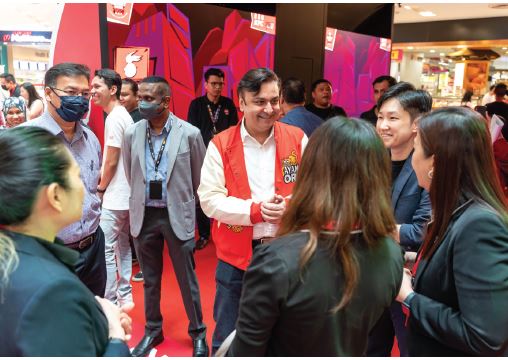
Nehchal Khanna at the launch of Kentucky Town at Sunway Pyramid in July.
The company introduced a new “flywheel” model a year ago, says Khanna, which sets the tone for the newfound culture and encapsulates the distinctive QSR approach to operations. This flywheel is underpinned by four core values: growing people as builders; daring to innovate boldly; never giving up; and putting customers first.
“One of the first priorities was to transform people and their attitudes,” Khanna says. “We knew we needed a set of principles and a culture to which everyone could subscribe. We wanted everyone to behave in a more entrepreneurial way by taking ownership.”
The transformation was imperative, says Khanna, as it would help the company scale and enhance its agility in tackling prevailing market challenges, such as hyperinflation, supply chain disruptions, rising interest rates and evolving consumer demands.
Catalyst for Change
Looking back at the events over the past few years, Khanna notes that the pandemic has played a pivotal role in reshaping the company’s perspectives, fostering better adaptability.
“In some ways, the pandemic has served as a springboard and a catalyst for change for QSR Brands,” he says.
The nationwide lockdowns in Malaysia and the rest of Southeast Asia had an impact on the company’s business, which derived on average 40% of its revenue from dine-in services. “We made a bold decision to pivot very early on, turning to e-commerce and digital channels,” says Khanna.
The decision paid off as QSR Brands successfully concluded the year 2020 with revenue that was “closely comparable” to that of 2019 despite the widespread challenges faced by numerous businesses.
Khanna also emphasized that none of these changes could have taken off without the strong backing of the board, especially the Chairman, Tan Sri Jamaludin Ibrahim, and the shareholders. “I am really grateful that the board and shareholders gave me the support and confidence to carry these initiatives through. That made all the difference,” he says.
Nehchal Khanna, CEO and Managing Director of QSR Brands Holdings Bhd.
Growth Momentum
Today, QSR Brands has over 1,400 KFC and Pizza Hut restaurants across Malaysia, Singapore, Brunei and Cambodia, and employs over 30,000 people across these markets.
QSR Brands has seen positive growth momentum since the start of 2023, says Khanna, adding that the company has achieved double-digit growth in the first half of the year.
He attributes this success to three key drivers, namely, the company’s people and culture, its new business model and technology.
People at its Core
One of the key initiatives QSR Brands undertook was to further empower its employees, as the company believes that its future success depends on the “scalability of cultural change across the organization.”
Khanna says, “The leadership team is entirely empowered; they have a great deal of autonomy and they are able to pass that down through the ranks.”
The company also emphasizes continuous employee support, exemplified during the pandemic when it chose not to retrench any of its 30,000 employees, in contrast to industry trends.
The company has also set up a special talent development initiative—GROW— grooming around 100 high-potential individuals as next-generation leaders through an in-house MBA-like initiative.
Customers enjoyed Pizza Hut’s newest product range, Melts, at the Genshin Impact fan event.
Take-away kiosks were installed at Pizza Hut to minimize contact post-pandemic
Continuous Innovation
As part of the efforts to refine its business model, Khanna has dedicated substantial time to crafting proprietary frameworks. Notably, the transaction velocity strategy, comprising eight levers, emerged as a standout framework. Khanna says, “Sales growth is really about transaction growth, serving as a direct sales indicator.”
Another lever is menu innovation, an area where QSR Brands excels. New menu items such as the Juicy Whole Chicken, Satay Burger and Melts have not only enticed new customers but also increased repeat visits.
To further enhance the customer’s digital experience, the company launched a new KFC Malaysia mobile app last year, offering e-commerce, gamification, loyalty programs and digital vouchers. Within 11 months post-launch, the app has garnered an impressive 1 million subscribers.
Customers at KFC’s self-ordering kiosks
Looking Ahead
Recognizing that QSR Brands plays an important role in the area of food sustainability, Khanna says the company takes Environmental, Social and Governance (ESG) matters seriously.
“Having a strong governance in place is crucial as it will be the key pillar that supports the group’s environmental and social initiatives,” he says. “We have a new head of governance, and he is taking the lead so that everyone is putting the firm first when making any decisions.”
Looking ahead, QSR Brands aspires to improve its ranking among restaurant operators worldwide, aiming to secure a spot in the top five within the next three to five years. This objective aligns seamlessly with its overarching vision of becoming the foremost food-technology company in ASEAN.
Leading Aboitiz Group’s journey toward becoming the Philippines’ first techglomerate is Sabin M. Aboitiz, Group CEO and Aboitiz Foundation Chairman.
With its current “Great Transformation” to become the Philippines’ first “techglomerate,” Aboitiz is redrawing its Environmental, Social, and Governance (ESG) blueprint by placing people at the center of everything. This approach to “One New Aboitiz” is not a mere strategy; it is a holistic shift that harmonizes technology, business, and humanity. And never has this been more evident than in the work of its corporate citizenship arm, Aboitiz Foundation Inc. (AFI), which is celebrating 35 years of transforming lives for the better.
With its myriad of ESG initiatives spanning digitalization and inclusion, renewable energy, water and forest management, health and safety, climate action, and corporate social responsibility (CSR), Aboitiz Foundation has always been dedicated to sustainability. And the group’s recent focus on becoming a techglomerate amplifies the foundation’s commitment to this cause. By harnessing data science and artificial intelligence, it is not only seeking to solve problems faster and on a larger scale but also striving to shape a sustainable future for mankind.
After more than three decades of primarily building sustainable communities, the foundation now promises to change through three flagship pillars: Future Leaders, Enterprise and Jobs, and Climate Action. Future Leaders centers on STEM education for emerging scientists, engineers, data specialists, forward-thinking leaders and entrepreneurs—people adept at addressing urgent challenges, something the Philippines urgently needs. Enterprise and Jobs aims to reduce the digital divide for MSMEs and cooperative advancement, promoting wealth creation, future-oriented upskilling, and employment. Finally, Climate Action concentrates on co-creating climate-resilient ecosystems through nature-based solutions, encompassing carbon and waste management, adaptation, mitigation, biodiversity oversight and habitat conservation.
Aligning with Global Goals AFI’s ESG ambitions align with the UN Sustainable Development Goals (SDGs). But what sets it apart is its commitment to addressing these objectives not in isolation, but as an ecosystem of interconnected goals. This synergetic approach combines environmental preservation, social impact, and sound governance to benefit people and communities above all.
Consider the case of biodiversity management, a responsibility in the “E” of ESG. By plugging community involvement into the equation, AFI ensures that the beneficial ripples of ecological preservation reach the communities surrounding these protected areas. This person-centric perspective, coupled with technological advancements, is emblematic of the group’s promise to advance business and communities.
President and CEO Sabin Aboitiz never fails to remind team members that sustainability is always and ultimately about people. From generating employment opportunities and nurturing entrepreneurial growth to bolstering education, the endeavors of the Aboitiz Foundation over the last 35 years mirror this belief. And the foundation’s future collaboration with global partners, such as integrating solutions like plastic waste management technologies, hopes to further underscore this commitment to humanity.
Furthermore, according to Aboitiz, ESG is not a responsibility that should rest solely on corporate shoulders. Individuals play a crucial role in driving sustainable change as much as benefiting from it. “Every choice we make, whether as consumers, investors, or as members of society, has the potential to impact our environment, communities and governance structures,” says Aboitiz. “By understanding and acting upon this, we can pick up the pace of sustainable transformation.”
Putting People First But what truly sets the foundation apart from many other sustainability programs is its sharp focus on empathy. It seeks to understand the experiences and pain points of its stakeholders, be they employees, shareholders, communities, or beneficiaries of their ESG initiatives. By putting itself in the shoes of those it serves, the foundation uncovers effective and expedient solutions to pressing issues. This is what they call a “techglomerate in action,” which refers to a conglomerate that leverages technology to improve society.
The first batch of women from Toledo City graduated from the Aboitiz Foundation and Connected Women’s Elevate AIDA Program, which aims to train 300,000 women by 2025 by partnering with both public and private institutions. Photo courtesy of the Toledo City Public Information Office.
“It isn’t just about mitigating climate change,” says Aboitiz. “As a techglomerate, we are trying to reshape our past understanding of ESG by putting a unique emphasis on the “S.” The foundation’s belief is clear: people are the heart and soul of all its endeavors, making Aboitiz’s Great Transformation (GT) a cultural revolution for corporations in the Philippines to join.
Through its Future Leaders pillar, the Aboitiz Foundation is nurturing tomorrow’s leaders through its education programs.
Under Sabin Aboitiz’s leadership, the GT is preparing the organization’s employees to address sustainability challenges innovatively and effectively. Just like its business model, the company’s transformation is customer-, stakeholder- and human-centric, reflecting the principle that everything in this world is interconnected through and for human beings. They are both the driving force behind the GT, as well as its ultimate beneficiaries.
Leveraging Technology As it celebrates this momentous anniversary and journeys forward, Aboitiz Foundation strengthens its commitment to using technology as a lever to fuel its sustainability agenda and ensure better lives for Filipinos. A “Great Transformation” sounds audacious, but it is grounded in the belief that true sustainability can only be achieved when solutions are designed with people at the core. “The challenges of sustainability are a collective responsibility that can be surmounted through collaboration, empathy and innovation,” says Aboitiz Chief Reputation and Sustainability Officer Ginggay Hontiveros-Malvar.
A farmer from one of Aboitiz’s community beneficiaries goes digital through the Foundation’s Enterprise and Jobs project Byaheng Digiskarte.
The techglomerate model is more than just a new operational framework for the foundation. It’s a clarion call for other corporations to reload their sustainability strategies and raise the bar. By embracing the convergence of technology and humanity, businesses can accelerate the journey toward a world where environmental conservation, social responsibility and good governance coalesce for the betterment of people and the planet.
The Aboitiz Foundation story is really about the sustainability of the human race, and it serves as a compelling manifesto for other foundations and corporations to take a page out of. The foundation’s approach hopes to help illuminate the path to a future where corporations do not just contribute to a better world but actually co-create it.
In the ever-evolving realm of ESG, the foundation’s 35-year-old history serves as a strong reminder that businesses have a fundamental role to play in societal change. As the foundation moves forward, the group seems fairly convinced that the GT will not just reshape the way it thinks and acts, but also redefine the very contours of sustainable corporate practice in the Philippines.
The FedEx journey continues to be driven by innovation and digitally driven solutions to enhance the experience for customers. Fifty years on, FedEx is also leveraging technology to help solve the sustainability challenge. “In the words of our founder, we have always put sustainability at the center of our business because we know that the future of our business is tied to the climate, the environment and the future of our planet,” says Kawal Preet, President of the Asia Pacific, Middle East, and Africa (AMEA) region at FedEx Express.
“We view sustainability through the lens of opportunity, growth and profitability as well as a clear purpose to connect businesses and communities.”
FedEx has invested in digital solutions and EVs to power its business.
Continuous Tech Innovation
FedEx is embracing advanced technologies to explore new possibilities in operational efficiency. In markets like Singapore and China, FedEx introduced artificial intelligence-powered robotic sorting arms at sorting centers and hubs to drive overall operational efficiency. With machine learning, Estimated Delivery Time Window (EDTW) provides FedEx customers in Japan and Hong Kong with a target delivery time.
FedEx continues to roll out products and solutions for customers in a mobile-first world. For instance, Picture Proof of Delivery gives customers the assurance that their package has been delivered to their doorsteps. Through FedEx Ship Manager Lite, customers can arrange shipments on their mobile devices without having to print documents at home. WhatsApp notifications are integrated into its FedEx Delivery Manager International platform for customizable delivery options, with direct messaging and tracking for convenience.
Commitment to Sustainability
FedEx is making great strides in its journey toward carbon neutral operations—from vehicle electrification to energy-efficient facilities and infrastructure.
“We are creating a smarter network that is flexible and intelligent—not just for today but well into the future, enabling customers to compete and win,” says Preet. “This includes how we ensure sustainability is fully aligned with our business strategy.”
Digital technology is helping FedEx innovate to provide paperless solutions and more convenience to its customers. With millions of packages in FedEx’s system every day, minimizing paper usage makes a difference. For example, by using Electronic Trade Documents, customers can submit information essential for customs clearance electronically. This means there is no need to attach printed paperwork to each shipment and delays at customs can be avoided.
Electric vehicles (EVs) will make up 50% of the FedEx pick-up and delivery vehicle purchases by 2025, rising to 100% by 2030. More EVs are being deployed across the AMEA region including in South Africa, China, India, Thailand, Malaysia and Singapore.
FedEx’s new facilities across AMEA like in Johannesburg, South Africa, Clark in the Philippines, Adelaide gateway in Australia and the upcoming Dubai World Central Airport hub in the UAE, incorporate multiple layers of sustainability features, from construction materials to lighting, ventilation, insulation, water recycling and renewable power generation. FedEx Incheon gateway in South Korea, for example, boasts of 2,400 solar panels on its rooftop, which can generate 19% of the facility’s monthly energy needs.
Ultimately, through company-wide initiatives like these and more in the pipeline, FedEx is well on its way to achieving carbon-neutral operations by 2040.
Empowering Sustainable Business Practices
Recently, the company launched FedEx Sustainability Insights across AMEA markets to give customers better visibility of their carbon footprint within their supply chains, supporting reporting and strategic future planning.
Preet says, “We are living in a time when sustainability is a core strategic consideration for businesses and a driver of innovation and talent attraction. We are fortunate at FedEx that our leaders have always been fully engaged in setting and enabling sustainability goals. Addressing climate change is bigger than one business and we must all work together on sound policy and innovative solutions for our planet.
Thailand’s Little Amazon, located in the town of Takua Pa in Phang Nga province
Thailand, a beloved destination renowned for its stunning beaches, majestic temples and delectable cuisine, has evolved beyond its sun-kissed coastal retreats and bustling cities. As sustainable tourism gains momentum with travelers now seeking immersive experiences that align with their environmental and social values, Thailand has taken a proactive approach to developing a sustainable tourism ecosystem.
Embracing the Bio-Circular-Green Economy Model, Thailand is promoting low-carbon tourism across its major and secondary cities, some of which were previously off the beaten path for tourists. Spearheaded by the Tourism Authority of Thailand (TAT), this movement focuses on five key areas of travel: adventure, gastronomy, slow life, history and wellness.
Low-Carbon Tourism Principle
Under the low-carbon tourism principle, activities are designed to limit the use of electrical and fossil fuel energy, prioritize renewable energy, employ products made from natural or biodegradable materials to reduce waste and encourage responsible food consumption to combat food waste. Ultimately, the aim is to curtail greenhouse gas emissions and minimize the ecological footprint. TAT has identified 20 low-carbon travel routes across the country and recommended activities catering to every traveler type.
Adventure-seeking travelers, for instance, can embark on an exhilarating journey through Thailand’s Little Amazon, located in the town of Takua Pa in Phang Nga province. Visitors can kayak through the thriving mangrove forest teeming with wildlife such as macaques, Oriental pied hornbills and kingfishers. For an awe-inspiring encounter, visitors can get up close with the elephants at Khao Lak Elephant Home, participating in activities such as feeding and bathing these majestic creatures.
For those desiring a slower pace of life, Koh Mak is a hidden gem treasured for its tranquility and natural beauty. Guests can cycle around the island, stroll along pristine beaches or snorkel among vibrant coral reefs—ensuring an eco-conscious vacation free of carbon emissions.
Sustainable Activities Catering to All
TAT’s low-carbon travel routes cater to history enthusiasts and food lovers, too. In the old city of Nan, located in northern Thailand, visitors can immerse themselves in the region’s rich cultural heritage. The charming old neighborhood can be explored on foot, but low-powered trams are available to ferry tourists to the main attractions such as the temples and a museum.
To savor the diverse flavors of Thailand, tourists are encouraged to taste locally made dishes that feature locally sourced ingredients. The Takian Tia community in Chonburi, just a short distance from Bangkok, offers an authentic village experience where coconuts take center stage. Locals ingeniously use every part of the coconut in their cooking as well as to create products such as soaps, coconut shells and coconut oil.
Visitors can paddleboard and harvest local produce in Koh Mak.
Tourists in the pursuit of wellness activities will not miss out. Thailand continues to entice visitors with luxurious spas and wellness centers as well as natural attractions such as hot springs. Krabi province, for instance, is home to a mineral-rich hot spring nestled within a pristine rainforest, providing a serene setting for visitors to unwind, soothe tired muscles and rejuvenate their spirits—without compromising the delicate natural environment.
TAT has demonstrated how sustainable practices can be seamlessly integrated into diverse travel experiences that are authentic, enjoyable and fun. By embracing these eco-friendly initiatives, travelers can enjoy a vacation in this Southeast Asian gem with a clear conscience.
Wyndham Hotels & Resorts is the world’s largest hotel franchising group. The Group is experiencing robust growth in key Asia-Pacific markets as it leverages its long-standing expertise in franchising to capitalize on fast-growing demand for travel.
These factors contributed to the Group’s sterling performance in 2022, which featured 169 new hotel signings, 132 hotel openings and the addition of more than 18,000 new rooms. The expansion included new brands in existing markets, such as the La Quinta by Wyndham in Greater China, Microtel by Wyndham in New Zealand and Trademark Collection by Wyndham in Vietnam. Wyndham Hotels & Resorts also established its presence in 19 new cities in Asia-Pacific in 2022, including 13 cities in Greater China.
“We tapped on the resurgent demand for business and leisure travel, reinforced our leadership position in Asia-Pacific last year by introducing new brands in our existing core markets, as well as entering new cities. As Greater China reopened their borders in early 2023, we expected this momentum to carry on in 2023 and beyond as we continue to execute our growth strategies for Asia-Pacific,” says Joon Aun Ooi, President, Asia Pacific, Wyndham Hotels & Resorts.
Indeed, Wyndham’s strong growth trajectory continues to garner momentum in 2023. In the first quarter of the year, the Group signed 27 deals and unveiled 15 new hotels in Greater China, while the South East Asia and Pacific Rim region saw 6 new deals secured and 5 hotels opened.
Most recently, the Group announced the signing of its first Wyndham hotel in Singapore. The hotel is set to debut as Peninsula Excelsior Singapore, a Wyndham Hotel during its soft opening in early July 2023. Following a multimillion-dollar refurbishment, the hotel will be officially launched as the Wyndham Singapore in 2024. With this flagship property, Wyndham Hotels & Resorts maintains its strategic and operational presence in Singapore while debuting an upscale hospitality brand.
Peninsula Excelsior Singapore, a Wyndham Hotel
Across South East Asia and the Pacific Rim, the Group opened the Wyndham Grand Phu Quoc and Wyndham Garden Phu Quoc in Vietnam, as well as TRYP by Wyndham properties in Adelaide, Australia and Wellington, New Zealand between February and April this year.
Moving to Greater China, the Group’s on-ground satellite development teams continued to engage owners to identify suitable opportunities and that attributed to its growth plans in 2023. The Group opened three hotels in Shanxi with over 1,000 rooms, as well as a new Wyndham property in Shanghai, the Group’s 32nd in the city. Wyndham also signed more than 20 new deals on the sidelines of the Hotel Franchising Expo in Shanghai, China. These deals will be based in popular tourist spots such as Kunming, Haikou, Dali and Xishuangbanna.
Earning the Loyalty of Owners and Guests By putting owners at the heart of everything they do, Wyndham has earned a high level of trust and loyalty among its partners. This approach goes beyond supporting day-to-day operations and is designed to ensure mutually beneficial outcomes for all parties.
“When we work and negotiate with an owner or solve a problem at a hotel, it’s always with the mentality of putting the owner first, of putting ourselves in their shoes. And if I were an owner, I would get a lot of comfort knowing that. It means that Wyndham is not thinking just for themselves, but thinking of us as well,” says Ooi.
TRYP by Wyndham Wellington, Tory Street
In 2023, the Group has strengthened its hospitality franchising leadership position in the region through various strategic agreements with industry partners. For instance, its recent partnership with Alliga Eternity to launch the first and all-inclusive Wyndham Alltra in the region—a 300-cabin superyacht resort in Vietnam’s Halong Bay—is a testament to this strategy.
The Group has also joined hands with Sun Motor Group in Indonesia, Hospitality360 in Malaysia, Safari Group and Marsden Group in New Zealand to introduce new brands or enhance existing ones in their respective markets. These collaborations not only add to Wyndham’s room count, but also provide opportunities to introduce novel hotel concepts.
This OwnerFirst engagement strategy continues to bear fruit. Having witnessed first-hand the benefits of partnering with Wyndham, approximately 25% of the Group’s new signings for 2022 came from existing owners, reflecting Wyndham’s solid reputation and high level of trust with owners in the industry.
In addition, the Group’s global portfolio of 24 brands empowers it to meet every owner’s aspiration, after understanding their requirements, making it possible for partners to identify the right brand for their target guest segment in their markets of choice.
For Wyndham’s guests, they continue to enjoy the perks of seasonal offers and benefits of being a Wyndham Rewards member. Owing to its high popularity, Wyndham Rewards, the Group’s loyalty rewards program, has doubled its membership base in the last six years, crossing the 100-million-member milestone on March 15, 2023, as its reputation for being one of the most generous hospitality programs in the world continues to grow.
Wyndham Grand Zhaoqing Downtown
The success of Wyndham Rewards, which was honored at the USA TODAY 10Best Readers’ Choice Awards for the fifth consecutive year in 2022, is significant, as studies show that members drive 79% higher revenue, and stay 62% more often, at the Group’s properties.
“Wyndham Rewards continues to enjoy the reputation as the world’s most generous loyalty program. Beyond that, the high usability of Wyndham Rewards genuinely enhances the guest experience as they can redeem their points with three simple free night tiers–7,500, 15,000 and 30,000 points per bedroom,” says Ooi.
Resilience in the Face of Competition Following an impressive performance in the first quarter of 2023, the Group is confident that it will continue to exceed expectations even as hotel franchising competition in the region intensifies. This optimism is partly fueled by the travel sector’s rapid recovery from the pandemic, which has been boosted by the reopening of borders in Asia-Pacific, particularly in Greater China.
During the 40-day Spring Festival travel rush, which lasted from early January to the middle of February 2023, a total of 4.73 billion passenger trips were made in China. Chinese domestic tourism alone is projected to grow 73% year-on-year in 2023.
Wyndham Shanghai Nanxiang
Elsewhere in the region, Southeast Asia has also benefited from the unleashing of pentup demand. Thailand saw 11.15 million foreign visitors arriving in 2022, up from just 428,000 the previous year. Meanwhile, Indonesia has set an ambitious goal of attracting up to 7.4 million foreign tourists in 2023. This impressive rebound is the latest example of the hospitality and travel industry’s resilience and can only bode well for Wyndham’s continued success in the coming years.
“In my 20 years of being in the hospitality industry, I have seen it being hit by shock after shock, and it has been encouraging to see how it can pick itself up very quickly after each crisis. It’s no different this time. Many markets in the region are already ahead of their pre-pandemic 2019 numbers,” says Ooi.
He adds: “As we celebrated our 5th anniversary as a publicly traded, pure-play hotel company on June 1, 2023, we are confident that we will continue to grow our strategic and operational presence in Asia-Pacific by remaining steadfast and diligent in executing the owner-centric strategies that have served us and our partners so well up to now.”
Kongkrapan Intarajang, CEO and President of PTT Global Chemical (GC), has been at the forefront of the company’s sustainability journey, focused on demonstrating that petrochemical companies can contribute positively to the environment with the right direction in place.
Over the last 10 years, GC has been operating its business with sustainability in mind. Moreover, the company is a pioneer in applying the circular economy to its business operations, a crucial foundation for its journey toward achieving its net zero goal. GC has shown its commitment to building a sustainable business by incorporating Environmental, Social and Governance (ESG) principles into its operations. Driven by its “Chemistry for Better Living” vision, the company has continued its decades-long endeavor to create sustainable solutions for all, says Intarajang.
Sustainability in Business
To transform the business sustainably in response to the rapidly changing world, GC has integrated 3-step strategies into its business operations. The strategies comprise of: Step Change—actively strengthen the business competitiveness by enhancing resilience and creating future growth; Step Out—move toward High Value Businesses (HVB) focusing on growth products and superior profitability that meets consumer needs and megatrends, for example GC’s acquisition of allnex, a global leader in specialty coating resins that provides high performance and environmentally friendly solutions; and Step Up—elevate its sustainability operations for business connectivity in response to industrial trends, while striking the ESG balance.
Working Together to Net Zero
As one of the global sustainability leaders, GC aims to reduce its greenhouse gas emissions by 20% by 2030 and achieve net zero emissions by 2050, in line with the Paris Agreement.
Its “Together to Net Zero” roadmap, drawn up in 2021, comprises three core pillars: efficiency-driven, which involves increasing operational efficiency and reducing waste emissions; portfolio-driven, which involves transitioning its portfolio to low-carbon businesses while maintaining corporate growth and integrating circularity to solve issues of limited resources and waste management; and compensation-driven, which utilizes nature-based solutions and explores technology to drive decarbonization.
GC started a closed-loop plastic waste management project called YOUTURN, which is one of the driving forces to net zero that aims to instill proper knowledge of plastic recycling and sustainability in local communities and encourage circular living. YOUTURN focuses on transforming plastic waste into valuable products such as fashionable items and construction materials, among others. The waste collected from the YOUTURN drop-off points is also transported to GC’s plastic recycling plant ENVICCO, where it is turned into high-quality, food-grade PCR PET approved by the Food and Drug Administrations in Thailand and the U.S.
Helping the Society
One of GC’s main missions is to assist society by elevating the quality of people’s lives. This is achieved through promoting community development (since 2011), engaging in community procurement of goods and services and creating employment opportunities that generate income for the community, which has amounted to 2.45 billion Thai baht (US$72 million). These efforts are also carried out in conjunction with environmental conservation initiatives.
Intarajang says, “Sustainability starts with ourselves. Then, we collaborate and take a dedicated, hands-on approach not only within the company but also across all sectors throughout the supply chain. These actions have led us to receive international recognition, such as being ranked consecutively for four years in the chemical sector by the Dow Jones Sustainability Indices. We feel proud and grateful to all our partners who have contributed to our sustainability efforts, and we remain committed to continuing these efforts for the benefit of ourselves and future generations.”
Environmental, Social and Governance (ESG) has evolved from a nice-to-have to a corporate imperative over the years. Governments, businesses and investors recognize the importance of ESG in driving the world’s transition to a greener and more sustainable future and are doubling down on efforts to achieve nature-positive targets.
At the World Economic Forum’s annual meeting in Davos earlier this year, global leaders discussed how new approaches and partnerships could lead to new solutions, such as leveraging philanthropy in new ways, driving climate adaptation and spurring more ambitious, comprehensive and sustainable infrastructure investment plans that could stabilize the planet and help the world meet the 2030 emissions reduction goal.
Driving Sustainable Change
Among the businesses driving sustainable change is Apical, part of the Singapore headquartered RGE group of companies. As the world’s second largest vegetable oil processor, Apical has embarked on a journey to become a leading second-generation biofuel feedstock provider through the collection of waste and residue from mill and palm oil refineries, along with used cooking oil, to act as an alternative to other forms of feedstock.
The company has also diversified its operations into other downstream areas such as sustainable aviation fuel (SAF) used to power aircraft. Through a joint venture, Apical is now commercially using at scale the waste generated by its operations as viable feedstock to produce SAF. These efforts highlight the company’s commitment to driving sustainable change in the palm oil sector.
In the real estate sector, Hong Kong’s Sino Group is leading the way toward a climate-resilient built environment. Sino Group integrates sustainability into all aspects of its operations and aims to achieve net zero by 2050 through more energy-efficient design, green construction and procurement, renewable energy usage, reduction of waste and carbon emissions and promoting sustainable living at its properties.
As of June 30, 2022, the company recorded a reduction of greenhouse gas emissions and electricity consumption by almost 40% from its 2012 baseline, exceeding its initial target.
Capitalizing on the Green Transition
As the world transitions to a low-carbon economy, investors are ready to capitalize on opportunities presented by this global shift. HSBC Global Private Banking offers investors three main ways to embed sustainability into an investment portfolio: ESG enhanced, thematic and impact investing.
ESG enhanced investments refer to investing in companies that score well on ESG criteria, while thematic investments focus on specific sustainability themes such as renewable energy, water conservation or circular economy. On the other hand, impact investing aims to generate an intentional, direct and positive social or environmental impact alongside financial returns.
The bank believes that by adopting an ESG approach to investment and finance, investors can play a crucial role in driving the transition to a low-carbon economy, while also generating long-term financial returns.
Bridging the ESG Trust Gap
But while companies are starting to make progress on sustainability objectives, some investors feel strongly that they are not getting the quality of ESG data required to evaluate a company’s strategy and risk profile, according to the Asia-Pacific findings in the latest EY global corporate reporting and institutional investor survey. This information gap threatens to stifle access to capital for many organizations and ultimately, could hinder progress on decarbonization.
Investors believe that Asia-Pacific organizations are “highly selective” about the information they provide and unless there is a regulatory requirement to do so, most companies will provide only limited ESG disclosures useful for decision-making.
The good news is that both sides acknowledge that there are weaknesses in current reporting standards, including issues such as lack of requirements for supporting evidence, separation of ESG reporting from mainstream financial reporting and a lack of forward-looking disclosure, so more can be done. Asia-Pacific companies can bridge the ESG trust gap with investors by taking key action to ensure that sustainability is built into their reporting processes—systemically, strategically and rigorously.
Advancing Social Justice
In addition to environmental concerns, organizations are starting to give the same attention to the social component of ESG. Businesses today are faced with a growing number of social justice issues that can affect their corporate reputation—from human rights and gender equality to health and safety, and community engagement.
FGV Holdings Berhad, a global and diversified agribusiness based in Malaysia, is one of the world’s largest producers of crude palm oil. In its efforts to operate a sustainable and socially responsible business, FGV has implemented various programs to strengthen its labor practices, including aligning its policies and recruitment practices with international labor standards.
One of the main standards adopted by FGV is the no recruitment fees policy for the hiring of migrant workers. The company has taken several measures, including setting aside about US$25 million to compensate current and former FGV migrant workers who had paid recruitment fees to secure jobs.
Indeed, there is plenty that businesses can do to build on the ESG framework to drive real change. Those that lay the right foundation now are likely to succeed long into the future.
Home Credit has a pioneering reputation in the consumer finance industry in Vietnam. Between 2020 and 2022, the company was rated as the “Most Desired Brand” in the market by the Ipsos’ Annual Brand Health Tracker. It has also received many other prestigious awards in the technology, HR and CSR categories.
Annica Witschard, CEO of Home Credit Vietnam, shares the company’s ESG journey so far.
Why is Home Credit Vietnam proactively developing an ESG strategy when this trend is still new in Vietnam?
ESG principles are actually not new to us at all. They have always been integral to our business approach, even before being called ESG. Responsible finance, financial inclusion and digital empowerment, which have been woven into Home Credit’s DNA since day one, are central to our policies and commitments to customers, staff and the communities that we serve.
I strongly believe that an action-driven ESG strategy has a powerful impact on the sustainable growth plans of any business. But, it’s not just about the business growth; it’s also about driving transformational social impacts. I am proud to say that our strategy has so far proven successful. Our customers say that they find us trustworthy, responsible and friendly. Three out of four of our customers recommend Home Credit services to their families and friends, while 75% of new revenue is generated by returning customers.
Annica with the Sustainability team
We are able to achieve steady and healthy business results while maintaining the lowest non-performing loan ratio across the industry.
In addition, as more and more employees seek purpose and value at work, we find that social responsibility and a forward-thinking workforce strategy are keys to employee satisfaction and attracting talent in a competitive labor market.
How is sustainability included in work at Home Credit Vietnam?
First and foremost, we apply the principles of good governance through responsible financing and acting with transparency and compliance. We offer customers the right products, based on their needs and financial capacities with sustainable repayment plans, ensuring that they clearly understand all essential information related to the service and do not become overburdened. At the same time, we promote responsible borrowing practices via roadshows and workshops, focusing on teaching core skills such as money management or household budgeting.
We serve more than 14 million customers nationwide, most of whom are low-income earners with no credit history, and therefore not being served by traditional banks. We can plug that gap and help them access financing easily and safely to quickly achieve their daily goals. This is financial inclusion in action.
The “S” in ESG is also an area we focus on. We give back by supporting female entrepreneurs in communities and teaching financial literacy, which I believe will have long-term positive impacts for both societies and our business. We have also invested in CSR programs that have delivered, for example, direct aid for flood victims and for people in need during Covid-19.
Our digital products ensure that the end-to-end aspects of our transactions are efficient and promote sustainable consumption. Our automated lending process helps to improve customer experience, increases the ease of doing business across the economy and lowers the impact on the environment.
Annica Witschard, CEO of Home Credit Vietnam
Can you explain more about your digital strategy and some of your innovative products, e.g., Home PayLater and Home App?
Digital empowerment is one of our goals as a business. Home PayLater is a recently launched Buy Now, Pay Later product which will revolutionize the way customers shop, allowing them fast access to consumables without adding financial pressure to their budgets. Home App, which was launched last July, helps customers access a full suite of financing services anytime, anywhere.
These technologies are underpinned by a solid technological foundation, a wealth of data, and cutting-edge information security protocols that are designed to enable everyone to benefit from digitisation.
In the context of global economic instability in 2023, how can Home Credit build a sustainable future?
We do not treat ESG as “just another line item” in our budget but as the driving force of our sustainable growth.
This year is going to be challenging but we believe in the resilience of the Vietnamese economy. We trust that improving access to responsible finance through digital innovation will help us to mitigate global headwinds and contribute to the broader economic recovery.
We will keep on ensuring consistency and coherence in our approach to sustainability while pioneering high-quality products and services. I trust this will continue to make us a desired brand that customers, partners and employees want to stay with.