Investors are keen to ride on Indonesia’s rebound.
As Indonesia emerges from the pandemic, businesses and investors are looking to ride on the country’s rebound from an unprecedented crisis. According to the Asian Development Bank (ADB) in a report released late September, the Indonesian economy is expected to grow by 3.5% in 2021, and by 4.8% in 2022, underpinned by robust exports and government spending. Supportive fiscal policy and accommodative monetary policy will also help boost growth.
Meanwhile, private consumption is projected to recover modestly before rising by 5% next year, ADB said. Investment should also strengthen in 2022 as conditions stabilize and the business climate improves.
Indonesia’s economy had a relatively mild downturn in 2020, thanks to the government’s bold, timely policies to provide fiscal stimulus and social assistance to the vulnerable to prevent long-term economic scarring. It continued to recover in the first half of 2021 due to those same policies and strong exports,” said Jiro Tominaga, ADB Country Director for Indonesia.
Keen Investor Interest
The confidence in Southeast Asia’s largest economy is reflected in rising investment in the country’s dynamic tech sector. Indonesia’s digital economy is projected to grow by almost 50% this year on the back of rapid development in the e-commerce segment, a trend that is expected to continue until at least 2025 according to the “e-Conomy SEA 2021” report by Google, Temasek and Bain & Company. The report estimates that Indonesia’s internet economy—measured in gross merchandise value—will grow to US$70 billion this year, up 49% from US$47 billion last year.
Venture capital (VC) firm Alpha JWC Ventures has capitalized on keen investor interest in tech start-ups to continue its winning streak in Indonesia over the past year. With three Indonesia-based unicorns already in its portfolio, the firm’s portfolio of companies managed to raise over a billion dollars so far in 2021 amid the pandemic.
Going forward, Alpha JWC Ventures plans to double down on Indonesia’s tech sector. With the recent close of its latest, and largest fund, the firm will be able to increase its investment ticket size significantly, and partner with its portfolio companies for longer periods. The VC’s Indonesia-focused investment approach has been validated by global organizations such as the World Bank’s International Finance Corporation and Morgan Stanley Alternative Investment Partners, who have invested in the latest fund.
Domestic Leaders Continue to Dominate
Meanwhile, Indonesian companies in more traditional sectors have also prospered during this challenging time. As the largest and most successful bread company in Indonesia, PT Nippon Indosari Corpindo Tbk continued its domestic dominance, commanding a 90% share of the country’s mass-produced bread market.
Indonesian SMEs are leveraging digitalization to find new avenues of growth.
The company’s strategy to focus on developing Indonesia’s bread market has yielded positive results, and the company’s quarterly sales are already returning to pre-pandemic levels, boosted by wider distribution coverage and higher penetration. Profitability margins are also set to expand, underpinned by improved productivity and efficient cost management.
PT Arwana Citramulia Tbk, Indonesia’s ceramic tile industry leader, is another case in point. The company’s early decision to spread out its manufacturing to five locations around the country has kept costs low and its operations efficient, helping it to navigate the turbulence and maintain its leadership position. The company is also expanding into new market segments. Its latest plant, for instance, was set up to produce a new product, glazed porcelain tiles, called ARNA.
Transforming to Fuel Growth
Other companies have also pivoted their businesses to adjust to changing customer and market needs. Indonesian conglomerate Emtek Group, for instance, has managed to stay ahead of the competition by transforming from a conventional free-to-air television broadcaster into a multi-channel, multi-platform digital media company.
Today, the group owns three free-to-air television stations, one direct-to-home satellite television operator, a leading over-the-top streaming platform, an ecosystem of digital publishers, and a series of content and production companies, among other assets.
While Emtek has helped Indonesian businesses by providing them multiple platforms to showcase their products, its associate company Bukalapak is helping small businesses in the country grow. Enterprises that sign up to the Bukalapak app have access to buying millions of different products at the best wholesale prices for resale into their local community, as well as the ability to offer digital services to their customers; including paying utility bills, moving remittance money, buying travel tickets and even investing in digital gold.
Access to innovative financial solutions will play a key role in driving Indonesia’s long term economic expansion. In this regard, Bank Mandiri, the largest financial institution in Indonesia, is committed to delivering relevant financial products and services to its customers around the country. This is part of the bank’s broader mission to seamlessly integrate its financial solutions into its customers’ lives by delivering fast and simple digital banking solutions.
Pertamina is utilising solar panels at its refinery in Central Java.
In the energy sector, Indonesia’s Pertamina is also committed to transforming its operations to contribute to a low-carbon economy as it works towards building a sustainable business by transitioning to greater use of clean energy. In particular, the country’s national energy provider has set its sights on the development of geothermal, hydro- and solar-based power generation. As part of this transition, it has announced plans to support the nation’s effort to decarbonize, starting with reducing its greenhouse gas emissions, mainly carbon dioxide, by 30% before 2030.
These progressive companies have leveraged technology and innovation to grow sustainable businesses, and will lead Indonesia’s recovery as it shakes off the effects of the pandemic in the coming years.
Hong Kong’s private wealth management industry has remained resilient in the face of the Covid-19 pandemic, thanks to the sound asset management of established groups and the tech-fueled boom by first-generation entrepreneurs.
Total assets under management rose 21% to HK$34 trillion (US$4.4 trillion) in 2020 from the year before, while private banking and private wealth management increased 25% to US$11.3 trillion, data from the Securities and Futures Commission (SFC) show. “Hong Kong is already well in the game but the question is how we can remain relevant amid the stiffer global competition,” says Laurence Li, Chairman of the Hong Kong Financial Services Development Council (FSDC).
FSDC believes the Wealth Management Connect (WMC) would enhance the special administrative region’s already transparent regulatory framework, technology-friendly environment and professional talent pool. With its proximity to the mainland and experience in serving the China market, Hong Kong is poised to maintain its premier position in the wealth management market.
Major Breakthrough
The WMC is a major breakthrough in which retail investment funds domiciled in Hong Kong and authorised by the SFC will be eligible for the scheme instead of the traditional product by product approval approach. “With the abundance of a 1.3 million high net worth individual (HNWI) population and US$6.5 trillion of HNWI wealth, China offers tremendous demand for private wealth management services,” FSDC said in a report.
Hong Kong’s family offices—which comprise a high-end subset of the private wealth management business—are becoming increasingly important to the whole financial services industry because of the business potential inherent in their massive AUM as well as financial centre’s overall wealth management capabilities.
There has been robust growth in family offices globally in recent years, with the number of single family offices worldwide climbing 38% to 7,300 in 2019 from the 2017 level, according to Campden Research. Asia led the increase, recording a 44% growth in the same period, the fastest in the world. Hong Kong can leverage this strong regional growth momentum and further develop into Asia’s hub for family offices.
With its mature and sophisticated financial markets, Hong Kong can meet the investment needs of wealthy families. These families can depend on Hong Kong’s robust regulatory and legal framework as well as its predictable tax system that helps to ensure protection for their assets. The city’s close ties with the mainland also makes it the ideal investment gateway into and out of China.
Key Growth Segment
After FSDC published a report on “Family Wisdom: A Family Office in Hong Kong” in July 2020, Chief Executive Carrie Lam acknowledged in her policy address last year the high growth of the family office business, which she says has become an important segment in the wealth and asset management industry.
FSDC has provided recommendations to further develop Hong Kong as a hub for family offices, encompassing four key areas: regulatory requirement, tax considerations, talent development and setting up of one-stop liaison and services centre. In line with the recommendations, FamilyOfficeHK was established under InvestHK to promote Hong Kong in local and major international markets, while offering one-stop support services to family offices seeking to establish their presence in the city.
The private sector has also expanded their services in the city. For instance, HSBC has launched a new institutional family office service in Hong Kong. The bank is also investing US$3.5 billion and hiring more than 5,000 new wealth planners to grow its business in Asia over the next three to five years as part of a broader regional expansion.
Greater Asian Interest
“We are seeing greater interest from Asian clients who are setting up and expanding family offices to adopt institutional approaches to build continuity, diversification and resilience in their investment portfolios,” said Siew Meng Tan, Regional Head of HSBC Private Banking, Asia Pacific.
Other international banks including UBS, JPMorgan and DBS are also building their family office units in Hong Kong. “When I first joined the bank, private banking was mainly about managing our client’s personal investments,” says Amy Lo, Co-Head of UBS Wealth Management for Asia Pacific and concurrently Head and Chief Executive of UBS Hong Kong Branch. Over time, the industry gradually transformed into wealth management, says Lo, who is also a member of FSDC’s council board. “Now, we have to take care of the clients’ needs including their families and businesses. It goes beyond investment. It is a holistic approach to managing their total wealth.”
With Hong Kong offering a broader spectrum of green and alternative investment opportunities that are popular among family offices, such as wine and art investments, the city is well placed to accommodate the diversified investment needs of family offices. These unique advantages make Hong Kong a natural choice for family offices looking to deepen their presence in the Asia Pacific region.
Hong Kong broadly defines family offices as single family offices (SFOs) and multi-family offices (MFOs). SFOs are set up by a single family and exclusively serves the needs of that family, while MFOs serve multiple families who may or may not be related to each other. Some MFOs are owned by third parties and operate like asset management companies.
In January 2020, the SFC issued a circular on the licensing framework for family offices, which provided guidance on regulating family offices intending to carry out asset management and other services in Hong Kong. If an SFO is not being run as a business, a license isn’t required, according to the regulatory framework.
Hong Kong’s wealth management industry is leveraging technology to tap increasing opportunities amid a rapid growth in wealth across Asia. With new technologies such as robo-advisors, artificial intelligence and virtual reality transforming the industry, asset managers are embracing technology to keep up with the latest innovations.
In November 2021, Bangladesh-based Beximco Pharmaceuticals made international headlines with the launch of the world’s first generic molnupiravir, an oral antiviral drug for the treatment of patients with mild to moderate forms of COVID-19. Developed by U.S. firms Merck, Sharp & Dohme (MSD) and Ridgeback Biotherapeutics, molnupiravir represents a major breakthrough in addressing the world’s current greatest health challenge, with interim data published by MSD showing that it reduces the risk of hospitalisation and death by around 50%. Beximco’s branded generic version of molnupiravir is being marketed as Emorivir.
This follows on from Beximco’s May 2020 launch, at the height of the pandemic, of the world’s first generic version of remdesivir—branded as Bemsivir—an antiviral drug developed by U.S. firm Gilead Sciences that has been effective in treating COVID-19 patients.
Beximco was allowed to produce these generic copies under a pharmaceutical patent waiver granted by the WTO’s Trade-Related Aspects of Intellectual Property Rights (TRIPS) for the least developed countries. The company, which is considered a pioneer in providing access to breakthrough drugs at affordable prices, leveraged its competitive cost advantages and strong experience to be able to make these potentially life-saving treatment options at substantially cheaper prices than the originator brands.
“Further to our launch of the first generic remdesivir at the start of the pandemic, the launch of a generic version of molnupiravir is another example of Beximco Pharma’s ability to rapidly respond to make affordable treatments available to patients suffering from COVID-19,” said Nazmul Hassan MP, Managing Director of Beximco Pharmaceuticals. “This is a great achievement for the company and one which we believe could play an important role in combating the pandemic, especially in low- and middle-income countries where access to vaccines has been limited.”
Over the past 12 months, Beximco has provided Bemsivir to public and private healthcare facilities in Bangladesh, and has also donated large quantities of the drug in several other countries. To date, the company has supplied Bemsivir to 22 countries including India, Azerbaijan, Pakistan, Nigeria, the Philippines, Venezuela and Lebanon.
Exports to 50 Countries
Founded in 1978, Beximco started out importing medicines from multinational corporations (MNCs) such as U.S.-based Upjohn and Germany’s Bayer, before manufacturing the drugs locally under license. Today, Beximco has emerged as a leading exporter of medicines, with a global footprint in 50 countries around the world. Its success story is built on its unwavering commitment to quality and the dedication of its 5,000-strong workforce, driven by the company’s aspiration to be among the world’s most admired pharmaceutical companies.
Beximco began its export operations in 1992, exporting active pharmaceutical ingredients (APIs) to Hong Kong, with Russia becoming its first export destination for formulation products the following year. Since then, the company has gradually expanded its overseas business, entering Singapore, one of the most stringent markets in Asia, in 2001. As a testament to its success, the company has won Bangladesh’s prestigious National Export Trophy (Gold) five times for its outstanding contribution to the country’s export.
Spanning an area of 23 acres in Dhaka, Bangladesh, Beximco’s state-of-the-art manufacturing facilities have been accredited by regulatory authorities in Australia, Canada, Europe, the Middle East and the U.S., among others. Through these facilities, the company has made great strides in its ability to produce high-quality drugs at prices up to 99% cheaper than their branded counterparts, thus making treatments and medicines accessible to millions of patients in developing countries.
In 2015, the company launched the world’s first generic version of Harvoni (Sofosbuvir plus Ledipasvir), the revolutionary drug to treat hepatitis C, and began selling it for around US$10 versus the originator’s price of US$1,130. It did the same when it launched the generic version of another groundbreaking hepatitis C drug, Sovaldi (Sofosbuvir).
COVID-19 Pledge
Out-of-pocket expenditure accounts for the bulk of the healthcare expenses in most low- and middle-income countries where access to breakthrough and highly expensive treatments is almost impossible. Since the beginning of the pandemic, there has been an urgent need to find immediate solutions or medical interventions to save human lives. Rising to the challenge, in November 2020, Beximco and 17 leading global generic drug companies pledged to work together via the United Nations-backed Medicines Patent Pool (MPP) to accelerate access to COVID-19 treatments for low- and middle-income countries. Among the other signatories to the MPP pledge are world-leading generic manufacturers such as Lupin, Aurobindo Pharma, Zydus Cadila, Dr. Reddy’s Laboratories, Sun Pharmaceutical Industries and Celltrion.
Bangladesh’s pharmaceutical industry has been at the forefront of driving the nation’s progress, with the country transforming itself from a net importer of medicines to an exporting nation over the past three decades—and Beximco has played a pioneering role. At present, Beximco is the country’s sole exporter of medicines to the U.S., which is also the largest export market for the company.
Looking to the future, Beximco aims to strengthen its presence in key emerging and developed markets. The company is also building a robust pipeline of value-added generic products for these markets, including a differentiated portfolio of metered dose inhalers, dry-powder inhalers and sterile ophthalmics. By collaborating with leading MNCs, it has developed new skills and conceived and implemented advanced, state-of-the-art technologies.
Rising healthcare costs have become a major challenge globally, with the high cost of medicines a serious concern for governments around the world. To address this, governments are promoting the use of generic drugs, which creates huge opportunities for generic drug producers like Beximco.
With its robust and highly compliant infrastructure, cost competitiveness, diverse portfolio and skilled manpower, Beximco has already emerged as an important generic drug player in Asia. As patents for branded or originator drugs expire, Beximco will be able to reinforce its differentiated value proposition, taking the opportunity to produce generic versions at significant scale and at a much lower cost, touching the lives of millions around the world by providing affordable access to life-saving medicines.
The HSBC building, facing the picturesque Victoria Harbour in Hong Kong, serves as the bank’s regional headquarters.
With the impending transfer of wealth in the next decade, many high-net-worth families around the world have turned their attention towards the critical issue of succession and legacy planning. The so-called “great wealth transfer” is particularly relevant to Asia, one of the world’s fastest growing regions.
“Wealthy families in the region are dealing with many of the same issues as their counterparts in the West in transferring wealth from one generation to the next, and ensuring that their needs are met across multiple stakeholders with different motivations,” says Steven Weekes, Head of Trust and Fiduciary Services for Southeast Asia at HSBC Global Private Banking. “The key question we help clients answer is: How can we ensure that the family’s wealth and legacy is preserved, to last for generations to come?”
According to recent research by Wealth-X, by the year 2030, it is expected that more than US$15 trillion of wealth will be handed down to the next generation—with much of this wealth expected to change hands within the next five years.
Transition in a family-owned business can be a challenging, multi-faceted process. Families should begin conversations about succession early, encompassing everything from handing over the business, investment goals to values and purpose, Weekes says.
He adds that external advisors may need to be involved in these discussions as independent parties to help address differences of opinions, as well as seemingly divergent concerns and preferences.
Philip Kunz, Head of Global Private Banking, South Asia, HSBC
Steven Weekes, Head of Trust and Fiduciary Services, Southeast Asia, HSBC Global Private Banking
The Role of Family Offices
Clients are also increasingly establishing family offices to ensure a smooth transfer of wealth as the task of creating meaningful legacies for affluent families becomes more complex and challenging.
The family office deals with the organisation, administration, management and maintenance of the family wealth and affairs. More importantly, it provides a platform for the family to professionalise their long-term wealth management and increase family member engagement.
“Establishing a family office is a big undertaking,” Weekes says. “Ultimately, a family office is and will always be as distinctive as the families that set them up.”
Family offices also face a unique set of challenges when it comes to succession planning, as family dynamics can complicate matters. Succession planning for both the family office and the family enterprise must be planned in a holistic manner, in line with the family’s long-term objectives, to ensure effective transition.
“Often, the family enterprise may lack the governance structures to manage these complex situations,” says Philip Kunz, Head of Global Private Banking for South Asia at HSBC.
A properly structured family office and succession plan is thus crucial to overcome these obstacles and establish an orderly transfer of the management and ownership of the family enterprise.
“We always encourage our clients to start planning and preparation early. Families can embark on the journey by communicating openly, building trust, and work towards balancing the needs of the business whilst satisfying family members’ expectations,” Kunz adds.
Aligning Next Generation Priorities
Against the backdrop of these challenges to the transfer of wealth is a new and rising generation preparing to take the reins of their family legacy. Research by HSBC has shown that this unique group of individuals are increasingly driven to influence the world and exert a positive social impact compared to their parents.
“Our goal is to give these next generation of family members and entrepreneurs the support they need to plan strategically for the wealth that they will manage and the businesses they will operate or influence,” says Kunz.
Over the years, HSBC has actively engaged its next generation of clients through various initiatives—including the Next Generation Conference and Next Generation Sustainability Leadership Programme—to facilitate networking and provide a platform to discuss their challenges and ideas. “We have even brought our next gen clients to the jungles of Borneo so that they can see first-hand what impact our behavior has on nature and sustainability,” Kunz says.
Driving Sustainable Outcomes
Indeed, leveraging their wealth to achieve sustainable outcomes is a top priority for many of the next generation clients. To support these aspirations, HSBC launched the Sustainable Investment Academy, a collaborative effort with the group’s asset management, wealth management and private banking arms.
“We have handpicked the most relevant in-house and external content to facilitate effective conversations with clients about sustainable investments—supporting them as they choose to make a positive change to the world,” says Kunz. “Whereas in the past private banking clients were more focused on ethical exclusions from their investments, we are now seeing that clients are generally interested in ESG (environmental, social, and governance) from multi-asset approach, and want to include ESG criteria in their portfolio, without incurring additional risk.”
On the other hand, clients who are keen on impact investing—and intentionally seek to create a direct social or environmental impact—may be prepared to get personally involved.
Serving More Complex Needs
Technological, environmental, generational and social changes are defining the future of wealth and legacy planning. While the needs of families and individuals with significant wealth are becoming more complex, these clients also recognise that their wealth is not measured purely by its monetary value but by the positive change it can bring.
Likewise, HSBC understands that the bank’s role goes beyond simply managing their wealth, but more importantly to ensuring future sustainability and growth.
With Asia being at the center of this global wealth shift, Kunz believes that HSBC is well-positioned to provide its regional clients with holistic and comprehensive solutions that meet their increasingly global needs.
This spans across a client’s basic retail and transactional needs, to constructing a long-term investment strategy and portfolio, to considering generational planning needs, and perhaps even embarking on their philanthropic ambitions.
“It has been a privilege for us to have worked with many of our clients for over 75 years in Asia, from one generation to the next,” Kunz says. “We will continue to build these bridges, forging stronger bonds with Asia’s entrepreneurs and families in helping them achieve their long-term ambitions.”
Disclaimer
The information contained in this article has not been reviewed in the light of your individual circumstances and is for information purposes only. It does not purport to provide legal, taxation or other advice and should not be taken as such. No client or other reader should act or refrain from acting on the basis of the content of this article without seeking specific professional advice. Issued by The Hongkong and Shanghai Banking Corporation Limited.
With the digital acceleration process outpacing even the boldest of estimates, cybersecurity strategies need to be radically reimagined if organizations are to have any real chance of managing the emerging technological risks. Tasked with assessing the scale of the challenge facing cybersecurity experts and professionals, three industry thought leaders turned a keynote session at the CLOUDSEC 2021 event into a high-tech summit, detailing both the priority issues that need to be addressed and the solutions that will ensure success in a future that has arrived much sooner than anyone ever anticipated.
Led by Rich Karlgaard, Forbes Media’s Futurist and Editor-at-Large, the panel saw Dhanya Thakkar, Trend Micro’s Senior Vice President for Asia, Middle East and Africa, and Nilesh Jain, Trend Micro’s Vice President for South East Asia and India, turn their attention to the defining cybersecurity issues of the day, assessing the global state of play while also drawing the focus down to the ground-floor challenges facing businesses throughout the wider Asian region.
Among the wide-ranging array of topics covered during the course of the session were:
Speed of Change
With five years of expected digital acceleration compressed into the last six months alone, how can businesses cope with what is—arguably—the biggest challenge of our time?
Cybersecurity Knowledge Gap
Given the rate of digital acceleration, how can cybersecurity professionals expand both their financial resources and their skillsets in order to ensure they counter any exploitable technological vulnerabilities?
Cloud-Led Digital Acceleration
Why it is important legacy businesses consider a shift towards a Platform as a Service (PaaS) model before they look to commit to a cloud migration that may well be incompatible with their systems, culture and objectives.
The Cybersecurity Bottleneck
With the shortfall in the number of properly skilled and experienced coders unlikely to be remedied any time soon, the need for low-code and no-code cybersecurity software has never been greater. Given the growing complexity of corporate digital infrastructure though, is the current generation of solutions up to the task?
Boosting Security by Building a Culture of Trust
With many in the industry now seeing a direct correlation between a company’s number of security breaches and its number of unhappy employees, is it now time to reassess corporate priorities? In short, does it now add more value to prioritize the well-being of employees above the interests of customers or stakeholders?
Founded in 2011, CLOUDSEC has established itself as the key global forum for cybersecurity experts and professionals. Hosted by award-winning multinational cybersecurity software company Trend Micro, the 2021 event took “Reimagine Your Cloud” as its overall theme and featured more than 100 sessions, cementing its status as the sector’s only truly global thought leadership platform duly enriched by regional uniqueness.
The free-to-view high-level cyber-security summit can be accessed at or by scanning the QR code below.
A wider range of video content from CLOUDSEC 2021 can be viewed here:
Despite the lingering impact of the Covid-19 pandemic, Singapore is taking center stage amid a resurgence in businesses, a calibrated resumption of travel, and upbeat consumer sentiment. The city-state has clearly regained its confidence as a global financial hub, with the growing number of wealthy entrepreneurs snapping up posh homes in prime residential districts, sending prices to record highs.
Adding to signs that the Singapore economy is returning to normalcy, the nation’s economic growth climbed a reassuring 7.1% in the third quarter compared to the previous year. This nascent recovery has boosted the country’s burgeoning fintech industry and the ever-resilient luxury real estate market. No doubt, the substantial economic stimulus measures announced by the government in the most recent budget has helped to further bolster economic activity across the board.
Peak of Luxury
While the restoration of international links has empowered certain sectors, it’s the legacy of the sundry local lockdowns that has brought added vitality to some businesses. With staying at home required for some people and the preferred choice for others over the past two years, the primacy of having access to truly resplendent residential spaces has never been greater.
Residential spaces don’t come more resplendent than the Wallich Residence, a skyscraper at the heart of Singapore’s central business district. The occupants of one of Singapore’s loftiest living spaces can endure pandemic-enforced confinement in the utmost comfort.
Inevitably, demand has soared for the remaining units in this deluxe abode, which extends from the 39th to 64th floor of the Guoco Tower, the city’s tallest and most exclusive mixed use residential, office and hotel structure. Now that fine dining and cultural exploration are very much back on the menu, the ultra-connectivity of the residence’s city center location has only further enhanced its allure.
Transborder Transactions
With trade rebounding, restrictions on travel being scaled down and supply chains surging back into life, the need for efficient and unfettered digital payments into China has become a priority for many international businesses. This bodes well for Aleta Planet, a Singapore fintech firm that processes cross-border digital payments.
Founded seven years ago, the successful rollout of its flagship AP-1 digital card has positioned Aleta Planet among the major players facilitating rapid and secure payments to China-based business partners and suppliers. AP-1 allows international users to make payments in China without the need for a local bank account.
This app-based system allows payments to be cleared into UnionPay personal accounts worldwide or to qualified WeChat users in China in an instant, much faster than the 2 to 4 business days it takes via telegraphic transfer. With its mainland system in place, the company is looking to replicate its services in other jurisdictions, making it ideally equipped to meet the needs of Singapore’s increasingly global businesses.
Engineers being trained for the future at PETRONAS Technology Center at Universiti Teknologi PETRONAS (UTP).
Amid the rising tide of digitalization and deployment of robotics and artificial intelligence capabilities across industries, companies are adapting to the revolutionary changes by upskilling their workforce in an effort to minimize job losses and prepare their organizations for the future.
A recent study by PricewaterhouseCoopers suggests that specialist jobs will be highly prized as companies embrace digitalization to boost productivity and decrease workforce size. While jobs won’t be insulated from redundancies resulting from technological advancements, organizations do have a responsibility to train their people to adapt to the new normal.
Anticipating this, PETRONAS has been building an agile, innovative, and resilient workforce. This will enable the company to fully realize its potential as a progressive energy and solutions partner, with a vision for a sustainable future.
Knowledge is Power
PETRONAS’ commitment to its workforce stems from over two decades of dedication towards sustainability. It has been developing and investing in talent to create a highly knowledgeable and skilled workforce to support growth and drive Malaysia’s energy industry forward.
With this in mind, PETRONAS has established Institut Teknologi Petroleum PETRONAS, Universiti Teknologi PETRONAS (UTP) and Akademi Laut Malaysia. These institutions offer specific expertise to support PETRONAS’ technology and sustainability agenda. For example, PETRONAS has activated 53 projects with UTP geared towards subsurface imaging, unconventional resources, improved oil recovery, carbon dioxide removal technology, and future sensors. All these efforts are aimed at producing excellent technology-driven and economical solutions.
Complementing this is an expanding network of academic collaborations with more than 15 Malaysian universities and 10 foreign tertiary institutions. The deep rooted synergy between the industry and the academe has pushed knowledge and innovation frontiers in the areas of sustainability, while fortifying the capabilities of all involved to thrive amid a challenging era that calls for the rapid transition of the energy industry into net zero emissions.
To support this transition, PETRONAS had established three global technology centers: the PETRONAS Technology Center at UTP, Malaysia; the PETRONAS Center for Engineering of Multiphase Systems at Imperial College London; and the PETRONAS Center of Excellence in Subsurface Engineering and Energy Transition at the Institute of GeoEnergy Engineering at Heriot-Watt University in the U.K.
With chronic heart diseases and cancers among the leading causes of death in the Asia Pacific, German pharmaceutical and life sciences company Bayer is striving to address the growing medical needs of patients across the region.
As Asia Pacific economies boom in recent years, deaths caused by cardiovascular diseases have significantly increased, aggravated by consumers’ increasingly sedentary lifestyles and rapidly changing eating habits.
Recognizing the urgency of this chronic disease epidemic, Bayer has stepped up investments in research and development in Singapore, its regional hub for the past 50 years.
Strengthening the Heart
Last year, Bayer announced a five-year collaboration with the National Heart Centre Singapore to set up a research center to better understand the underlying causes of cardiovascular diseases, the region’s leading cause of deaths. Though preventive care and early screening are crucial to achieve better patient outcomes, patients typically delay consultation with the doctor until it’s too late.
Cases of heart failure—which affects more than 60 million people worldwide¹—is projected to increase drastically in the next decade.² A worsening heart condition sparks a downward health spiral and repeated hospitalizations, with 56% of patients returning to the hospital within 30 days. Each subsequent hospitalization raises the mortality rate, with one in five patients dying within two years of a worsening heart failure event.³
Among other innovations to lower the death rate from heart diseases, Bayer has introduced a new drug therapy that promotes smooth muscle relaxation and vasodilation, and reduces the likelihood of re-hospitalization for heart failure patients.⁴
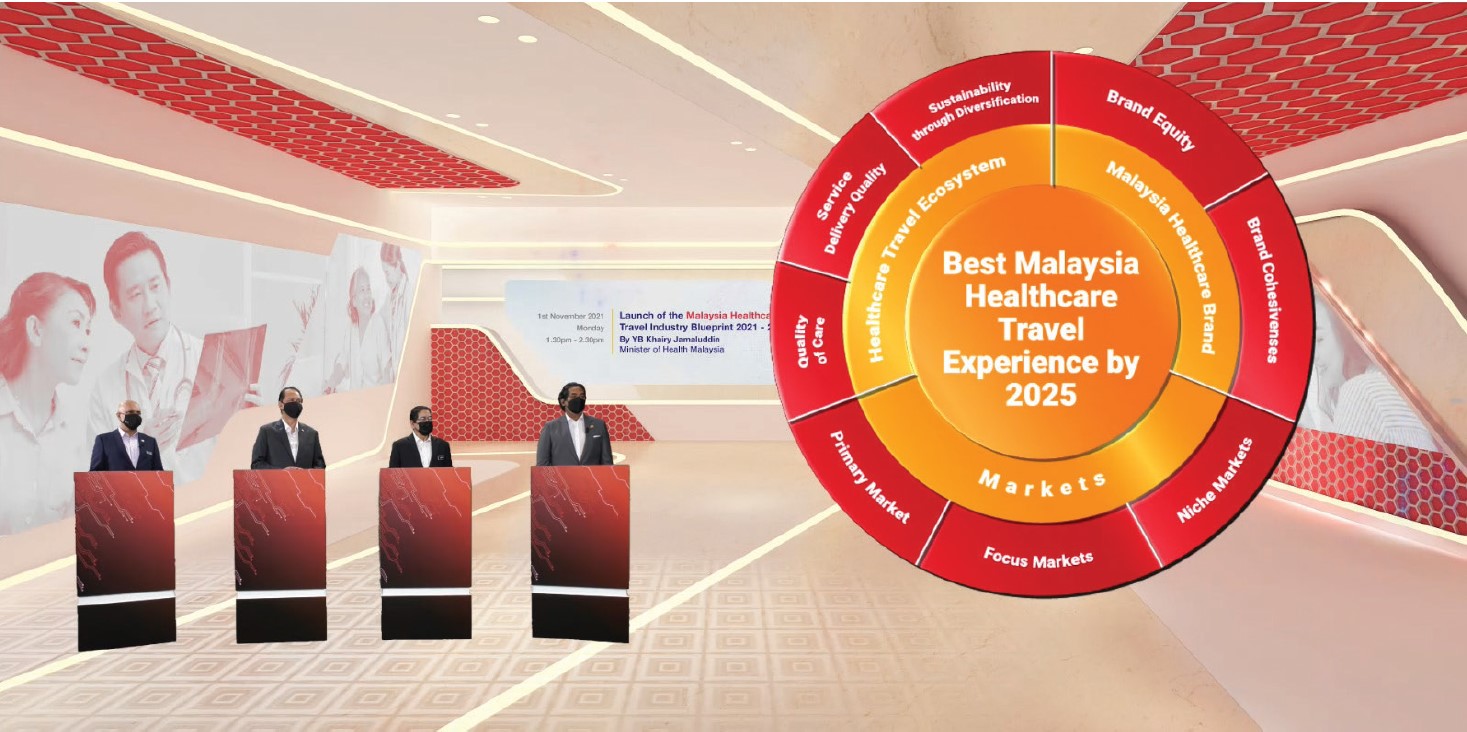
Malaysia’s Health Minister Khairy Jamaluddin (rightmost) spearheads the launch of the Malaysia Healthcare Travel Industry Blueprint 2021-2025 on a virtual platform.
As international travel gradually resumes post-pandemic, Malaysia is pulling all the stops to speed up the growth in medical tourism, guided by a new blueprint unveiled last month by the Malaysia Healthcare Travel Council (MHTC).
Founded in 2009 under the purview of the Ministry of Health, MHTC works with industry players and service providers to grow the health travel sector by promoting the Malaysia Healthcare brand globally. Its new blueprint aims to highlight the country’s healthcare travel ecosystem with a focus on enhancing the traveler experience in the next few years as economies around the world recover from the negative impact of the Covid-19 pandemic.
To enhance and elevate the traveler experience, the blueprint will highlight five areas: quality, affordability, safety, hospitality and seamless journey. The country aims to maintain high quality healthcare services at affordable prices, while equipping highly trained specialists with the latest medical technologies.
The plan also calls for the cooperation among stakeholders to rebuild the industry, amplify the Malaysia Healthcare brand and increase global awareness of the country’s niche offerings such as the Fertility Hub of Asia, the Cardiology Hub of Asia, and the Cancer Care Center of Excellence.
Charting a New Course
“The emphasis will be on providing the best ‘Malaysia Healthcare’ travel experience with world-class medical services at an affordable price, great hospitality and an overall seamless journey for the traveler,” says Mohd Daud Mohd Arif, CEO of MHTC.
Malaysia to enhance the healthcare traveler experience.
“By 2025, we hope to achieve a targeted US$400 million in receipts from healthcare travel, with a significant positive spillover effect into the rest of the Malaysian economy.” That will potentially equal or surpass the hospital receipts generated from healthcare travelers in 2019, just before the pandemic upended the global economy.
Medical tourism has had a significant contribution to the country, with the government estimating the spillover of such medical receipts to the broader economy at US$1.5 billion in 2019 when 1.2 million medical tourists visited the country. The industry achieved an average annual growth of 16% between 2015 and 2019.
While Malaysia’s popularity as a leading healthcare travel destination in Southeast Asia has grown in the past decade, its value propositions of quality, accessibility (to top specialists and medical facilities) and affordability, has grabbed the attention of the international media. Last year, the International Medical Travel Journal in the U.K. named the country “Destination of the Year” while the U.S.-based International Living magazine ranked Malaysia as the “Best Country in the World for Healthcare” from 2015 to 2019.
Anticipating pent-up demand among travelers seeking medical treatments in Malaysia in the post-pandemic years ahead, the country has positioned itself as a safe and trusted destination with a wide range of hospitality choices such as spa resorts, wellness centers and health-centric getaways. It will leverage technology to make the traveler experience even more seamless.
“For every plan and aspiration articulated today, we must bear in mind that the end goal is to build a sustainable future for the healthcare industry,” Health Minister Khairy Jamaluddin said during the launch of the blueprint last month.
Every day we are reminded of just how vulnerable individuals and whole societies have become within our damaged environment. Whether via social media or rolling broadcast news, our awareness of the global challenge represented by extreme weather events and social inaccessibility grows by the day. Our world has never seemed so fragile as it struggles to contend with mounting climate change and heightened social inequality.
Amid all this, Covid-19 has manifested a yet more visible and tangible understanding of these social and environmental issues. Most notably, the pandemic has amplified the importance of delivering relief to those parts of the world where the need is greatest but where vital resources are the hardest to come by.
It is all too easy to be daunted by the sheer scale of challenges many people are facing in disparate parts of the world. Increasingly, though, collaborative global action is coming to be seen as an effective partnership to address the needs of those who are marginalized.
Philanthropy as a Responsibility
In an era where social inequality is at its height, philanthropy has become a global and collective responsibility.
At the international level, businesses, families and individuals are showing their commitment to helping transform lives and communities. This, though, is not achieved through random acts of charity, but through intention and focus, as well as via expertly implemented strategic programs that dig deep into the root cause of many of these issues, ensuring purposeful outcomes and trackable improvements.
Acknowledging the significance of the growing donor capacity, Jean Sung, Executive Director and Head of The Philanthropy Centre at J.P. Morgan Private Bank for Asia Pacific, says, “As societies across the world have had to contend with an ever-escalating number of health and education issues, corporate, family and individual giving is playing an ever more important role in tackling these problems. We truly are in a golden era of philanthropy.”
The Importance of Collaboration, Evaluation and Precision
This golden era has been characterized by a new emphasis on collaboration, evaluation and precision targeting, as well as by a considerable increase in the level of available philanthropic capital. It has also seen an increase in the desire to give back and to make a positive and lasting impact, something that has become a core component of corporate strategies and a priority for many ultra-high net worth (UHNW) individuals.
In the U.S., philanthropists are no stranger to the headlines, with the likes of Bill Gates, Melinda French Gates and Jeff Bezos regularly feted by the media for the scope and scale of their commitment to good causes.
“As societies across the world have had to contend with an ever-escalating number of health and education issues, corporate, family and individual giving is playing an ever more important role in tackling these problems. We truly are in a golden era of philanthropy.”
– Jean Sung, Executive Director and Head of The Philanthropy Centre, J.P. Morgan Private Bank, Asia Pacific
These high-profile donors have succeeded in establishing philanthropy as a primary responsibility, rather than as a secondary option for many of the world’s wealthiest individuals and most profitable corporations. One initiative that clearly encapsulates this is the Giving Pledge, a program jointly launched by Bill Gates and Warren Buffet in 2010.
Seen as revolutionary at the time, the scheme set out to inspire the wealthiest to donate at least half of their net worth to philanthropic causes. Within months of its launch, some 40 billionaires had taken the pledge. As of August 2021, there were 223 pledges from 27 countries.1
Another key benefit of this highly public and largely transparent take on philanthropy has been the move towards greater collaboration. While, historically, many donors gave individually, contributing without any prior understanding of their peers’ initiatives, there is now an acceptance of the importance of collective and coordinated action.
The Asian Charitable Culture
In Asia, such giving tends to be more discreet, with many of the region’s wealthiest individuals favoring a lower profile.
Sharing Resources, Unifying Goals
The region also has its own charitable culture and unique structural characteristics. Most notably, Asian benefactors tend to have, traditionally, a distinct preference for contributing to their local communities and to addressing the specific needs of their home countries. Collaboration, though, is still very much at the heart of giving in Asia. This has seen a growing understanding that working in partnership with like-minded individuals and corporations will hugely enhance the effectiveness of philanthropic capital. Not only does such an approach minimize duplicate targeting, it also allows for shared resources, aligned goals and a more comprehensive evaluation of short- and long-term measures of success.
Such collaboration, especially among low-profile donors, requires coordination and this is where philanthropic advisory support can often be essential. Highlighting the need for such a service, Sung says, “Among the questions I’m most frequently asked by philanthropists are ‘How do I know what everybody else is doing?’ and ‘How do I know I’m not just replicating what someone else is already doing?’
“Fortunately, through our connectivity; knowledge and experience; industry contacts; and understanding of global and regional priorities, we can help our clients maximize their philanthropic impact. We can also help bridge the gap to align their passions and pursuits with other philanthropic entities and individuals that share their values and have compatible philanthropic priorities.”
Nurturing Social Commitment
With many Asian businesses now in their second or third generation of family ownership, philanthropy also tends to be a more personalized family matter than in corporations with a more varied stakeholder hierarchy. This makes the creation of an enduring and positive legacy an imperative for such families and their companies, as well as a matter of shared concern among its family members.
With nurturing social commitment now seen as key to instilling legacy values into emerging generations, education remains the number one priority for Asia’s philanthropists and accounts for a considerable proportion of all such spend. Historically, it has been well above the allocation for alleviating poverty, inaccessibility to healthcare and addressing climate change.
Addressing Immediate Needs
Evaluating the particular challenges of the region and highlighting the need for coordination, Sung says, “While we all agree that education is essential and is the key to financial and social independence for many of those currently living below the poverty line, there is also the problem of immediate need. For someone living below the poverty line, their next meal is more of a priority than their education.
“This is where The Philanthropy Centre at J.P. Morgan Private Bank can really help. We facilitate, introduce and ensure that donors can work in partnership with one another, coordinating contributions that can be complementary and help deliver programs and services that can respond with immediate and longer term solutions to the pressing social issues. This ensures no one falls through the net and outcomes are not undermined by factors outside the remit of any individual initiative.”
Philanthropic Veteran Jean Sung Talks About How To Make Philanthropy Truly Impactful
In many ways it is easy to understand why there is now such a widespread need for the portfolio of services offered by The Philanthropy Centre. Amid all the challenges facing the world—from climate change to social inequality of opportunity and emerging public health threats—we are also on the verge of the greatest transfer of wealth of all time. By 2030, some US$15 trillion will be inherited by the next generation—a generation of young entrepreneurs and businesspeople committed to both honoring the philanthropic legacy of their forebears and to championing their own causes.2
Explaining why there is now such a widespread need for a holistic and sophisticated understanding of how to effectively do good, Jean Sung, Executive Director and Head of The Philanthropy Centre at J.P. Morgan Private Bank for Asia Pacific, addresses the importance of tailored and holistic philanthropic planning.
Q: What differentiates The Philanthropy Centre at J.P. Morgan Private Bank?
Sung: We emphasize the importance of tailoring our advisory service to clients at different stages of their donor journey. For example, when working with first-time philanthropists, we focus on helping them to identify and articulate their passion, with a focus on understanding their primary giving interest and the social issues closest to their hearts. Often, we find ourselves helping build upon a framework passed onto them by their predecessors and coming up with a refined plan for outlining specific and measurable goals—whether geographic or time-specific—that address issues they are most passionate about. In addition, we also assist with deciding which vehicle should be adopted.
Q: How about those in the later stage of their philanthropic journey?
Sung: In the case of those who are more matured in their philanthropic journey, we may be more involved with succession planning or with conducting a mission audit, assessing the achievements to date and allowing for strategic readjustments to be implemented should they be required. At every level, we are there to ensure there is a defined and deliberate approach to each client’s philanthropic journey. We are also there to help and to assist families and/or individuals in formalizing and implementing their philanthropic goals.
Q: What is the one thing that is shared at all stages of a philanthropic journey?
Sung: Regardless of which philanthropic stage the donor client has reached, The Philanthropy Centre is also a firm advocate of the importance of networking. Given J.P. Morgan’s reach, depth and the breadth of its global, regional and local networks, access to the most influential and innovative private foundations is assured, as is social sector engagement with the most effective non-profit organizations active within a diverse range of communities and social issues.
Our philanthropy advisors can be the bridge that connects like-minded individuals and their families with each other so that when they collaborate, they can hear from each other; they can also stand by to offer each other’s global contacts and networks that can assist with [like] objectives; that can deepen impact. Collaboration can be meshed to deliver measurable solutions to social problems.
Q: Why are such networking opportunities important for philanthropy?
Sung: They are hugely beneficial as they are the key means for our clients to interact on an exclusive platform with other like-minded philanthropists. Often, they want to hear what others are doing and discover what has previously worked well, allowing them to hear and to learn from the success (and even failures) of others. These events also reflect the importance The Philanthropy Centre places on understanding the differing priorities and charitable cultures that coexist across Asia. This allows for tailored, informed and up-to-date advice to be provided with regards to optimized giving parameter across the region’s constituent jurisdictions.
Q: What is the essence of successful philanthropy?
Sung: I’m a firm believer that giving back is most effective when professionally managed. Philanthropy is multi-billion-dollar concern. It changes lives and shapes destinies at an individual, regional, and global level. Given its scale and potential impact, families and corporations have also recognized the need for their philanthropic giving to be effectively managed; properly implemented and be fully evaluated and accounted for.
Philanthropy is not a new phenomenon—it has the power to nurture, to stir collaboration between the private, social and public sectors—developing successful models that can stimulate and advocate positive change.
When we can step up with philanthropy and help solve pressing challenges in our own backyards, in our communities, and in our common home—we can build vibrant and healthy societies that are fair and works for everyone—this is good business!
Philanthropy can truly be transformative. We pride ourselves on being the advisory partner for those looking to leave a legacy of caring values, those who genuinely want to make a difference and build back better. We realize and understand that every philanthropic journey needs to start somewhere and we are here to help and support donors through their own individual journey of transforming charitable giving into effective philanthropy. We, at J.P. Morgan, are so proud to work with our clients and their families to help explore options and develop strategies that would work well for them and ultimately deliver their philanthropic goals.