Vietnam’s Next Game Changer: Art

Entrepreneur Nguyen Thi Kim Duc sees art as an important investment channel for the wealthy in Vietnam.

The art market has been viewed as an asset class in its own right by investors around the world for decades now. This continuing trend has helped to contribute to the current boom in the global art market, which reached more than US$67 billion in sales in 2018, up 6% from a year earlier, Art Basel and UBS reported in March.

While works by great Impressionist or Modern artists such as Claude Monet or Pablo Picasso might be top targets for investors, their pieces are already largely in public and private collections. As a result, more investors are turning their focus to newer markets and artists, including artwork coming out of Vietnam. In June 2019, for instance a piece by late Vietnamese artist Le Pho sold for $1.4 million at Christie’s in Hong Kong, a record price for a work by a Vietnamese artist.

One prominent art investor is Vietnamese entrepreneur Nguyen Thi Kim Duc, who has invested in paintings from notable Vietnamese artists such as Bui Xuan Phai, Nguyen Sang, Nguyen Gia Tri, Nguyen Tu Nghiem, Tran Van Chan, Le Pho, Le Tiet Cuong and Trinh Tu, among others.

“America, Europe and China have long invested in art; indeed it is an important investment channel for the super-rich. Vietnam should also be part of this trend. I see great potential and opportunity in art investment,” Duc says.

An Artistic Streak

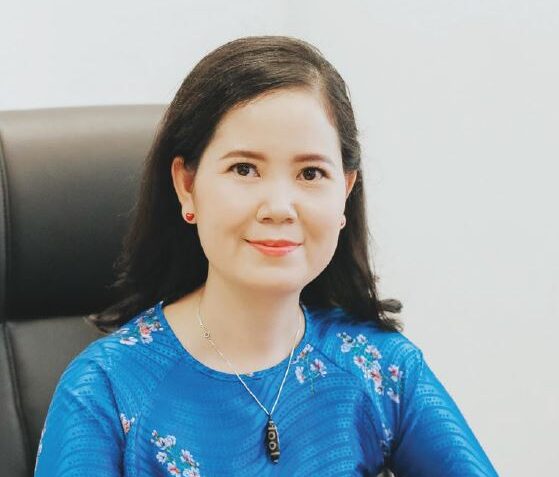
Duc, Founder and Chairman of HTD Media, was born in Hanoi in a family of artistic talent. Her father, Nguyen Son Dong, is well-known for his novel Xu Doai May Trang May. Under his influence Duc has maintained an interest in the arts even as she built a successful career in business.

Aside from being a collector, Duc herself is a painter. Earlier this year, she presented “Cover of Future”—a watercolor on Vietnamese silk that she painted to show the devastating result of climate change—to world leaders at the United Nations Day of Vesak in Vietnam. The painting will also be exhibited at the Florence Biennale art exhibition in Italy in October.

Duc’s painting “Cover of Future” was on display at the UN Day of Vesak celebrations in Vietnam in May.

Bringing Vietnam’s Art to the World

Duc has gone beyond investing in Vietnamese art for her own collection, and is now focused on growing the market by attracting more investors. “I do not want to invest alone and succeed, I want the Vietnamese super-rich to join in helping the local art scene to grow and spread to the region,” she says.

In September, Duc launched the Kim Duc Art Investment Fund in Vietnam to invest in artworks from Vietnam and from around the region, with plans to open the site to global investors in 2021. She also started the Local Art auction site, which will sell the works of talented Vietnamese and Southeast Asian artists. By leveraging blockchain technology, the site will help to protect artists’ works from being copied.

She hopes to expand the investment fund’s focus beyond Vietnam to international markets and auctions and believes that, “one day our art collections will be in the spotlight for world art collectors.” Just as Chinese artwork has sold for record prices in New York and Hong Kong, Duc is confident the same can happen for Vietnamese art. She realizes, however, it will take more time and resources to grow the Vietnamese market and launch Local Art globally. Despite the challenges, she is determined to make Local Art a game changer in the art market in Vietnam and Southeast Asia.

Local Art plans to donate 10% of its turnover to plant trees in Vietnam. Duc has also committed to giving 50% of her wealth to charitable causes, and will support young artists in Vietnam through the Kim Duc Art Investment Fund from next year.


Local Art Advisory Board

The advisory board of the Local Art auction site started by entrepreneur and artist Nguyen Thi Kim Duc is comprised of the following members:

Nguyen Hong Hue (Peter Hong) – Chairman of Advisory Board – Permanent Vice Chairman / General Secretary of Vietnam Overseas Business Association

Nguyen The Khai – Member of Advisory Board – Architectural consultant – in charge of more than 100 Planning and Architecture projects with five architectural awards in Vietnam

Mike Lai – Member of Advisory Board, CEO Vietnam Global Media
HENRY JACQUES The Art Of Fragrances

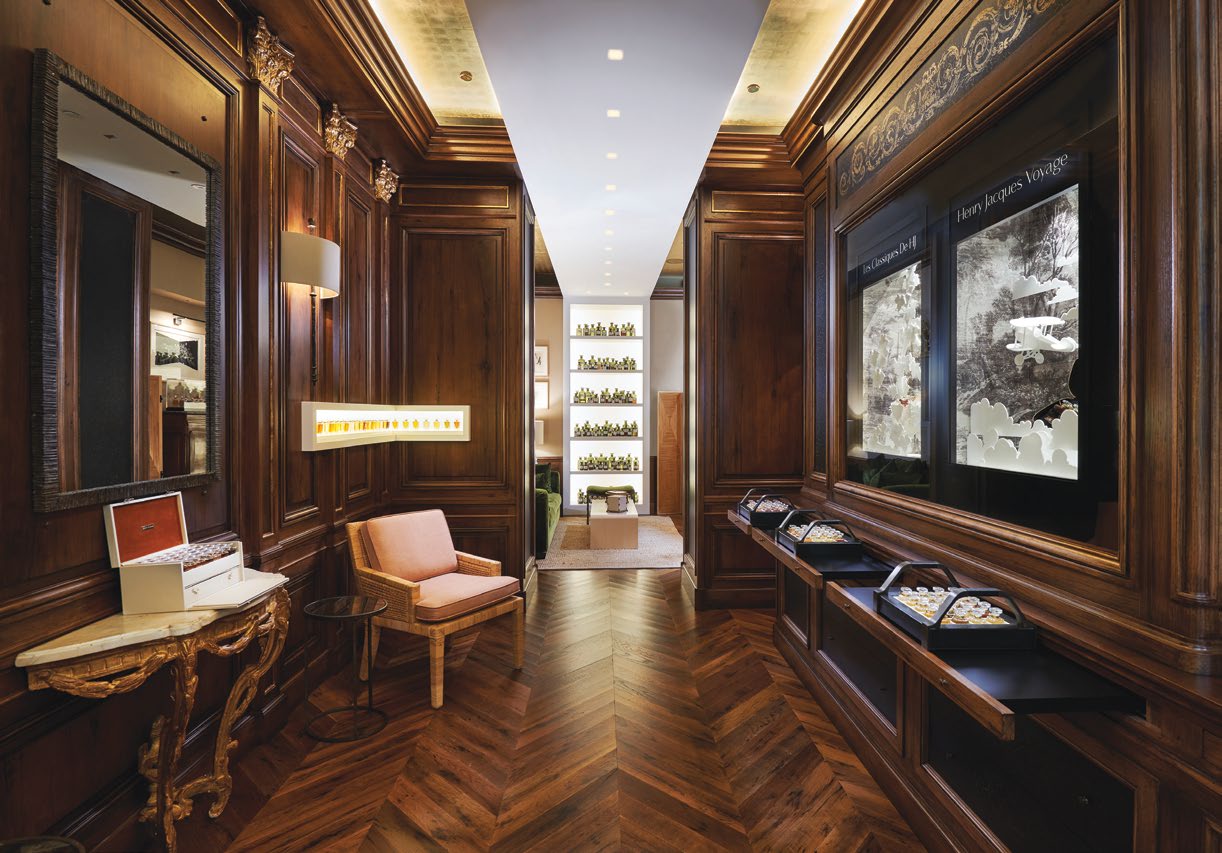
Inside the Singapore boutique
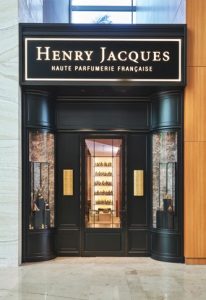
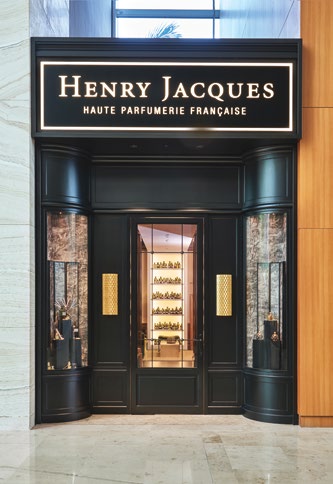
Henry Jacques boutique in Singapore

Since its founding in 1975 by Henry Jacques Cremona, French haute perfume Henry Jacques has forged a reputation for creating bespoke scents for elite members of society—from members of royalty to captains of industry. The soul of Cremona’s creations lies in a laboratory in the town of Grasse on the French Riviera, where more than 3,000 formulas are housed. These are comprised of natural ingredients painstakingly sought from around the world by the brand’s perfumers. From the essences to the bottles, every aspect of a Henry Jacques creation is created in-house to ensure that the quality of the brand’s offerings are maintained at an exceptional level.

The perfume house has only recently expanded its exclusive distribution with the opening of a highly select number of retail shops. Its first-ever retail presence debuted as a store-in-store at Harrods in London in 2014. This was followed by two stand-alone boutiques in Asia; the first at the Singapore luxury hotel Marina Bay Sands, and another located at Pavilion Kuala Lumpur shopping center. These boutiques offer a diverse range of products—from the brand’s Couture collection, Masterpieces collection, High Jewelry collections and Les Classiques collection. As tribute to their heritage, the Henry Jacques boutiques offer the brand’s bespoke perfume service.

To create the exceptional scents contained in each bottle, Henry Jacques perfumers take inspiration from a variety of sources, resulting in a dazzling concoction of notes and blends, colors and textures, to delight even the most discerning nose.

The private viewing room

A Palette of Essences

Henry Jacques perfumes are created only with the highest quality natural essences sourced from around the world, which are as varied as the flowers from which they are extracted. This wondrous palette of essences includes velvety rose, intoxicating tuberose, sunny lavender, sumptuous jasmine, soft, sensual, heady musk, and the subtle heat of marine ambergris. Like highly skilled alchemists turning metal into gold, Henry Jacques perfumers then work rigorously in their laboratories to bring out the quintessence of each of these premium ingredients.

To ensure that their presentation accurately reflects the quality of the product within, the finished perfumes are bottled in intricately designed crystal flacons or customized jewel-toned flasks made by the world’s leading crystal-glass makers and jewelers.

Mr Henry Jacques Cr emona in the laboratory

Les Classiques Collection

In 2014, Henry Jacques’s daughter, Anne-Lise Cremona, introduced the world to the Les Classiques collection, which is made up of 50 scents that come in 15ml or 30ml flacons. Les Classiques was born from a challenge: to create an exquisite selection of perfumes to represent the perfumer’s extensive and diverse body of olfactory work in a single collection. The 50 unique fragrances act as a gateway for newcomers to the Henry Jacques universe. Each perfume is designed to enhance the personality of the person who uses it. In essence, the perfumer becomes a matchmaker between customers and the ideal life they seek.

Fittingly for such an exclusive collection, each fragrance is housed in a minimalist crystal bottle specially designed by the brand’s Artistic Director, Christophe Tollemer. Each Classique is presented in a varnished wood case embellished with gold leaf, opening to reveal a bottle resting on a silk cushion.

Henry Jacques is also working to revive the pleasure and satisfaction of assembling one’s own personal perfume collection; an art that is akin to building an elegant wardrobe. To this end, the brand has come up with Caves à Parfums, a cabinet to hold crystal bottles from the Classiques de HJ line. Selecting perfumes from Henry Jacques wide range of fragrances has added meaning as you piece together your own mosaic of scents in this exquisite cabinet available in two sizes: 10 x 15ml and 15 x 15ml.

Les Classiques Collection

Les Toupies I
Les Toupies II

A Haven for the Senses

Henry Jacques has always been discreet about how it distributes its exclusive products, only setting up a retail presence as recently as 2014. The decision to do so was accompanied by months of consideration and reflection over how these boutiques could best reflect Henry Jacques’ brand values.

Tollemer led the creative process, designing each space as a haven to escape daily life; a place where customers can realize the most idealized versions of themselves through the brand’s offerings. Each of the boutiques feature cabinets of curiosities, elegant design, comfortable furnishings and discrete service to reflect the Henry Jacques legacy. While the perfume organ takes center stage, the collections themselves are hidden from sight, waiting to be discovered.

The Henry Jacques Singapore shop was its first stand-alone boutique. The space was inspired by the old-world charm and grandeur of historic Parisian apartments, but given a twist of modernity to suit today’s consumer tastes. “The entire boutique was conceived and assembled in France, and reassembled in Singapore by our team. This long process was the only way to guarantee uncompromised French craftsmanship. Like our perfume, each component is of rare quality,” says Tollemer.

Les Toupies: A Fairytale Fragrance

One standout piece from Henry Jacques Masterpieces collection is Les Toupies. This collection was creatively envisioned as part of a tale, with each perfume representing a character in a love story.

Les Toupies, which means Spinning Tops, are made up of couples: two unique and exclusive fragrances—one for men and one for women. These creations are designed to be timeless while showcasing a distinctive style all of their own.

The first two from the collection were “Mr. H and Mrs. Y,” followed by the next couple, “No. 16 de HJ and No. 81 de HJ.” Each fragrance is inspired by French romance and elegance. The perfumes are housed in extraordinary crystal flacons that took more than three years to develop and represent a technical and artistic breakthrough for Henry Jacques perfumes.

They are specially designed for those who are passionate about art and historic French craftsmanship, with every detail meticulously crafted by Tollemer. He created a bottle that is both multifaceted and symmetrical, but with no central point. Despite their intricate design, these crystal marvels sturdily hold the precious nectars within.

The men’s flacon is slightly larger than that for the women, but the curves of each appear to respond to each other in a reflection of their synergy. says Henry Jacques: “We imagined the Toupies collection as a great fresco, filled with myriads of stories and characters, like [Honoré de] Balzac’s ‘The Human Comedy.’ One Toupie after the other, one fragrance after the other, we wish to express the immensity and fragility of life and its many romances.”

G20 Interfaith Forum Japan 2019

From left: David Cameron, former British Prime Minister; Enda Kenny, former Irish Prime Minister; Haruhisa Handa, WSD Chairman; John Key, former New Zealand Prime Minister; Graca Machel, the first Education Minister of Mozambique

The G20 Interfaith Forum took place at Hotel New Otani Makuhari in Chiba prefecture from June 7 to 9. Speaking at the conference, Haruhisa Handa, Chairman of Worldwide Support for Development (WSD), a nonprofit organization that co-hosted the event, stressed that cooperation among religious, political and private sectors is crucial to the realization of the U.N.’s Sustainable Development Goals (SDGs).

This year’s sixth annual G20 Interfaith Forum was the largest to date, attracting an audience of 4,000 over the course of the two days, with sessions open to the public. Discussions covered a range of local and global issues, and the forum’s agenda focused on how religious leaders can point the way forward and inspire people around the world—particularly in regard to SDGs—targets adopted by all U.N. member states in 2015 to achieve a better and more sustainable future.

The 17 SDGs are based on the philosophy that “no one should be left behind.” As all are linked, a breakdown in the process of achieving even one goal hinders the success of the entire agenda for sustainable development.

One of the major factors slowing down the movement is the lack of progress toward ending poverty—a target defined in goals one and two. The forum’s main mission is to highlight issues gathered from the global network of philanthropists and charitable organizations of various faiths that provide support in impoverished areas, and to make policy recommendations to G20 leaders.

Also attracting attention to the forum was key organizer WSD. The group offers humanitarian assistance to victims of conflict and refugees, and has established a neonatal hospital in Laos and a free medical emergency clinic in Cambodia. WSD also holds various international forums to promote the spread of peace around the world. It hosts the annual Global Opinion Leaders Summit, which has welcomed former British Prime Minister Tony Blair and former U.S. Presidents Bill Clinton and Barack Obama, among others, to present guidelines on how developed countries should tackle increasingly complex societal issues.

In addition to his leadership of WSD, Handa is President of Misuzu Corp., which runs the Handa Watch World event. Handa, who is well known for his numerous charitable activities and achievements, has named John Key, former Prime Minister of New Zealand, and Enda Kenny, former Prime Minister of Ireland, as honorary chairs of WSD.

1. Panel discussion with Enda Kenny, John Key and Graca Machel 2. WSD Chairman and G20 Interfaith Forum host Haruhisa Handa 3. David Cameron delivering his keynote speech 4. Denise Coghlan, winner of the Nobel Peace Prize, and 5. Osama Al-Azhari, adviser to the Egyptian President on religious affairs, served as moderators

At this year’s G20 Interfaith Forum, 300 leaders in the fields of religion, politics, economics, education and the sciences gathered in Japan to exchange ideas on topics ranging from poverty and the refugee crisis to education and environmental degradation. The lineup included prominent speakers such as former British Prime Minister David Cameron; Graca Machel, the first Education Minister of Mozambique and Chancellor of the University of Cape Town; and Nobel Peace Prize winner Denise Coghlan. Discussions on the second day of the forum began with remarks by Koichi Hagiuda, Executive Acting Secretary-General of Japan’s Liberal Democratic Party, who delivered greetings from Prime Minister Shinzo Abe.

WSD Chairman Handa opened the forum on June 8, stressing the need to include faith leaders in policy decisions: “As 85% of the world population has a deep connection to religion, politicians must include [a network of religious leaders] in addressing global problems,” he said.

Religious leaders, including Pope Francis and Ecumenical Patriarch Bartholomew, gave messages to the forum about the shared care and concern across diverse religious communities for underprivileged children and others. Professor Osama Al-Azhari, adviser to the Egyptian President on religious affairs, echoed this sentiment, noting that the principles of the SDGs match the teachings of the Koran—a view shared by Muslim leaders.

Innocent Children Are the Biggest Victims

Most of the speakers touched on the problem of poverty. Estimates from the World Bank show the number of people in extreme poverty—those living on less than US$1.90 a day—remains unacceptably high. According to U.N. data, most of the world’s poor live in developing countries, and one in nine are suffering from starvation. University of Cape Town’s Machel, who was married to late South African President Nelson Mandela and is a staunch advocate for women and children, spoke on the issue. “Due to conflicts and the effects of climate change, 6.5 million people are refugees, of which 52% are children,” she said, describing how the weak become targets of criminal networks engaged in human trafficking and illegal organ harvesting.

Machel also emphasized the necessity of providing education for refugee children, who are half as likely to attend elementary school as non-refugee children.

“Children are treasures. If given a chance, they will contribute to the economic growth of developing nations. Without [education], they will grow up without morals and creativity, and as adults they will be unable to fully participate in society,” she observed, urging collaboration among academic, religious and private sectors to come up with innovative solutions.

About 90% of refugees flee to developing countries, where they are vulnerable to the worst human rights violations. It has been reported that criminal organizations impersonating humanitarians infiltrate refugee camps, kidnapping children and selling them into sex and labor trafficking.

What can we do? First, we must accurately grasp the situation, and then act upon our natural human emotions. The evolution of technology has made it possible for anyone to speak up and send a message all over the world.


WORLDWIDE SUPPORT FOR DEVELOPMENT (WSD)

https://wsd.or.jp

Managing Wealth In An Era Of Change: Will You Thrive?

Michelle Lau, Head of Private Wealth Solutions, Southeast Asia, HSBC Private Banking; Philip Kunz, Head of Global Private Banking, Southeast Asia, HSBC Private Banking

Wealth management, an industry that has upheld traditions for centuries, is undergoing rapid transformation. At the heart of today’s changes are the evolving needs of clients. These are being shaped by the enormous amount of wealth that is increasingly held by Generation X and Millennials. The younger generation is not solely concerned with financial gains: It is equally motivated to help overcome environmental and social issues such as climate action, water security and poverty reduction.

A further consideration is the growing proportion of wealth held by women, which today stands at about 30%. This is significant, as research has shown that while women typically make less aggressive investment decisions, they create an inclusive environment that promotes cohesiveness and well-being among staff and the wider community.

“In about five years’ time, one-third of Asia’s wealth will have moved from the older generation to the next,” explains Michelle Lau, Head of Private Wealth Solutions, Southeast Asia, HSBC Private Banking. “That’s about US$40 trillion of the region’s estimated US$115 trillion of wealth.”

The amount of new wealth generated by Asian entrepreneurs and business owners is also noteworthy. Currently, more than 40% of new wealth globally resides in the region, split equally between mature markets such as Singapore and Hong Kong, and emerging markets such as China and India.

“Although interest in sustainable investments is booming, viable opportunities that support environmental and social causes while delivering financial returns remain limited,” cautions Lau. “Identifying these requires specialist investment managers who understand both the rewards and risks these types of investments present.”

Against the Odds

Managing wealth in today’s era of change is greatly challenging for entrepreneurs and business owners. Not only must their businesses stay on top of a myriad of macro issues—including trade tensions, digital disruption and increased demand for greater personalisation by customers—they must also manage investment portfolios that are exposed to heightened volatility across a wide range of asset classes and markets.

For entrepreneurs and business owners seeking to pass their business to the younger generation, they too face difficulties. Typically, this is due to two reasons: Either there is no successor or there are too many, where rivalry and conflict among siblings flourish. Secondly, the younger generation is often unprepared for leadership, lacking the skills, knowledge and expertise required for the new role.

“By creating a holistic plan that outlines a business’s goals and objectives, and considers generational preferences, equal opportunities and the need to continually innovate, entrepreneurs and business owners will have built a platform that allows them to prosper for many generations to come.”

– Philip Kunz, Head Of Global Private Banking, Southeast Asia, HSBC Private Banking

“Studies find that only 30% of wealth is successfully passed to the second generation, with 12% passed to the third,” says Philip Kunz, Head of Global Private Banking, Southeast Asia, HSBC Private Banking. “Just 1% of wealth reaches the sixth generation.” This trend, attests Kunz, shows no sign of abating. Against these odds, how can entrepreneurs and business owners thrive?

Robust Planning Required

Planning can overcome most issues that entrepreneurs and business owners encounter.

“As a starting point, they must establish a shared sense of purpose and a clear vision for the future,” says Lau. “This involves the agreeing of goals and objectives, and the creation of a governance framework.”

The drafting of values is equally as decisive. Not only do they unite business owners and staff internally, they can also be a business’s unique proposition. Having a distinct set of values not only attracts top talent, research finds, it also appeals to customers and can act as a differentiator to rival businesses.

Complementing these measures, the establishment of a family office can enable greater oversight of business and personal interests. These range from investments to tax, estate management and philanthropic activities. The family office can ensure greater alignment between all activities, and shield each interest against the risks associated with internal and external changes.

The family office usually includes its own team of wealth professionals, who understand the investment preferences of entrepreneurs and business owners, and can allocate their wealth to viable, performing investments. For investors concerned about climate change, for example, these might include green bonds, which fund carbon-neutral projects while delivering healthy returns.

As the private banking hub of Southeast Asia, a US$3-trillion-dollar economy that is growing annually by more than 5%, Singapore is well positioned to assist regional entrepreneurs and business owners with their wealth needs.

“Singapore’s safety and security, pro-business environment, transparent legal framework and regional interconnectivity make the city-state the premier location within Southeast Asia from which to manage wealth,” says Kunz. “Equally, Singapore’s wide pool of highly skilled wealth management professionals rival those of any other city globally.”

Embracing Change, One Generation to the Next

The family office is commonly used to support the ambitions of the next generation.

“The family office allows the younger generation to explore new opportunities and help grow the business in novel and innovative ways,” says Lau. “Not only can the younger generation draw on the know how of other family members, it can capitalise on the wisdom of specialist advisors from a wide variety of fields.”

For second-and third-generation family business owners, this is crucial, as typically they are more risk-averse than the founding generation but need to continue innovating to keep up with market changes. Fear of failure, Lau asserts, must be replaced by the entrepreneurial spirit that drove the founding generation. Otherwise, the longevity of the business will be challenged.

“By creating a holistic plan that outlines a business’s goals and objectives, and considers generational preferences, equal opportunities and the need to continually innovate, entrepreneurs and business owners will have built a platform that allows them to prosper for many generations to come,” says Kunz. “Having served Asia’s business community since the bank’s formation in 1865, HSBC has a rich history of realising the wealth preferences of clients, and ensuring that their companies and investments thrive during times of great change.”

This article is issued by The Hongkong and Shanghai Banking Corporation Limited and its wholly owned subsidiary, HS BC Trustee (Singapore) Limited.

Nguyen Thi Kim Duc: A Vietnamese Entrepreneur’s Success Story

As a child growing up in the 1970s in Hanoi, Nguyen Thi Kim Duc, the founder of Vietnamese technology group HTD Media, dreamt of being an artist. But life was difficult in Vietnam in the years following the Vietnam War, so she put aside her artistic passions in favor of more practical pursuits.

She finished high school but found her employment prospects were limited to low-paying jobs. Determined to get ahead, Duc plunged head first into the world of entrepreneurship. She started her business in the 1990s with the meager savings she had managed to accumulate, filling the gaps in her knowledge by devouring books on business and economics.

“Initially I was just buying and selling some items to make a profit. After accumulating some capital, the savings from business profits gave me a chance to participate in real estate. This was a big turning point in my life,” recalls Duc.

She invested in property in neighborhoods around Hanoi that were thinly populated at that time though located relatively close to the city’s center. “I expected that after a few years, when the population increased, the economy would develop more and the areas I invested in would increase in value quickly,” she says.

Her instincts proved true; after a few years, the real estate market boomed, allowing Duc to net a huge profit. She sought the advice of experienced investors on how to make the best use of her new wealth, who suggested reinvesting the money in real estate with a focus on locations that had yet to be developed. It was a formula that made Duc a millionaire by the time she was 30. She believes the country’s buoyant real estate market—which has propelled the fortunes of other savvy investors—is a reflection of Vietnam’s rapidly growing economy.

She also learned an important lesson from her success in real estate investment: that women can succeed if they make the effort to acquire knowledge and are able to use their negotiating and diplomatic skills to their benefit.

“The real estate sector in Vietnam is dominated by men.” However, after what I experienced, I can be confident that women in Vietnam and developing countries can have equal opportunities to compete and even have an advantage over men in some areas,” she says.

The key success factors that can help any woman succeed in any field, she says, are “concentration, determination, derring-do, a spirit of not giving up, flexibility and discipline.”

Duc adds, “I have done it, [and] will continue to do more than that. Hopefully, my story will prove that women can succeed and follow their own destiny.”

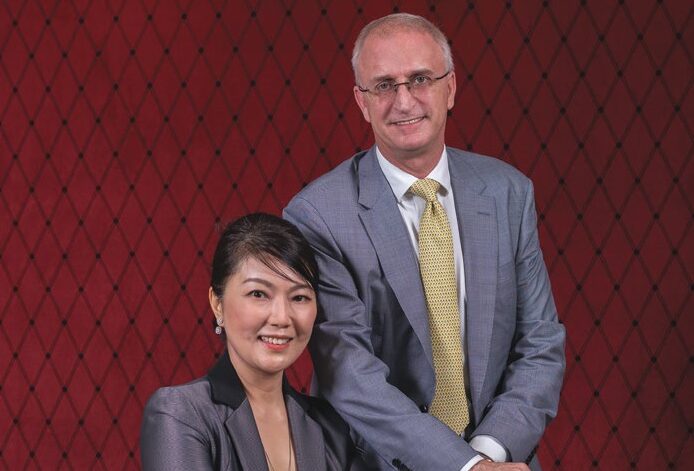
Duc meets her partners at HTD Media’s office in Hanoi.

Vision is Key to Success

After her success in the property market, Duc looked at other entrepreneurial opportunities that she could capitalize on. Realizing that the global economy is increasingly being driven by technology, she started investing in technology startups in 2015. “The reason why I boldly changed to a new field was based on my vision. It had previously helped me succeed in real estate, and today it will help me succeed in the field of technology. Vision is very important, it determines everything,” she explains.

Duc founded HTD Media, a technology company engaged in content production, social networking services, financial technology, communications, e-commerce and software production. The company’s vision is to become the leading technology company in Southeast Asia. Specifically, it aims to provide products and content that have a global influence and help put Vietnam on the world’s technology map.

HTD Media’s core team

Besides technology, she believes art will be another investment for emerging Asian wealth in the near future, and has invested in thousands of artworks around the world through an art investment fund. In the future, she plans to introduce an innovative service that uses blockchain technology to protect buyers from art forgeries as well as make the buying and selling of artwork faster and easier, creating greater value for global investors.

A Responsibility to Give Back

Duc believes in giving back to the communities around her. She chose reforestation as one of her key charitable initiatives after witnessing the negative impact of urbanization on trees and forests in Vietnam. Her efforts have led to the planting of about 200,000 trees across the country in the past five years.

Her company HTD Media has donated millions of dollars to the poor throughout the country, including the elderly, the disabled, students and orphans. “This is something I have to do to share opportunities with others and help reduce the gap between rich and poor, which is a serious problem in Vietnam,” Duc says.

Most recently, she participated in a campaign to limit plastic waste. This initiative led her to being honored in June by Vietnam’s Prime Minister Nguyen Xuan Phuc. “I believe that there are many successful people around me and most of them are talented, kind people, so hopefully through my story, I can further promote the spirit of giving back to the community to successful individuals around the world,” she says.

As for her childhood dreams of being an artist, Duc has not given up on that either. Earlier this year, she presented “Cover of Future”—which she painted to show the devastating result of climate change—to world leaders at the UN Vesak festival in Vietnam.

“Through the ‘Cover of Future,’ I wanted to remind world leaders about their responsibility of preserving our world. Even though I’m just a businesswoman in Vietnam, I want to do my part in preserving our world and this is the first step,” she says.

Asia Innovatif+ Leading Next Gens Toward Innovation

Asia Innovative Agency’s Co-founder, Mei Tan

In the digital economy, the challenge for the next generation of leaders (Next Gen) in traditional family businesses is to innovate or risk being upended by new market disruptions.

The Asia Innovatif+ Summit & Awards, which will be held October 26–27, is aimed at “promoting innovation through global collaboration by bringing together Next Gen leaders, startup owners and venture capitalists from across the region under one roof,” says Mei Tan, Co-founder of Asia Innovative Agency, the event organizer.

“The movie ‘Crazy Rich Asians’ may be fiction but there is some truth to family offices holding enormous wealth in this region, and many are prepared to embrace innovation or invest in startups,” she says.

Tan herself is no stranger to innovation. After an eight-year stint in the U.S.—first as a student and later as a graphic designer—she returned to Penang in 2010 to join the family business, Asia Green Group, an established property developer, plywood manufacturer and international trading company. As the company’s COO, Tan began to introduce innovative technology in the workplace. On the side, she launched a co-working space called Scoopoint to foster creativity within a community of like-minded people. The Asia Innovatif+ Summit & Awards event is her latest initiative, working with Co-founder, Steve Wee and the Penang state government to promote innovation in the digital economy.

“There is a bit of something for everyone attending the summit. Next Gens will get the chance to hear success stories first-hand from those who have successfully transformed their businesses. They will also get new ideas on how to incorporate innovation into their family businesses and how to leverage on startup ventures. VCs will get the chance to tap into the Next Gen network and resources, and at the same time discover new startup ideas. Last but not least, startup owners will get exposure and may potentially find the right match for their future growth,” explains Tan.

The summit will feature a star-studded cast of Next Gen leaders coming from companies such as BookDoc in Malaysia, MaBelle in Hong Kong and PT Citra Marga in Indonesia, among others. Topics discussed will range from real estate, manufacturing, agriculture and retail to artificial intelligence, fintech and B2B innovations. Startup owners will get the chance to present their business case and vie for the “Startup of the Year Award.”

Keynote speakers during the event include Penang’s Chief Minister Chow Kon Yeow and Dato’ Seri Anwar Ibrahim, President of the People’s Justice Party and leader of the Pakatan Harapan coalition. Joining the lineup will be speakers from China, Indonesia, Singapore, Thailand, Vietnam, Germany and the U.S., besides Malaysia.

Setia Spice Convention Centre in Penang, venue of the Asia Innovatif+ event

One of the event highlights is a panel discussion by Next Gen leaders who will share their views on challenges faced by family-owned businesses. Fringe activities during the event include industry visits, sightseeing and networking sessions.

Besides Next Gen leaders, venture capitalists and startup owners, the event is expected to attract entrepreneurs and C-level executives from 18 countries to the island state of Penang, famous as a tourist destination with Unesco World Heritage status and hailed as the “Silicon Valley of the East” by international media.

“With this event, we hope to create a better ecosystem linking Next Gens with startup entrepreneurs. We also hope that all the participants will better understand innovation and be prepared to create disruptions in their respective industries. Who knows, the next Airbnb or Uber could arise out of this event to revolutionize old business models,” says Tan.


www.innovatifplus.com

Delta Soap: The Story Of A Nigerian Brand With Asian Influence

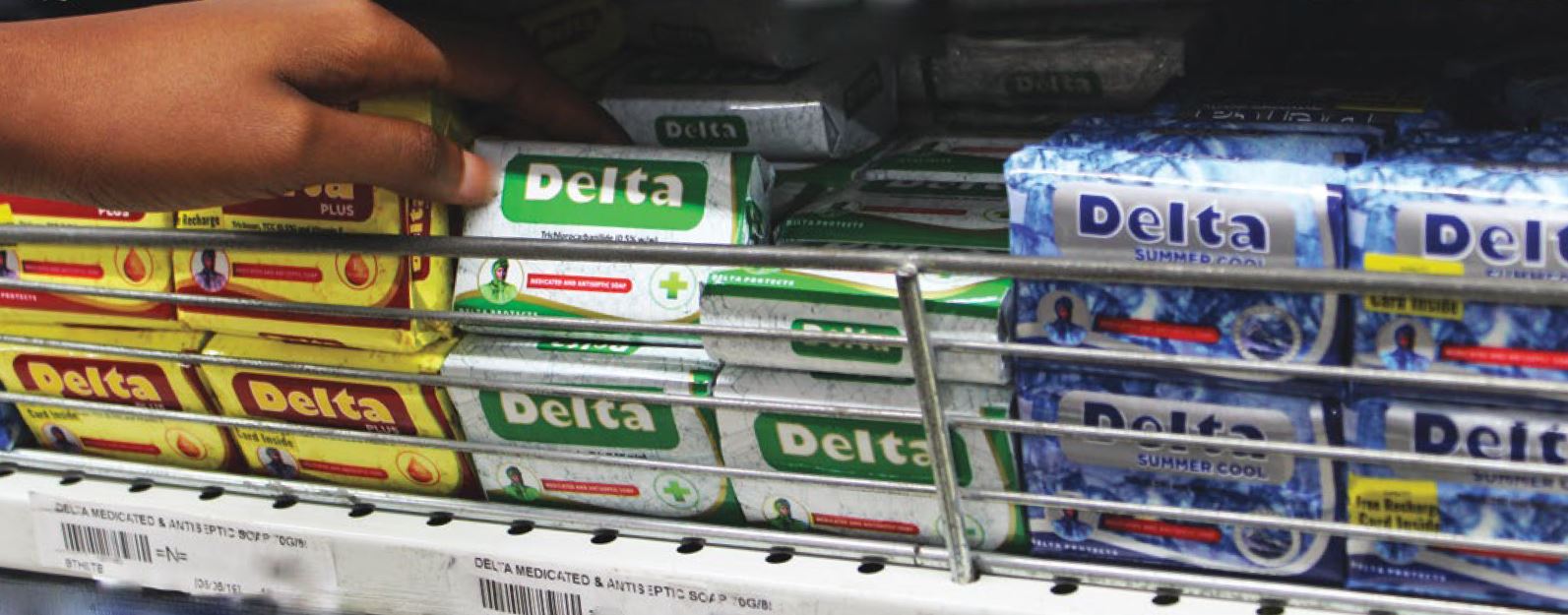
Consumer picking Delta Soap

Few people would assume that a popular medicated soap brand sold in West Africa has its origins in Southeast Asia. This, however, is the case of Delta Soap, a leading personal care brand owned by Orange Group, a large, diversified fast moving consumer goods (FMCG) group in West Africa.

Founded by Nigerian entrepreneur Sir Anthony Ezenna, Orange Group has supported the entry of several Indonesian companies into the African market. The group is present in West Africa across four key segments: pharmaceuticals, beverages, personal care and lighting. It counts some of Indonesia’s largest family businesses among its partners, including Kalbe Farma, the country’s largest pharmaceutical company, as well as Tempo Scan Pacific, Dexa Medica and Mensa Group.

As a result of these relationships, Orange has gained valuable insights from studying how its partners compete in Southeast Asia’s dynamic consumer markets. Some of these lessons were applied to the successful launch of Delta Soap in Nigeria.

Delta Soap production

Spotting an Opportunity

In the 1980s, Reckitt Benckiser launched its Dettol brand in Nigeria and proceeded to build the medicated soap market in the region. The benefit of protection from germs made medicated soaps an instant success in Nigeria, which struggles with sanitation issues and access to clean water. Dettol was so successful that it began to threaten the already established beauty-soap segment.

By 1993, Sir Ezenna saw an opportunity to establish a competing brand that could deliver the same benefits at an affordable price. At that time, Dettol was produced in Europe and exported to Nigeria, which was experiencing a currency crisis and had highly price-sensitive consumers. The key to Orange Group’s strategy was to source soaps competitively from either Malaysia or Indonesia, which have a global comparative advantage in producing palm-based products such as toilet soap.

Delta Soap was rolled out to the Nigerian market in 1994 as a more affordable alternative to Dettol. Although sales were brisk initially, its brand equity paled in comparison with Dettol. Sir Ezenna’s foray into the personal care business demanded that he learn more about brand building and guerrilla marketing. Orange Group began developing TV campaigns to market Delta Soap, and differentiate it from Dettol’s highly successful branding campaign that featured doctors.

As many new consumers of medicated soap were former beauty soap users, Delta’s TV commercials focused on the more aesthetic benefits of using medicated soaps. The product was positioned as providing protection from germs while also delivering the moisturizing and “skin glowing” benefits of beauty soaps. Commercials featuring pop music and young trendsetters became synonymous with the Delta brand and were a hit with the target audience. The branding campaign was a success and Delta Soap would go on to become a market leader in the medicated soap segment.

In 2005, the Nigerian government banned the importation of finished soaps, and this drove Sir Ezenna to invest US$23 million in the construction of a 20,000-square-meter production site in the eastern city of Onitsha, Nigeria. The investment paid off; by 2007 Delta Soap realized US$12 million peak in annual sales.

Declining Market Share

In the following years, Orange Group witnessed a series of management changes, which involved Sir Ezenna stepping down from day-to-day operations. However, the new management team had little sales and marketing expertise, which meant that little attention was given to brand building and improving the company’s route-to-market. The team also made some unpopular changes to Delta, such as switching its composition from mainly palm oil to tallow.

As a result of these and other misguided strategic decisions, Delta Soap lost significant market share over the next decade. By January 2017, the product had dropped to No. 4 in the segment with 12% market share. Dettol, meanwhile, had regained its market leadership.

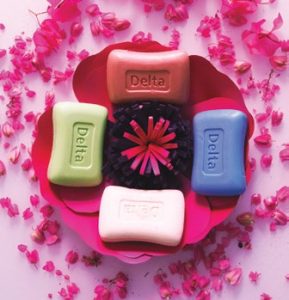
Delta Soap range

Refreshing the Brand

As Delta approached its 25th anniversary, the company embarked on an aggressive relaunch that included changing the product’s packaging and formula while introducing it to a younger market segment that was not as familiar with the brand.

Under the new management team lead by second-generation Ezenna family members, Orange Group adopted a “back to the core” approach to sales and marketing. “We simply decided to go back to doing what worked and made commercial sense. Nothing fancy or complex. We had to go back to the basics,” says Ernest Ezenna, who currently serves as the group’s Business Development Director and is part of the second-generation Ezenna family management team.

First, the team decided to launch a “new” Delta Soap with a modern look and shape, and revert back to the original palm oil-based formula. This new formula enriched the soap fragrance, which was found to be a key driver for purchase in consumer studies. Second, the sales team focused on primary markets and channels in the traditional trade segment that would allow the soap to be distributed more effectively among small retailers. Nigeria currently generates 95% of its retail sales from traditional trade.

Finally, the team developed a campaign to relaunch Delta to appeal to a younger audience, similar to the campaign used at the brand’s inception. But this time around, the campaign would be driven by social media.

Inspired by a trip to Jakarta, Ernest witnessed first-hand the potential of social media and leveraging the influence of online celebrities. “All you have to do is open Instagram or YouTube in Jakarta, and you are bombarded with multiple ads targeted at young consumers by companies like Unilever Indonesia and, of course, our partners like Kalbe and Tempo Scan,” says Ernest.

Using this insight, the management team developed a social media commercial in the form of a music video to appeal to the music-loving, social media-savvy Nigerian millennials. Since the launch, the music video has generated more than 14 million views across Instagram and Facebook.

Because of the campaign’s success, social media has become the cornerstone of the team’s marketing plans. “It’s all about interacting with the younger generation of Nigerian consumers. Through social media, we are able to engage with them directly and this gives them a voice to feel that their individual needs are being met by the brand. We plan to build on the success of Delta’s relaunch, and increase our digital investments for other brands,” says Uchenna Ezenna-Gboneme, another second-generation Ezenna family member who oversees Media Relations for the group.

Brand Extensions With Asian Partners

The successful relaunch of the Delta brand has led to plans to diversify the group’s personal care offerings. This includes introducing a shaving line, with razors sourced from China, and a moisturizing cream lotion, possibly sourced from Indonesia. With its strong distribution network, fully integrated logistics, and warehousing and sales operations, Orange Group is confident that it will be able to leverage its insights and partnerships from Asia to explore the vast potential of the FMCG market across Africa.

“The Delta experience shows us that there is a lot we can still learn and leverage from our Asian partners,” says Ernest. “Africa is next, and we believe that the explosive growth that happened in Asia in the early 2000s will occur in Africa soon. We are very excited about the future and are investing aggressively to ensure that we are adequately prepared to take advantage of that growth.”


Hong Kong: A Global Hub For Opportunity

Hong Kong-Zhuhai-Macao Bridge

In 2018, the world’s longest bridge-and-tunnel sea crossing officially opened. The 55-kilometer passage that now links Hong Kong to Macao and Zhuhai in China’s Pearl River Delta not only is an awe-inspiring feat of architecture, it is also symbolic of the increasing synergy between these vital business districts. Yet, while Hong Kong is set to capitalize on its unique location as the greater bay area grows into a center of commerce and industry, it itself remains a key hub in the heart of Asia.

Opportunity is everywhere. Global in outlook, in experience and in standards, Hong Kong is an ideal base for businesses wanting to stretch far. An extremely pro-business environment makes it easy to register a company, while Hong Kong’s simple tax system—with low rates and favorable deductions—is the most business-friendly in the world, according to a report by PricewaterhouseCoopers and the World Bank.

Financial institutions, chambers of commerce, venture capitalists and trade organizations connect businesses with people, networks and resources across the region. With an unparalleled appetite for entrepreneurialism, Hong Kong is constantly keen to welcome new business and access is exceedingly simple. It’s no wonder that an increasing number have flocked to the city to set up businesses in recent years; close to 9,000 overseas companies are currently registered.

Hong Kong knows how to make things happen. World renowned for its infrastructure, its experience and its efficiency in shipping, logistics and freight forwarding, it is home to one of the world’s busiest container ports and Hong Kong International Airport (HKIA), the world’s busiest international cargo hub. Responding to rapid growth from e-commerce, the airport’s new plans include a state-of-the-art logistics center, which is designed to handle high-value cargo such as pharmaceuticals and electronics. If the goal is to get things moving to get things done, there is no better destination than Hong Kong.

World-class living coexists alongside industry and entrepreneurialism. Vibrant arts and culture sit alongside a diverse choice of sports and recreational activities, and the bustling streets are a colorful display of language and livelihood. Hong Kong’s universities feature high in global listings, with the Kellogg-HKUST Executive MBA program ranked among the best. Team this with the city’s high-achieving local and international schools and it is easy to see from where Hong Kong gets its famous drive and ambition.

Commerce races ahead in this bright, cosmopolitan city, often within view of an expansive shoreline and the South China Sea. And, of course, for business or pleasure, most people find themselves frequently coasting across those waters. Whether commuting on the reliable rail network up to Shanghai, traversing the extraordinary bridge to Zhuhai, or jetting out of HKIA, Hong Kong is a buoyant jumping-off point to the rest of the world.

Upgrading The Travel Experience

As travelers become savvier and more demanding, hospitality players are leveraging technology and design to upsize the guest experience for their customers. Comfortable, well-designed rooms and premium services are just the starting points in an increasingly competitive landscape. To truly stand out in a crowded market, hotel and serviced residence operators must offer a seamless and enriching experience throughout the entire customer journey.

Progressive regional and international players are doing just that. For instance, Singapore-based hospitality group The Ascott Limited has rolled out a group-wide digital transformation strategy to support its growing global portfolio that encompasses eight world-class brands. One key initiative in this effort was the launch of the Ascott Star Rewards (ASR) earlier this year. ASR is the serviced residence industry’s first loyalty program that offers members the full flexibility to earn and redeem points.

In Manila, pioneering integrated-resort Solaire continues to reinforce its position as a leading leisure destination in booming Entertainment City. To complement its old-world opulence, the property is pushing the boundaries of innovation. For instance, Solaire’s high-tech “Players Stadium” features the world’s largest suspended center display, spanning 360 square meters and offering the equivalent of 310 65-inch screens merged into one.

The younger generation of travelers is demanding that the brands they patronize prioritize sustainability. One hotel group that is leading the way on this front is Singapore’s Pan Pacific Hotels Group. The group was recognized as the “World’s Leading Green City Hotel” for PARKROYAL on Pickering, its flagship property in Singapore. Pan Pacific is continuing its sustainability efforts with plans to launch another eco-friendly property, Pan Pacific Orchard, in 2021. The new hotel aims to offer guests a resort-style experience in the heart of Singapore’s Orchard Road shopping and lifestyle district.

Amid the focus on technology and sustainability, however, simple pleasures such as an exceptional fine-dining experience continue to be important to discerning travelers. One hotel that has taken this to heart is Lotte Hotel Seoul. Korea’s premier luxury business hotel is known as one of the country’s best “gourmet” hospitality establishments. In particular, the hotel’s two leading restaurants—the Korean restaurant Mugunghwa and French eatery Pierre Gagnaire à Séoul—have helped make Lotte Hotel Seoul a must-visit for foodies.

In the battle for travelers’ hearts and minds, these hospitality groups have hit on the right formula to ensure that their guests keep coming back to their world-class brands, wherever they may be.

The Plaza Seoul: Relax In Style

THE PLAZA Seoul as seen from Deoksugung Palace (foreground).
Swimming Pool and Seoul Ice Rink.

THE PLAZA Seoul, Autograph Collection, the five-star hotel at the heart of central Seoul, celebrates the arrival of 2019 with a special package inspired by the East Asian concept of feng shui. Embracing the new hotel culture of storytelling—to bring guests into the heart of local culture and history—the package is the first of its kind in Korea and includes an exclusive range of products and services, plus the chance to earn 25,000 Marriott Bonvoy points.

Feng shui is based on traditional geomantic principles that link good fortune to the art of placing buildings and other structures to be in harmony with the natural environment. Seoul was chosen 600 years ago as the location for the new capital of the Joseon dynasty, which went on to rule Korea for half a millennium. Surrounded by mountains to the north, south, east and west and with a large river flowing below, it was considered a perfect embodiment of feng shui principles. Still today the site is regarded as highly auspicious by scholars and feng shui specialists. Guests staying at THE PLAZA Seoul enjoy a location at the heart of the ancient capital, surrounded by historic royal palaces, relaxing urban streams and, in the distance, the peaks of the mountains that guarded the city through the centuries. Nearby is the former site of the Taepyeonggwan, a building used to accommodate foreign envoys during the Joseon period, further underlining the area’s historic spirit of hospitality.

PLAZA SUITE Room

“Hotels today are positioned not just as places for staying the night but as destinations offering valuable cultural experiences in a local context,” says MY YOON at Marketing Department of THE PLAZA Seoul. “At THE PLAZA Seoul, we always strive to go beyond providing a mere break to become a place of experience and unforgettable memories.”

The Feng Shui Package, offering relaxation and happiness in Seoul’s most auspicious location, is available for multiple-night stays and is priced from 410,000 won (US$363) a night, plus tax and service charges.

www.marriott.com/selak