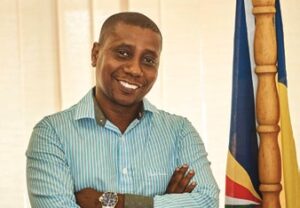
Dr. Steve Fanny, CEO, Seychelles’ Financial Services Authority (FSA)
With its stable political environment, robust regulatory framework and a sophisticated portfolio of entity structures, the Republic of Seychelles in the Indian Ocean is an established international financial jurisdiction that offers businesses and investors a range of products to meet their increasingly complex needs. Today, a host of global financial institutions, law firms and corporate service providers have set up operations on the archipelago, attracted by the country’s many tax and business benefits.
“Seychelles as a jurisdiction has a very solid regulatory framework that is a hybrid of English common law and French civil law. Having a legal system with such flexibility enables us to provide innovative structures to meet the needs of companies,” says Dr. Steve Fanny, Chief Executive Officer of Financial Services Authority, the regulatory body for non-bank financial services in Seychelles.
Fanny adds that Seychelles also enjoys low crime and unemployment, and a literacy rate of more than 95%. “In a nutshell, we have in place the necessary infrastructure for good economic development and growth. That is what differentiates the Seychelles from other jurisdictions,” he says.
Seychelles – Eden Island
Gateway to Africa
Made up of 115 islands that lie 1,500 kilometers east of mainland Africa in the Indian Ocean, Seychelles is ideally positioned as a gateway for international investors into the fast-growing economies of the African continent. In particular, there has been growing interest from Chinese investors in recent years to use the Seychelles as a jurisdiction to expand into Africa.
Seychelles has had a long relationship with China; the two countries established diplomatic relations in 1976. “Our relationship with China has grown over the years and the two countries have one of the best double taxation agreements. Seychelles is also supporting China with the Belt and Road initiative,” says Fanny.
Innovative Structures
Seychelles provides companies and investors with a wide range of entity structures to meet their various needs. For instance, the International Business Company (IBC) is a simple and flexible structure that is ideal for any business, from personal services companies to collective investment schemes operating locally or internationally. Another structure, the Company (Special Licence), or CSL, is a Seychelles domestic company that is allowed to conduct business both internationally and within Seychelles. Both IBCs and CSLs are not subject to Seychelles’ tax or duty on income or profits if they do not derive assessable income in the country.
For investors looking for asset protection, Seychelles offers trust and foundation structures that appoint a trustee/council to manage assets on behalf of the beneficiaries. There are also a host of fund structures that create pools of funds for specific investments.
In the face of a fast-evolving global landscape, Seychelles is designing new products to meet the changing needs of businesses around the world. The jurisdiction will soon publish a set of regulations for a regulatory sandbox to accommodate the increasingly important financial technology (fintech) sector. The sandbox will provide a regulated environment that will allow fintech companies in the capital market space to carry out live testing of their innovative products or services. There has been marked interest from several large fintech companies to participate in this initiative. Says Fanny,“Fintech is a fast-growing industry and we are seeing many players coming to Seychelles.”
The Asia-Pacific real estate market has ridden a wave of expansion over the past decade, powered by robust economic growth and strong capital inflows into the region. However, recent headwinds have emerged to threaten the continued growth of the sector. These challenges—ranging from the continued trade spat between the U.S. and China to rising borrowing costs—have persisted into 2019, resulting in heightened uncertainty.
Amid the volatility, however, lies unique developments and concepts that have risen above the competition to grab the attention of investors and buyers. One luxury residential project that has literally taken Singapore’s real estate market to new heights is the Wallich Residence—a one-of-a-kind development that offers an ultra-exclusive, urban-living experience in the heart of the city’s business district.
Developed by GuocoLand, Wallich Residence is perched atop Singapore’s tallest building—the 290-meter Guoco Tower—which has helped elevate the profile of downtown Tanjong Pagar district, one of Singapore’s most sought-after neighborhoods.
Also injecting a dose of vibrancy into the premium end of Singapore’s residential market is the luxurious Marina One Residences, which launched unit sales at its second tower this year. This groundbreaking project is the result of a historic collaboration between Malaysia’s and Singapore’s state-owned investment funds.
More exciting launches are in the pipeline. For instance, developer Aurum Land is introducing a new living concept that combines nature and art in a prime lifestyle district. The Hyde condominium will offer an oasis of tranquility in bustling Singapore, with the lush foliage of Goodwill Hill providing the residence with an air of exclusivity, while high-end boutiques and Michelin-starred restaurants lie minutes away on Orchard Road.
Projects such as these helped boost prime residential prices in Singapore by 9.1% in 2018 to S$3,480 (US$2,565) per square foot as buyers returned to the market in force, according to property consultancy Knight Frank. While the growth trend stalled when the government introduced new cooling measures in July, analysts say a severe price correction in 2019 is unlikely given the city’s stable economic fundamentals.
In Hong Kong, the city’s prime housing prices rose 3.9% in 2018 to HK$33,956 (US$4,328) per square foot, decelerating from a 7.3% increase a year earlier, data from Knight Frank showed. But like Singapore, differentiated offerings are expected to continue to do well over the long term.
One such development is Discovery Bay on Hong Kong’s Lantau Island. Located between the waters of the South China Sea and tree-lined hills, this once-barren land was transformed in the 1980s by developer HKR International Limited into a 650-hectare, world-class, resort-style residential development. As Hong Kong’s largest, low-density, premium integrated development, Discovery Bay is highly sought after by families seeking a vibrant child- and pet-friendly community within the territory.
Over on Hong Kong island, meanwhile, Sun Hung Kai Properties Limited iconic Victoria Harbour residential project is making waves in the market, with the development’s luxury apartments in high demand and registering record prices.
Against a backdrop of uncertainty, investors should take the opportunity to refine their real estate strategies and identify developers and projects that can help build resilience against market volatility into their portfolios.
China Construction Bank (CCB), one of the world’s largest banks by market capitalization, made further headway in 2018 in its mission to support the development of the Chinese economy amid an uncertain and volatile environment. By leveraging the capabilities of its workforce and new technologies, CCB continued to focus on serving the needs of the real economy.
The Beijing-headquartered group successfully implemented major strategies last year that involved growing its housing rental operations, expanding its inclusive finance strategy and financial technology (fintech) platforms, supporting supply-side structural reforms, strengthening internal control risk-management measures, and promoting high-quality growth of the bank’s businesses to generate positive economic and social benefits.
Real Estate Solutions
To build up its real estate rental business, CCB set up a housing-service company, Jianxin Housing Services Co. Ltd., and a housing-rental-service platform, which today has more than 10 million online listings and registered users. It continued to develop a rental community called Jian Rong Jia Yuan to explore a new model for the inventory housing business. These initiatives have contributed to the bank establishing a nationwide rental service network that will benefit the bank and its customers over the long term.
Inclusive Finance
The previous year also saw CCB rolling out its inclusive finance strategy that features “mass customer acquisition, accurate profiling, automated approval, intelligent risk control and integrated services.” These efforts helped propel the bank to lead the industry in terms of outstanding loan and incremental loan growth.
Through this strategy, the bank successfully promoted new online financing models, such as an online supply chain, increased its access to small and midsize enterprise (SME) clients through its large corporate clients and introduced 26 targeted measures to support the private economy as well as SMEs. CCB made more than RMB710 billion (US$105.7 billion) in loans that benefited 550,000 small and micro-enterprises. It has also explored new ways to expand rural finance by introducing new forms of banking support, such as the “agricultural quick loan.”
The bank has worked to alleviate poverty through a new platform known as Min Gong Hui, which offers services for migrant workers. To further broaden the reach and impact of its inclusive finance initiative, it established a one-stop service platform called Hui Dong Ni. These efforts are paying off for CCB. At the end of 2018, the bank’s balance of inclusive finance loans stood at RMB631.02 billion (US$93.95 billion), up 50.78%, from the previous year. This puts CCB as the industry leader in terms of balance loans and new inclusive finance loans.
CCB executives announce the bank’s 2018 annual results.
Adopting Fintech
CCB continued its adoption of fintech solutions in 2018. It has built 17 platforms, including public cloud services and smart government administration, to provide customized technical support services for customers, financial institutions and government departments. To deepen its technology capabilities, the bank also set up CCB Fintech Corporation, a wholly owned unit that employs big data analytics, blockchain and artificial intelligence to fuel product innovation and improve customer service and risk management across the group’s various businesses and subsidiaries in China and overseas.
Serving the Real Economy
CCB is committed to serving the real economy and is doing so by proactively supporting major national strategic programs, including the Belt and Road Initiative, the Beijing-Tianjin-Hebei Collaboration, the Yangtze River Economic Belt and the Guangdong-Hong Kong-Macau Greater Bay Area, among others.
CCB provided the first commercial bank loan for the Xiongan New Area construction project, and also launched the Shan Xing Chen Jian financial brand to support the construction of urban infrastructure for smart city solutions. At the end of 2018, the bank’s loan balance for the infrastructure industry sector stood at RMB3.46 trillion (US$515.15 billion), a year-on-year increase of 3.04%.
CCB is also playing its part in the transformation of China’s economy. For instance, it has supported eco-friendly construction, with its green credit balance reaching RMB1.04 trillion (US$154.84 billion) last year. The bank successfully completed the first green and sustainable development bond issuance. Together with the National Development and Reform Commission, CCB actively supports emerging businesses, industries and technologies through a range of investment and financing vehicles, such as bonds, funds, mergers and acquisitions, and asset securitization.
On the retail-banking front, CCB constantly adapts its service offerings to meet the changing needs of consumers. In response to customer demand, it expanded its suite of easy-to-use financial products such as “quick loans,” and launched the personal wealth management and service platform “Long Wealth.” Such innovations continue to drive CCB’s retail business, as it leads the industry in terms of total customer volume, loan balance and asset quality.
Giving Back to Society
CCB ramped up its corporate social responsibility activities in 2018. To date, it has a total of 14,300 “caring stations” at its branches to provide useful services for industry groups such as delivery drivers, sanitation workers and taxi drivers. About 30 million people have benefited from this initiative so far.
In the area of manpower development, the bank set up CCB University to integrate the bank’s training resources and collaborate with other universities at home and abroad. It also launched the “Industry and Education Integration Alliance for New Financial Talents,” an open platform for education and training.
Fulfilling its responsibility as a large, state-owned bank, CCB donated a total of RMB89.41 million (US$13.31 million) toward public welfare in 2018, and rolled out several long-term public welfare projects. In 2019, which marks the 70th anniversary of the founding of the People’s Republic of China, CCB will continue to move forward to realize its mission of “serving the public to live and work in peace and build a modern and beautiful life.”
FINANCIAL PERFORMANCE HIGHLIGHTS
In March 2019, China Construction Bank announced its 2018 annual operating results. Here are some of the highlights:
Total assets stood at RMB23.22 trillion (US$3.46 trillion), up 4.96% from 2017.
Net profit rose 4.93% to RMB255.63 billion (US$38.06 billion), while net profit attributable to equity shareholders improved by 5.11% year-on-year to RMB254.66 billion (US$37.91 billion). Net interest income rose 7.48% to RMB486.28 billion (US$72.39 billion). Net interest margin reached 2.31%, an increase of 10 basis points.
Return on average assets and return on average equity were 1.13% and 14.04%, respectively.
The capital adequacy ratio was 17.19%, the nonperforming loan ratio was 1.46% and the provision coverage ratio was 208.37%.
Based on the group’s strong business performance, the board of directors recommended a final cash dividend of RMB0.306 (US$0.05) per share (tax included).
BookDoc co-founder and CEO Chevy Beh receiving an award from Perkeso CEO Dr. Mohammed Azman for promoting an active lifestyle among Malaysian workers.
Medtech start-up BookDoc is on a roll and the secret, according to Chief Executive Officer Dato’ Chevy Beh, lies in forging meaningful partnerships within an ecosystem that is aimed at building long-term relationships.
“We are always on the lookout for new initiatives to add value to our healthcare ecosystem,” says the 34-year-old co-founder of BookDoc. “BookDoc may have started with a simple idea of matching patients with doctors but it’s now more than that; it’s about growing our partner and user base.”
The company began in 2015 with the aim of providing a convenient way to match patients to doctors through a mobile app, which has since evolved to connect corporate customers with insurers and syncs with wearable devices such as the Apple Watch and Fitbit.
It counts among its clients Top Glove, Petronas, Malaysia’s Ministry of Health (MOH), KPJ Healthcare and Ramsay Sime Darby Health Care. Regionally, its services are used by PT Siloam International Hospitals in Indonesia and Bumrungrad International Hospital in Thailand.
It’s just the beginning for Beh. In the past nine months alone, Beh has added a string of Malaysian government ministries to its list of partners. These include the Ministry of Education (MOE), the Ministry of Human Resources (MOHR) and the Ministry of Defence.
“The idea is to get large government agencies and its employees onto our Book-Doc platform so that we can expand our healthcare benefits as widely as possible,” he explains. “For example, BookDoc, the MOH and MOE are together promoting healthier lifestyles among Malaysian students in schools by getting them to sign up for the app. Our tie-up with MOHR is to promote a healthy workplace environment at offices.”
Beh believes BookDoc can be the catalyst to promote healthier lifestyles. Behind this effort is the company’s loyalty platform dubbed Activ, which aims to reward people for setting fitness goals and exercising.
He says Activ is designed to create a “wow” factor to motivate people to take care of their health and be recognized for their efforts.
“We’ve partnered with hundreds of retailers, and BookDoc users who meet their exercise targets can, for example, redeem their rewards at over 1,600 offline locations as well as with online partners in 12 countries.”
Beh says the Activ loyalty program is constantly evolving based on what its users are doing with the BookDoc app.
“We collect a lot of data, such as the frequency of visits, the different health screening packages and exercise data from smartwatches connected to BookDoc. “Our app can then target specific users with different offers and rewards,” Beh explains, adding that all data collected complies with guidelines in the U.S. Health Insurance Portability and Accountability Act to safeguard patient health information.
Beh says in the near future, BookDoc’s ecosystem will grow exponentially. He is currently working on securing another government partnership before the end of the year that will add 1.6 million Activ users to its existing 500,000 members.
“We are continuing to grow our corporate customers and reward partners, and have plans to add features like telehealth and remote monitoring,” he says.
“It’s an honor to be invited to such a wonderful event by Haruhisa Handa. I respect him for running so many charitable organizations, which support people who have suffered difficulties throughout the course of their lives. His spirit has a positive impact on the world,” U.S. actor Nicolas Cage said at the December 20th opening of the Tokyo Art Foundation Christmas concert and exhibition.
Cage’s own career needs little explanation. In 1990, he got his big break in David Lynch’s film “Wild at Heart,” which also became a smash hit in Japan. Five years later at the age of 32, he received an Academy Award for Best Actor for his performance in “Leaving Las Vegas,” and has remained a permanent fixture in the world of entertainment. Cage has starred in several major works and blockbuster movies, but in recent years his taste in feature films has changed dramatically. Since 2010, he has opted for roles in B-movies over scripts offered to an actor of such standing—a decision that has garnered disapproval from some critics.
Cage, however, doesn’t subscribe to Hollywood values and rejects the idea that box office success and awards are the measures of a performer’s worth. What matters is the belief of the audience, and it’s more important to be able to fully inhabit a character, he says, than to star in a major film.
“When I get a casting offer, I focus on how the role synchs with my imagination, memories of the past or life experiences—whether or not I can find a little bit of common ground. Then I ask if I am really able to play that role at this point in time. In that sense, appearing in mainstream action films during the 90s was a rather reckless challenge,” he explained.
His career has been a series of challenges, which have introduced him to talented performers and helped polish his art. “Working with superstars like Meryl Streep and Sean Connery gave me new motivation. From Jon Voight, I learned that making a movie is about teamwork rather than individual effort. These days, I am picky about who I work with,” he says.
Cage’s philosophy of life was largely shaped by his late father, August Coppola. “My dad was a university professor and very involved with the arts. He was familiar with the culture of every country and was, in fact, particularly interested in Japan. He introduced me to the classic films of Akira Kurosawa at a very young age. Even now, my heroes are [legendary swordsman] Miyamoto Musashi and [actor] Toshiro Mifune,” he recalled.
A professor of comparative literature, a film executive and a lifelong advocate of the arts, August Coppola also had a strong influence on his younger brother, acclaimed director Francis Ford Coppola, who dedicated the coming-of-age drama “Rumble Fish” to his elder brother. August encouraged members of the Coppola family, including Nicolas and Sofia—Francis’s daughter who has become a prominent director in her own right—to embrace other cultures and pursue creative endeavors.
Cage (right) joined Haruhisa Handa (center) on stage at the Tokyo Art Foundation Christmas concert and watch exhibition.
“My father and Haruhisa Handa resemble each other closely, in personality and way of thinking,” Cage said. “Both of them are teachers, knowledgeable about world literature and art, who also love sports. However, there are many people who can’t easily engage with these things. Take, for example, the visually impaired. Both men share deep empathy for people in these circumstances. Based on his desire to connect people through sports, Dr. Handa established the International Blind Golf Association, which now operates in 16 countries. My father August wanted blind people to be able to experience art, so he built a structure [called the Tactile Dome] in California where you use your sense of touch to appreciate the artwork in complete darkness. In my opinion, Dr. Handa’s vision overlaps with my father’s.”
Before designing the Tactile Dome in 1971, which is located inside San Francisco’s Exploratorium museum, Coppola went about daily life wearing a blindfold for three months to better grasp the experience of blindness. “Sympathy alone is not enough to make this kind of social contribution. My dad and Dr. Handa started by trying to understand the lives of people with disabilities. It’s not about just participating in charities and volunteering, but rather focusing on actions. By spending time with one another, we are trying to find the meaning of life together. It’s a relationship of equals. If we as a society could all become aware and accepting of diversity, just think how happy the world would be. This is what I learned from my father and Dr. Handa,” Cage said.
It seems Cage has based his career on the mindset that he inherited from his father. “As society becomes more diverse, the characters we as actors portray are becoming more complex. I want to be able to play those characters, whether they’re good guys or bad guys,” he said.
When asked by Handa about his upcoming project with Sion Sono—a director who has been dubbed “the most subversive filmmaker in Japanese cinema today”—Cage answered enthusiastically: “I’m really excited to work with Mr. Sono.”
About Nicolas Cage
American actor, director and producer Nicolas Cage was born Nicolas Kim Coppola in Long Beach, California, in 1964. Raised among a family of artists and entertainers, he is the nephew of director Francis Ford Coppola and actress Talia Shire, and cousin of directors Roman Coppola and Sofia Coppola. After working with the prestigious American Conservatory Theater, he made his film debut in the 1982 film “Fast Times at Ridgemont High.” In 1995, we won the Academy Award for Best Actor for his performance in “Leaving Las Vegas.” He has appeared in numerous works, such as “The Rock,” “Con Air,” “Gone in 60 Seconds” and “Mandy.”
It’s hard to miss a Richard Mille timepiece. With their cutting-edge designs, audacious use of color and extreme technical sophistication, the watchmaker’s creations stand out in a sea of cookie-cutter offerings. Its new Bonbon collection is no exception. Released in January at the Salon International de la Haute Horlogerie in Geneva, it proves yet again the brand’s willingness to break new ground in the world of luxury watchmaking.
The daring but elegant collection features 10 models, each limited to just 30 pieces, that inject a dose of playfulness from our childhood. Their designs are inspired by the colors and tastes of candy, and would be at home in the wild and wacky world of Willy Wonka and his chocolate factory.
The Bonbon collection took more than 18 months to develop, and follows the spirit of Richard Mille in its willingness to upend convention to push the boundaries of creativity. All the watches in the collection use the construction of previous Richard Mille timepieces as their base. Recognizable models such as the RM 07-01, the RM 016 and the RM 037 have been completely transformed and sport a refreshed aesthetic.
These creations are the brainchild of Cécile Guenat—the daughter of Richard Mille’s founding partner Dominique Guenat—who served as the artistic director for the series and has brought the carefree spirit of childhood into the world of serious craftsmanship.
“’Bonbon.’ Just saying the word is enough to make you smile. It manages to convey a combination of pleasure, openness and sharing all at once. This collection is disruptive, elegant, daring and playful. In a word: creative!” says Guenat, who set herself the goal of reinventing classic sweets such as marshmallow, licorice and gelato with a horological twist.
She adds: “For me, it was truly an opportunity to let loose and have fun revisiting childhood. Nonetheless, it was an ambitious, daring project entailing 18 months of development, and entirely faithful to the spirit of Richard Mille, a serious brand that’s not afraid to break with tradition.”
A Sugary Inspiration
The Bonbon collection’s 10 releases are divided into either the Sweets line (four models) or the Fruits line (six models). Some of the timepieces feature miniature fruits and candies across the dial, while the crowns and case bands on others have been crafted in the shape of cupcakes and bowls of gelato.
For Guenat, the outrageous idea of creating a watch collection around the theme of confectionery was not a totally surprising one. She explains: “It was quite a natural step, you see. The crown of the RM 07-01 is reminiscent of a bonbon, and so is the texture of the ceramic. For its part, the case of the RM 016 made me think of a licorice roll-up. It was also an opportunity to revisit existing collections from a new perspective and give them a bit of a twist, make them fun.”
Fruits
From gumdrops and swirling gelato to marshmallows and barley sugars, the Fruits line’s six models are each adorned with eight, 12, or 16 miniature depictions. Every model comes with a different piece of decorative confectionery that is unique to that timepiece.
All the miniatures are machined from sheets of solid titanium, and can be a mere two millimeters in thickness. They are entirely painted by hand to give the look and feel of a sugar coating and feature hues that embody mouth-watering flavors. Whether it’s the Litchi (Lychee) and the Myrtille (Blueberry) RM 07-03, the Citron (Lemon) and the Fraise (Strawberry) RM 16-01, or the Cerise (Cherry) and the Kiwi RM 37-01, these timepieces are vibrantly colored and irresistibly delightful.
Simply put, each miniature is a work of artistic craftsmanship in its own right. All the Fruits watches use Carbon TPT® or Quartz TPT®—the same layering materials found in popular Richard Mille models, such as Rafael Nadal’s RM 27-03 Tourbillon.
Sweets
Meanwhile, the Sweets line features four models inspired by Sucette (Lollipop), Cupcake, Réglisse (Licorice) and Marshmallow. Each is crafted from two-tone ceramic that evokes a creamy, melt-in-your-mouth surface.
Shaped like giant sweets, the dials of the RM 37-01 the Sucette, the RM 07-03 Cupcake and the RM 07-03 Marshmallow have been made with one of the most complex decorative techniques in watchmaking: the grand feu enamel. This technique involves creating shallow depressions that outline the desired motif for each model in plates of rose or white gold, which are then filled in with powdered enamel.
Beyond mere decoration, however, the Richard Mille team has used the technique to enable the creation of green, yellow and pink shades that evoke the sense of playfulness that is at the heart of the Bonbon collection. The firing and glazing skills used to produce the artisanal confectionery are also different from traditional methods. On these elegant canvases, the motifs of the Sweets line stand out and enhance the variations in texture. These creations are certainly objects of desire to be savored slowly and intensely. Much like a kid enjoying a lollipop, it is a childhood dream come true.
An Explosion of Color
The extravagant use of color is not new to the Richard Mille family, and is indeed one of the brand’s signature design flourishes. Beyond the use of titanium, gold and Carbon TPT®, Richard Mille has continuously introduced a wide and vibrant palette of shades to express an adventurous vision that is ever-evolving.
The Bonbon collection boasts its own burst of vibrant colors, including cherry red, kiwi green, the lavender TZP ceramic of the Marshmallow and an unprecedented turquoise shade.
Guenat explains that the combination of Quartz TPT® and Carbon TPT® in the Fruits line “makes it possible to create nuance in some pretty flashy colors.” For instance, alternating black and bright hues produce cases that sport the look of Neapolitan ice cream. The technology used to create these effects is not unlike the science behind baking, where a delicate balance of ingredients, proportion and cooking time is key to success.
Aurèle Vuilleumier, Research and Design Manager at Richard Mille, says a new color takes a year of development to perfect before it can be used. “Every new color is the outcome of innumerable tests. We use prepreg quartz filaments to observe interactions between the constituents and the resin. We evaluate the visual appearance after firing,” he explains. “Each pigment, all of which are natural, has a unique set of chemical reactions.”
It is the exacting and rigorous process that has enabled the launch of a new color, Quartz TPT® Turquoise, which was created especially for the RM 07-03 Myrtille.
Pushing the Boundaries of Creativity
Underlying the playful designs of Richard Mille’s Bonbon collection is a highly sophisticated level of technicality as well as exquisite artistic craftsmanship. For instance, it takes about 45 minutes for an experienced craftsman to paint just one of the candies by hand. In all, 3,000 hours of work were required to apply the acrylic paint and complete quality control on 3,000 components.
With this new collection, Richard Mille has proven yet again that his unorthodox methods and his ability to surprise with each new release continue to fuel demand for his timepieces. This time around, Guenat and her team has done so by successfully refreshing previous generations of Richard Mille watches with her whimsical take on classic pieces. In the process, she may also succeed in bringing out the child in even the most serious watch collector.
THE BONBON COLLECTION
The Fruits line consists of the following 6 models:
Real estate group Aurum has forged its reputation in Singapore as an innovative provider of unique residential and commercial spaces. From luxury condominiums to premium co-working spaces, the company is breaking new ground across different market segments. Working with a network of communities, Aurum strives to create value for businesses, professionals and individuals in Singapore and beyond. The group’s business units include Aurum Land, Found8, Core Collective and Aurum Investments.
Since its establishment in 1982, award-winning property developer Aurum Land has championed the seamless fusion of function and form in its developments. The result of this effort is a growing portfolio of exquisite living spaces. Guided by a culture of innovation coupled with deep market insight, Aurum Land is managed by a team of passionate industry professionals who bring with them extensive development expertise, design excellence and technical skills.
The boutique developer adopts an experiential, human-centric approach to building spaces and communities. The end goal is to inject life into its developments while breaking down the walls that limit the possibilities of connectivity. Among its award-winning projects is The Asana. Located in one of Singapore’s most distinguished districts, The Asana is a luxurious urban sanctuary comprising 48 exclusive apartments. Another of its creations, the 1919, is an award-winning collection of 75 black-and-white apartments set amidst the stylish yet tranquil Mount Sophia neighborhood.
NYON: Legacy Retold
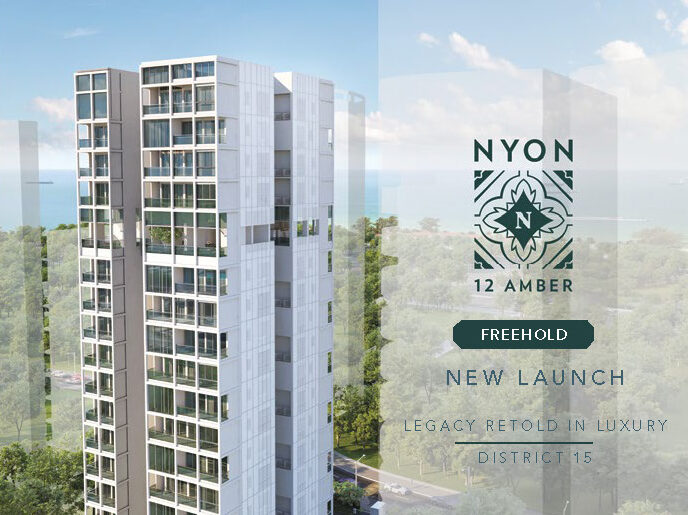
Aurum Land continues to blaze new trails with its latest offering—NYON. This exceptional residence seeks to capture the best of living on Singapore’s vibrant East Coast through the harmonious union of heritage and modernity. NYON elevates the residential experience by building a bridge between cutting-edge urban comforts and treasured cultural stories.
Drawing inspiration from the neighborhood’s history, every aspect of the development is imbued with the rich essence of Peranakan culture. From the elegant architecture down to its fine detailed furnishings, NYON’s 92-unit freehold apartments and surroundings faithfully represent the legacy of the Peranakans while delivering an unparalleled living experience.
When completed, the pure white tower of this freehold development on Amber Road will stand out from the area’s surrounding structures—a bold expression of identity that succeeds in being unique, while remaining true to its heritage. From the romance of its public spaces to the thoughtful design of every apartment, NYON’s originality is present throughout the space.
Mosaic Pool at Level 1 Artist’s Impression
Up Close With History
Lying on the fringe of central Singapore in one of Singapore’s most sought-after districts, NYON is an ideal home for living, working and playing. A walk along the surrounding neighborhoods of Joo Chiat and Katong is a journey through a slice of the area’s rich history. The intricate designs of old-world shophouses line the streets, as do shops and eateries that serve up slices of old world charm as well as a taste of the modern.
Whether it’s nyonya rice dumplings—renowned for their sweet-spicy filling—floral batik sarongs or hand-beaded slippers, Peranakan traditions are being celebrated in the district’s boutiques, antique houses and restaurants. Yet the landscape is constantly evolving, and the East Coast has spawned a fresh spirit of creativity that has resulted in a new generation of cultural flavors in the form of modern-day restaurants and retail spaces.
Close by, the seaside attractions of East Coast Park await with a host of outdoor and water activities. For young families, the East Coast is home to some of the country’s best schools, ranging from preschool to junior college. Meanwhile, getting around the island from NYON will be a breeze, as the condominium will be linked to a range of transport options—from Mass Rapid Transit (MRT) stations and bus routes to expressways that connect conveniently to all parts of the island.
Living and Dining Room Artist’s Impression
An Experience in Luxury
Once inside NYON, residents will be treated to a range of features and amenities suited to the lifestyles of the romantic and the adventurous. Upon arriving home, they will be greeted by a stunning courtyard and the arched walkway that feature distinctly Peranakan designs.
From delicious cuisine to fine tableware, the Peranakans were fabulous hosts at social events. This tradition is honored at NYON with several spaces that are designed to let you celebrate special occasions with loved ones. The clubhouse on the ground floor is a beautiful multifunctional space that both invites and impresses, and gives you the option to keep the party indoors or extend it into the garden. Expand your entertainment space to the 14th floor’s Sky Terrace, where there is more to meet all of your social needs. Here you will find a communal dining area with a décor that honors heritage—perfect for dinner parties or family gatherings.
Residents can also choose to relax after a long day at work by taking a dip in a pool sporting the signature patterns of the kebaya (the traditional dress of Peranakan ladies). Or unwind by working out in the gym or sipping your favorite cocktail at the lounge on the 14th floor, all while enjoying the cool sea breeze and expansive views.
A Home for All
The 92 luxurious apartments at NYON, which range in size from 484 to 1,615 square feet, are designed for all demographics. A cozy one-bedroom unit is ideal for singles, while couples can opt for an intimate two-bedroom home. The spacious three-bedroom apartment, meanwhile, has enough room to accommodate families.
All units are fitted with the highest quality fixtures and fittings from luxury brands, including Gessi and Laufen, as well as kitchen appliances by Bosch. Additionally, textured finishes from natural oak timber flooring to fine European marble bring natural beauty into the home.
With its unique Peranakan-infused design, luxury-lifestyle amenities and vibrant neighborhood location, NYON from Aurum Land is an exceptional residence that combines heritage and modernity in a dynamic city.
Led by Singapore-based food and beverage (F&B) company BreadTalk Group, renowned Taiwanese restaurant chain Din Tai Fung and it’s signature dish xiao long bao (broth-filled steamed pork dumplings), made their debut in London in December, marking the brand’s maiden venture in Europe. Located in the city’s West End district, the flagship restaurant is Din Tai Fung’s 153rd restaurant globally. A second restaurant in the British capital will open in 2019.
Ranked as one of the world’s top 10 gourmet restaurants by The New York Times in 1993, the brand has been awarded a Michelin star and enjoys a global presence in Australia, China, Hong Kong, Macau, Thailand, Indonesia, Japan, Malaysia, the Philippines, South Korea, the United Kingdom, the U.S. and the United Arab Emirates.
“We wanted to bring this world-renowned brand to London because it is home to some of the best chefs and restaurants globally. Consumers in London appreciate good food and quality Taiwanese cuisine. In addition, through the opening of our first Din Tai Fung restaurant in London, it provides our team with many learning opportunities, which will be useful for future growth and expansion”
– Henry Chu, Group Chief Executive Officer
BreadTalk Group’s partnership with Din Tai Fung began 16 years ago when it brought the brand’s first restaurant to Singapore. It opened the first Din Tai Fung branch in Thailand eight years later. To date, there are 22 Din Tai Fung restaurants in Singapore, six in Bangkok and one in London operating under BreadTalk Group.
Din Tai Fung’s U.K. venture is led by Taster Food UK Ltd., a subsidiary of BreadTalk Group. Taster Food’s subsidiary, Together Inc., is in a joint venture with Din Tai Fung Restaurant Co. and other partners.
Henry Chu, Group Chief Executive Officer shares: “We wanted to bring this world-renowned brand to London because it is home to some of the best chefs and restaurants globally. Consumers in London appreciate good food and quality Taiwanese cuisine.
“In addition, through the opening of our first Din Tai Fung restaurant in London, it provides our team with many learning opportunities, which will be useful for future growth and expansion,” he adds.
Chu says Din Tai Fung’s London restaurant will differentiate itself through the quality and authenticity of the chain’s signature dishes and other delicious Taiwanese staples, including its steamed chicken soup and world-famous xiao long bao. The dumplings have a minimum of 18 folds and pass through six different stations—each manned by a team of dian xin (dim sum) chefs—before steamed to perfection for more than 40 minutes.
BreadTalk Vivo City
Global Expansion
London is BreadTalk Group’s first foray into Europe, with the majority of its outlets in Asia. Looking ahead, Chu says the group will pursue its expansion plans in the United Kingdom and elsewhere through one of the 12 brands in its stable. To support this, it is looking to grow its brand portfolio, and has added five more to its offerings in the past two years alone. “The end goal is to strike a balance between having more countries to operate in and strengthening our presence in countries we already operate in, with new, refreshing brands,” he explains.
BreadTalk Group has four business divisions: bakery, food atrium, restaurant—which manages the Din Tai Fung brand—and a recently launched division called 4orth Food Concepts that identifies suitable joint-venture partnerships. In May last year, for instance, BreadTalk Group partnered with Shenzhen Pindao Food and Beverage Management to introduce popular beverage brands Tai-Gai and Nayuki, respectively known for fruit-blended premium teas and the cheese tea bakery café concept, to consumers in Singapore and Thailand, with a first right of refusal to operate in Malaysia, Indonesia and the Philippines.
Nayuki Vivo City
Both brands were founded in 2015 and have become two of the most iconic beverage brands in China, with more than 240 stores in 22 major cities, including Beijing, Shanghai, Guangzhou and Shenzhen. “Nayuki is a brand that we will consider bringing to Europe. It’s tasty and healthy, so it appeals not only to the young but also to a broader audience of tea and milk lovers,” explains Chu.
Embracing Technology, Supported by Our Values
To fuel its global expansion, the group looks to leverage technology and automation to overcome pertinent issues faced by the F&B industry, such as its heavy reliance on manpower. Chu notes, “F&B is a labor-intensive industry and, coupled with long working hours, it’s difficult to hire younger people to join this industry. By investing in automated solutions in the kitchen and leveraging consumer technology, such as iPad ordering, we can create a more efficient working environment and enable our staff to engage more with our customers.”
Newly renovated Food Republic Wisma Atria
Guiding BreadTalk Group’s growth strategy is its recently revised vision, mission and core values statement. The group continues to embrace innovation and ongoing improvement, with both supported by a spirit of professionalism and integrity. “We always ensure that we use the freshest ingredients and deliver the best value for our customers in every product we serve,” says Chu. The group conducts regular audits to ensure that quality is consistent across its vast array of brands and outlets, and is committed to a culture of continuous training for its staff.
“The United Kingdom is a new market for us. Therefore, we will continue to invest time and effort so that we can deliver an enjoyable brand experience to our British customers as they learn about our brands and products,” says Chu.
From left: Mr Ji Shaobo, President of Yantai Port Group; Mr Seydouba Bangoura, Director of Societe Bauxite Kimbo SA Unipersonelle; Dato’ Victor Tan, CEO of Top International Holding; Mr G. Jayakrishnan, Global Markets Director, Middle East and Africa, Enterprise Singapore, at MOU signing ceremony.
Already one of only a handful of Singaporean companies operating in Guinea, Top International Holding is making further inroads into the West African nation with plans to build a port along one of its major waterways. The mining and trading group specializes in the export of bauxite—the raw material for aluminum production—as well as the trading of coal. Over the years, it has expanded its operations into a number of markets, including Malaysia, Indonesia and Africa.
In February, plans for the port along Guinea’s Fatala River came closer to fruition when Top International signed a Memorandum of Understanding (MOU) with China’s Yantai Port Group and Guinea’s Societe Bauxite Kimbo SA Unipersonelle (Kimbo) to embark on its development. Another member of this partnership is Singapore’s Winning International Group, which will provide maritime-logistics support to the venture.
Speaking at the signing ceremony, Mr G. Jayakrishnan, Global Markets Director, Middle East and Africa at Enterprise Singapore, said the MOU reflected growing ties between Asia and Africa, and the economic dynamism of the two regions.
When completed, the port will serve selected mining concessions and help fuel the growth of Top International’s bauxite business in the country.
“Discussions of this port project have now reached a mature stage, where all parties agree that a more formal understanding in the form of an MOU is the logical next step. With this MOU, we expect our momentum to increase and we are one step closer to achieving the goals of our collaboration,” said Dato’ Victor Tan, Chief Executive Officer of Top International, in a speech at the MOU signing ceremony.
Yantai Port Group is a China state-owned enterprise with more than 150 years of experience in building and operating ports around the world, including Guinea. At the signing ceremony, Yantai Port Group President Ji Shaobo said the company has established an international bauxite-logistics chain that connects Guinea to China as part of its overseas expansion strategy. He noted that in 2018, Yantai Port was the world’s leading port for bauxite imports for the sixth consecutive year, having exceeded 100 million tons in throughput. Meanwhile, bauxite-exploration company Kimbo has been granted mining concessions in Guinea, signifying it has the support of the government.
Greater Than the Sum of Its Parts
Dato’ Victor Tan said the development of the Guinea project will be carried out in phases to enable the group to progressively scale the port in terms of capacity and operational efficiency. The project will also include a network of roads connecting the port to the relevant concessions. “The project may seem complex, but with the combined strength of our collaboration, the outcome will be greater than the sum of its parts,” he said.
Looking ahead, he hopes to see a growing community of Singaporean businesses operating in the largely untapped markets of West Africa. “The insights we’ve garnered in Guinea have shown us that there are a lot more opportunities beyond Southeast Asia,” he said. “What we need is to have a broad mindset, be enterprising and not be afraid to seek out new markets outside of our comfort zone; all of this, of course, with proper planning and having the right partners.”
One of Japan’s strengths has always been in the area of innovation: Japanese firms are known worldwide for embracing and developing new technologies. The companies profiled in this section are primary examples of ones deploying this strategy.
Seeing the demand coming from healthcare industries around the world, including Japan, Mr. Fujio Mitarai, Chairman and CEO of Canon, has decided to revamp the entire corporate structure at his firm, so as to position medical technologies as a core revenue source. Lucrative opportunities are seen in diagnostic imaging, healthcare information technology and in-vitro diagnostics. With Japan leading the world in imaging scan rates per head of population, the innovation of miniature endoscopes is also an example of how Japanese companies are applying cutting edge expertise to produce better health care.
On the shop-floor, Mr. Akihiro Teramachi, President and CEO of THK is applying robots and AI in the increasing automation of production lines to help off set declining labor availability. He is also putting into place the Flexible Manufacturing Systems necessary to stay abreast of the high-mix low-volume order format likely to emerge as a result of the diversification of newer markets.
Mr. Kouichi Tamai, President and Representative Director of Fuji Xerox, is also leading with innovation. His approach is called Smart Work Innovation, which is a term covering a host of new services from Fuji Xerox. The approach combines aspects of AI, IoT and what the company calls IoH—the Internet of Humans. One example is software for reading handwritten documents with 99.96% accuracy, so data stored on these documents can be converted and digitally processed.
Even a traditional firm such as Kikkoman, which has been making soy sauce for more than 300 years, employs innovations. As Yuzaburo Mogi, the Honorary CEO of Kikkoman Corporation notes, “Innovation drives demand, which drives growth.” Kikkoman has been using innovations in its products and marketing efforts to grow the company into a leader in the global soy sauce market.
On a broad scale, Japan is helping the economy, and companies, with such innovations as the introduction of 5G telcom services—a fifth generation mobile Internet service that is as much as 10 to 20 times faster than those currently available. The rollout of 5G worldwide is expected to boost the sales of electrical components, such as semiconductors, sensors and other technology which are often produced by Japanese firms.
While Japan is buffeted by some headwinds, such as possible spillover effects of the U.S.-China trade dispute and local challenges such as an aging population, overall Japan’s economy remains resilient and the corporate community’s reputation for innovation remains strong. As the world’s third largest economy, Japan has tremendous resources to deploy to overcome any challenges and maintain its position as one of the world’s leading economies with a corporate sector underpinned by innovation-led growth.