Beximco Pharmaceuticals Puts High-Quality Medicines Within Everyone’s Reach

In November 2021, Bangladesh-based Beximco Pharmaceuticals made international headlines with the launch of the world’s first generic molnupiravir, an oral antiviral drug for the treatment of patients with mild to moderate forms of COVID-19. Developed by U.S. firms Merck, Sharp & Dohme (MSD) and Ridgeback Biotherapeutics, molnupiravir represents a major breakthrough in addressing the world’s current greatest health challenge, with interim data published by MSD showing that it reduces the risk of hospitalisation and death by around 50%. Beximco’s branded generic version of molnupiravir is being marketed as Emorivir.

This follows on from Beximco’s May 2020 launch, at the height of the pandemic, of the world’s first generic version of remdesivir—branded as Bemsivir—an antiviral drug developed by U.S. firm Gilead Sciences that has been effective in treating COVID-19 patients.

Beximco was allowed to produce these generic copies under a pharmaceutical patent waiver granted by the WTO’s Trade-Related Aspects of Intellectual Property Rights (TRIPS) for the least developed countries. The company, which is considered a pioneer in providing access to breakthrough drugs at affordable prices, leveraged its competitive cost advantages and strong experience to be able to make these potentially life-saving treatment options at substantially cheaper prices than the originator brands.

“Further to our launch of the first generic remdesivir at the start of the pandemic, the launch of a generic version of molnupiravir is another example of Beximco Pharma’s ability to rapidly respond to make affordable treatments available to patients suffering from COVID-19,” said Nazmul Hassan MP, Managing Director of Beximco Pharmaceuticals. “This is a great achievement for the company and one which we believe could play an important role in combating the pandemic, especially in low- and middle-income countries where access to vaccines has been limited.”

Over the past 12 months, Beximco has provided Bemsivir to public and private healthcare facilities in Bangladesh, and has also donated large quantities of the drug in several other countries. To date, the company has supplied Bemsivir to 22 countries including India, Azerbaijan, Pakistan, Nigeria, the Philippines, Venezuela and Lebanon.

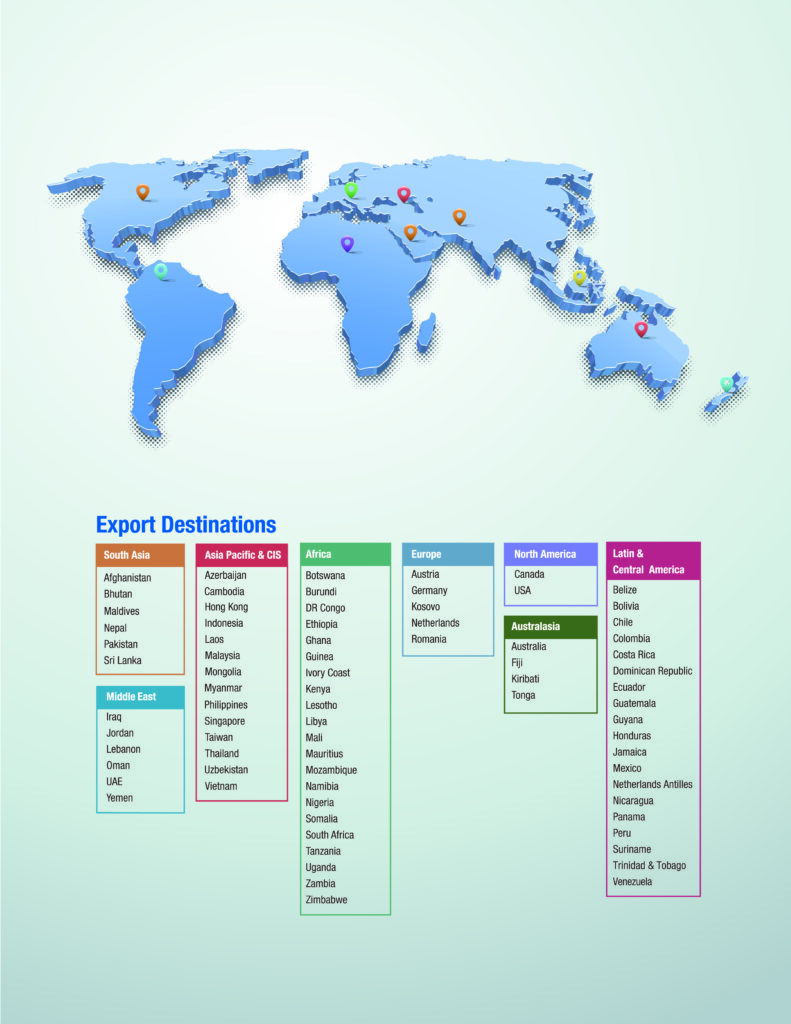
Exports to 50 Countries

Founded in 1978, Beximco started out importing medicines from multinational corporations (MNCs) such as U.S.-based Upjohn and Germany’s Bayer, before manufacturing the drugs locally under license. Today, Beximco has emerged as a leading exporter of medicines, with a global footprint in 50 countries around the world. Its success story is built on its unwavering commitment to quality and the dedication of its 5,000-strong workforce, driven by the company’s aspiration to be among the world’s most admired pharmaceutical companies.

Beximco began its export operations in 1992, exporting active pharmaceutical ingredients (APIs) to Hong Kong, with Russia becoming its first export destination for formulation products the following year. Since then, the company has gradually expanded its overseas business, entering Singapore, one of the most stringent markets in Asia, in 2001. As a testament to its success, the company has won Bangladesh’s prestigious National Export Trophy (Gold) five times for its outstanding contribution to the country’s export.

Spanning an area of 23 acres in Dhaka, Bangladesh, Beximco’s state-of-the-art manufacturing facilities have been accredited by regulatory authorities in Australia, Canada, Europe, the Middle East and the U.S., among others. Through these facilities, the company has made great strides in its ability to produce high-quality drugs at prices up to 99% cheaper than their branded counterparts, thus making treatments and medicines accessible to millions of patients in developing countries.

In 2015, the company launched the world’s first generic version of Harvoni (Sofosbuvir plus Ledipasvir), the revolutionary drug to treat hepatitis C, and began selling it for around US$10 versus the originator’s price of US$1,130. It did the same when it launched the generic version of another groundbreaking hepatitis C drug, Sovaldi (Sofosbuvir).

COVID-19 Pledge

Out-of-pocket expenditure accounts for the bulk of the healthcare expenses in most low- and middle-income countries where access to breakthrough and highly expensive treatments is almost impossible. Since the beginning of the pandemic, there has been an urgent need to find immediate solutions or medical interventions to save human lives. Rising to the challenge, in November 2020, Beximco and 17 leading global generic drug companies pledged to work together via the United Nations-backed Medicines Patent Pool (MPP) to accelerate access to COVID-19 treatments for low- and middle-income countries. Among the other signatories to the MPP pledge are world-leading generic manufacturers such as Lupin, Aurobindo Pharma, Zydus Cadila, Dr. Reddy’s Laboratories, Sun Pharmaceutical Industries and Celltrion.

Bangladesh’s pharmaceutical industry has been at the forefront of driving the nation’s progress, with the country transforming itself from a net importer of medicines to an exporting nation over the past three decades—and Beximco has played a pioneering role. At present, Beximco is the country’s sole exporter of medicines to the U.S., which is also the largest export market for the company.

Looking to the future, Beximco aims to strengthen its presence in key emerging and developed markets. The company is also building a robust pipeline of value-added generic products for these markets, including a differentiated portfolio of metered dose inhalers, dry-powder inhalers and sterile ophthalmics. By collaborating with leading MNCs, it has developed new skills and conceived and implemented advanced, state-of-the-art technologies.

Rising healthcare costs have become a major challenge globally, with the high cost of medicines a serious concern for governments around the world. To address this, governments are promoting the use of generic drugs, which creates huge opportunities for generic drug producers like Beximco.

With its robust and highly compliant infrastructure, cost competitiveness, diverse portfolio and skilled manpower, Beximco has already emerged as an important generic drug player in Asia. As patents for branded or originator drugs expire, Beximco will be able to reinforce its differentiated value proposition, taking the opportunity to produce generic versions at significant scale and at a much lower cost, touching the lives of millions around the world by providing affordable access to life-saving medicines.

To find out more

www.beximcopharma.com

Closing The Gap: Reimagining Cybersecurity In The Age Of Digital Acceleration

With the digital acceleration process outpacing even the boldest of estimates, cybersecurity strategies need to be radically reimagined if organizations are to have any real chance of managing the emerging technological risks. Tasked with assessing the scale of the challenge facing cybersecurity experts and professionals, three industry thought leaders turned a keynote session at the CLOUDSEC 2021 event into a high-tech summit, detailing both the priority issues that need to be addressed and the solutions that will ensure success in a future that has arrived much sooner than anyone ever anticipated.

Led by Rich Karlgaard, Forbes Media’s Futurist and Editor-at-Large, the panel saw Dhanya Thakkar, Trend Micro’s Senior Vice President for Asia, Middle East and Africa, and Nilesh Jain, Trend Micro’s Vice President for South East Asia and India, turn their attention to the defining cybersecurity issues of the day, assessing the global state of play while also drawing the focus down to the ground-floor challenges facing businesses throughout the wider Asian region.

Among the wide-ranging array of topics covered during the course of the session were:

Speed of Change

With five years of expected digital acceleration compressed into the last six months alone, how can businesses cope with what is—arguably—the biggest challenge of our time?

Cybersecurity Knowledge Gap

Given the rate of digital acceleration, how can cybersecurity professionals expand both their financial resources and their skillsets in order to ensure they counter any exploitable technological vulnerabilities?

Cloud-Led Digital Acceleration

Why it is important legacy businesses consider a shift towards a Platform as a Service (PaaS) model before they look to commit to a cloud migration that may well be incompatible with their systems, culture and objectives.

The Cybersecurity Bottleneck

With the shortfall in the number of properly skilled and experienced coders unlikely to be remedied any time soon, the need for low-code and no-code cybersecurity software has never been greater. Given the growing complexity of corporate digital infrastructure though, is the current generation of solutions up to the task?

Boosting Security by Building a Culture of Trust

With many in the industry now seeing a direct correlation between a company’s number of security breaches and its number of unhappy employees, is it now time to reassess corporate priorities? In short, does it now add more value to prioritize the well-being of employees above the interests of customers or stakeholders?


Founded in 2011, CLOUDSEC has established itself as the key global forum for cybersecurity experts and professionals. Hosted by award-winning multinational cybersecurity software company Trend Micro, the 2021 event took “Reimagine Your Cloud” as its overall theme and featured more than 100 sessions, cementing its status as the sector’s only truly global thought leadership platform duly enriched by regional uniqueness.

The free-to-view high-level cyber-security summit can be accessed at or by scanning the QR code below.

A wider range of video content from CLOUDSEC 2021 can be viewed here:

https://www.cloudsec.com

Singapore Scales New Heights

Despite the lingering impact of the Covid-19 pandemic, Singapore is taking center stage amid a resurgence in businesses, a calibrated resumption of travel, and upbeat consumer sentiment. The city-state has clearly regained its confidence as a global financial hub, with the growing number of wealthy entrepreneurs snapping up posh homes in prime residential districts, sending prices to record highs.

Adding to signs that the Singapore economy is returning to normalcy, the nation’s economic growth climbed a reassuring 7.1% in the third quarter compared to the previous year. This nascent recovery has boosted the country’s burgeoning fintech industry and the ever-resilient luxury real estate market. No doubt, the substantial economic stimulus measures announced by the government in the most recent budget has helped to further bolster economic activity across the board.

Peak of Luxury

While the restoration of international links has empowered certain sectors, it’s the legacy of the sundry local lockdowns that has brought added vitality to some businesses. With staying at home required for some people and the preferred choice for others over the past two years, the primacy of having access to truly resplendent residential spaces has never been greater.

Residential spaces don’t come more resplendent than the Wallich Residence, a skyscraper at the heart of Singapore’s central business district. The occupants of one of Singapore’s loftiest living spaces can endure pandemic-enforced confinement in the utmost comfort.

Inevitably, demand has soared for the remaining units in this deluxe abode, which extends from the 39th to 64th floor of the Guoco Tower, the city’s tallest and most exclusive mixed use residential, office and hotel structure. Now that fine dining and cultural exploration are very much back on the menu, the ultra-connectivity of the residence’s city center location has only further enhanced its allure.

Transborder Transactions

With trade rebounding, restrictions on travel being scaled down and supply chains surging back into life, the need for efficient and unfettered digital payments into China has become a priority for many international businesses. This bodes well for Aleta Planet, a Singapore fintech firm that processes cross-border digital payments.

Founded seven years ago, the successful rollout of its flagship AP-1 digital card has positioned Aleta Planet among the major players facilitating rapid and secure payments to China-based business partners and suppliers. AP-1 allows international users to make payments in China without the need for a local bank account.

This app-based system allows payments to be cleared into UnionPay personal accounts worldwide or to qualified WeChat users in China in an instant, much faster than the 2 to 4 business days it takes via telegraphic transfer. With its mainland system in place, the company is looking to replicate its services in other jurisdictions, making it ideally equipped to meet the needs of Singapore’s increasingly global businesses.

Bayer Transforms Healthcare Across Asia Pacific

With chronic heart diseases and cancers among the leading causes of death in the Asia Pacific, German pharmaceutical and life sciences company Bayer is striving to address the growing medical needs of patients across the region.

As Asia Pacific economies boom in recent years, deaths caused by cardiovascular diseases have significantly increased, aggravated by consumers’ increasingly sedentary lifestyles and rapidly changing eating habits.

Recognizing the urgency of this chronic disease epidemic, Bayer has stepped up investments in research and development in Singapore, its regional hub for the past 50 years.

Strengthening the Heart

Last year, Bayer announced a five-year collaboration with the National Heart Centre Singapore to set up a research center to better understand the underlying causes of cardiovascular diseases, the region’s leading cause of deaths. Though preventive care and early screening are crucial to achieve better patient outcomes, patients typically delay consultation with the doctor until it’s too late.

Cases of heart failure—which affects more than 60 million people worldwide¹—is projected to increase drastically in the next decade.² A worsening heart condition sparks a downward health spiral and repeated hospitalizations, with 56% of patients returning to the hospital within 30 days. Each subsequent hospitalization raises the mortality rate, with one in five patients dying within two years of a worsening heart failure event.³

Among other innovations to lower the death rate from heart diseases, Bayer has introduced a new drug therapy that promotes smooth muscle relaxation and vasodilation, and reduces the likelihood of re-hospitalization for heart failure patients.‎⁴

pharma.bayer.com/transforming-healthcare

Petronas Gears Up For The Future Of Work

Engineers being trained for the future at PETRONAS Technology Center at Universiti Teknologi PETRONAS (UTP).

Amid the rising tide of digitalization and deployment of robotics and artificial intelligence capabilities across industries, companies are adapting to the revolutionary changes by upskilling their workforce in an effort to minimize job losses and prepare their organizations for the future.

A recent study by PricewaterhouseCoopers suggests that specialist jobs will be highly prized as companies embrace digitalization to boost productivity and decrease workforce size. While jobs won’t be insulated from redundancies resulting from technological advancements, organizations do have a responsibility to train their people to adapt to the new normal.

Anticipating this, PETRONAS has been building an agile, innovative, and resilient workforce. This will enable the company to fully realize its potential as a progressive energy and solutions partner, with a vision for a sustainable future.

Knowledge is Power

PETRONAS’ commitment to its workforce stems from over two decades of dedication towards sustainability. It has been developing and investing in talent to create a highly knowledgeable and skilled workforce to support growth and drive Malaysia’s energy industry forward.

With this in mind, PETRONAS has established Institut Teknologi Petroleum PETRONAS, Universiti Teknologi PETRONAS (UTP) and Akademi Laut Malaysia. These institutions offer specific expertise to support PETRONAS’ technology and sustainability agenda. For example, PETRONAS has activated 53 projects with UTP geared towards subsurface imaging, unconventional resources, improved oil recovery, carbon dioxide removal technology, and future sensors. All these efforts are aimed at producing excellent technology-driven and economical solutions.

Complementing this is an expanding network of academic collaborations with more than 15 Malaysian universities and 10 foreign tertiary institutions. The deep rooted synergy between the industry and the academe has pushed knowledge and innovation frontiers in the areas of sustainability, while fortifying the capabilities of all involved to thrive amid a challenging era that calls for the rapid transition of the energy industry into net zero emissions.

To support this transition, PETRONAS had established three global technology centers: the PETRONAS Technology Center at UTP, Malaysia; the PETRONAS Center for Engineering of Multiphase Systems at Imperial College London; and the PETRONAS Center of Excellence in Subsurface Engineering and Energy Transition at the Institute of GeoEnergy Engineering at Heriot-Watt University in the U.K.

www.petronas.com/sustainability

Malaysia Unveils Blueprint To Accelerate Growth In Healthcare Tourism

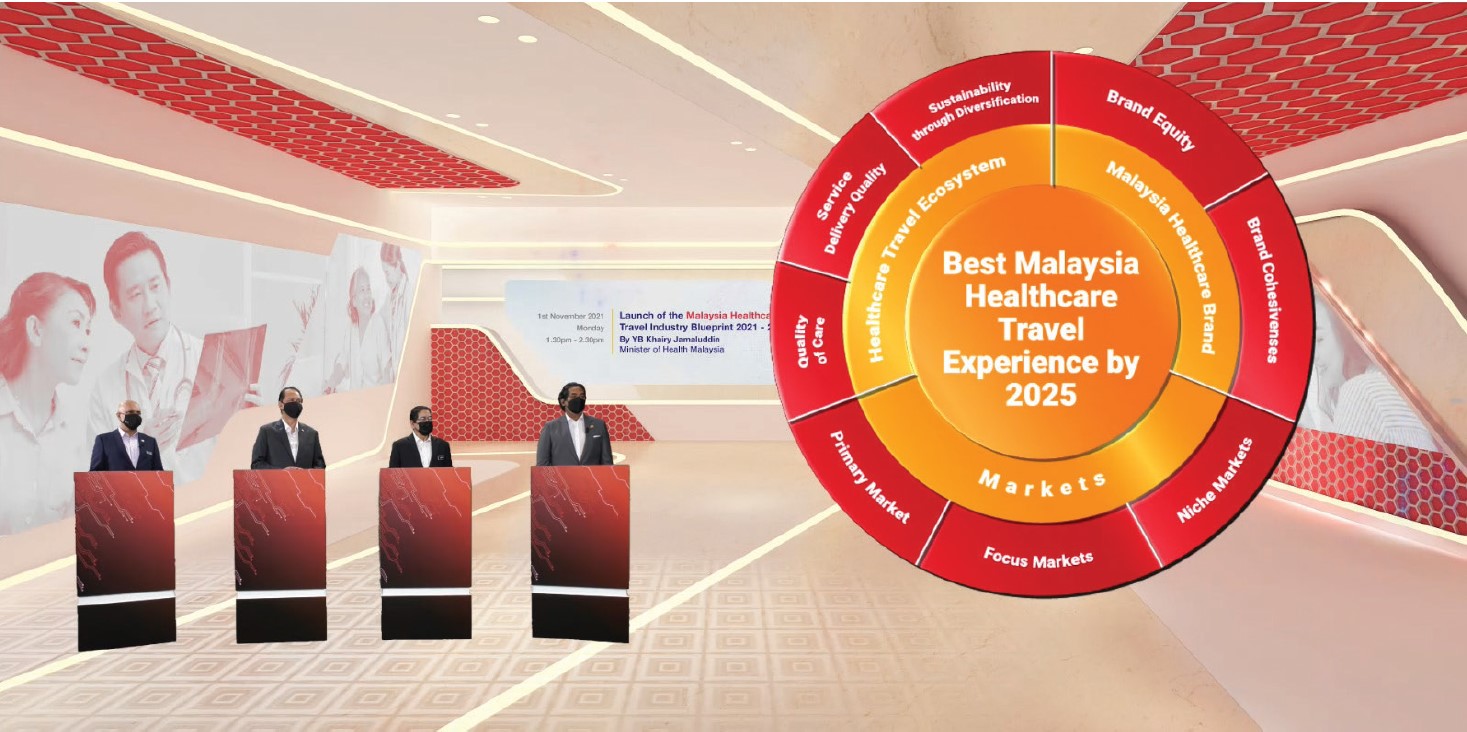
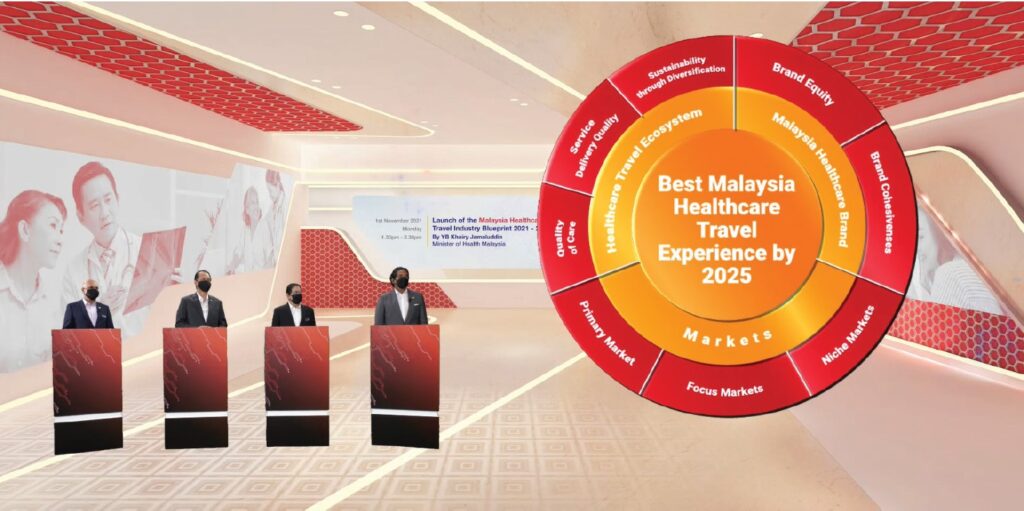
Malaysia’s Health Minister Khairy Jamaluddin (rightmost) spearheads the launch of the Malaysia Healthcare Travel Industry Blueprint 2021-2025 on a virtual platform.

As international travel gradually resumes post-pandemic, Malaysia is pulling all the stops to speed up the growth in medical tourism, guided by a new blueprint unveiled last month by the Malaysia Healthcare Travel Council (MHTC).

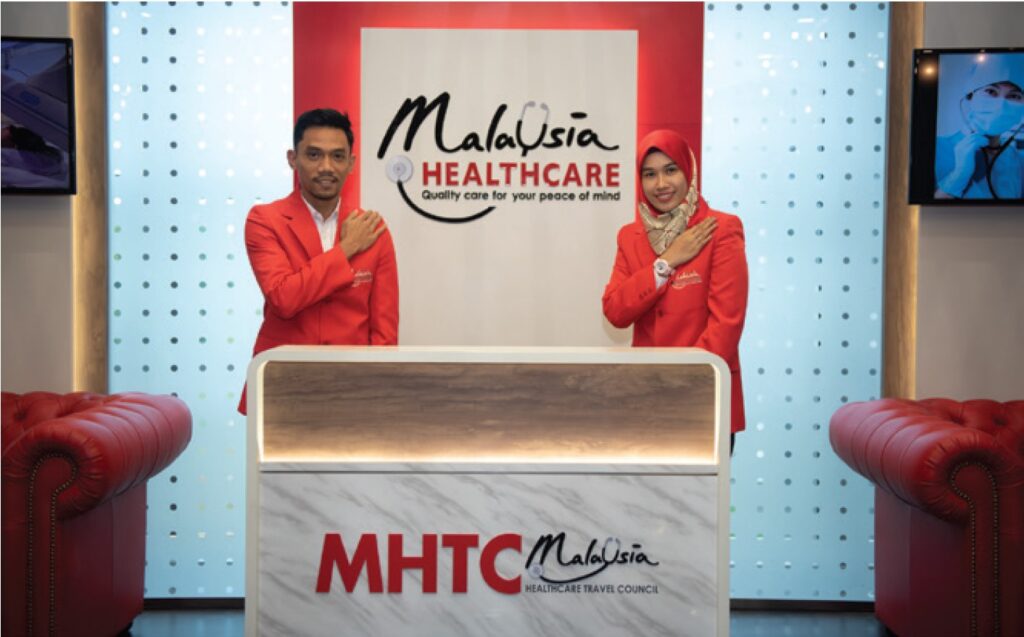
Founded in 2009 under the purview of the Ministry of Health, MHTC works with industry players and service providers to grow the health travel sector by promoting the Malaysia Healthcare brand globally. Its new blueprint aims to highlight the country’s healthcare travel ecosystem with a focus on enhancing the traveler experience in the next few years as economies around the world recover from the negative impact of the Covid-19 pandemic.

To enhance and elevate the traveler experience, the blueprint will highlight five areas: quality, affordability, safety, hospitality and seamless journey. The country aims to maintain high quality healthcare services at affordable prices, while equipping highly trained specialists with the latest medical technologies.

The plan also calls for the cooperation among stakeholders to rebuild the industry, amplify the Malaysia Healthcare brand and increase global awareness of the country’s niche offerings such as the Fertility Hub of Asia, the Cardiology Hub of Asia, and the Cancer Care Center of Excellence.

Charting a New Course

“The emphasis will be on providing the best ‘Malaysia Healthcare’ travel experience with world-class medical services at an affordable price, great hospitality and an overall seamless journey for the traveler,” says Mohd Daud Mohd Arif, CEO of MHTC.

Malaysia to enhance the healthcare traveler experience.

“By 2025, we hope to achieve a targeted US$400 million in receipts from healthcare travel, with a significant positive spillover effect into the rest of the Malaysian economy.” That will potentially equal or surpass the hospital receipts generated from healthcare travelers in 2019, just before the pandemic upended the global economy.

Medical tourism has had a significant contribution to the country, with the government estimating the spillover of such medical receipts to the broader economy at US$1.5 billion in 2019 when 1.2 million medical tourists visited the country. The industry achieved an average annual growth of 16% between 2015 and 2019.

While Malaysia’s popularity as a leading healthcare travel destination in Southeast Asia has grown in the past decade, its value propositions of quality, accessibility (to top specialists and medical facilities) and affordability, has grabbed the attention of the international media. Last year, the International Medical Travel Journal in the U.K. named the country “Destination of the Year” while the U.S.-based International Living magazine ranked Malaysia as the “Best Country in the World for Healthcare” from 2015 to 2019.

Anticipating pent-up demand among travelers seeking medical treatments in Malaysia in the post-pandemic years ahead, the country has positioned itself as a safe and trusted destination with a wide range of hospitality choices such as spa resorts, wellness centers and health-centric getaways. It will leverage technology to make the traveler experience even more seamless.

“For every plan and aspiration articulated today, we must bear in mind that the end goal is to build a sustainable future for the healthcare industry,” Health Minister Khairy Jamaluddin said during the launch of the blueprint last month.

www.mhtc.org.my

Beximco Health: Beximco Adopts Cutting Edge Technology In The Fast Changing Textile And Garment Industry

Global textile and apparel makers are accelerating their digital transformation amid intensifying competition from online fashion brands and booming demand for e-commerce in the wake of the Covid-19 pandemic that has kept consumers at home as cities around the world went into lockdowns to curb the coronavirus from spreading.

With the pandemic upending the fashion industry, Beximco—Bangladesh’s leading textile and apparel maker—is leveraging innovative technologies to gain global market share and deepen relationships with customers in the fashion and retail industries.

“Global competition is increasing with the rise of fast fashion and digital only players,” says Syed Naved Husain, Group Director and CEO of Beximco. “Traditional retailers are under financial pressure and players such as Amazon and Primark—are fast moving and at the forefront of the digital economy and are gaining market share. Retailers that can adapt and change quickly, such as Zara and Target, are doing well, but they want to work with suppliers who can also change and adapt quickly.”

Beximco has been quick to adapt technological innovation, one of its hallmarks since it began operations over 26 years ago. The company employs advanced design, manufacturing and distribution solutions to add value to its customers’ businesses across the entire value chain. It’s a one-stop shop that gives clients best in class service with flexibility, agility and speed.

“We’ve taken a very proactive approach to the implementation of production technologies and processes that have the greatest impact on efficiency and product quality,” says Group Chairman of Beximco, A. S. F. Rahman. “We collaborate closely with our customers across the entire value chain. Beximco also invests in the education, training and skills development of all its employees, enabling them to support the production of differentiated value-added garments.”

Smart Fabrics

One area Beximco has excelled in is its use of “smart fabrics,” or textiles that leverage technology for fashion or design purposes. About 45 percent of apparel companies surveyed by McKinsey in February 2020 are looking to integrate more innovative materials into their products, a trend McKinsey describes as “materials revolution.”

Beximco makes use of performance fabrics that can be engineered to integrate features such as thermal management, quick drying, extra durability, antimicrobial, odor free, or UV protection. In partnership with brands such as Zara, U.S. Polo Assn, Land’s End and Marks & Spencer, the company makes garments that look stylish for work, but wearable for outdoor and sports activities because of features such as all-way stretch, temperature regulation and reinforced seams.

3D Design Solutions

Beximco also utilizes 3D design technology to efficiently showcase samples to clients. The digital solution—developed by fashion design software firms CLO and Browzwear—enables realistic garment simulations.

Using the software, designers can make virtual samples, see how the designs fit on models and show them to buyers at different locations, without cutting any fabric. This speeds up the design process and enables the designers to save time and resources, while identifying potential issues with the fit and pattern.

“3D processes will result in reduced approval timelines and less fabric wastage, enabling Beximco’s designers to be more creative and have closer collaboration with their counterparts at the brands,” says Husain.

SmartLab New York

Beximco customers in the U.S. can even access the company’s cutting edge technology at its SmartLab in New York. Designers and product developers who visit the SmartLab are able to develop garment washes that fit their requirement on the spot, and digitally transfer their chosen wash recipe to Beximco in Dhaka for bulk production.

The company is also building a network of “urban factories” that will help designers develop and produce a small batch of orders for trials or test marketing. These facilities can make up to 1,000 pieces of garments for quick-to-market and pre-bulk-buying runs.

“This will save customers travel and shipping time and provide them with many of the same capabilities in New York as would be available in Dhaka,” says Husain. “The SmartLab New York also allows fashion design students in the U.S. to practice creating washes and looks using the SmartLab software and immediately see their designs in actual fabrics.”

Beximco’s technology initiatives help to slash manufacturing lead times and retailers’ time to market, allowing the company to cater to fast evolving fashion trends. Recognizing the firm’s capabilities, Zara Women exponentially boosted its orders with Beximco.

Fighting Covid-19

The company’s agility and flexibility was put to the test as Covid-19 spread rapidly last year. At the height of pandemic, Beximco quickly pivoted to make fabrics for the manufacture of personal protective equipment (PPE).

The company leveraged its existing strengths in technical fabric, sewing and large scale manufacturing to launch Beximco Health—a new division dedicated to making PPE materials for the production of surgical and isolation gowns, coveralls, as well as N95 masks. The new division built a new facility, with clean room and PPE testing lab, on the group’s 20-acre (80,900-square meter) campus in a very short period of time.

Since advanced PPE testing facilities were limited in Bangladesh, Beximco formed a strategic partnership with Intertek UK to create an on-site laboratory. The 12,000-square feet (1,100-square meter) Centre of Excellence PPE Lab conducts physical, chemical and microbiological testing, enabling Beximco to obtain PPE certifications fast. Following its launch, one of the first shipments was the delivery of 6.5 million PPE gowns to the Federal Emergency Management Agency in the U.S.

“The new Beximco facility marks an important step in the diversification of the global supply chain, especially for healthcare equipment,” says Earl R. Miller, the U.S. Ambassador to Bangladesh, who personally witnessed the shipment of the PPE gowns to the U.S. from the airport. “Beximco instantly saw the dangers of this dependence and invested to meet the challenge, and it’s not the first time Beximco has risen to the challenge posed by a disrupted supply chain.”

To find out more

www.beximco.com


Petronas: An Aspiration For A Sustainable Future

India’s largest single location open access solar farm of 175 MWp at Gadag, Karnataka.

There is no doubt that climate change is one of humanity’s greatest challenges. Its effects are detrimental and range from sweeping ecological damage and community impact to potentially trillions of dollars of losses in economic cost.

Cognizant of this, PETRONAS, as a global energy solutions provider, is guided by its Net Zero Carbon Emissions (NZCE) aspiration. The goals of NZCE are driven by a clear path to combat climate change and generate near-term macroeconomic payback for the Malaysian economy while delivering a sustainable future for the world, its people and the business.

To achieve NZCE, PETRONAS has identified four building blocks to balance the energy trilemma, defined as energy security (supply), energy equity (affordability) and environmental sustainability. These are building operational excellence, making cleaner energy more accessible, accelerating technology and innovation stewardship, and investing in nature-based solutions.

Driving Forward

With this clear vision articulated, PETRONAS has already begun to pursue more climate friendly solutions and opportunities in the broader energy space, while creating new sustainable values for the organization.

These new values include boosting energy efficiencies through the increased use of natural gas and renewable energy supply capacity such as solar power and hydrogen. Complementing these efforts is PETRONAS’ commitment to lower emissions from its operations through the reduction of hydrocarbon flaring, venting and fuel gas usage.

A testament to how the company is utilizing solar power in its own facilities can be seen in PETRONAS’ Rooftops and Assets Nationwide (also known as Project SINARAN), an initiative to generate clean energy from solar photovoltaic (PV) systems. To date, more than 100 sites have had their installations completed or are in various stages of planning and execution.

Besides addressing internal needs, PETRONAS leads the way with approximately 1,000 megawatts of solar capacity in operations and under-development projects across India, Dubai and Malaysia. PETRONAS’ notable projects include the 175-megawatt power solarization project, India’s largest commercial and industrial (C&I) open access solar farm in a single location. Meanwhile in Malaysia, PETRONAS has signed the largest solar Power Purchase Agreement (PPA) through its deal with Lotuss Stores (formerly known as Tesco), and has a wide variety of customers, from fabrication yards and research complexes to universities and utility companies.

PETRONAS has also made headway in the production of low-carbon hydrogen by looking into carbon capture, utilization and storage (CCUS) technologies and renewable based hydrogen production pathways. In the near future, it plans to collaborate with key customers and hydropower suppliers to produce zero emission (green) hydrogen.

In addition, PETRONAS is currently looking into solutions for nature-based carbon offsets in order to preserve and restore these natural carbon sinks.

www.petronas.com/sustainability

Malaysia Prepares For Post-Pandemic Resurgence In Medical Tourism

Before the pandemic struck in 2020, Malaysia’s medical tourism industry had been growing year over year, contributing US$400 million to the national economy in 2019. In that year alone, the country welcomed 1.2 million visitors seeking medical services and treatments ranging from fertility, cardiology and oncology to orthopedics, neurology and health screenings.

World-class Healthcare

“Our strength as a key player in the medical tourism industry lies in our easily accessible world-class healthcare services offered at a comparatively affordable price thanks to government-regulated ceiling rates,” says Mohd Daud Mohd Arif, the CEO of MHTC.

MHTC CEO, Mohd Daud Mohd Arif

“Once known as the ‘Hidden Jewel of Asia’ for medical tourism, we have since been recognized as the Destination of the Year for healthcare travel from 2015 to 2017, and most recently in 2020, awarded by the International Medical Travel Journal,” continues Mohd Daud.

“With over 200 private hospitals and many highly qualified physicians and specialists, waiting time for consultations and treatments is minimal. There is no barrier to communication as English is widely spoken and translators can easily be arranged for non-English speakers. For post-treatment options, Malaysia has a myriad of world-class spas and resorts, wellness centers and health-centric tourist attractions on offer, although this may be limited at the present time due to the pandemic,” he adds.

MHTC is an agency under the Ministry of Health tasked with promoting Malaysia as an international healthcare destination. The agency also serves as a one-stop center for all matters related to healthcare travel—ranging from handling of inquiries and business development to safeguarding regulations and facilitating applications.

Forging Resilience

The insigHT virtual conference held in Kuala Lumpur last year.

Malaysia, like most countries around the world, is emerging from the pandemic with a slew of initiatives to kickstart the economy, and “forging industry resilience” is one of the key strategies. In line with this, an upcoming virtual conference by MHTC with a similar theme, named insigHT2021, will be held from November 16 to 18. 

Held annually, the event is a medical travel market intelligence conference that gathers thought leaders and partners from within the country and abroad to collaborate and advance the healthcare travel industry in Malaysia and the region.

The conference will gather some of the top minds from around the world to discuss topics ranging from the future of healthcare and implementation of travel passports to the convergence of hospitality and wellness, and how the industry can work together to achieve common goals.

Besides hospital and healthcare administrators, the conference is expected to attract industry players, professionals and officials from travel, tourism, pharmaceutical, real estate, government and many other sectors.

“New global tourism trends will emerge in 2022, and the future of travel will be impacted by socio-economic shifts, digital innovations and new travel experiences. As professionals in the industry, we must be prepared for what lies ahead and forge resilience,” says Michel Julian, United Nations World Tourism Organization’s program officer and one of the key speakers at the upcoming conference.

Conference participants from around 40 countries will get the chance to exchange ideas and knowledge with peers through private online meetings and roundtable discussions. Participants will also get the opportunity to build their company’s visibility among industry players while brushing up on upcoming trends and post-pandemic recovery strategies. An e-business card download facility will be available to make it easy for participants to expand their networks and connect with their peers.

http://www.mhtc.org.my/insight2021

Redefining Purpose Beyond Profit

Corporates in Asia and the rest of the world are devoting more and more resources toward achieving socially responsible and sustainable outcomes as they seek to make a positive impact globally.

This trend has been accelerated by the pandemic, as remote work, changing consumer behavior and rising inequality have forced companies to rethink their priorities and adjust their strategies to adapt and thrive. Meanwhile, the challenges posed by the climate emergency continue to loom large on boardroom agendas.

According to a report by Deloitte, there is also growing evidence to suggest that companies with superior Environmental, Social and Corporate Governance (ESG) performance will also do well financially over the long term.

This drive to demonstrate ESG performance has led to an upsurge in companies looking to establish sustainability targets, from measurably reducing carbon emissions and single-use plastics, to ensuring that new building projects meet globally recognized certification standards.

Leading the Way

In the wealth management space, more of Asia’s leading business families are seeking out advisors who can help them invest with purpose and social impact. This comes as they are poised to pass an unprecedented amount of wealth on to a new generation of more socially aware family members.

To address their needs, financial institutions such as HSBC Global Private Banking are incorporating sustainability considerations into their investment and advisory processes. With an extensive network of non-governmental organizations (NGOs), the bank has also been supporting progressive clients in realizing their philanthropic ambitions, preserving their legacy and making long-lasting impact in the wider community.

Sustainability has also come to the fore in the real estate sector. For instance, Hong Kong-based Sino Group has been committed to making a positive impact through its vision of Creating Better Lifescapes, which aims to help communities thrive by embracing green living and wellness, pursuing meaningful designs, and seeking innovation while respecting heritage and culture.

Reflecting its commitment to this journey, Sino Group last year introduced its Sustainability Vision 2030, a blueprint charting the company’s path toward 2030 and beyond. This ambitious plan establishes goals that are in line with Sino Group’s three pillars of Green Living, Innovative Design and Community Spirit, and also aims to support the United Nations’ Sustainable Development Goals.

Thanks to forward-thinking companies such as these, Asia is moving purposefully toward a more sustainable and socially responsible future.