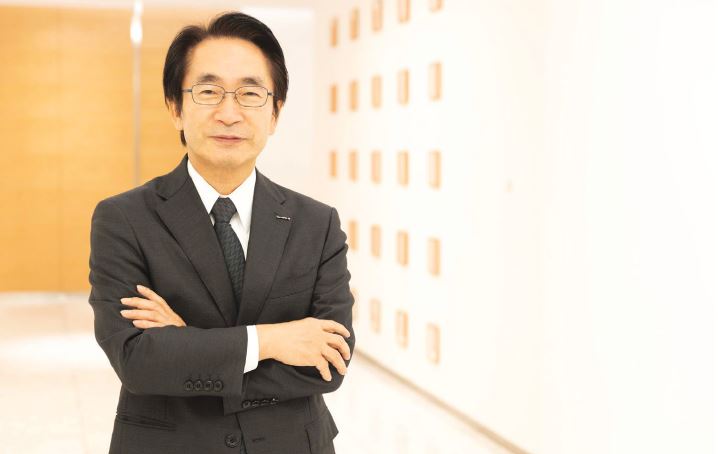
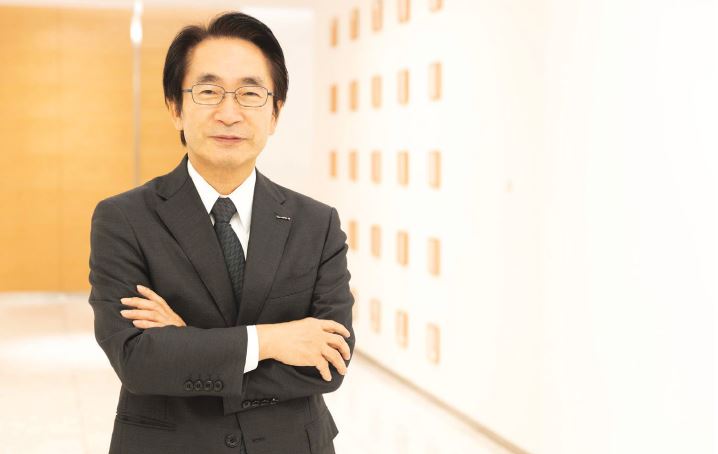
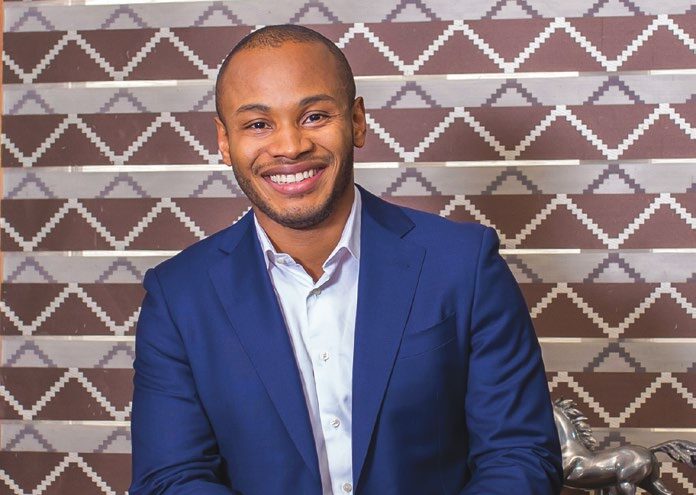
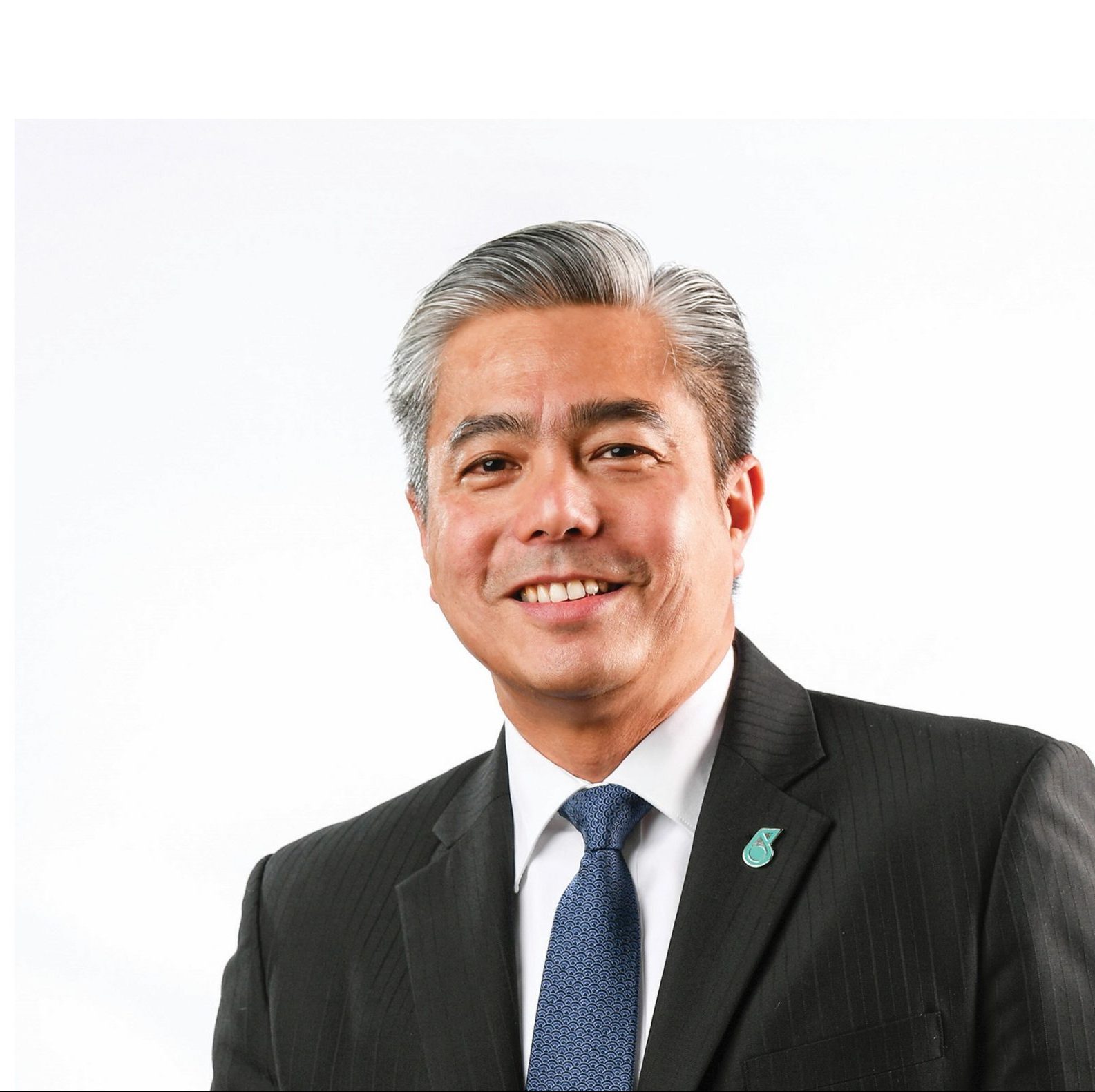
PETRONAS Executive Vice President and CEO of Upstream, Adif Zulkifli
Malaysia Petroleum Management (MPM) has launched the Malaysia Bid Round (MBR) 2021, a platform to offer 13 new offshore exploration blocks within proven hydrocarbon basins in Malaysia to interested investors.
These 13 blocks cover nine shallow-water and four deep-water acreages, with discovered resources opportunities (DRO) included in some of the exploration blocks. MPM, on behalf of the resource owner PETRONAS, manages Malaysia’s hydrocarbon assets.
Although there has been an accelerated shift toward renewables, petroleum demand is expected to remain robust in the coming years due to rising energy demand.
Thus, decarbonization of its core operations is critical in ensuring energy security, while helping countries to benefit from less emissions-intensive fuels.
To that end, there is a need to explore oil and gas in the right places and drill for what is known as “advantaged” barrels—oil that has the twin properties of being low in cost and carbon content.
PETRONAS Executive Vice President and CEO of Upstream, Adif Zulkifli, says advantaged barrels can be produced even when prices are low and when regulations are tightened, and is expected to be the source of the bulk of oil supply in the next few decades.
“For 2021, PETRONAS is offering attractive exploration blocks located within proven hydrocarbon basins. Our track record shows we have always been investment friendly as we continue to create a conducive environment to deliver value and promote sustainable development,” adds Adif.
Flexible Terms
Looking to draw in agile investors, MPM is enhancing its product offering to encourage collaboration and further investment in the industry, offering three types of new production sharing contracts (PSCs) under the MBR 2021.
The first, the Enhanced Profitability PSC Terms (EPT), includes a 70% fixed-cost recovery ceiling and linear profit sharing, based on a single oil and gas pool. Under this scheme, the contractor’s profit share will range between 30% and 90% depending on the asset’s profitability.
The second and third PSC—called the Small Field Assets (SFA) and Late Life Assets (LLA), respectively—provide opportunities for industry players with niche capabilities to monetize discovered fields with resource size of less than 15 million barrels of oil or less than 300 billion cubic feet of gas.
MPM also offers several nonfiscal enhancements for the exploration blocks such as larger block size, flexible bidding options, e.g. the option to merge two adjacent blocks under one PSC, transferable minimum work commitments between two adjacent PSCs and a phased exploration period.
MPM is hosting a virtual data room that is accessible now until August 6 to allow potential investors to conduct data room reviews within the bid round period. The bid evaluation exercise will take place between August and September. The contracts will be awarded to successful bidders by year-end.
MBR 2021 blocks on offer
Senior Vice President of MPM, Mohamed Firouz Asnan, says, “To date, some 40 billion barrels of oil equivalent (bboe) have been discovered in Malaysia, one of the highest in the region, with 20 bboe more waiting to be unlocked. This makes Malaysia a country with great potential for growth while providing investors flexibility and choice.
“Those seeking the right opportunities will not only balance but strengthen their portfolio, and we hope to see new investors, including existing players, bidding this year,” adds Firouz.
Southeast Asia’s technology sector powers ahead despite an unprecedented crisis that has affected businesses and ravaged economies globally. The value of fundraising deals in the region rose 90% to US$2.7 billion in the second quarter from a year earlier, according to financial news site DealStreetAsia. Transaction counts increased by 60% to 184 over the same period.
Technology platforms welcomed healthy revenue boosts from the pandemic-fueled reshaping of homes and workplaces. Sectors such as health, education and online media, in particular, had strong showings as consumers and businesses spent big on digital offerings in the face of Covid-19.
Investors are paying attention. EMPEA’s 2020 Global Limited Partners Survey, featuring the views of 109 limited partners on the attractiveness of current conditions and outlook for private capital in emerging markets, saw Southeast Asia maintain its pole position.
Poised for Regional Growth
Singapore-based Openspace Ventures, an early investor in Indonesian decacorn Gojek, is a pioneer in the region. Established in 2014, the fund now manages over US$350 million in committed capital, and boasts 32 investments and counting. To date, the firm’s portfolio companies have attracted US$6.5 billion in follow-on capital. Even in the midst of Covid-19, Openspace’s companies raised more than US$2 billion in capital in the 12 months to September, outpacing its peer average by over seven times. The firm counts institutional powerhouses, including sovereign wealth funds, superannuations and university endowments, in its stable of limited partners.
Openspace’s strategy is clearly paying dividends. The VC’s first and second funds, launched in 2014 and 2017, respectively, are both performing in the top quartile against global peers, according to Cambridge Associates and Preqin benchmarks, with Fund I in the top 5%.
International players are expanding into the region to capitalize on Southeast Asia’s potential. Lightspeed, an established global venture capital (VC) firm, set up shop in Singapore this year, joining other well-known VCs like Sequoia Capital India, 500 Startups and Wavemaker in providing great liquidity to the market. But while ASEAN is gradually coalescing into an integrated market, it is not homogenous. Firms and investors must have boots on the ground to leverage strategic local networks for success.
Openspace is built for purpose. Its team of 22 includes 12 nationalities, and it has offices in Bangkok and Jakarta. The firm made four investments in Indonesia and Thailand in the midst of the pandemic, claiming a return on its dominant geographical advantage. While currently providing coverage out of Singapore, it plans to open offices in Vietnam and the Philippines in 2021, deepening its long-term commitment to Southeast Asia.
Capturing Alpha
Investor interest is expanding beyond fintech and surging into newer areas such as healthtech, edtech, agtech and cleantech. Openspace already has substantial expertise here, having entered these sectors and geographies ahead of the curve.
The firm attributes its early successes in Indonesia, including investments in Gojek, TaniHub, FinAccel and Halodoc, to a strategy of active anticipation. “Our ability to source and analyze data and have conversations with industry shapers on macroeconomic and geopolitical trends gives us an edge in picking startups that succeed at scale,” says Shane Chesson, Founding Partner at Openspace. The firm consistently evaluates a high number of startups—it assessed over 800 in 2019 alone.
Founding Partners Shane Chesson (left) and Hian Goh met at INSEAD.
Openspace’s team members at their Singapore office.
While Indonesia is home to many of Southeast Asia’s tech stars, others in the region are also producing winners. The Philippine and Thai markets have large youthful populations, an emerging middle class, and rising internet penetration. Kumu, the Philippines’ fastest-growing consumer app, saw average monthly active users increase by over 500 times since 2018 to exceed 1 million users earlier this year.
Deep Operations Expertise
Openspace propels value creation. The team features full-time, in-house operations experts in the key areas of technology, legal, human resources, and environmental, social and corporate governance. One notable example is Yiliang Zhao, who holds a Ph.D. in computer science (artificial intelligence). As the firm’s Vice President of Data Science he works with portfolio companies to develop machine learning models and optimization algorithms to generate revenue and streamline operations. Zhao worked with Finnomena, a Thai digital wealth management platform, to build predictive models identifying investment patterns as well as product recommendation models. Finnomena’s account openings tripled to over 42,000 in the third quarter from a year ago.
“Our diverse expert team gives us a clear competitive advantage and we can therefore take a high-conviction and constructive approach to investments. This drives out performance in our portfolio companies,” says Hian Goh, Founding Partner at Openspace.
Openspace’s strategy is clearly paying dividends. The VC’s first and second funds, launched in 2014 and 2017, respectively, are both performing in the top quartile against global peers, according to Cambridge Associates and Preqin benchmarks, with Fund I in the top 5%.
Halodoc’s Covid-19 rapid testing initiative with Indonesia-based hospital group Mitra Keluarga.
Openspace’s tech experts Dr Yiliang Zhao (left) and Wenbo Zong.
ICBC Private Banking this year marked its 12th anniversary of becoming China’s first licensed private banking institution. Over that time, it quickly expanded and distinguished itself from competitors to become a market leader. It has built a team of more than 5,000 financial advisors, extended its presence to all major Chinese cities and established a worldwide service network. As of June, ICBC Private Banking had 169,000 clients, with assets under management hitting 2.9 trillion yuan (US$425.75 billion).
As an integral part of ICBC Group’s strategy to become the No. 1 personal bank in China, ICBC Private Banking is pushing forward with innovative products and services. It is well positioned to leverage the parent group’s advantages in personal banking, asset management, corporate investment banking, financial technology, fund insurance and risk management, which allow ICBC Private Banking to provide a full package of integrated, professional, quality services.
ICBC Private Banking provides its high net worth clients—comprised of individuals, businesses and families—with all-market, omni-target and full-term asset allocations while focusing on comprehensive, personalized solutions. In recent years, the bank zeroed in on market trends and used its extensive resources to launch a string of successful products and services, such as its “fixed income plus” solution.
Its distinctive offerings extend to a diverse lineup of advisory services. ICBC Private Banking is committed to providing a full package of value-added services for high net worth clients and their families that include health, business travel, inheritance, art and lifestyle.
When it comes to online services, ICBC Private Banking pools its digital resources in an innovative way. It offers a VIP version of the ICBC Mobile Banking app, which allows premium clients to use WeChat and other social media platforms to contact the ICBC Private Banking team with a click for timely support.
In the fight against Covid-19, ICBC Private Banking leveraged the group’s resources to support medical staff in Wuhan, Hubei Province. It started a fundraising program called “Caring for Hospital Nurses in the Pandemic Fight,” through which it was able to deliver 10,000 sets of personal protective equipment to frontline workers.
ICBC Private Banking continues to expand its network across China.
It also moved quickly to launch financial services and products targeted at Hubei businesses. It cooperated with other group departments to develop “ICBC Exclusive Loan” solutions for areas severely impacted by the pandemic, and assisted efforts to support small and micro businesses and their owners with sufficient credit and financing services to help them overcome ongoing difficulties. ICBC Private Banking delivered online sessions to explain financial, taxation and economic policies put in place by the Chinese government and the bank in response to the pandemic crisis as well as government guidelines for companies resuming operations. After the government eased travel restrictions, ICBC Private Banking allocated marketing resources and value-added services to help its Hubei branch resume its client services and business operations.
ICBC Private Banking remains committed to the group’s core value of “Integrity Leads to Prosperity,” and continues to build an ecosystem of services that features “group-wide collaboration, full market selection, all-product configuration and global service availability” to facilitate the development of the real economy and serve individuals, companies and family properties.
Despite the headwinds caused by the Covid-19 crisis, Indonesia continues to be an attractive destination for savvy investors. According to the IMF, Southeast Asia’s largest economy is expected to shrink by 1.5% this year due to the pandemic, before rebounding to expand by 6.1% in 2021.
The Indonesian government is preparing to spend about 2.75 quadrillion rupiah (US$186.3 billion) to bolster the economy next year, with most of the funds going to infrastructure, education and healthcare. Meanwhile, the Omnibus Law on Job Creation passed by parliament in October will help businesses by cutting red tape, easing restrictions on foreign investment and providing more incentives to free-trade zones.
Outperforming in a Crisis
Venture capital firm Alpha JWC Ventures is capitalizing on the potential of Indonesia’s economy as its funds continue to outperform its industry peers during this pandemic year. The firm’s two Southeast Asian venture funds invest primarily in early-stage Indonesian startups, with the aim of discovering and supporting exceptional entrepreneurs to create enduring industry champions. About two-thirds of its investments are in Indonesia-based companies.
Alpha JWC’s first fund was launched in 2016. The US$50 million fund has achieved a net asset value (NAV) of 3.6 times with a Distribution to Paid-In (DPI)—cumulative investment returned to the investor relative to invested capital—of at least 12% by the second quarter of 2020. The second fund (2018 vintage) has a NAV of 3.3x and a DPI of 26%. Reflecting its confidence in the region’s longer-term prospects, Alpha JWC is currently gearing up to launch its third fund next year.
Amid a tumultuous 2020, Alpha JWC’s portfolio companies have also continued to attract significant funding. For example, Indonesia’s largest grab-and-go coffee chain Kopi Kenangan completed a massive US$109 million Series B round, while the Indonesia-based B2B marketplace for FMCG traders, Gudang Ada, announced its US$25 million Series A funding in May, only 15 months after its inception. Both companies have Alpha JWC as their first institutional investor.
Alpha JWC Ventures is led by Cofounders and Managing Partners Chandra Tjan (L) and Jefrey Joe (R).
Long-Term Partnerships
Alpha JWC’s success is underpinned by its philosophy of prioritizing the vision, passion and grit of a company’s founder when it comes to assessing potential investments. Indeed, it is this philosophy that has made the firm a top-choice partner of many startups.
“We always say that we have a ‘Founder First’ philosophy, meaning that above all calculations and business potential, we put the quality of the startups’ founders on the highest regard. This also includes spotting their unfair advantages and track record, which would be a determining factor in the company’s success in the future,” says Alpha JWC Cofounder and Managing Partner Chandra Tjan. “Finding the right ones doesn’t only require thorough due diligence, but also experience and gut feelings, something that you can only get after doing something for a long time.”
Prior to Alpha JWC, Tjan made a name for himself investing in Indonesian unicorns such as Traveloka and Tokopedia in his previous role as Cofounder and Managing Partner of venture capital firm East Ventures. He has been in the industry for more than a decade, starting when Indonesia’s tech ecosystem was still nascent.
The firm is also led by Cofounder and Managing Partner Jefrey Joe, formerly Chief Operating Officer of Groupon Indonesia and Cofounder of Indonesia’s leading bill payment aggregator Alterra. With one of the largest early-stage funds in the region, Alpha JWC is well positioned to support startups as they progress on their journey of expansion.
“However, for us, investing right does not stop at finding and funding the right companies and founders. We believe that the VC should be an active partner and support its portfolio companies throughout their journey,” Joe says. “Studies show that a hands-on approach improves fund performance significantly. Over the years, we have seen the positive impact of value creation on our companies’ performance, but the past months have shown everyone just how important it is for investors to support their founders in good times, and especially in bad times. We’re lucky we’ve had a long head start so we were more than ready when the pandemic brought unprecedented challenges.”
The firm has one of Southeast Asia’s largest VC teams, made up of high quality and experienced professionals from various backgrounds including regional investment funds, tech giants and global consulting firms. As a value-adding partner, it is the firm’s commitment to provide the best resources and platform to company founders during both early days and the growth stages.
A Pandemic Boost
The pandemic has pushed companies, both established and startups, to pivot and adjust to survive. While the turbulence has been disruptive, Covid-19 also boosted digital adoption in some sectors, including technology. Many Alpha JWC portfolio companies have gained momentum and accelerated their growth during the pandemic, including healthy food producer Lemonilo. The Jakarta-based company has seen sales surge as more Indonesians turn to a healthier lifestyle.
Another company that has benefited is B2B marketplace Gudang Ada. Transactions on its platform increased as regional lockdowns pushed industry players to quickly adopt technology solutions. In May, Gudang Ada launched pilot logistics services to ensure a steady supply of essential consumer goods in Indonesia’s cities.
Meanwhile, the social commerce sector has provided alternative jobs for workers laid off or forced to take a pay cut amid the economic downturn. It also has helped brands to connect with customers who have stopped visiting shopping centers. One of Alpha JWC’s social commerce startups, Evermos, noted significant user and transaction growth since the start of the pandemic.
“It is a tough time for everyone, but it’s not as grim as people painted it to be,” Tjan says. “Times like this reveal whether your investment thesis and portfolio management have been right, and we like what we are seeing right now. The pandemic has created unique investment opportunities, hence we are still actively investing. Our founders and internal team are stronger than ever, and the learnings we get throughout the pandemic will make us even more resilient.”
Joe adds, “We are confident that Indonesia and Southeast Asia is still the most lucrative hot spot for the tech industry in the world right now, which is why we will continue finding the next great companies and support them the best we can. Our third fund will hold the same investment thesis, but with even more dry powder, Alpha JWC will be able to double down on our existing extraordinary startups while also investing in new larger companies.”
For investors seeking opportunities in Southeast Asia, Alpha JWC has shown that there are still gems to be found even in the roughest of environments.
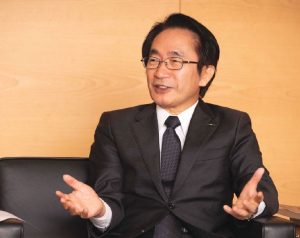
Kouichi Tamai, President and Representative Director, Fuji Xerox
Fuji Xerox is undergoing the biggest change in the company’s history. After its half-century-old technology agreement with Xerox Corporation ends next year, the Tokyo-based firm plans to embark on a dynamic growth strategy and expand to new markets under the Fujifilm brand.
Fuji Xerox reached record profits in fiscal year 2018 and says it expects to post strong results in fiscal 2019. “Our employees have worked incredibly hard. I would like to share the fruit of those results with our customers,” says Kouichi Tamai, who has been President of Fuji Xerox since June 2018. Over the past two years, he has addressed management issues and established a corporate structure to generate profits through various initiatives.
Going Global With Fujifilm Brand
Fuji Xerox was established in 1962 in Tokyo as a joint venture between Rank Xerox and Fuji Photo Film, now Xerox and Fujifilm, respectively, to bring to Japan and to the Asia-Pacific the technology that revolutionized business communications—xerography, which is widely used in photocopying and printing. From the start, Fuji Xerox had the technology agreement with Xerox that provided for technology/brand licensing and sales-territory coverage. That agreement is set to expire at the end of March 2021. Pursuant to its expiry, Fuji Xerox will change its name to “Fujifilm Business Innovation,” the company announced in January.
“The first thing I want to say is that we will continue providing the same services to our customers. By improving the speed and the level of technology and product development within Fuji Xerox, we are innovating products with our own original technology. I would like all of our valued customers to be assured that there will be no change in the products and services we already offer,” Tamai says.
Ending the technology agreement with Xerox will bring three major changes for Fuji Xerox. The biggest is the expansion of its sales territories worldwide. The firm’s sales coverage is currently limited to Asia-Pacific and Oceania. But after April 2021, the restrictions will be lifted, paving the way for Fuji Xerox to pursue global expansion under a new brand.
Tamai holds a doctorate degree in engineering from the University of Tokyo. He joined Fujifilm in 2003, then Fuji Xerox in 2017 as Deputy President, before assuming his current position of President and Representative Director in June 2018.
Next, the company will be in position to move quickly to invest in new businesses as well as seek mergers and acquisitions in line with strategic goals. Fuji Xerox will also be able to provide customers with innovative new products and solutions by strengthening collaboration within the Fujifilm group. Fuji Xerox will have exclusive use of technology patents that it retains after the expiration of its agreement with Xerox.
Finally, Fuji Xerox will no longer have to pay approximately ¥10 billion (US$95.3 million) annually to Xerox for use of the Xerox brand. The money instead will be reinvested in new businesses.
Innovating Constantly
The decision to disclose the changes in January was also significant. “Sure, it will be more than a year before the company name will actually change. However, Xerox is a brand that employees have affection for and customers are extremely familiar with. So we opted to make the announcement early to take plenty of time to explain the background of our decision,” Tamai says.
The company plans to accelerate its synergies with Fujifilm group companies to further promote innovative solutions and services using technologies such as the cloud, AI and the Internet of Things.
“For example, in the area of AI, there is synergy with Fujifilm’s medical field. Combining Fujifilm’s image-processing technology with our language-processing technology will expand the possibilities of new IT solutions. We must continue to focus on building an effective and efficient development system that leverages the strengths of both companies by fusing the technologies of Fuji Xerox and Fujifilm,” Tamai says.
Expanding to Europe and America
To break into new overseas markets, including Europe and the U.S., “we will first look into manufacturing products for other brands. In other words, we’ll start as an OEM [original equipment manufacturer] supplier,” Tamai says.
He received requests from both domestic and foreign manufacturers seeking OEM supplies from Fuji Xerox after the company became a wholly owned subsidiary of FUJIFILM Holdings in 2019. “When asked why they wanted to partner with us, clients responded unanimously that in side-by-side comparisons of the world’s major multifunction printers, the best products were made by Fuji Xerox. Even in challenging environments, there hardly were paper jams or malfunctions. In the case of cyberattacks, data remains safe,” Tamai says. “Careful consideration should be given on whether to invest in fixed costs, so in highly competitive European and American markets, we will keep a close eye on the OEM situation while considering whether to launch our own brand there.”
In Asia-Pacific countries where Fuji Xerox’s sales channels already exist, the company will pursue M&As that will increase market share or accelerate the development of solutions and services. In February, Fuji Xerox acquired Australian office IT services company CSG to leverage CSG’s relationships with small and midsize businesses in Australia and New Zealand. Fuji Xerox, whose main customers are large corporations, aims to capture a broader client base through the mutually complementary business structures of the two companies.
Tamai, who holds a doctorate degree in engineering, takes a precise approach to strategy development, much like a mechanical engineer designing sophisticated machinery. His goal is to raise the company’s sales to ¥1.3 trillion (US$12.4 billion) from approximately ¥1 trillion (US$9.5 billion) by fiscal 2024. The company is also working on developing new game-changing models that will contribute to the company’s growth. Fuji Xerox is set to become a key force in driving innovation in global business.
Tamai has been growing roses as a hobby for the past 10 years—precisely, he says, because they are “difficult to grow.”
“Just like with work, you have to put a lot of effort into it, but it gives me so much pleasure to see others enjoy their beautiful blossoms,” he explains.
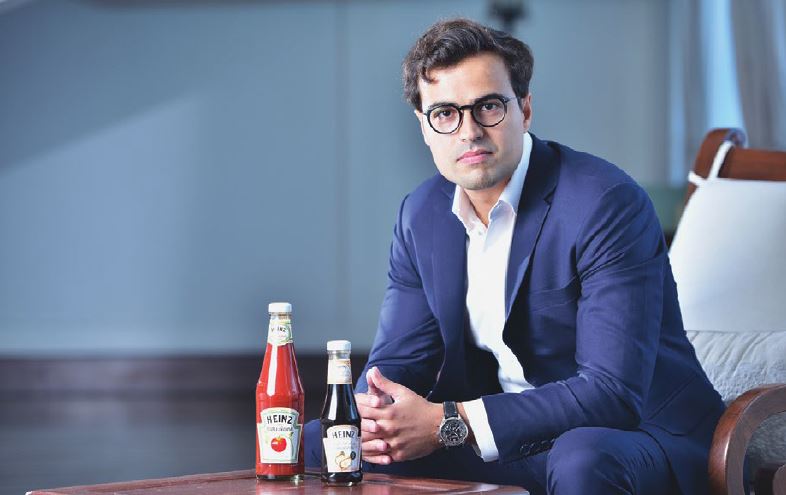
Joao Leitao, Managing Director of ASEAN, India, Hong Kong and APAC Exports
Already one of the world’s leading food companies, Kraft Heinz is expanding its business in Southeast Asia and India to realize its long-term vision of becoming “The Best Food Company, Growing a Better World.” Kraft Heinz products have graced dining tables for more than 150 years.
Joao Leitao, Managing Director of ASEAN, India, Hong Kong and APAC Exports—the business unit established to drive expansion in the region—shares the company’s plans.
What are your goals for the region?
Our business unit was set up to achieve annual double-digit growth in Southeast Asia, India, Hong Kong and Taiwan. On top of that, we are also responsible for exporting our portfolio of authentic Asian brands to the U.S., Europe and other geographies globally.
Apart from the flagship Heinz and Kraft offerings, the company is also responsible for other market-leading brands in the region, including Lea & Perrins, A1 sauce, Australia’s Golden Circle and New Zealand’s bestselling Watties brands.
Our goal is to be the fastest-growing FMCG (fast-moving consumer goods) company in the region, and we also aspire to be the fastest-growing business unit in Kraft Heinz.
Why has Kraft Heinz decided to expand in the region?
The food Industry has been continually growing, especially in the so-called Kitchen of the World, Southeast Asia and the Indian subcontinent. These markets each have their own characteristics, so in 2019, we launched relevant products in top categories that are relevant to the local palate, such as authentic Asian sauces like Heinz Oyster Sauce in Thailand and ABC Soy Sauce in Malaysia.
What are some of your key markets in the region?
Hong Kong, Thailand and Malaysia are our current core markets, while India, the Philippines and Vietnam are the fast-growing markets in our portfolio. We have great plans for the whole region.
In Thailand, for example, the company is aiming to become a “top-of-mind brand” for Thai consumers through key products such as Heinz ketchup and Heinz Oyster, which has garnered sizable market share, with steady year-on-year growth.
What do you view as your company’s key success factor?
People are the key factor to our success. We have rigorous selection processes to identify the right owners to join us, and we invest heavily in our talent pool.
We also foster transparency and trust between the employees—and it all starts with the environment we built. We brought the entire team into the center of the office in an open environment. That way information flows easily and we ensure that we have a flat organization, which we believe is one of the key factors for us to grow further. We have a startup environment with the unique advantage of being backed by a strong brand with significant resources.
How has Kraft Heinz built diversity into the organization?
An important part of the company’s strategy is fostering diversity among its teams by ensuring a robust mix of talent from different nationalities, genders and experiences. Reflecting this commitment, we have a higher ratio of female leaders in senior management positions in our region.
We strive to create a work environment that encourages people in the organization to have respect for others and to work together regardless of their differences. We believe this unique corporate culture is the secret ingredient that can help us succeed.
Dustin Lee Hoffman was born in 1937 in California. After a year at Santa Monica City College, he moved to New York to pursue acting in the 1960s. His film debut “The Tiger Makes Out” (1967) was followed by his breakthrough role in “The Graduate” the same year. Hoffman has appeared in numerous films and won an Academy Award for Best Actor for “Kramer vs. Kramer” (1979) and “Rain Man” (1988).
Last December, renowned American actor Dustin Hoffman made a guest appearance at the Tenkomori Art Exhibition hosted by the Tokyo Art Foundation and cosponsored by Misuzu Corp. Before the event, Hoffman discussed his life in the arts.
By the 1990s, Dustin Hoffman was a household name following his acclaimed performances in a string of hit films, including “The Graduate” (1967), “Midnight Cowboy” (1969), “Kramer vs. Kramer” (1979) and “Tootsie” (1982). In addition to two Academy Awards for Best Actor, he has earned numerous honors as a performer, including four British Academy of Film and Television Arts, six Golden Globes and two Emmys. No one can doubt his contribution to the art of cinema.
As many Hollywood movies are made with overseas audiences in mind, premier screenings featuring the leading actors and executives are major events around the world. Although Hoffman receives countless invitations, he rarely attends events outside his home country.
Naturally, there’s a reason. When he first decided to become an actor, he vowed to dedicate all of his time to his art and his family, and at the age of 82, he continues to live by this philosophy.
“I want to be with my family when I’m filming. If I am shooting in Japan, I’d want them to stay here for a few months with me, but unfortunately that kind of opportunity is hard to come by,” he says.
As an actor who follows strict routines to improve his performances, Hoffman values time with his family above all else. Why, then, did he decide to squeeze a few days into his extremely busy schedule for his third visit to Japan at the end of the year?
“Japan is one of my favorite countries,” Hoffman explains. “I’m very impressed by Japanese courtesy and the culture of respect for others. When I was studying drama in my 20s, there were two actors I admired: One was Marlon Brando, and the other was Toshiro Mifune [the star of several films directed by legendary Japanese filmmaker Akira Kurosawa]. I’ve seen a lot of Kurosawa films and I’m always impressed by his way of directing.
“My reason for coming to Japan this time is to meet someone who’s been called ‘a modern-day Renaissance man,’ a businessman who sings Italian opera and is renowned as an artist,” he says.
The person Hoffman wanted to meet is Haruhisa Handa, President of Misuzu Corp., which runs Handa Watch World. The actor says he strongly empathizes with Handa’s dedication to social contribution.
The Tenkomori Art Exhibition, cosponsored by Misuzu Corp., took place in Tokyo Dec. 6-10. Traveling with his wife, Hoffman made a special guest appearance at the show.
The True Meaning of Charity
“In recent years, terrorist attacks have become more common all over the world. Natural disasters caused by climate change have increased, killing many. We hear about all of this on the news, but once things calm down, we forget. Some of the survivors of these tragedies have been seriously injured and need help. Haruhisa Handa understands that it takes time to come to terms with these events. He has set up hospitals in conflict zones to care for those in distress and supports the injured through sports-related activities. It’s amazing,” Hoffman says.
Handa is the Chairperson of the International Sports Promotion Society (ISPS), which supports a variety of sporting activities worldwide. One of the most famous ISPS events is the PGA “Pro-Amateur” golf tournament, which gives blind and disabled golfers the opportunity to play with top golfers.
Hoffman has supported similar charity work and describes establishing a camp for children with cancer as one of his greatest achievements.
“A long time ago, my wife’s cousin got leukemia at the age of six,” Hoffman says. “Although she was forbidden from playing outside, she longed to go to camp, but there was no camp for kids with leukemia at that time. That memory stayed with me, so I founded a campsite for children with cancer. There was a hospital nearby, and helicopters were on hand to take the children there in case of an emergency.
“Visitors were allowed, but I didn’t have the courage to go at first because I didn’t know if the children were enjoying it. I was worried that they might be sad. But when I went, it was completely different to what I’d imagined. By feeling close to death, the children probably understood the importance of living in the moment. The children were communing with nature and learning how to live. The place was full of vitality. Being with other kids in the same situation created a sense of camaraderie and they encouraged each other. It’s something I’ll never forget,” Hoffman recalls. “I realized that I was stupid to doubt the strength of those kids. They’re much smarter and stronger than me.”
Inhabiting a Character
Hoffman is a method actor who believes that actors must fully inhabit the experiences and emotions of a character to play the part effectively. For his role as Raymond Babbitt in the 1988 film “Rain Man,” Hoffman spent two years getting to know people with autism. He used insights gained through observations and interviews with one individual in particular—a man with savant syndrome—to develop Raymond’s character.
“An actor has to condense a life of 10, 20 or 50 years into the span of two hours. It’s never easy. Sometimes it takes more than a year to learn a part, and every film is a big challenge. Once I am given the role, I research every angle about the character to understand how his personality developed from birth. I have to understand the character’s thoughts and motivations for his behaviors,” he says.
In all endeavors, Hoffman never fails to get to the heart of the matter. He concludes the interview with a few words of wisdom: “No one is perfect. Everybody has their strengths and weaknesses. But accepting yourself is no easy task. At least in my case, even though I want to be a great person, I’m still struggling to become my ideal self. It’s the effort that counts, and I’ll keep trying for the rest of my life.”
Dzafri Sham Ahmad, Vice President of Group Health, Safety, Security and Environment, PETRONAS
Since the second industrial revolution, the world has been dependent on the oil and gas industry to power economic growth. In the past decade, climate change concerns have accelerated the push for cleaner and sustainable energy solutions in a bid to reduce dependence on fossil fuel.
For PETRONAS, industry disruption—on the back of increasing energy demands, resource depletion and the push for sustainable solutions—is inevitable. It’s an ongoing challenge for all energy players, including PETRONAS, says Dzafri Sham Ahmad, Vice President of Group Health, Safety, Security and Environment, PETRONAS.
“In the energy business, change is becoming even more volatile today than ever before. Disruptive forces and emerging megatrends are pushing oil and gas companies to reinvent themselves and revisit their business strategies in order to remain relevant and sustainable.
“Climate change, air-quality concerns and government-driven initiatives are also fueling the rising demand for renewables. This spurs us to be more innovative and to invest in other sources of energy such as renewables for the security and sustainability of our supply.”
Dzafri says PETRONAS has been exploring the clean energy space since 2013 as part of the company’s long-term growth strategy. Today, this means the company is adopting commercial renewable energy technologies that use solar and wind for power.
The challenge in transitioning toward a low carbon future is ensuring a sufficient and affordable supply of energy to cater to fast-growing energy demands due to population growth and rapid urbanization. Energy companies such as PETRONAS find themselves walking a fine line when it comes to energy security, affordability and sustainability.
While fossil fuels remain core to the global energy mix, PETRONAS is redefining its energy offerings by pushing for the increased use of natural gas, which it sees as complementary to renewables. Its efforts to ensure a sustainable supply of natural gas is evident in its Canadian venture; PETRONAS and four global joint venture participants reached a final investment decision last year to build a LNG export facility in Kitimat in British Columbia, Canada.
The multibillion-dollar LNG Canada project, which will initially comprise two LNG liquefaction processing units, aims to produce a total of 14 million tons per annum, with the potential to expand to four units.
PETRONAS is among the top five LNG sellers in the world with positions in Australia, Egypt and Sarawak. The company is also a significant supplier to Japan, Korea, Taiwan and China, and it recently expanded its customer positions in Thailand and India. Investing in Canada provides the company a long, sustainable business for the future.
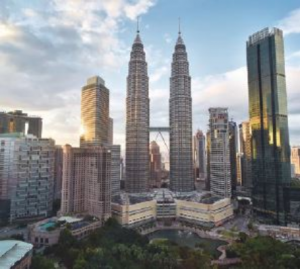
PETRONAS Twin Towers, home to Malaysia’s premier energy solutions company.
As for renewable energy, the company is currently focusing on solar and wind power and has established a new division called Gas & New Energy, which is aimed at growing a substantial business in delivering clean energy solutions to customers.
In line with its strategies in new energy, PETRONAS in April acquired Amplus Energy Solutions Pte Ltd (Amplus Solar), which is headquartered in India, to expand its renewables portfolio to include rooftop solar, ground-mounted solar and other distributed energy solutions such as storage.
In Malaysia, PETRONAS is collaborating with Universiti Teknologi MARA to jointly develop the On-Campus Energy Optimization and Solar Rooftop projects. The company plans to be a significant contributor to the Malaysian government’s renewable energy target of 6 GW by 2025.
“We are exploring new ideas and technologies that go beyond oil and gas as we witness the emergence of new disruptive business models, products and ideas. For PETRONAS, we view technology as a differentiator—the key to unlocking new opportunities and driving growth for our business,” says Dzafri.
Making Sustainability a Key Strategy
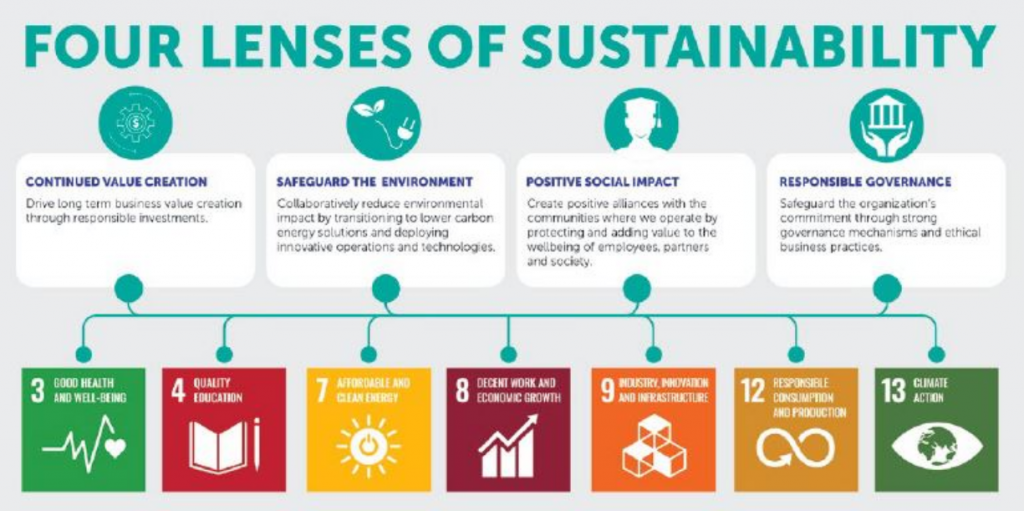
PETRONAS has been on its sustainability journey for nearly two decades now, says Dzafri, “but looking at future trends and rising expectations, we realize that we cannot afford to continue managing sustainability the same way anymore.”
Sustainability at PETRONAS today is driven by a clear agenda for a more effective orchestration of programs to immerse it into every aspect of the company’s business strategy and work processes, he adds.
When it comes to community development, he says PETRONAS is consistent in upholding its responsibility in providing sustainable value to enrich the lives of people in the areas it operates in, focusing on three pillars: education, community wellbeing and development, and the environment. With the launch of Yayasan PETRONAS, the company’s philanthropic arm, in March, PETRONAS continues to extend its four-decade involvement with communities and the environment in a more strategic manner and direction.
PETRONAS’s education sponsorship has helped 80 South Sudanese students since 2000.
In education, it supports several initiatives in areas where the firm operates. In Malaysia, PETRONAS has been sponsoring more than 36,000 students to pursue tertiary studies in Malaysia and abroad, investing more than US$790,000 to date. In South Sudan, PETRONAS has sponsored 80 South Sudanese students since the year 2000 to continue their studies, of which 23 attended Universiti Teknologi PETRONAS in Malaysia, investing US$4 million in the program so far. Efforts are also in place to train South Sudanese geologists, operators and technicians.
“Through these initiatives, we are helping them to become experts and leaders, so that they can one day rebuild what was lost during war,” says Dzafri.
He points out that the education initiatives are geared toward creating access to education and providing the infrastructure to support these programs. In East Malaysia, the company has built hostels for children living in remote areas of Sabah and Sarawak so they can live near their schools. Halfway around the world, in Iraq, PETRONAS has over the past decade established several long-term educational projects, including refurbishing schools in Al-Rifa’I a district located in the south of Baghdad to support 900 students.
Its community projects include creating access to clean water to rural communities, such as the villages around Pitas and Kota Marudu in Sabah where clean water is supplied thanks to the gravity-fed, water system project.
In South Sudan, PETRONAS’s Water for Life initiative provides portable water supply through wells and boreholes—delivering access to clean water to more than 40,000 local communities—with the first phase completed in 2018. Using a solarpowered motorized system, the company built six water wells in five locations, producing 162,000 liters with 72 public taps. This initiative is in collaboration with a local nongovernmental organization, Nile Hope, and the Ministry of Petroleum.
The company’s flagship environmental project is the conservation of a 27,599-hectare virgin rainforest in the Imbak Canyon Conservation Area in Sabah. To promote environmental conservation and research in biodiversity, the company constructed the Imbak Canyon Studies Centre, a state-of-the-art facility. PETRONAS has also been actively promoting the conservation of mangrove areas in Malaysia, particularly in the state of Terengganu.
Mr. Ernest Ezenna, Business Development Director, Orange Group
Asia is familiar territory for the 33-year-old Ernest Ezenna, the Business Development Director of the Nigeria-based Orange Group (orangegroups.com), a family-owned fast-moving consumer goods (FMCG) business. The Group was established by his father, Sir Tony Ezenna, in 1988 after visiting Indonesia to strike partnerships with local top-tier pharmaceutical companies such as Kalbe Farma and PT Tempo Scan.
After graduating from Babson College in Boston, Ernest Enzenna spent two years in Asia; first learning Mandarin at Peking University, before working in Jakarta at Northstar Pacific, Indonesia’s premier private equity firm. Upon joining the family business, Ernest spearheaded the Group’s digitization initiative, as well as its investments in tech startups in Nigeria.
“The situation in Nigeria is similar to Indonesia—and much of Southeast Asia—20 years ago,” Ernest says. “We’ve got a large population, a lot of young people and an economy that’s transitioning from extractive industries to one that’s more services driven. The difference, however, is that we’re leveraging tech early in the process to jumpstart growth and address some of our everyday challenges. It’s an exciting time for tech in Africa, especially in Nigeria.”
The Economist Intelligence Unit reported Nigeria’s e-commerce market to be worth US$13 billion currently, with experts in the Nigerian financial services sector expecting this to hit US$50 billion in the next 10 years. Meanwhile, McKinsey Global Institute estimates that Nigeria’s economy will grow to US$1.6 trillion by 2030—propelling it into the world’s top 20. This growth, coupled with the nation’s population of around 200 million people, means that investors can’t ignore Nigeria.
Ernest believes that technology enables businesses in Nigeria to skip the ‘brick-and-mortar phase’ and scale up faster and cheaper, while minimizing exposure to certain operational hurdles. “The only way to reduce inefficiencies is to use technology. This tech disruption is occurring in the banking and logistics sector in Nigeria as we speak.” This has motivated Orange Group to begin investing in promising tech start-ups in the space, such as Carbon and Gokada.
New apps aiming to solve some of Africa’s bottlenecks
Disrupting Banking
Lagos-based Chijioke Dozie, co-founder of digital finance platform Carbon (app.getcarbon.co), says that Nigerian fintech start-ups have big potential beyond the country’s borders. “When you consider that these solutions are being built and honed in some of the most hostile business environments in the world, and seeing incredible traction, you have to ask how soon we should expect to see these solutions in markets outside Africa,” Dozie told FinTech Magazine.
“Penetration is low for Nigerian banks, compared to mobile phone subscribers. Fintech will take off faster. It makes sense to offer financial services through apps, over bank branches,” he said.
Chijioke, 40, is a Harvard-trained wunderkind who is making waves in the fintech space. His Carbon app offers credit, simple payments, high-yield investment opportunities and personal financial management tools aimed at the unbanked. It has 1.5 million downloads and completes more than 5,000 loans a day.
Carbon developed a machine-learning tool to calculate credit-worthiness for customers without credit histories, opening the door to, among others, the 60% of Nigerians working in the informal labor market.
Carbon secured US$13 million in Series A funding earlier this year. The start-up plans to launch the app in Kenya in Q4 2019, and is also targeting Egypt, Ghana and Ivory Coast for likely future rollouts.
Orange Group’s belief in Carbon’s ability to disrupt Nigeria’s banking sector motivated the Group to invest US$600,000 in Carbon’s convertible bond, which was raised before pursuing its recent Series B round later in the year.
Passenger hailing a Gokada ride
Disrupting Logistics
Also on Orange Group’s shortlist is Ayodeji Adewunmi, President and Co-CEO of Lagos-based motorcycle ride-hailing app Gokada (gokada.ng). Drawing inspiration from Indonesian unicorn Gojek, Gokada is based in Lagos, which has 25 million people, most of whom are eager to avoid the city’s horrendous traffic jams.
Adewunmi is targeting to book a million rides a month by late 2019. “Lagos is at the cusp of regulating the ride-hailing ecosystem. This is a critical infrastructure, and will be important to further boost investor confidence.”
His long-term strategy is to expand the app from mobility to include on-demand and financial services. Adewunmi understands that Gokada will need a laser focus on customer demand to realize a potential market of US$2 billion in Nigeria, and US$15 billion across Africa.
“Safety is the No. 1 priority and the city is the No. 1 customer,” Adewunmi says. Reflecting his commitment to this ethos, Gokada shut down for a week in late August to retrain all its riders after his Co-CEO had a bad experience with the app.
Gokada raised US$5.4 million in Series A funding in early 2019, including US$300,000 from Orange Group. Adewunmi said Gokada is more than halfway to completing its planned Series B funding by Q1 2020.
Disrupting FMCG Distribution
At Orange Group, meanwhile, Ernest plans to disrupt a different segment: FMCG distribution. The Group is a major local player, having specialized in manufacturing and distributing personal care and pharmaceutical products for over 30 years. He spearheaded the development of the Orange Business Intelligence Technology (ORBIT), a cloud-based retail coverage system. The platform was conceived in 2017, developed by Houston-based developers TuiSpace, and launched in early 2019.
ORBIT is a tool that allows FMCG companies to have visibility on their brand presence in various retail outlets across the country. It was explicitly designed for the chaotic and opaque local market, Ernest says. “FMCG distribution in Nigeria requires tighter controls on the field team’s ability to ensure shelf presence.”
Currently, ORBIT allows for real-time visibility across 23,000 retail outlets. The dataset is compiled by field teams going from street to street in three big cities to map everything from big-box retailers to street-side stands. The teams return to the same retail points on a weekly to monthly basis to check brand shelf presence, and then input the data into ORBIT.
Through the cloud, brand managers in Lagos are able to see how their brands are distributed, store by store. In Indonesia, Kalbe is beta-testing ORBIT to manage the distribution of its brands in Nigeria.
With over 1 million retail outlets in Nigeria selling FMCG products, based on Nielsen’s estimates, Ernest plans to expand ORBIT’s outlet base from a mere 1% currently to at least 70% of retail coverage in five years. Moreover, he aims to expand the Group’s pool of potential FMCG clients. “ORBIT is cloud-based, transparent and customized to one of the world’s most fragmented retail markets. It’s a game-changer for firms looking to access Africa’s largest FMCG market.”
Ernest continues to believe in the potential of partnerships and shared learnings between Asia and Africa, especially in the tech space. This has been one of the guiding principles at Orange Group and one that is likely to set it apart from others on the continent.
Entrepreneur Nguyen Thi Kim Duc sees art as an important investment channel for the wealthy in Vietnam.
The art market has been viewed as an asset class in its own right by investors around the world for decades now. This continuing trend has helped to contribute to the current boom in the global art market, which reached more than US$67 billion in sales in 2018, up 6% from a year earlier, Art Basel and UBS reported in March.
While works by great Impressionist or Modern artists such as Claude Monet or Pablo Picasso might be top targets for investors, their pieces are already largely in public and private collections. As a result, more investors are turning their focus to newer markets and artists, including artwork coming out of Vietnam. In June 2019, for instance a piece by late Vietnamese artist Le Pho sold for $1.4 million at Christie’s in Hong Kong, a record price for a work by a Vietnamese artist.
One prominent art investor is Vietnamese entrepreneur Nguyen Thi Kim Duc, who has invested in paintings from notable Vietnamese artists such as Bui Xuan Phai, Nguyen Sang, Nguyen Gia Tri, Nguyen Tu Nghiem, Tran Van Chan, Le Pho, Le Tiet Cuong and Trinh Tu, among others.
“America, Europe and China have long invested in art; indeed it is an important investment channel for the super-rich. Vietnam should also be part of this trend. I see great potential and opportunity in art investment,” Duc says.
An Artistic Streak
Duc, Founder and Chairman of HTD Media, was born in Hanoi in a family of artistic talent. Her father, Nguyen Son Dong, is well-known for his novel Xu Doai May Trang May. Under his influence Duc has maintained an interest in the arts even as she built a successful career in business.
Aside from being a collector, Duc herself is a painter. Earlier this year, she presented “Cover of Future”—a watercolor on Vietnamese silk that she painted to show the devastating result of climate change—to world leaders at the United Nations Day of Vesak in Vietnam. The painting will also be exhibited at the Florence Biennale art exhibition in Italy in October.
Duc’s painting “Cover of Future” was on display at the UN Day of Vesak celebrations in Vietnam in May.
Bringing Vietnam’s Art to the World
Duc has gone beyond investing in Vietnamese art for her own collection, and is now focused on growing the market by attracting more investors. “I do not want to invest alone and succeed, I want the Vietnamese super-rich to join in helping the local art scene to grow and spread to the region,” she says.
In September, Duc launched the Kim Duc Art Investment Fund in Vietnam to invest in artworks from Vietnam and from around the region, with plans to open the site to global investors in 2021. She also started the Local Art auction site, which will sell the works of talented Vietnamese and Southeast Asian artists. By leveraging blockchain technology, the site will help to protect artists’ works from being copied.
She hopes to expand the investment fund’s focus beyond Vietnam to international markets and auctions and believes that, “one day our art collections will be in the spotlight for world art collectors.” Just as Chinese artwork has sold for record prices in New York and Hong Kong, Duc is confident the same can happen for Vietnamese art. She realizes, however, it will take more time and resources to grow the Vietnamese market and launch Local Art globally. Despite the challenges, she is determined to make Local Art a game changer in the art market in Vietnam and Southeast Asia.
Local Art plans to donate 10% of its turnover to plant trees in Vietnam. Duc has also committed to giving 50% of her wealth to charitable causes, and will support young artists in Vietnam through the Kim Duc Art Investment Fund from next year.
Local Art Advisory Board
The advisory board of the Local Art auction site started by entrepreneur and artist Nguyen Thi Kim Duc is comprised of the following members:
Nguyen Hong Hue (Peter Hong) – Chairman of Advisory Board – Permanent Vice Chairman / General Secretary of Vietnam Overseas Business Association
Nguyen The Khai – Member of Advisory Board – Architectural consultant – in charge of more than 100 Planning and Architecture projects with five architectural awards in Vietnam
Mike Lai – Member of Advisory Board, CEO Vietnam Global Media


 “Our diverse expert team gives us a clear competitive advantage and we can therefore take a high-conviction and constructive approach to investments. This drives out performance in our portfolio companies,” says Hian Goh, Founding Partner at Openspace.