Delta Soap: The Story Of A Nigerian Brand With Asian Influence

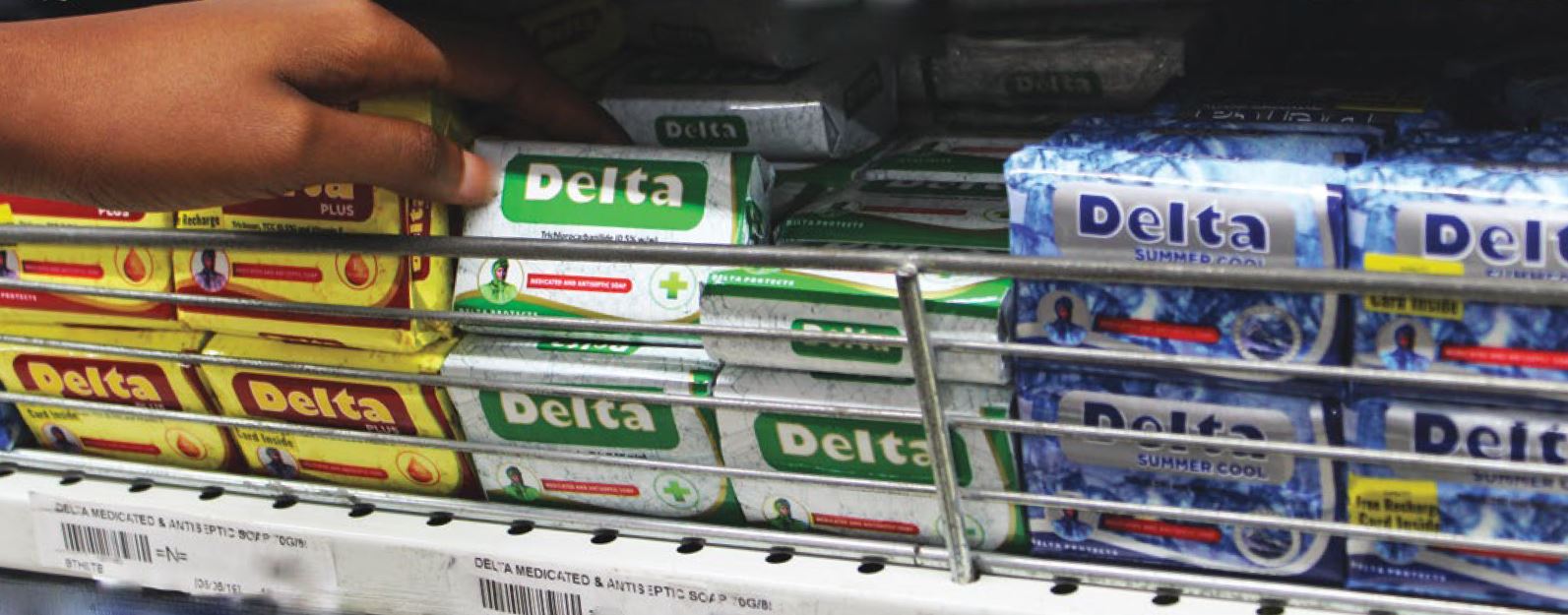
Consumer picking Delta Soap

Few people would assume that a popular medicated soap brand sold in West Africa has its origins in Southeast Asia. This, however, is the case of Delta Soap, a leading personal care brand owned by Orange Group, a large, diversified fast moving consumer goods (FMCG) group in West Africa.

Founded by Nigerian entrepreneur Sir Anthony Ezenna, Orange Group has supported the entry of several Indonesian companies into the African market. The group is present in West Africa across four key segments: pharmaceuticals, beverages, personal care and lighting. It counts some of Indonesia’s largest family businesses among its partners, including Kalbe Farma, the country’s largest pharmaceutical company, as well as Tempo Scan Pacific, Dexa Medica and Mensa Group.

As a result of these relationships, Orange has gained valuable insights from studying how its partners compete in Southeast Asia’s dynamic consumer markets. Some of these lessons were applied to the successful launch of Delta Soap in Nigeria.

Delta Soap production

Spotting an Opportunity

In the 1980s, Reckitt Benckiser launched its Dettol brand in Nigeria and proceeded to build the medicated soap market in the region. The benefit of protection from germs made medicated soaps an instant success in Nigeria, which struggles with sanitation issues and access to clean water. Dettol was so successful that it began to threaten the already established beauty-soap segment.

By 1993, Sir Ezenna saw an opportunity to establish a competing brand that could deliver the same benefits at an affordable price. At that time, Dettol was produced in Europe and exported to Nigeria, which was experiencing a currency crisis and had highly price-sensitive consumers. The key to Orange Group’s strategy was to source soaps competitively from either Malaysia or Indonesia, which have a global comparative advantage in producing palm-based products such as toilet soap.

Delta Soap was rolled out to the Nigerian market in 1994 as a more affordable alternative to Dettol. Although sales were brisk initially, its brand equity paled in comparison with Dettol. Sir Ezenna’s foray into the personal care business demanded that he learn more about brand building and guerrilla marketing. Orange Group began developing TV campaigns to market Delta Soap, and differentiate it from Dettol’s highly successful branding campaign that featured doctors.

As many new consumers of medicated soap were former beauty soap users, Delta’s TV commercials focused on the more aesthetic benefits of using medicated soaps. The product was positioned as providing protection from germs while also delivering the moisturizing and “skin glowing” benefits of beauty soaps. Commercials featuring pop music and young trendsetters became synonymous with the Delta brand and were a hit with the target audience. The branding campaign was a success and Delta Soap would go on to become a market leader in the medicated soap segment.

In 2005, the Nigerian government banned the importation of finished soaps, and this drove Sir Ezenna to invest US$23 million in the construction of a 20,000-square-meter production site in the eastern city of Onitsha, Nigeria. The investment paid off; by 2007 Delta Soap realized US$12 million peak in annual sales.

Declining Market Share

In the following years, Orange Group witnessed a series of management changes, which involved Sir Ezenna stepping down from day-to-day operations. However, the new management team had little sales and marketing expertise, which meant that little attention was given to brand building and improving the company’s route-to-market. The team also made some unpopular changes to Delta, such as switching its composition from mainly palm oil to tallow.

As a result of these and other misguided strategic decisions, Delta Soap lost significant market share over the next decade. By January 2017, the product had dropped to No. 4 in the segment with 12% market share. Dettol, meanwhile, had regained its market leadership.

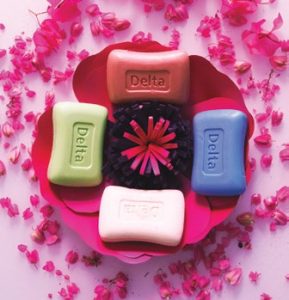
Delta Soap range

Refreshing the Brand

As Delta approached its 25th anniversary, the company embarked on an aggressive relaunch that included changing the product’s packaging and formula while introducing it to a younger market segment that was not as familiar with the brand.

Under the new management team lead by second-generation Ezenna family members, Orange Group adopted a “back to the core” approach to sales and marketing. “We simply decided to go back to doing what worked and made commercial sense. Nothing fancy or complex. We had to go back to the basics,” says Ernest Ezenna, who currently serves as the group’s Business Development Director and is part of the second-generation Ezenna family management team.

First, the team decided to launch a “new” Delta Soap with a modern look and shape, and revert back to the original palm oil-based formula. This new formula enriched the soap fragrance, which was found to be a key driver for purchase in consumer studies. Second, the sales team focused on primary markets and channels in the traditional trade segment that would allow the soap to be distributed more effectively among small retailers. Nigeria currently generates 95% of its retail sales from traditional trade.

Finally, the team developed a campaign to relaunch Delta to appeal to a younger audience, similar to the campaign used at the brand’s inception. But this time around, the campaign would be driven by social media.

Inspired by a trip to Jakarta, Ernest witnessed first-hand the potential of social media and leveraging the influence of online celebrities. “All you have to do is open Instagram or YouTube in Jakarta, and you are bombarded with multiple ads targeted at young consumers by companies like Unilever Indonesia and, of course, our partners like Kalbe and Tempo Scan,” says Ernest.

Using this insight, the management team developed a social media commercial in the form of a music video to appeal to the music-loving, social media-savvy Nigerian millennials. Since the launch, the music video has generated more than 14 million views across Instagram and Facebook.

Because of the campaign’s success, social media has become the cornerstone of the team’s marketing plans. “It’s all about interacting with the younger generation of Nigerian consumers. Through social media, we are able to engage with them directly and this gives them a voice to feel that their individual needs are being met by the brand. We plan to build on the success of Delta’s relaunch, and increase our digital investments for other brands,” says Uchenna Ezenna-Gboneme, another second-generation Ezenna family member who oversees Media Relations for the group.

Brand Extensions With Asian Partners

The successful relaunch of the Delta brand has led to plans to diversify the group’s personal care offerings. This includes introducing a shaving line, with razors sourced from China, and a moisturizing cream lotion, possibly sourced from Indonesia. With its strong distribution network, fully integrated logistics, and warehousing and sales operations, Orange Group is confident that it will be able to leverage its insights and partnerships from Asia to explore the vast potential of the FMCG market across Africa.

“The Delta experience shows us that there is a lot we can still learn and leverage from our Asian partners,” says Ernest. “Africa is next, and we believe that the explosive growth that happened in Asia in the early 2000s will occur in Africa soon. We are very excited about the future and are investing aggressively to ensure that we are adequately prepared to take advantage of that growth.”


BookDoc: A Growing Circle Of Connections

BookDoc co-founder and CEO Chevy Beh receiving an award from Perkeso CEO Dr. Mohammed Azman for promoting an active lifestyle among Malaysian workers.

Medtech start-up BookDoc is on a roll and the secret, according to Chief Executive Officer Dato’ Chevy Beh, lies in forging meaningful partnerships within an ecosystem that is aimed at building long-term relationships.

“We are always on the lookout for new initiatives to add value to our healthcare ecosystem,” says the 34-year-old co-founder of BookDoc. “BookDoc may have started with a simple idea of matching patients with doctors but it’s now more than that; it’s about growing our partner and user base.”

The company began in 2015 with the aim of providing a convenient way to match patients to doctors through a mobile app, which has since evolved to connect corporate customers with insurers and syncs with wearable devices such as the Apple Watch and Fitbit.

It counts among its clients Top Glove, Petronas, Malaysia’s Ministry of Health (MOH), KPJ Healthcare and Ramsay Sime Darby Health Care. Regionally, its services are used by PT Siloam International Hospitals in Indonesia and Bumrungrad International Hospital in Thailand.

It’s just the beginning for Beh. In the past nine months alone, Beh has added a string of Malaysian government ministries to its list of partners. These include the Ministry of Education (MOE), the Ministry of Human Resources (MOHR) and the Ministry of Defence.

“The idea is to get large government agencies and its employees onto our Book-Doc platform so that we can expand our healthcare benefits as widely as possible,” he explains. “For example, BookDoc, the MOH and MOE are together promoting healthier lifestyles among Malaysian students in schools by getting them to sign up for the app. Our tie-up with MOHR is to promote a healthy workplace environment at offices.”

Beh believes BookDoc can be the catalyst to promote healthier lifestyles. Behind this effort is the company’s loyalty platform dubbed Activ, which aims to reward people for setting fitness goals and exercising.

He says Activ is designed to create a “wow” factor to motivate people to take care of their health and be recognized for their efforts.

“We’ve partnered with hundreds of retailers, and BookDoc users who meet their exercise targets can, for example, redeem their rewards at over 1,600 offline locations as well as with online partners in 12 countries.”

Beh says the Activ loyalty program is constantly evolving based on what its users are doing with the BookDoc app.

“We collect a lot of data, such as the frequency of visits, the different health screening packages and exercise data from smartwatches connected to BookDoc. “Our app can then target specific users with different offers and rewards,” Beh explains, adding that all data collected complies with guidelines in the U.S. Health Insurance Portability and Accountability Act to safeguard patient health information.

Beh says in the near future, BookDoc’s ecosystem will grow exponentially. He is currently working on securing another government partnership before the end of the year that will add 1.6 million Activ users to its existing 500,000 members.

“We are continuing to grow our corporate customers and reward partners, and have plans to add features like telehealth and remote monitoring,” he says.


What Nicolas Cage Thinks The World Needs To Be Happy

“It’s an honor to be invited to such a wonderful event by Haruhisa Handa. I respect him for running so many charitable organizations, which support people who have suffered difficulties throughout the course of their lives. His spirit has a positive impact on the world,” U.S. actor Nicolas Cage said at the December 20th opening of the Tokyo Art Foundation Christmas concert and exhibition.

Cage’s own career needs little explanation. In 1990, he got his big break in David Lynch’s film “Wild at Heart,” which also became a smash hit in Japan. Five years later at the age of 32, he received an Academy Award for Best Actor for his performance in “Leaving Las Vegas,” and has remained a permanent fixture in the world of entertainment. Cage has starred in several major works and blockbuster movies, but in recent years his taste in feature films has changed dramatically. Since 2010, he has opted for roles in B-movies over scripts offered to an actor of such standing—a decision that has garnered disapproval from some critics.

Cage, however, doesn’t subscribe to Hollywood values and rejects the idea that box office success and awards are the measures of a performer’s worth. What matters is the belief of the audience, and it’s more important to be able to fully inhabit a character, he says, than to star in a major film.

“When I get a casting offer, I focus on how the role synchs with my imagination, memories of the past or life experiences—whether or not I can find a little bit of common ground. Then I ask if I am really able to play that role at this point in time. In that sense, appearing in mainstream action films during the 90s was a rather reckless challenge,” he explained.

His career has been a series of challenges, which have introduced him to talented performers and helped polish his art. “Working with superstars like Meryl Streep and Sean Connery gave me new motivation. From Jon Voight, I learned that making a movie is about teamwork rather than individual effort. These days, I am picky about who I work with,” he says.

Cage’s philosophy of life was largely shaped by his late father, August Coppola. “My dad was a university professor and very involved with the arts. He was familiar with the culture of every country and was, in fact, particularly interested in Japan. He introduced me to the classic films of Akira Kurosawa at a very young age. Even now, my heroes are [legendary swordsman] Miyamoto Musashi and [actor] Toshiro Mifune,” he recalled.

A professor of comparative literature, a film executive and a lifelong advocate of the arts, August Coppola also had a strong influence on his younger brother, acclaimed director Francis Ford Coppola, who dedicated the coming-of-age drama “Rumble Fish” to his elder brother. August encouraged members of the Coppola family, including Nicolas and Sofia—Francis’s daughter who has become a prominent director in her own right—to embrace other cultures and pursue creative endeavors.

Cage (right) joined Haruhisa Handa (center) on stage at the Tokyo Art Foundation Christmas concert and watch exhibition.

“My father and Haruhisa Handa resemble each other closely, in personality and way of thinking,” Cage said. “Both of them are teachers, knowledgeable about world literature and art, who also love sports. However, there are many people who can’t easily engage with these things. Take, for example, the visually impaired. Both men share deep empathy for people in these circumstances. Based on his desire to connect people through sports, Dr. Handa established the International Blind Golf Association, which now operates in 16 countries. My father August wanted blind people to be able to experience art, so he built a structure [called the Tactile Dome] in California where you use your sense of touch to appreciate the artwork in complete darkness. In my opinion, Dr. Handa’s vision overlaps with my father’s.”

Before designing the Tactile Dome in 1971, which is located inside San Francisco’s Exploratorium museum, Coppola went about daily life wearing a blindfold for three months to better grasp the experience of blindness. “Sympathy alone is not enough to make this kind of social contribution. My dad and Dr. Handa started by trying to understand the lives of people with disabilities. It’s not about just participating in charities and volunteering, but rather focusing on actions. By spending time with one another, we are trying to find the meaning of life together. It’s a relationship of equals. If we as a society could all become aware and accepting of diversity, just think how happy the world would be. This is what I learned from my father and Dr. Handa,” Cage said.

It seems Cage has based his career on the mindset that he inherited from his father. “As society becomes more diverse, the characters we as actors portray are becoming more complex. I want to be able to play those characters, whether they’re good guys or bad guys,” he said.

When asked by Handa about his upcoming project with Sion Sono—a director who has been dubbed “the most subversive filmmaker in Japanese cinema today”—Cage answered enthusiastically: “I’m really excited to work with Mr. Sono.”

About Nicolas Cage

American actor, director and producer Nicolas Cage was born Nicolas Kim Coppola in Long Beach, California, in 1964. Raised among a family of artists and entertainers, he is the nephew of director Francis Ford Coppola and actress Talia Shire, and cousin of directors Roman Coppola and Sofia Coppola. After working with the prestigious American Conservatory Theater, he made his film debut in the 1982 film “Fast Times at Ridgemont High.” In 1995, we won the Academy Award for Best Actor for his performance in “Leaving Las Vegas.” He has appeared in numerous works, such as “The Rock,” “Con Air,” “Gone in 60 Seconds” and “Mandy.”


Contact information:

Misuzu Corporation

81-3-3247-5585

www.misuzu.com

Breadtalk Group: Going Global

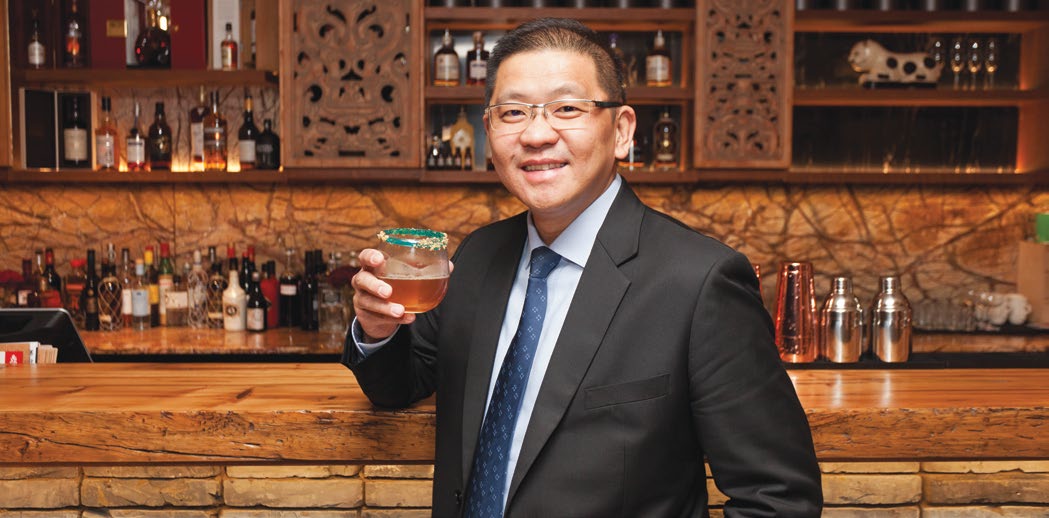
Mr Henry Chu, Group Chief Executive Officer

Led by Singapore-based food and beverage (F&B) company BreadTalk Group, renowned Taiwanese restaurant chain Din Tai Fung and it’s signature dish xiao long bao (broth-filled steamed pork dumplings), made their debut in London in December, marking the brand’s maiden venture in Europe. Located in the city’s West End district, the flagship restaurant is Din Tai Fung’s 153rd restaurant globally. A second restaurant in the British capital will open in 2019.

Ranked as one of the world’s top 10 gourmet restaurants by The New York Times in 1993, the brand has been awarded a Michelin star and enjoys a global presence in Australia, China, Hong Kong, Macau, Thailand, Indonesia, Japan, Malaysia, the Philippines, South Korea, the United Kingdom, the U.S. and the United Arab Emirates.

“We wanted to bring this world-renowned brand to London because it is home to some of the best chefs and restaurants globally. Consumers in London appreciate good food and quality Taiwanese cuisine. In addition, through the opening of our first Din Tai Fung restaurant in London, it provides our team with many learning opportunities, which will be useful for future growth and expansion”

Henry Chu, Group Chief Executive Officer

BreadTalk Group’s partnership with Din Tai Fung began 16 years ago when it brought the brand’s first restaurant to Singapore. It opened the first Din Tai Fung branch in Thailand eight years later. To date, there are 22 Din Tai Fung restaurants in Singapore, six in Bangkok and one in London operating under BreadTalk Group.

Din Tai Fung’s U.K. venture is led by Taster Food UK Ltd., a subsidiary of BreadTalk Group. Taster Food’s subsidiary, Together Inc., is in a joint venture with Din Tai Fung Restaurant Co. and other partners.

Henry Chu, Group Chief Executive Officer shares: “We wanted to bring this world-renowned brand to London because it is home to some of the best chefs and restaurants globally. Consumers in London appreciate good food and quality Taiwanese cuisine.

“In addition, through the opening of our first Din Tai Fung restaurant in London, it provides our team with many learning opportunities, which will be useful for future growth and expansion,” he adds.

Chu says Din Tai Fung’s London restaurant will differentiate itself through the quality and authenticity of the chain’s signature dishes and other delicious Taiwanese staples, including its steamed chicken soup and world-famous xiao long bao. The dumplings have a minimum of 18 folds and pass through six different stations—each manned by a team of dian xin (dim sum) chefs—before steamed to perfection for more than 40 minutes.

BreadTalk Vivo City

Global Expansion

London is BreadTalk Group’s first foray into Europe, with the majority of its outlets in Asia. Looking ahead, Chu says the group will pursue its expansion plans in the United Kingdom and elsewhere through one of the 12 brands in its stable. To support this, it is looking to grow its brand portfolio, and has added five more to its offerings in the past two years alone. “The end goal is to strike a balance between having more countries to operate in and strengthening our presence in countries we already operate in, with new, refreshing brands,” he explains.

BreadTalk Group has four business divisions: bakery, food atrium, restaurant—which manages the Din Tai Fung brand—and a recently launched division called 4orth Food Concepts that identifies suitable joint-venture partnerships. In May last year, for instance, BreadTalk Group partnered with Shenzhen Pindao Food and Beverage Management to introduce popular beverage brands Tai-Gai and Nayuki, respectively known for fruit-blended premium teas and the cheese tea bakery café concept, to consumers in Singapore and Thailand, with a first right of refusal to operate in Malaysia, Indonesia and the Philippines.

Nayuki Vivo City

Both brands were founded in 2015 and have become two of the most iconic beverage brands in China, with more than 240 stores in 22 major cities, including Beijing, Shanghai, Guangzhou and Shenzhen. “Nayuki is a brand that we will consider bringing to Europe. It’s tasty and healthy, so it appeals not only to the young but also to a broader audience of tea and milk lovers,” explains Chu.

Embracing Technology, Supported by Our Values

To fuel its global expansion, the group looks to leverage technology and automation to overcome pertinent issues faced by the F&B industry, such as its heavy reliance on manpower. Chu notes, “F&B is a labor-intensive industry and, coupled with long working hours, it’s difficult to hire younger people to join this industry. By investing in automated solutions in the kitchen and leveraging consumer technology, such as iPad ordering, we can create a more efficient working environment and enable our staff to engage more with our customers.”

Newly renovated Food Republic Wisma Atria

Guiding BreadTalk Group’s growth strategy is its recently revised vision, mission and core values statement. The group continues to embrace innovation and ongoing improvement, with both supported by a spirit of professionalism and integrity. “We always ensure that we use the freshest ingredients and deliver the best value for our customers in every product we serve,” says Chu. The group conducts regular audits to ensure that quality is consistent across its vast array of brands and outlets, and is committed to a culture of continuous training for its staff.

“The United Kingdom is a new market for us. Therefore, we will continue to invest time and effort so that we can deliver an enjoyable brand experience to our British customers as they learn about our brands and products,” says Chu.


www.breadtalk.com


Top International: Expanding In West Africa

From left: Mr Ji Shaobo, President of Yantai Port Group; Mr Seydouba Bangoura, Director of Societe Bauxite Kimbo SA Unipersonelle; Dato’ Victor Tan, CEO of Top International Holding; Mr G. Jayakrishnan, Global Markets Director, Middle East and Africa, Enterprise Singapore, at MOU signing ceremony.

Already one of only a handful of Singaporean companies operating in Guinea, Top International Holding is making further inroads into the West African nation with plans to build a port along one of its major waterways. The mining and trading group specializes in the export of bauxite—the raw material for aluminum production—as well as the trading of coal. Over the years, it has expanded its operations into a number of markets, including Malaysia, Indonesia and Africa.

In February, plans for the port along Guinea’s Fatala River came closer to fruition when Top International signed a Memorandum of Understanding (MOU) with China’s Yantai Port Group and Guinea’s Societe Bauxite Kimbo SA Unipersonelle (Kimbo) to embark on its development. Another member of this partnership is Singapore’s Winning International Group, which will provide maritime-logistics support to the venture.

Speaking at the signing ceremony, Mr G. Jayakrishnan, Global Markets Director, Middle East and Africa at Enterprise Singapore, said the MOU reflected growing ties between Asia and Africa, and the economic dynamism of the two regions.

When completed, the port will serve selected mining concessions and help fuel the growth of Top International’s bauxite business in the country.

“Discussions of this port project have now reached a mature stage, where all parties agree that a more formal understanding in the form of an MOU is the logical next step. With this MOU, we expect our momentum to increase and we are one step closer to achieving the goals of our collaboration,” said Dato’ Victor Tan, Chief Executive Officer of Top International, in a speech at the MOU signing ceremony.

Yantai Port Group is a China state-owned enterprise with more than 150 years of experience in building and operating ports around the world, including Guinea. At the signing ceremony, Yantai Port Group President Ji Shaobo said the company has established an international bauxite-logistics chain that connects Guinea to China as part of its overseas expansion strategy. He noted that in 2018, Yantai Port was the world’s leading port for bauxite imports for the sixth consecutive year, having exceeded 100 million tons in throughput. Meanwhile, bauxite-exploration company Kimbo has been granted mining concessions in Guinea, signifying it has the support of the government.

Greater Than the Sum of Its Parts

Dato’ Victor Tan said the development of the Guinea project will be carried out in phases to enable the group to progressively scale the port in terms of capacity and operational efficiency. The project will also include a network of roads connecting the port to the relevant concessions. “The project may seem complex, but with the combined strength of our collaboration, the outcome will be greater than the sum of its parts,” he said.

Looking ahead, he hopes to see a growing community of Singaporean businesses operating in the largely untapped markets of West Africa. “The insights we’ve garnered in Guinea have shown us that there are a lot more opportunities beyond Southeast Asia,” he said. “What we need is to have a broad mindset, be enterprising and not be afraid to seek out new markets outside of our comfort zone; all of this, of course, with proper planning and having the right partners.”