The New Geography Of Wealth

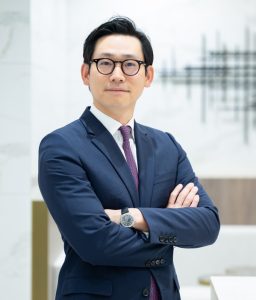
Raymond Ang, Global Head, Private Bank and Affluent Clients, and Head, Wealth and Retail Banking, Greater China and North Asia, Standard Chartered

For many ultra-high net worth (UHNW) families in Asia, daily life stretches across multiple jurisdictions. A family may operate their core business in India, hold assets through a Singapore governance structure, educate their children in the United Kingdom and allocate capital to private markets in the United States and China. Simply put, wealth is rarely anchored to a single market.

This shift is taking place against a backdrop of a rapid wealth accumulation. According to Boston Consulting Group’s Global Wealth Report 2025, Asia-Pacific (APAC) remains one of the fastest-growing regions and is projected to lead global wealth expansion at roughly 9% annually through 2029. Cross-border wealth has also accelerated, rising by 8.7% to US$14.4 trillion, with Singapore and Hong Kong among the strongest booking centers.

Geopolitical tensions and market volatility are encouraging further diversification of assets and booking centers. Established hubs such as Switzerland, Singapore and Hong Kong continue to attract inflows as families seek stability across legal and financial systems.

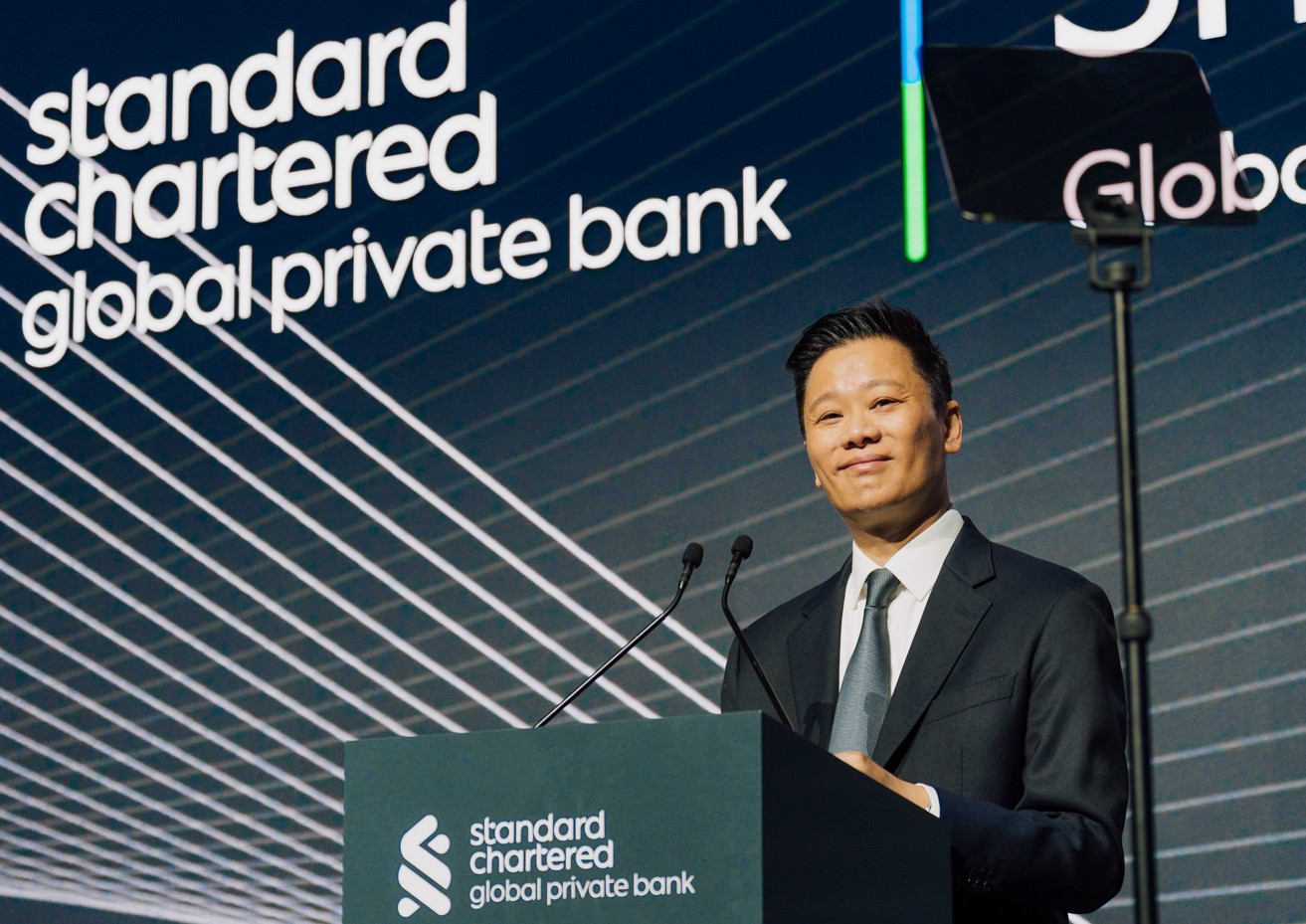
“Today’s UHNW families are increasingly global. Their businesses, investments and family members are spread across continents, reshaping the way they manage their wealth,” says Raymond Ang, Global Head, Private Bank and Affluent Clients, and Head, Wealth and Retail Banking, Greater China and North Asia, Standard Chartered.

The Trillion-Dollar Baton
Growth, however, is only part of the story. A second structural force is now influencing the wealth landscape with equal urgency: the transfer of wealth between generations at a scale never before seen in Asia.

An estimated US$5.8 trillion in wealth is expected to move across APAC by 2030. The challenge for many families is around structuring their wealth to preserve their legacy while preparing the next generation for the responsibilities of succession.

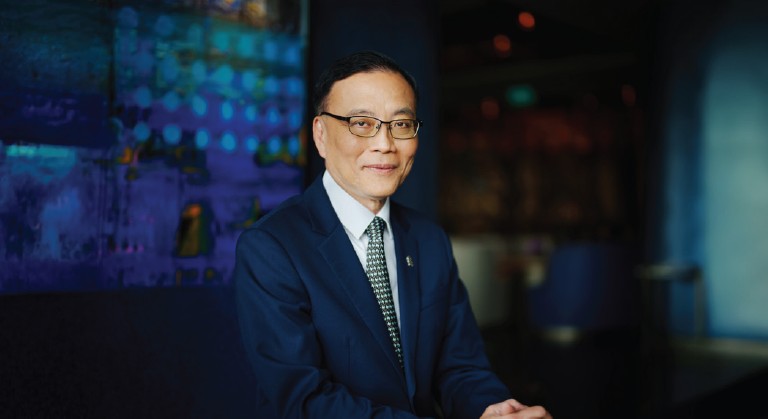
“Intergenerational wealth transfer is a pressing issue for UHNW families in Asia today and it is changing how they think about structures and engagement of the next generation,” notes Foo Tian Ong, Regional Head, ASEAN and Singapore Location Head, Standard Chartered Global Private Bank.

The next generation tends to have a different set of expectations. They are digital natives who are internationally educated; many are founders, investors or philanthropists in their own right. They expect transparency, active participation and direct engagement rather than a passive inheritance.

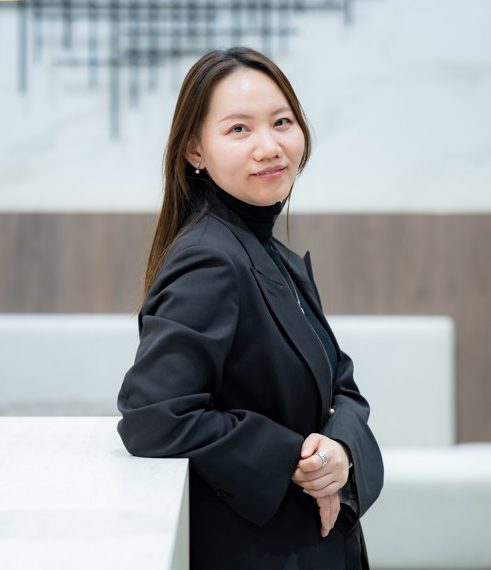
Foo Tian Ong, Regional Head, ASEAN and Singapore Location Head, Standard Chartered Global Private Bank

Partnership, Not Product
Two forces, then, are converging simultaneously: the increasing globalization of wealth and an unprecedented generational wealth transfer. Together, they are calling for a fundamentally different advisory model.

Families increasingly require coordination across tax advisors, lawyers and investment teams operating in multiple markets. Many are seeking clarity on a range of issues, whether it’s how their businesses interact with personal portfolios or succession structures that function across legal systems. Wealth management, in short, is moving away from transaction-based engagement toward deeper, ongoing relationships.

“Clients expect us to look beyond wealth preservation and review their wealth more holistically, from supporting philanthropic ambitions to bridging generational perspectives with advanced technologies. The conversation is about shaping legacies and building resilience as much as it is about returns,” says Ang.

Families whose businesses operate in Asia but have investments extending to Europe or the Middle East need advisors with in-market knowledge in key booking centers, supported by an integrated platform that can connect them seamlessly across these corridors.

Institutions that bring the combined advantages of global reach and deep local expertise have the upper hand in servicing these evolved wealth needs. Technology is also supporting personalization and raising service standards. Digital platforms and artificial intelligence enable bankers to distil insights to provide more personalized communications and advice for clients.

Standard Chartered’s global footprint across Asia, the Middle East, Africa and Europe positions it to support families whose capital and interests span these regions. As a universal bank, it is able to support wealthy entrepreneur clients both in their personal and corporate financing needs—a proposition that few institutions can replicate.

Built to Last
The expansion of wealth in Asia, the acceleration of cross-border flows and the gathering pace of intergenerational transfer are not temporary developments tied to market cycles. They are converging forces that will fundamentally impact how wealth is created, held and passed on.

For wealth managers, supporting this ambition means moving beyond products toward a genuine partnership that helps clients navigate international complexity, anticipate the expectations of the next generation and connect all of this into a coherent, enduring strategy.

Says Foo: “We see more UHNW families seeking partners who understand their evolving and multi-jurisdictional needs. In today’s highly volatile environment, a trusted advisor who truly understands their immediate needs and longer-term family ambitions, and who can connect personal and business needs across continents, will serve them well in building a lasting legacy.”

www.sc.com/private-banking

Japan, De-Risked: Landmark Projects Opening A New Era For Global Real Estate Capital

Japan has long attracted admiration from global investors for its political stability and rule of law, while deep domestic capital markets provide a reassuring foundation. Yet the real obstacle has historically been execution on the ground—coordinating stakeholders, navigating local regulations and meeting international governance standards. 

The new era of real estate investments—as planned and executed by Post Lintel Investment Management (PLIM)—is designed to resolve that friction. Each development is selected not only for location quality, but for its ability to become an institutional-grade asset: resilient cash flow, scarcity value and long-term appreciation potential. Beyond development oversight, PLIM operates as a fiduciary investment platform, structuring transactions, coordinating lenders and managing lifecycle performance on behalf of overseas capital.

“Our responsibility is fiduciary,” says Joey Yang, who heads the investment management arm. “We are structuring and managing these projects as long-term capital stewards, not short-term developers.”

“In many cases the challenge is not the asset itself, but the complexity around it,” says Akane Konomi, Managing Director and Head of Sales of Post Lintel Investment Management. “Our role begins at the sourcing stage—identifying opportunities, understanding the seller’s situation, and then structuring the transaction so the right international investor can participate with confidence.”

The firm’s portfolio includes three diverse projects that all share a common promise: prime location, professional oversight and the elimination of operational headaches that can deter overseas investors.

A Core Urban Trophy Asset
The first project centers on a premier site in Asakusa, one of Tokyo’s most established metropolitan districts. Land of this caliber is intrinsically scarce. Transactions are infrequent, and ownership is typically concentrated among long-term domestic institutions. That scarcity alone underpins long-term value stability.

Such a core urban asset in Japan offers a rare equilibrium: strong tenant demand, global corporate presence and infrastructure density that sustains occupancy even during cyclical downturns. PLIM’s development strategy focuses on elevating the site into a modern, mixed-use property aligned with evolving tenant expectations and lifestyle patterns.

“What matters most is curating an asset that will remain relevant 10 or 20 years from now,” Yang explains. “Design, tenant mix and operational planning are being calibrated to global institutional standards, not just local benchmarks.”

“Many properties in Japan have extraordinary locations but have yet to be optimized for today’s market,” Konomi says. “By analyzing operational performance, design and changing usage patterns, we can reposition an asset so that both revenue potential and long-term value are significantly enhanced.”

She adds: “Prime location alone is not sufficient. The asset must function seamlessly for tenants and investors alike. Our role is to anticipate operational demands—maintenance regimes, tenant services and lifecycle upgrades—so the property continues to perform as a flagship holding over decades.”

The result is positioned as a true trophy asset, boasting a prestigious address, institutional resilience and long-term capital preservation potential for family offices and institutions building core allocations in Asia.

A Strategic Regional Gateway
While Tokyo often dominates investor attention, Japan’s regional hubs are increasingly compelling. They combine strong transportation connectivity, diversified economic bases and sustained policy support for development, with demand drivers that remain structurally robust rather than purely cyclical.

PLIM’s second project focuses on Hakuba, internationally recognized as one of Japan’s premier alpine destinations. What was once viewed primarily as a domestic ski area has evolved into a globally known resort market attracting sustained inbound demand. Prime land in such resort zones is finite, and development is constrained by geography and regulation—factors that reinforce long-term scarcity value.

“Hakuba has evolved into an international alpine destination with structural global demand,” Yang says. “For investors with a long-term perspective, that creates a compelling case for disciplined capital deployment.”

“Each region in Japan has its own dynamics,” Konomi explains. “Successful investment requires understanding local demand, infrastructure and community relationships. When those factors are aligned with the right investor strategy, regional assets can deliver remarkably stable performance.”

For investors, this project offers diversification within Japan itself—a gateway to a globally recognized leisure market backed by disciplined asset management and governance structures aligned with international expectations.

A Culturally Anchored Destination Asset
The third project takes a different angle, leveraging Japan’s enduring cultural and tourism appeal. Positioned in Kyoto, PLIM has conceived a destination-oriented asset that blends modern functionality with sensitivity to local character.

Tourism-related assets in Japan occupy a distinctive position. The country’s reputation for safety, hospitality and cultural depth supports consistent visitor flows, while domestic travel demand provides an additional stabilizing layer. When carefully designed and professionally managed, such properties can achieve both high occupancy and premium pricing power.

“Japan’s cultural destinations have an enduring global appeal,” Yang says. “The opportunity is to create assets that respect that character while operating at the highest commercial and operational standards.”

“Destination assets must deliver an experience, not just a building,” says Konomi. “Operational excellence, tenant curation and design continuity all contribute to creating a property that becomes synonymous with its location. That is what drives sustained value and investor confidence.”

For family offices especially, such assets offer more than financial returns—ownership carries symbolic prestige and a tangible connection to Japan’s cultural narrative, serving both portfolio diversification and legacy-building objectives.

Why Japan, Why Now
Japan’s macro fundamentals remain compelling, with currency dynamics and valuation differentials further enhancing entry appeal for long-term foreign investors. Meanwhile, structural shifts in work patterns and tourism flows are reshaping how different property types generate value.

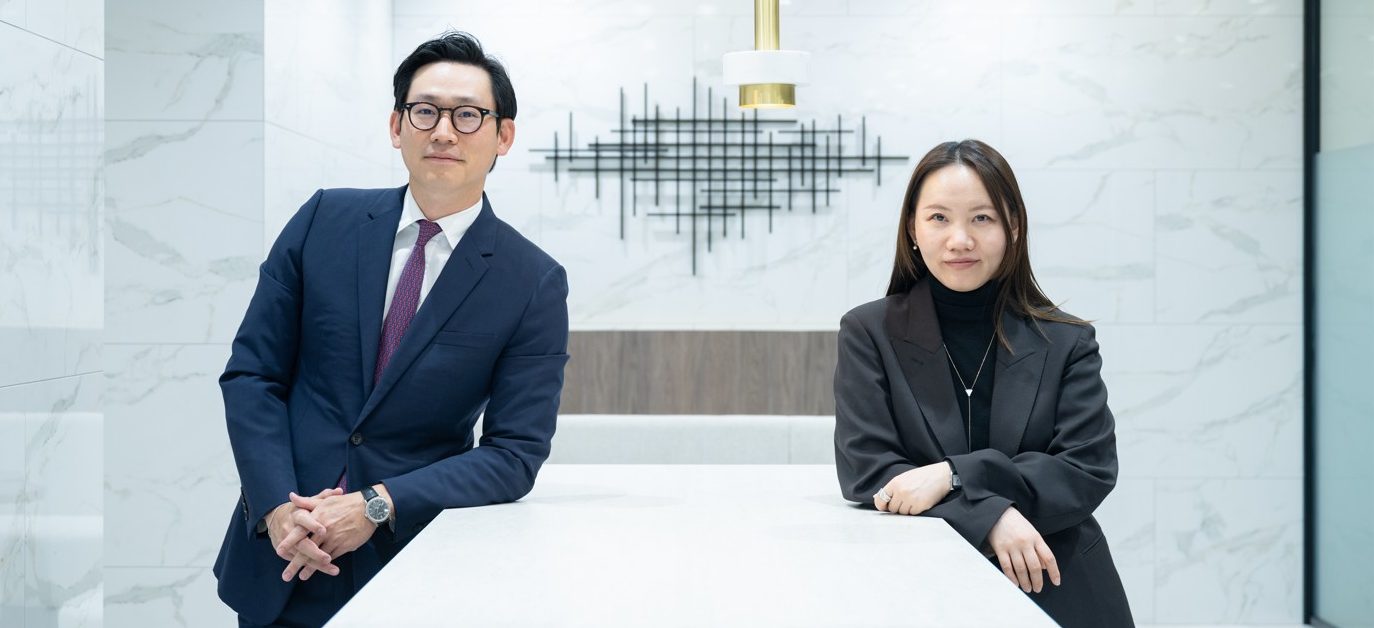
Joey Yang,
Representative Director, CEO,
Post Lintel Investment Management
Akane (Ada) Konomi,
Managing Director Head of Sales Department,
Post Lintel Investment Management

Across all three projects, PLIM’s central proposition remains consistent: complexity handled, value delivered. Japan’s regulatory and stakeholder landscape is transparent but intricate, and land rights structures, zoning coordination, lender conservatism and multi-party approvals can become significant barriers without experienced local execution.

“Japan’s banking environment rewards preparation and credibility,” Konomi says. “When structures are properly aligned, lenders respond with remarkable consistency. Many international investors remain interested in Japan but assume the market is difficult to navigate. Language barriers, unfamiliar regulations and limited access to local information can create hesitation. Our role is to bridge that gap so global investors can participate with the same clarity they expect in other major markets.”

“Our mandate is to remove uncertainty,” Yang explains. “Investors should be able to allocate capital with confidence, knowing governance, compliance and delivery are managed to international standards.”

For many overseas investors, the question is no longer whether to allocate to Japan, but how to do so in a way that is repeatable and scalable. PLIM’s approach is designed with that horizon in mind. Rather than treating each transaction as isolated, the firm structures investments with portfolio continuity—standardized reporting, lender relationships, governance frameworks and asset management processes that allow capital to be deployed consistently over time.

“Japan should not be approached opportunistically,” Yang says. “It rewards long-term discipline. Our objective is to build a platform where investors can allocate not just once, but repeatedly, with clarity, transparency and operational confidence.”

In an environment where certainty and quality are both scarce, that combination transforms Japan from an admired market into an actionable investment decision—one grounded not in speculation, but in disciplined execution and enduring value.

Impact & Stewardship

Organizations are increasingly shifting away from traditional models focused on maximizing financial returns for shareholders and owners toward approaches centered on impact and stewardship. While impact refers to economic, social and environmental outcomes, stewardship is the responsibility of leadership to manage those outcomes sustainably. The role of leadership in driving meaningful, long-term impact has never been more crucial in a rapidly changing world.

In Asia-Pacific, home to over 2.2 billion urban dwellers according to the United Nations Economic and Social Commission for Asia and the Pacific (UNESCAP), environmental issues are a growing concern. With six of the world’s 10 most climate-vulnerable countries located in the region, the population faces increasing risks such as air pollution, water scarcity, urban heat islands and biodiversity loss. Rapid urbanization will continue to put a severe strain on infrastructure and resources unless the region embraces sustainable urban planning, technological innovation and social inclusion.

Governance plays a crucial role in building urban resilience, according to UNESCAP. Stronger regional cooperation on climate action, promoting low-carbon transport solutions and investing in climate-resilient infrastructure will be critical for the region’s future.

A Model for Sustainable Governance

Sarawak, Malaysia, one of Borneo’s most biodiverse states, is turning rainforests, festivals and youth summits into models for sustainable governance. Sarawak Tourism Board has spent the last several years building institutional plat forms such as Rainforest World Music Festival (RWMF) and Rainforest Youth Summit (RAYS) to reflect the state’s commitment to environmental conservation and cultural diversity.

Held within the rainforest landscape of Sarawak Cultural Village, RWMF integrates sustainability into its program and operations. For instance, RWMF has consistently diverted over 30% of waste from landfills and aims to plant 10,000 trees by 2027 through the ecoGreen Planet initiative. Meanwhile, RAYS is designed to bring together youth delegates, policymakers, sustainability advocates and community voices to exchange ideas and develop practical responses to environmental and social challenges.

Through these events Sarawak positions itself as a regional case study in how biodiversity protection, cultural continuity and intergenerational leadership can operate within the same system, offering ASEAN a practical example of conservation in practice.

Sustainability in Real Estate

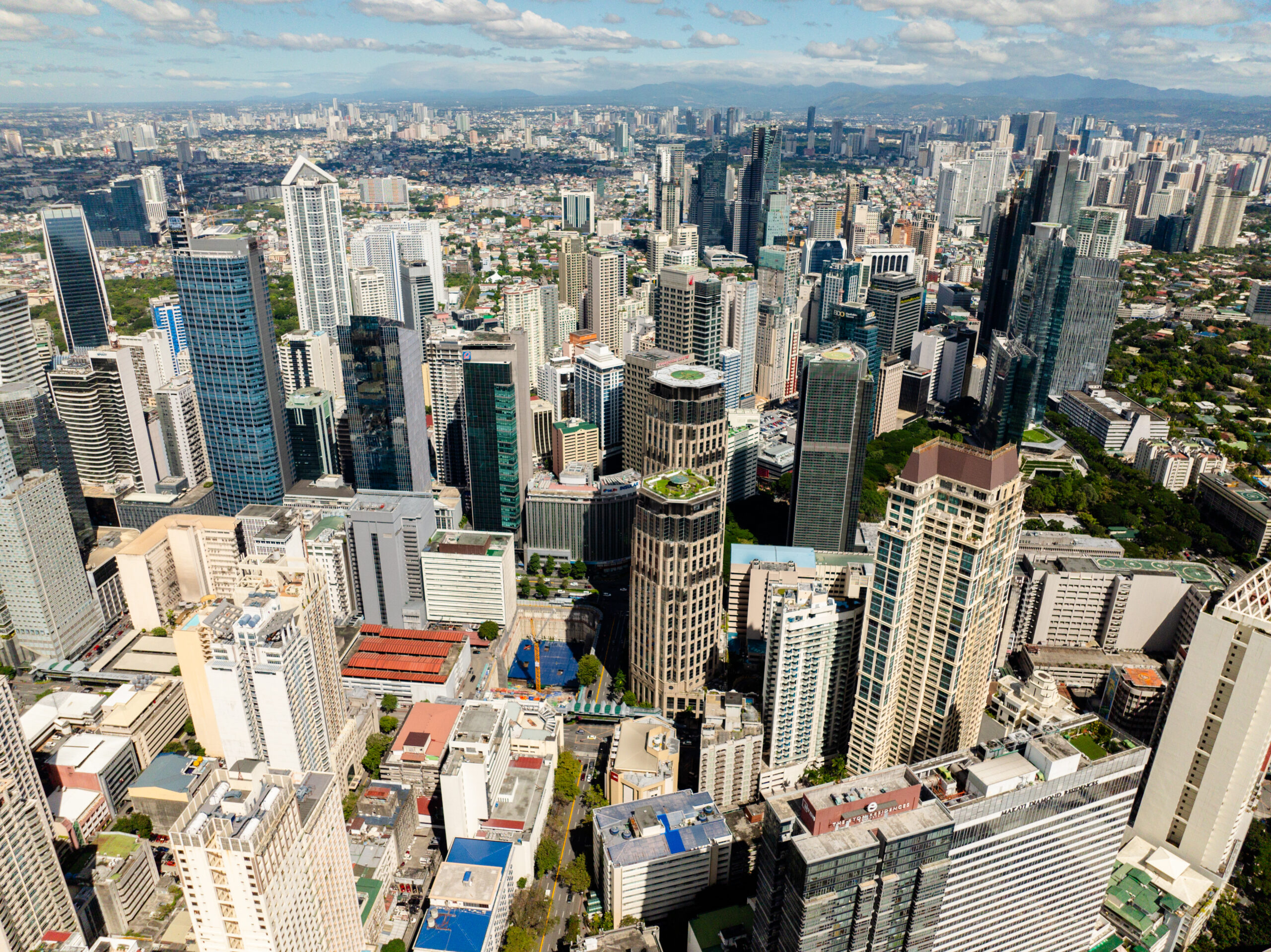
The real estate sector plays a central role in urban planning, shaping how cities grow and respond to climate risks. Megaworld, one of the Philippines’ largest real estate companies and currently the country’s biggest hotel developer and operator, is behind the development of Mactan Expo, a new two-story standalone convention center in Lapu Lapu City, Cebu.

Mactan Expo is designed to meet the requirements of the Philippine Green Building Council, integrated with sustainability features such as energy-efficient lighting and a sewage treatment plant. The convention center also highlights Cebuano art, culture and environmental stewardship. Its strategic proximity to the airport and transport terminals, along with walkable access to hotels, offices, beach resorts and leisure destinations, allows events to be staged more efficiently with less reliance on transportation. From its lobby to its main halls, Mactan Expo incorporates Cebuano cultural motifs and design elements inspired by the island’s natural environment. Together, these features highlight Megaworld’s long-term commitment to environmental stewardship, aligned with the United Nations Sustainable Development Goals.

Ultimately, environmental stewardship relies on collective efforts across sectors, stakeholders and communities to ensure a sustainable future for generations to come.

Japan: The Road Ahead

Japan’s stock market entered 2026 on a strong footing, with the Nikkei hitting record highs on the back of robust corporate earnings, a recovery in private consumption and newly announced government economic measures. Analysts expect the momentum to persist through the year, supported by corporate governance reforms and the country’s largest fiscal package since the Covid-19 pandemic, aimed at boosting domestic demand.

Artificial intelligence (AI)-related sectors and non-manufacturing industries were among the key contributors to GDP growth in 2025. Tourism, for example, demonstrated a strong recovery, boosting the services sector. The economy is expected to maintain steady growth in 2026, with GDP projected to expand moderately.

Strengthening AI Capabilities

Japan is moving to strengthen its AI capabilities and has committed to a significant increase in AI investment over the coming years. As the technology evolves rapidly, businesses are also stepping up spending on cybersecurity to manage the growing risks that come with it.

InfoSec Advisory, an IT security consulting firm, helps organizations protect information assets, manage cyber risks and comply with security standards and regulations. What makes today’s threat landscape particularly alarming, the firm says, is not just the scale of attacks, but who can now execute them. The emergence of generative AI and Ransomware-as-a-Service platforms has fundamentally altered the accessibility of cybercrime.

InfoSec Advisory aims to strengthen supply chain resilience by promoting unified security frameworks across interconnected manufacturing economies. The company believes Japan is uniquely positioned to lead regional standard-setting in supply chain security, with its deep understanding of manufacturing quality management and international standards.

Meanwhile, global consulting firm SYNTHESIS is seeking to reinvent the consulting industry through a strategic presence in key financial centers across Asia and North America. The firm differentiates itself from traditional consultancies through its structure, having been built from the ground up for the AI era. It replaces hierarchical teams with a more agile model and uses AI tools to deliver tangible results in weeks.

Over the next 12 to 24 months, SYNTHESIS plans to embed AI in every element of consulting, building a fundamentally new consulting model. The firm also aims to attract top global talent and develop a new generation of consultants capable of creating value in an AI-driven economy.

Building Strong Global Brands

Japan’s legacy companies remain a cornerstone of the country’s economy. Many have also successfully extended their influence beyond domestic borders, building strong global brands and achieving dominance in certain sectors. Kikkoman, which traces its soy sauce production back to the 17th century, has become a global growth engine, with international sales accounting for almost 75% of its total revenue. The United States is its largest market, and the company plans to open a third production facility there this year.

Looking ahead, Kikkoman sees Asia as its next major growth market, supported by rising incomes and increasing demand for high-quality products.

Enabling Cross-Border Investment

The real estate sector remained robust in 2025, driven by foreign investment. Family offices and institutional investors are drawn to Japan for its stable, high-quality real estate market, transparent legal system, strongly enforced property rights and equal ownership rights for foreign buyers.

Post Lintel, a fully integrated real estate solutions company, facilitates cross-border transactions for global investors, covering everything from sourcing and acquisition to legal structuring, asset management and building maintenance. The company’s international team combines deep local expertise with global fluency across Asia and beyond, enabling seamless operation across languages, cultures and regulatory frameworks. Post Lintel offers foreign investors not just access to Japan, but clarity, continuity and peace of mind in one of the world’s most complex real estate environments.

Looking ahead, Japan’s economic trajectory reflects stability, select growth opportunities and enduring appeal for global investors.

The Philippines: Charting The Growth Journey

The Philippines remains one of ASEAN’s fastest-growing economies, achieving 5.5% GDP growth in the second quarter of 2025, driven by strong domestic demand. Key sectors—including agriculture, industry and services—reported year-on-year growth, contributing to the country’s overall economic performance. Government spending rose 8.7%, with increased investment in education, healthcare, public services and social protection.

The government is accelerating public-private partnerships to at tract greater private sector investment in infrastructure. As of June 2025, 207 flagship projects worth approximately US$176.7 billion have been identified under the “Build Better More” program, spanning key sectors such as education, energy, healthcare, agriculture and digital connectivity. Meanwhile, the Department of Science and Technology plans to invest approximately US$44 million in AI initiatives by 2028 to strengthen the country’s competitiveness and support a sustainable, tech-driven economy.

Resilience in Real Estate

The real estate industry demonstrated resilience in the first half of 2025 despite global market volatility. The office segment continues to grow, driven by increased demand from business process outsourcing (BPO) firms expanding in Metro Manila. In the residential segment, the luxury market remains robust, supported by strong investor interest in high-end developments both within Metro Manila and in key regional locations.

Laurean Residences in Makati City, unveiled recently by Ayala Land Premier, aims to attract homeowners seeking urban living that combines timeless elegance and modern comfort. Its world-class amenities, thoughtfully designed spaces and proximity to major business districts and key lifestyle hubs come together to set a new benchmark for elevated living. Laurean Residences continues Ayala Land Premier’s tradition of creating enduring communities that embody modern luxury in the Philippines.

Meanwhile, the hospitality sector is regaining strength, buoyed by the rapidly growing tourism industry. To capture rising tourist arrivals, hotel developer and operator Megaworld is expanding its portfolio across key destinations. Through its partnership with Accor, Megaworld aims to strengthen its tourism trust by leveraging Accor’s international brand prestige, enhancing the appeal of local townships and elevating the Philippines as a premier tourist destination. Megaworld plans to expand its hospitality portfolio to 9,000 room keys by 2030, solidifying its standing as the Philippines’ largest hotel developer and operator.

Sustainable and Inclusive Growth

With the economy projected to sustain its growth momentum in the second half of the year, conglomerates such as SM Investments Corporation (SM Investments) and International Container Terminal Services, Inc. (ICTSI) remain committed to investing in inclusive and sustainable growth.

SM Investments aims to expand in key areas, reaffirming its commitment to renewable energy as a long-term growth driver. This commitment includes initiatives that support national energy goals—from delivering 300 megawatts of clean, renewable baseload power from its Tiwi and Mak-Ban geothermal steam fields, to pioneering the country’s first megawatt-scale floating solar facility in Cebu. Beyond energy, SM Investments gives back to the community, extending its impact in healthcare, education and food security.

Similarly, ICTSI views its role as more than just moving cargo, integrating social responsibility into its business model. The ICTSI Foundation, the company’s social development arm, introduces impactful community initiatives globally, with the Philippines serving as its launchpad. Programs piloted locally shape community development efforts across ICTSI’s international network, where its advocacy for youth, education, sports, sustainability and resilience is reflected and adapted to the needs of diverse host economies.

Looking ahead, the Philippines is projected to sustain strong growth of 5.5% to 6.5% in 2025, driven by efforts to promote inclusive development and expand economic opportunities across sectors.

Bombardier Global 8000: Unveiling The Ultimate Private Jet Experience

Bombardier Global 8000

Set to enter service later this year, the Bombardier Global 8000 aircraft combines unmatched speed, ultra-long-range performance and a cabin designed for comfort and well-being, unlocking new possibilities in business aviation.

After years of anticipation and development, Bombardier’s new flagship jet has moved from concept to reality. Designed to be the fastest and longest-range business aircraft in the world, the Global 8000 aircraft is delivering on that promise.

On May 16, 2025, the first production Global 8000 took to the skies and completed its inaugural flight. More than a symbolic first flight, this milestone signals real momentum in the Global 8000 program.

With the flight test vehicle preparing for certification, the first production aircraft is currently at Bombardier’s Laurent Beaudoin Completion Centre in Montreal for bespoke interior outfitting, keeping the program firmly on track for entry into service in the second half of 2025.

Leading the Field in Speed, Range and Airport Access

Speed and runway performance firmly set the Global 8000 apart from its competition. With a top speed of Mach 0.94, the Global 8000 is the fastest civilian business jet since the Concorde, setting a new benchmark for private aviation. Its 8,000-nautical-mile range (approximately 14,800 kilometers) enables nonstop connections once considered beyond reach, making city pairs such as Dubai–Houston, Singapore–Los Angeles, and London–Perth a reality.

And its class-leading runway performance enables operators to master 30% more airports than its closest competitor.

A Cabin Crafted for Comfort, Quiet and Productivity

While its performance is extraordinary, the Global 8000 truly excels in cabin experience. Designed with four true living spaces and a separate crew rest area, the aircraft accommodates work, relaxation and social engagement seamlessly.

Passengers benefit from a low cabin altitude of 2,900 feet, industry-leading air quality and the longest seated length in its class, all of which help minimize fatigue and maximize productivity, especially on long-haul flights. With the Global 8000 aircraft, Bombardier has approached cabin design as a strategic component of business aviation, where every detail contributes to passenger well-being and focus.

Bombardier engineers have also made sure that speed wouldn’t affect sound levels in the cabin, making design decisions including fuselage contouring, engines placed further aft and superior sound insulation, all of which enable the Global 8000 to deliver the quietest cabin in its class. In turn, the aircraft’s GE Passport 20 engines recently received the Federal Aviation Administration certification and are also the quietest engines in their class.

(L-R): The Nuage seats designed for comfort; Bombardier Vision flight deck; and entertainment suite

Operational Flexibility That Expands Possibilities

Conceived for speed, the Global 8000 aircraft is also built with versatility in mind, ensuring that performance extends beyond long-range travel to practical operational flexibility. Its short-runway capabilities allow access to smaller airports that other ultra-long-range jets cannot access as easily, providing owners and operators with unprecedented flexibility.

This operational freedom makes more direct routes possible, reduces reliance on hubs and magnifies possibilities for executives whose schedules demand precision and adaptability. The Global 8000 aircraft’s operational flexibility ensures that efficiency is never compromised by geography.

Proven Performance, Engineered to Perfection

As an evolution of Bombardier’s celebrated Global 7500, which has accumulated more than 280,000 flight hours and in excess of 215 deliveries since 2018, the Global 8000 draws on this proven platform to set new benchmarks for speed, range, ride quality and cabin refinement.

This proven performance comes with an incredible pedigree—the Global 7500 aircraft has more than 140 speed records to its name, showcasing a winning platform that highlights the attributes of Bombardier’s engineering, production and flight-test teams. This ensures that every aircraft meets the highest standards of performance and craftsmanship, continuing a tradition in which innovation and attention to detail converge to deliver extraordinary results.

One crucial area that is preserved in the Global 8000 is the aircraft’s acclaimed smooth ride, emblematic of the Global family of aircraft. Thanks to the brilliant work of Bombardier’s engineering team, the Global 8000 aircraft’s Smooth Flĕx Wing acts like a shock absorber to help dampen vibration, resulting in a noticeably smoother ride.

This commitment to excellence extends beyond performance and luxury. Sustainability is a priority for Bombardier, from the use of sustainable aviation fuel across operations to energy-efficient manufacturing processes. For today’s business leaders, the aircraft represents a modern approach to aviation—speed, comfort and capability aligned with environmental stewardship.

(L-R): A fully equipped galley; spacious principal suite with a full-size bed

Redefining Business Travel

Ultimately, the Global 8000 aircraft is more than a business jet; it is a strategic tool for executives who value time, flexibility and an environment designed for working in comfort. By combining record-setting speed, unmatched range and interiors optimized for productivity, it transforms hours in the air into impactful, focused time. The aircraft’s understated elegance and versatility project confidence without ostentation, allowing owners to operate with control and discretion wherever they fly.

As Bombardier prepares for the Global 8000 aircraft’s entry into service in the latter half of 2025, the aircraft continues to exceed expectations. Flight missions to Europe have already demonstrated real-world performance, while final assembly in the Greater Toronto Area ensures meticulous attention to every component. Each step reflects Bombardier’s philosophy: understand the customer deeply, anticipate unspoken needs and deliver solutions that combine reliability, efficiency and craftsmanship.

In the competitive arena of ultra-long-range business jets, the Global 8000 aircraft is in a class of its own. Its blend of near-supersonic speed, exceptional range, operational agility and a cabin designed for working efficiency redefines what discerning executives can expect from private aviation.

The Bombardier Global 8000 aircraft does not merely connect the globe—it transforms travel into a strategic advantage, where time in the air becomes a driver of results.

Talk to us today—your Global 8000 journey starts here.

bombardier.com

Inspired By Water, Forged By Vision

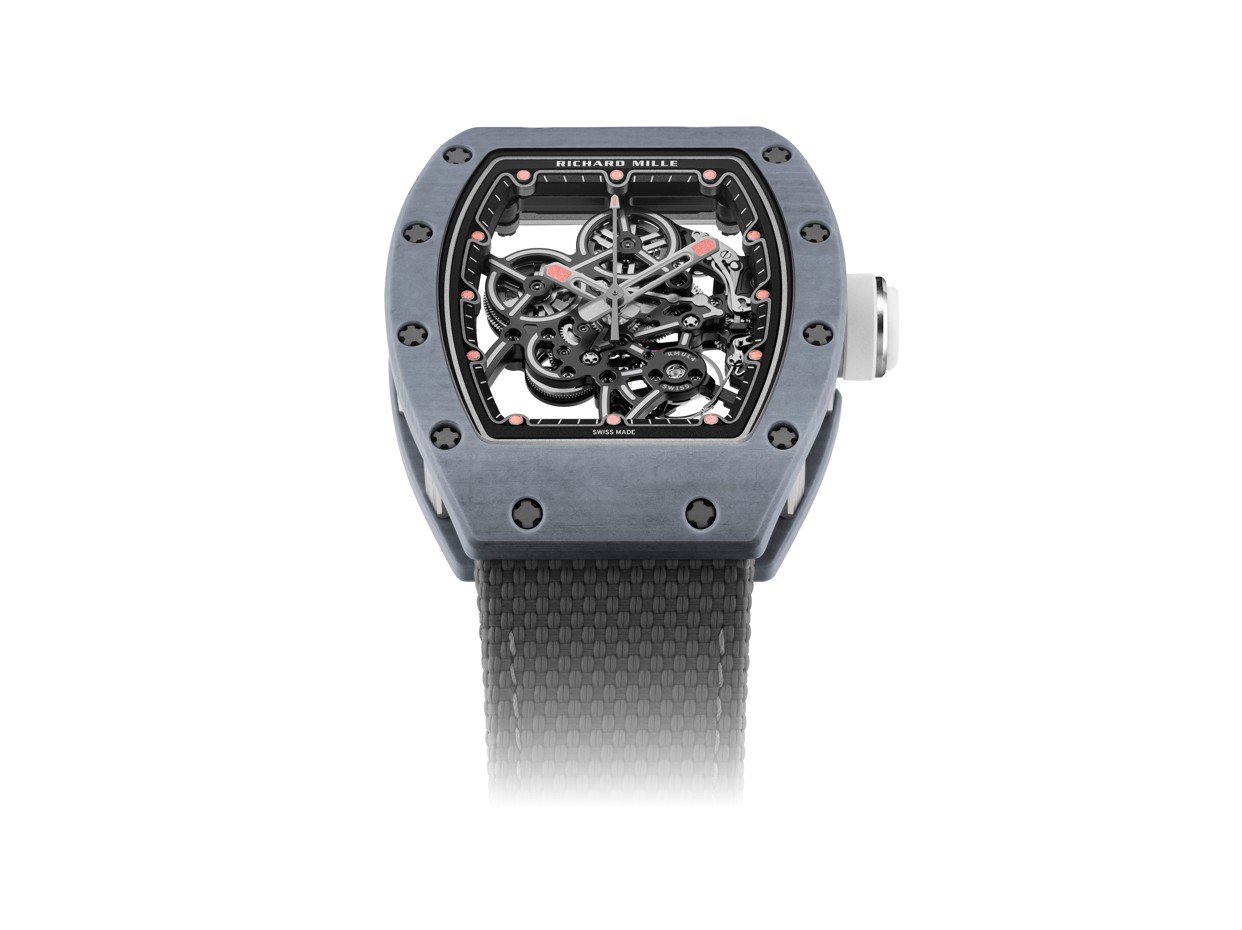
RM 75-01 Flying Tourbillon Sapphire Blue

Richard Mille has once again redefined the boundaries of watchmaking. In the RM 75-01 Flying Tourbillon, the brand has engineered an extraordinary technical masterstroke—a mechanical movement specifically designed to be cocooned in sapphire. The result is a collection of timepieces where architectural sublimity, sapphiric radiance and mechanical brilliance converge.

A Horological Enigma Revealed
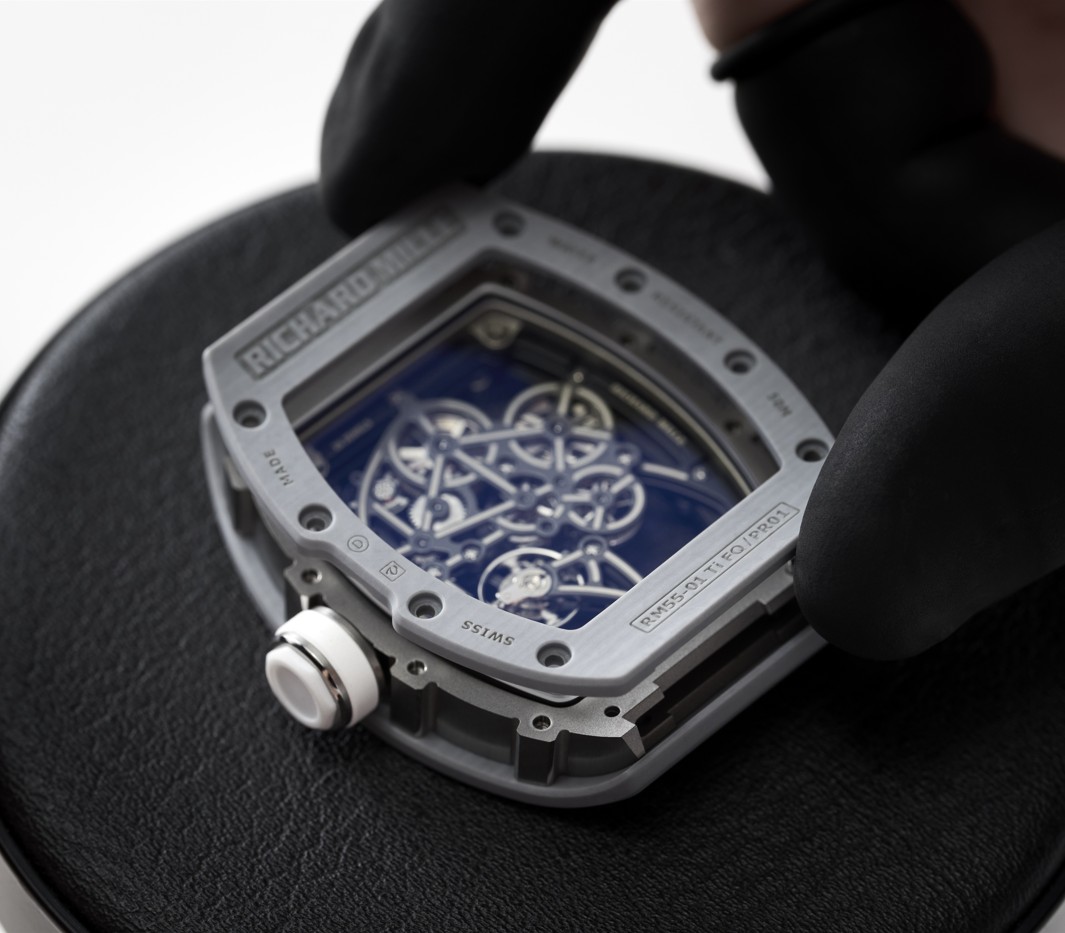
Richard Mille was one of the first watchmakers to fully unlock the potential of sapphire, pioneering its innovative use across all three case components: the bezel, case band and case back.

For Richard Mille, sapphire is functional, aesthetic and sensory. Sapphire’s smooth surface captivates the eye. When adorned, it radiates an energy that nurtures inner harmony and wellness. The transparency and sheer brilliance of this material also accentuate the intricacies and magnificence of the movement. Being able to observe the caliber from every angle was, after all, one of Richard Mille’s primary wishes when the brand was created in 2001.

The ability to gaze into and marvel at the inner workings of a high complication is a quality that is especially rewarding in the RM 75-01 Flying Tourbillon. The groundbreaking use of sapphire transforms the fully skeletonized movement into an ethereal sculpture—an awe-inspiring visual symphony. At the heart of this experience is the RM 75-01 caliber.

Four years in the making, the movement is strikingly minimalist yet astonishingly complex. The RM 75-01 is an unapologetic study in contrasts. Sculpted with meticulous precision and arching energy, the movement’s parts come together and rise like a gothic cathedral.

A titanium baseplate coated in 5N gold PVD provides a striking contrast against the rhodium-treated wheels, while serving as the foundation for the involute-profile gear train, tourbillon and barrel. This visionary architecture eliminates the need for an upper bridge and gives form to a gravity-defying, multilevel composition that appears to float within the case.

The ensemble’s aesthetic harmony and balance stand as a testament to the meticulous thought and unwavering attention to detail poured into its creation.

“We weren’t spontaneously attracted to a two-colour treatment for the metallic components,” says Cécile Guenat, Director of Development and Creation, Richard Mille. “But when a movement is entirely crafted in 5N gold, you can’t properly distinguish its constituents. The creative team always begins by modeling the architecture before bringing out its depths using various materials and treatments.”

The ultra-skeletonized platform of the RM 75-01 Flying Tourbillon Sapphire is further accentuated by the absence of a dial, allowing the engineered elegance and mechanical artistry of the movement to take center stage.

RM 75-01 Flying Tourbillon Sapphire

An Odyssey of Light and Time
The limited-edition series is deeply immersed in the essence of the sea. Water, a symbol of clarity and movement, provided the guiding principle for exploring and developing the multiple facets of clear and colored sapphire lavished in the RM 75-01 Flying Tourbillon.

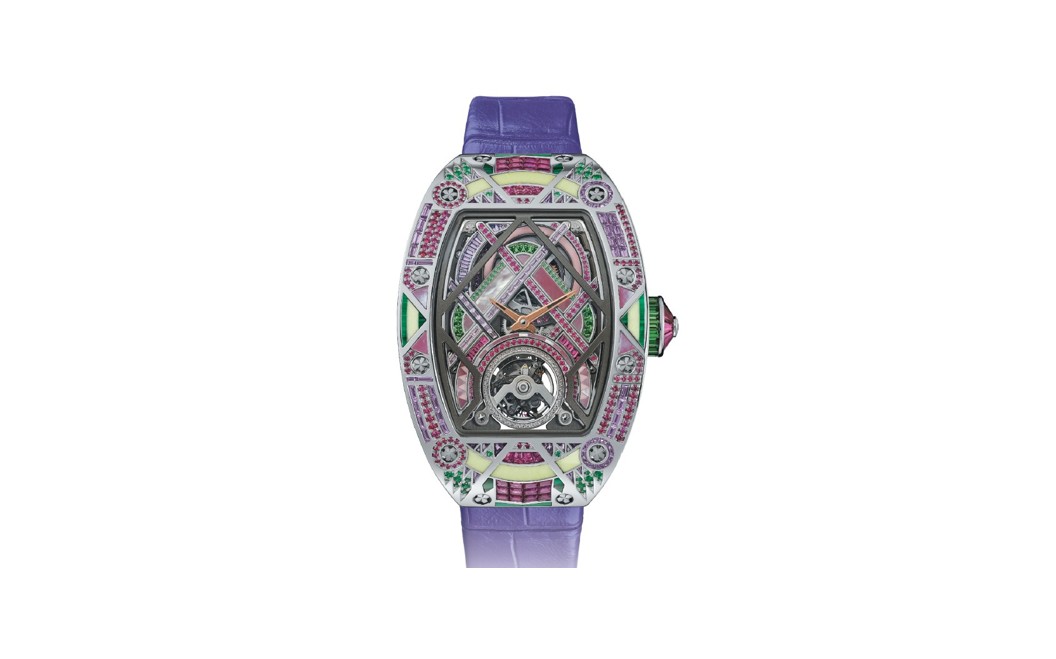
The RM 75-01 variant in clear sapphire has a case that recalls the surface of waves, and a green rubber strap that echoes images of tropical seas. A colored variant of the RM 75-01 Flying Tourbillon features a lilac pink shade reminiscent of a South Sea twilight, while the sapphire blue version is imbued with a tint that evokes the profound depths of the ocean.

Whether clear or hued, creating a single sapphire case requires an astonishing 1,000 hours of machining. With a hardness value of 9 on the Mohs scale, placing it just below diamond, sapphire is extremely scratch-resistant but notoriously unforgiving to work on.

Precise machining of sapphire remains one of the most complex and cost-prohibitive processes in cutting-edge watchmaking. This is where a large, single block of sapphire weighing tens of kilograms is reduced to a single tripartite case that sits comfortably and beautifully on the wrist.

Of the more than 40 days of round-the-clock machining required for each case, over a third is devoted solely to polishing—a task made especially time-consuming by the signature curvature and intricate form of a Richard Mille case.

RM 75-01 Flying Tourbillon Lilac Sapphire

Sublime Harmony Served Sparingly
The RM 75-01 Flying Tourbillon is as rare as it is distinctive. This manual-winding tourbillon boasts a 65-hour power reserve and is available in three variants: two that blend clear and colored sapphire, and one crafted entirely from clear sapphire. Production is strictly limited, with only 10 pieces of each colored variant and 15 of the clear variant.

“Being able to use sapphire in multiple colors offered the opportunity to create multiple identities,” says Guenat.

Colored sapphire is created by introducing metallic oxides into the crystal structure during the growth process—a method that demands precise control of temperature and timing, with intense heat playing a pivotal role. Achieving uniform color and clarity is phenomenally challenging, making each piece both unique and technically exceptional. The result is a breathtaking orchestration of the interplay between light, space and time.

With the RM 75-01 Flying Tourbillon, Richard Mille amplifies its legacy of challenging the orthodox, confidently forging a new realm of possibility in watchmaking. Through a breathtaking aesthetic reimagination of the interaction between metal, water and sapphire, the brand cements its role as a vanguard of innovation, boldly charting the future of contemporary horology.

For more information about the RM 75-01 Flying Tourbillon, visit www.richardmille.com.

How Asia’s Rich Are Rethinking Beyond Stocks And Bonds

Global markets have entered a phase of heightened volatility in 2025 after U.S. President Donald Trump unveiled a fresh round of tariff hikes that threaten to spark a global trade war. Following the announcement of the “Liberation Day” tariffs in early April, markets reacted sharply, with major stock indexes, including the Hang Seng Index, plunging to multi-year lows in the days following.

The tariff shock and ensuing market turbulence have reignited fears of global trade fragmentation, persistent inflation and renewed supply chain disruptions. In response, ultra-high net worth individuals (UHNWIs) across Asia are reevaluating their investment strategies, looking for greater diversification to help mitigate volatility, weather-proof their portfolios and secure long-term objectives.

Incidentally, private markets and alternative investments have increasingly gained the interest of UHNWIs looking beyond traditional investment products to grow alpha while building a more diversified portfolio. The recent market volatility has heightened their appeal for these investors, as private markets, in particular, are less sensitive to macro factors.

“We are seeing growing interest from our clients in private markets and alternative solutions as part of a broader portfolio diversification strategy,” says Raymond Ang, Global Head of Private Bank and Affluent Clients, and Head, Wealth and Retail Banking, Greater China and North Asia, Standard Chartered.

Raymond Ang, Global Head of Private Bank and Affluent Clients, and Head, Wealth and Retail Banking, Greater China and North Asia, Standard Chartered

Unlocking New Opportunities in Private Markets
Private markets encompass a broad universe, from private equity and private credit to real estate and infrastructure. While each strategy is distinct, they all involve direct investments into privately held, high-potential companies or assets, often with a view to add value through strategic or operational improvements.

Private equity remains the most established segment, accounting for over 60% of global private markets assets under management. According to McKinsey, these assets were valued at approximately US$13.1 trillion as of June 2023, having grown at an annual rate of 20% since 2018.

Private markets have historically been dominated by institutional capital. However, there is growing interest from wealthy investors, not only in the West but also increasingly in Asia, looking to increase their allocations in this space. Several global wealth managers are now expanding into Asia to tap the region’s rapid wealth accumulation. At the same time, Asian families are becoming more sophisticated and adopting endowment-style investment approaches, which emphasize long-term diversification.

Higher return potential is one key draw. Private equity and private credit have consistently outperformed their public market counterparts. This outperformance is often attributed to a liquidity premium, where investors are rewarded for committing capital for longer periods, and to the fact that many high-growth companies now stay private for longer.

Diversification is another important benefit. There are nearly nine times more private companies than public ones globally with annual revenues above US$100 million. These private firms offer access to a broader universe of opportunities that are less sensitive to macroeconomic factors and news flow that typically affect public market investments.

“More wealthy families in Asia are drawn to private markets not only for their potential for superior returns, but also their access to a wider range of opportunities that are less exposed to day-to-day market volatility,” says Nicholas Cheng, Head of Private Markets Group, Private Banking, Standard Chartered.

As such, private equity managers can create value by investing capital directly into these companies. Private markets also enable early exposure to promising, innovative companies before they go public or are acquired.

Nicholas Cheng, Head of Private Markets Group, Private Banking, Standard Chartered

Expanding Access Through Innovation
Traditionally, UHNW investors have accessed private markets either through direct deals or closed-end private equity funds. However, the landscape is evolving. New structures are lowering entry barriers. At the same time, innovation is enhancing how co-investments are sourced and managed.

Standard Chartered Global Private Bank is helping clients take advantage of this evolution. In February this year, it launched its Private Markets Co-Investment Club (CIC), a platform that offers UHNW clients access to curated, institutional-grade co-investment opportunities in private markets. The investment strategies currently cover global buyouts and could expand to include late-stage venture capital, thematic real estate, targeted private debt and specialized niche sectors.

Co-investments offer several benefits, including more control over deal selection, enhanced transparency and lower fees.

“We are disrupting the industry with the CIC to offer our clients differentiated access to high-quality direct investment opportunities that are otherwise not readily available,” says Ang. “The CIC provides a structured and programmatic approach to institutional-grade, single-asset co-investment deals.”

Expanding the Alternatives Menu
At the same time, alternative assets are becoming increasingly mainstream. While hedge funds and structured products remain part of the mix, investors are now exploring more unconventional areas, including sports, media and entertainment. Standard Chartered’s launch of a European private credit fund, along with its more recent sports-focused fund, is a direct response to growing demand for alternative investments from its UHNW clients.

Take the booming market for sports media rights, for instance. Broadcasting rights for major leagues such as football and cricket have reached record highs, driven by digital consumption and global fan engagement. Private equity firms are acquiring stakes in franchises, betting on their long-term monetization potential.

“As team valuations continue to rise, fewer individuals have enough wealth to purchase a team. This opens up a golden opportunity for private wealth today, as clients could not access these franchises in the past,” Ang says.

Standard Chartered recently launched a new alternatives fund in the sports, media and entertainment space, responding to sophisticated investors’ interest in this growing segment.

“As clients increasingly look to incorporate alternatives into their portfolios to achieve greater diversity and long-term growth, the new fund offers a professionally managed solution for our clients to access high-quality private market opportunities with institutional grade risk-management and oversight,” says Sumeet Bhambri, Global Head, Advisory and Management Investments at Standard Chartered’s Wealth Solutions.

Although these assets are complex and often illiquid, they offer exposure to differentiated value drivers, such as intellectual property, brand equity and recurring income streams, making them attractive to select investors.

Navigating Complexity With Expert Guidance
As allocations to private and alternative assets increase, so does complexity. UHNW portfolios often span multiple jurisdictions and require nuanced structuring, legal oversight and risk management.

Standard Chartered Global Private Bank offers a comprehensive suite of discretionary and advisory solutions to meet these needs. From closed-end funds to evergreen structures and co-investments, clients can tailor their exposure based on liquidity preferences and risk tolerance.

Education remains a key focus. The bank supports clients through workshops, market insights and investment briefings, helping them better understand emerging trends, exit timelines and manager performance.

This support is especially critical in Asia, where many family offices are still in the early stages of adopting private market strategies, although a shift is underway. According to joint research from Raffles Family Office and Deloitte, family offices in Asia-Pacific are allocating an average of 12% to direct investments and only 4% to funds.

In an increasingly volatile and unpredictable global environment, preserving capital and building long-term resilience have become critical for Asia’s UHNW families. Private markets and alternative investments are viable options to meet these evolving goals, especially if clients have wealth managers that can guide them with knowledge and advice, as well as provide them with access to suitable partners and opportunities.

www.sc.com/private-banking

THE SYNCHRONY OF SPEED AND TIME: The RM 43-01 Tourbillon Split-Seconds Chronograph Ferrari

In the world of cutting-edge, ultra-high performance innovation, few partnerships have been as groundbreaking or yielded such extraordinary results as the collaboration between Richard Mille and Ferrari. With a long history of pushing boundaries to the extreme, the two powerhouses have once again united to create another milestone in haute horology and avant-garde watchmaking—the RM 43-01 Tourbillon Split-Seconds Chronograph Ferrari.

From Evolution to Revolution
Technical mastery is earned through unwavering and relentless innovation. Richard Mille and Ferrari have long shared an uncompromising vision for excellence; a vision that formed the basis for their collaboration in 2021, culminating in the debut of the RM UP-01 Ferrari the following year.

Today, the RM 43-01 stands as the ultimate embodiment of the fusion between horological mastery and automotive excellence at the highest level. Through this joint creative and engineering endeavor, the RM 43-01 has become the second Richard Mille watch to bear the imprint of the Prancing Horse.

“A collaboration like this,” says Flavio Manzoni, Chief Design Officer at Ferrari, “is as much predicated on similarities in values as it is on the visual similarities between a Ferrari engine or a component and the elements used in a watch. In terms of performance, anything that has a technical purpose can also be beautiful. The concept of functional beauty is something that we really love.”

For both Richard Mille and Ferrari, there was never any doubt that the foundation for a new, collaborative timepiece would be anything other than a tourbillon split-seconds chronograph. Such a movement would fuse two of watchmaking’s most storied high complications—the whirling marvel of the tourbillon and the pinnacle manifestation of the chronograph.

Forged in Ferrari Design Philosophy
Centro Stile Ferrari, the carmaker’s design arm, played a pivotal role in shaping key elements of the RM 43-01. Designers from Maranello contributed directly to the design of the crown, the hands, as well as the strap, which mirrors the pattern of the Purosangue seats.

As the movement was being developed, Richard Mille’s engineers deliberately left creative space on the watch, to allow designers to push the aesthetic envelope even further. This space was filled with a beautifully detailed titanium plate laser-engraved with the Prancing Horse logo, inspired by the rear wing of the Ferrari 499P.

In designing the RM 43-01, Richard Mille’s 40-strong design team also drew inspiration from the architecture of Ferrari’s latest V12, particularly the sculptural intricacies of the crankshaft, suspension and exhaust.

“We also looked closely at the colors, materials and fabrics used by Ferrari,” says Salvador Arbona, Movement Technical Director at Richard Mille. “The team experimented with surface treatments, machining and polishing—what we call the anglage. We played with the finish underneath with a metallic effect above. Ferrari was very open to us taking inspiration from the mechanical engineering as well as the pure aesthetics of the car.”

Ferrari drivers Charles Leclerc and Lewis Hamilton

Where R&D Is an Obsession
As a clean slate project engineered from the ground up, the RM 43-01 was developed over a three-year process that also roped in longtime partner Audemars Piguet Le Locle. The development brief could not have been any more straightforward. From micro-components to material selection, every element of the RM 43-01 Tourbillon Split-Seconds Chronograph Ferrari would need to be considered through the lens of performance, as with any Ferrari automobile.

In refining the RM 43-01 caliber to comply with this mandate, Richard Mille’s engineers realized that a virtual redesign of an already complex mechanism would be required. The most striking outcome of this redesign is the repositioning of the tourbillon escapement from the traditional 6 o’clock position to the right of the dial. This shifts the entire balance of the design away from the center, creating a dramatic asymmetry at the watch’s core.

“The work of modernizing the overall lines of the watch while preserving its chronometric capabilities was critical,” says Arbona. “The complexity of the skeletonization, and the need for perfect integration of the dial, indications and minute counter within the movement—without affecting its performance or structural integrity—was a huge challenge.”

The RM 43-01’s intricate movement, comprising over 500 components, required 10 prototype iterations—an extraordinarily high and unprecedented number for a watch with a production run of only 150 units.

Exquisitely Forged for Connoisseurs of Speed and Time
Driven and motivated by such uncompromising approaches, it is only fitting that this collaboration would produce a watch as technically advanced as it is visually mesmerizing. Beyond integrating a split-seconds chronograph and tourbillon escapement, the RM 43-01 also features power reserve, torque and function indicators.

Two distinct variants of the RM 43-01 will be produced: Carbon TPT and microblasted titanium, each with a production run of 75 units.

“We have two cases to express two distinct personalities: a ‘gentleman driver’ ethos for the titanium case, and a more high-octane attitude in the carbon version,” says Julien Boillat, Richard Mille’s Casing Technical Director.

In both variants, the automotive influence is unmistakable. The exposed movement, with its architectural bridges and meticulously crafted components, recalls Ferrari’s high-performance engines and their design philosophy.

“Although we don’t design every technical element,” Ferrari’s Manzoni says, “there is a natural instinct to look for an aesthetic in everything Ferrari does. There is a common understanding enhanced by the mutual respect and cooperation between [our] design and technical department.”

This shared vision and unity of purpose are also the very foundation of Richard Mille, fueling the relentless pursuit of the impossible. It is this unwavering drive that transforms technical dreams—like the RM 43-01—from a paper sketch to groundbreaking reality.

For more information about the RM 43-01 Tourbillon Split-Seconds Chronograph Ferrari, visit: www.richardmille.com.

A Class Of Its Own: Shang Properties And The Resilience Of True Luxury

The 80-story Shang Summit is set to redefine the Metro Manila skyline.

In the evolving Philippine real estate market, the luxury residential segment remains resilient and distinctly underserved. While there are broader concerns about a condominium glut, these issues do not extend to the upper tiers of the property market. Reports from industry experts and analysts indicate that the demand for luxury properties at the highest end continues to outstrip supply. In the Philippines, only a handful of developers can genuinely claim to deliver properties that fulfill global standards expected at that level.

As part of the internationally renowned Kuok Group, Shang Properties, Inc. stands distinctively at the forefront of this elite category. While independently operated from the Shangri-La hotel group, the developer greatly benefits from the shared brand equity and skill set of its sister company. Shang Properties is lauded for its unique “luxury hotel DNA,” which sets its developments apart. Each project is meticulously crafted, from the design phase to long-term management, and executed by professionals trained to the highest standards of hospitality. This exceptional focus on quality ensures that residents enjoy living experiences comparable to being in a five-star luxury hotel.

Maria Rochelle S. Diaz, Executive Vice President – Commercial at Shang Properties, Inc., notes that the scarcity of properties matching the caliber of the developer’s offerings has fueled strong value gains in the segment. “Luxury and premium condominium developments sold pre-pandemic have seen their secondary market values double or even triple post-pandemic due to limited supply from a select few players,” she says.

Analysts attribute part of this appreciation to the concentration of premium developments in key business districts, known for their consistently high demand and appeal to a broad selection of end users. Diaz notes that these locations remain highly attractive due to their established business and lifestyle ecosystems, and the presence of major local and multinational corporations. This reflects the strategic positioning of Shang Properties’ flagship developments.

From stunning interiors to luxury amenities, Shang Summit is designed for multigenerational families.

Redefining Luxury Living

In the coveted, upscale enclave of Bonifacio Global City (BGC), Aurelia Residences has earned regional acclaim, including recognition as Best High Rise Condo Development (Asia) at the PropertyGuru Asia Property Awards 2023. Designed by global architecture firm Skidmore, Owings & Merrill and interior designed by FM Architettura, Aurelia’s twin towers offer expansive layouts exceeding 300 square meters, catering to buyers who value sophisticated and generous living spaces.

In Quezon City, Shang Summit is slated to be the tallest residential structure in the Philippines upon completion. This 80-story development blends architectural innovation with a diverse array of amenities tailored to multigenerational residents, including landscaped gardens, business lounges and resort-style recreational spaces.

Set in a prime location, Shang Bauhinia Residences captures the essence of the best in Cebu living, seamlessly blending luxury, community and convenience.

Venturing beyond Metro Manila, Shang Properties has expanded its footprint into the key regional and tourism hub of Cebu with Shang Bauhinia Residences—underscoring its strategic growth and understanding of the local market. The project offers two unique tiers of luxury: the Residences and the even more exclusive Signature units. Amenities such as a sky pool, private theaters and co-working spaces set a new benchmark for luxury residences in Cebu, highlighting the developer’s ability to adapt global standards to regional tastes.

Investing in Prestige

Shang Properties’ developments are tailored to the expectations of high net worth individuals, such as affluent professionals, expatriates and investors. This clientele seeks residences that offer exceptional living standards, as well as assets with significant long-term appreciation potential. The developer’s unique competitive advantage lies in its deft balance of world-class expertise and brand recognition, enhanced by deep local insights.

Diaz says, “In the luxury market, there is still good demand due to the limited supply of projects. Developers, regardless of scenario, carefully study market indicators and maximize opportunities.”

This measured approach has enabled Shang Properties to sustain robust pre-selling figures across its latest developments—reflecting strong investor confidence and anticipation for its signature offerings. It also reinforces that oversupply concerns do not apply to this particular tier, where Shang Properties is a prominent player. As Diaz notes, demand is further driven by shifting preferences toward larger, better-appointed living spaces suited to hybrid work and evolving lifestyle needs.

Catering to Growing Demand

Market forces are further driving the momentum of this segment. In 2024, Manila recorded an impressive 17.9% annual price growth in prime residential values, the highest in ASEAN, driven by strong interest from both local and foreign high net worth buyers. Economic indicators, including moderated inflation and eased monetary policies, have contributed to positive investor sentiment in the country. The Philippines’ demographic advantage—a young and economically active population—further supports long-term demand for residential and investment properties. This confluence of urbanization, wealth creation and emerging economic hubs ensures that the luxury tier enjoys a broad and growing base of demand, insulating it from trends seen elsewhere.

As the Philippines expands its economy and upgrades its infrastructure, the outlook for high-end properties in the rapidly growing country remains positive. With its focused portfolio and distinguished pedigree, Shang Properties is well-placed to drive the leading edge of this dynamic segment.

Shang Bauhinia Residences is a meticulously crafted vision from Shang Properties, where the signature Shang experience is seamlessly interwoven into every detail. 


https://www.shangproperties.com/