Indonesia Staging A Strong Comeback

Indonesia has proven to be resilient in the face of challenges on multiple fronts, from geopolitical tensions to rising inflation and interest rates. Buoyed by robust demand for its natural resources, a vibrant digital sector and surging foreign investments, Southeast Asia’s largest economy has weathered the global turbulence to put itself back on a growth trajectory.

The country’s economy is expected to grow by 5.4% in 2022, and by 5.0% in 2023, according to a report by the Asian Development Bank (ADB) released in September. The Asian Development Outlook 2022 update notes that robust consumer demand has more than offset lower government spending, while demand for Indonesia’s commodity exports has also been healthy, supporting growth and generating a fiscal revenue windfall.

“The Indonesian economy is coping well with threats to growth. Consumer spending is robust and commodity exports have boomed,” says Jiro Tominaga, ADB Country Director for Indonesia.

Reflecting this growing optimism over Indonesia’s outlook, foreign direct investments spiked by almost 64% in the third quarter of 2022, compared to the same period in 2021, boosted primarily by development of resources processing. Indonesia’s Minister of Investment Bahlil Lahadalia says the economic slowdown in China, one of its biggest partners, would not affect the flow of investment into the country.

A Tech Resurgence

Indonesia’s burgeoning digital economy is also regaining its momentum, driven in part by the country’s technology startups, whose innovative solutions are helping to overcome high distribution costs and provide access to goods and financial services to more Indonesians.

Indeed, amid an uncertain environment for the global technology sector, Indonesia’s startups continue to attract the attention of investors seeking new avenues for returns. In particular, industry watchers believe that the country’s early- to growth-stage investments present an attractive risk-reward profile for investors.

Indonesia is now home to a rising number of tech unicorns such as Traveloka, Xendit and Akulaku; local startups raised US$9.4 billion in 2021, almost three times the US$3.42 billion raised a year earlier. Indonesian venture capital (VC) firms have also been actively investing in the sector, further fueling growth.

One leading investor in the tech startup space is Alpha JWC Ventures, Indonesia’s first independent and institutional VC firm. Established in 2015, the firm’s total assets under management have grown to around US$700 million across three funds. Its portfolio of over 70 companies features four unicorns and 27 centaurs, with valuations of between US$100 million and US$1 billion.

Indonesia has also seen some of Southeast Asia’s most prominent public listings this year, including GoTo Group, the country’s biggest technology company. As of 10 November, the Indonesia Stock Exchange has recorded 54 new listings in 2022, exceeding 2021’s total.

The Return of Travel and Spending

Meanwhile, the lifting of pandemic-related restrictions and the reopening of borders are proving a boon for the country’s hospitality and consumer sectors. Amid this recovery, the first Langham Hotel in Southeast Asia opened its doors in downtown Jakarta.

The ultra-luxurious Langham, Jakarta sits on the uppermost stories of a skyscraper in the Sudirman Central Business District, with upscale shopping and entertainment nearby. Staying true to its roots, the property pays homage to the refined British elegance of the iconic Langham Hotel in London.

Growing confidence in the economy is also giving a boost to consumer spending. Fitch Solutions forecasts real household spending in Indonesia to grow by 4.8% year-on-year in 2022, an improvement from the 2.2% growth recorded in 2021. While household spending will moderate slightly downwards in 2023, growth is expected to remain strong at 4.7% next year.

As the largest and most successful bread company in Indonesia, PT Nippon Indosari Corpindo Tbk. is well-positioned to meet rising demand for its market-leading bread and cake products under its flagship brand Sari Roti.

To capitalize on the buoyant consumer sentiment, the company announced plans to enter the chocolate spread and chocolate milk business, after observing that Indonesian consumers had developed a strong affinity for Sari Roti’s chocolate flavor.

Healthy Demand for Natural Resources

Indonesia’s resources sector is expected to be another beneficiary of the recovering global economy. In particular, palm oil prices are projected to strengthen as demand increases for its use in food and biofuels. Indonesia is a major exporter of the commodity.

The uptick in palm oil is benefitting Indonesian producers such as PT Sumber Tani Agung Resources Tbk (STAA), which has established itself as a leading and sustainable player in the palm oil industry. Founded 50 years ago, the company has leveraged its expertise and experience to consistently deliver superior results to its key stakeholders.

STAA is now venturing into the downstream business to fuel growth, and is constructing a refinery and fractionation plant in Dumai, Riau. Coordinating Minister of Maritime and Investment Affairs Luhut Pandjaitan says Indonesia’s exports could surpass US$300 billion by 2024, as the country regulates the exports of a range of commodities to encourage investment in local downstream industries.

Meanwhile, sustainability has become a priority for many businesses in Indonesia. The country’s largest integrated energy company, Pertamina, is incorporating Environmental, Social and Governance (ESG) factors into its operations as it views ESG and sustainability as fundamental to its future growth.

While threats to growth still abound, Indonesian businesses are riding the economy’s resilience to position themselves for long-term success as the effects of the pandemic fades into the background.

Malaysia On Track For Further Growth

Kuala Lumpur, Malaysia

In its latest report, Bank Negara Malaysia noted that the country saw a stronger growth of 8.9% in the second quarter of 2022 compared to 5% in the first quarter.

It attributed this strong showing to an increase in domestic demand, underpinned by the steady recovery in labor market conditions and ongoing policy support. The central bank also said the higher growth was reflective of normalizing economic activity as the country moved towards endemicity and reopened international borders.

The country’s Finance Ministry said foreign direct investment flowing into Malaysia in Q2 2022 remained positive, totaling US$3.63 billion (RM17.3 billion), buoyed by sectors such as manufacturing, financial and insurance, wholesale and retail trade primarily from the United States and Singapore.

Malaysia’s trade performance has also seen an uptrend. The Malaysian External Trade Development Corporation noted that trade surged by 56.7% to US$55.7 billion (RM265.7 billion) compared to August 2021.

Bright Outlook for Local Companies

As recovery gains momentum, Malaysian companies, such as Silverlake Axis, have also done well and experienced marked growth this year despite the impact of the pandemic. The company has a strong reputation in Southeast Asia and counts over 40% of the top 20 banks and three of the five largest financial institutions in ASEAN among its customers.

But despite its success, the Singapore-listed company has recognized the need to diversify its business and adapt to new market demands. The company is developing cloud-based and software-as-a-service solutions to compete more effectively with newer financial technology companies. It has also successfully made inroads into Thailand with these new products, with Indonesia as its next growth target.

Another company that is diversifying into new business is Gentari, a wholly-owned subsidiary of PETRONAS, which has identified the world’s need for clean energy demand within three important areas: renewable energy, hydrogen and green mobility.

The newly-formed company aspires to be a low carbon hydrogen producer that will supply its hydrogen value chain to industrial, power and transportation customers in domestic and export markets. It has plans to build an overall energy capacity of 30 to 40 gigawatt in key markets by 2030 through utility-scale projects across solar, onshore and offshore wind, and battery storage.

Open for Business

Meanwhile, Malaysia’s international financial center, the Tun Razak Exchange (TRX), has opened its doors to three financial institutions—Affin Bank, HSBC and Prudential Assurance.

The 70-acre development has been benchmarked against the most stringent international standards and offers a unique proposition to potential investors and tenants as it employs biophilic designs, which bring in natural light and better air circulation.

These innovative designs support the future of work, where workers want to be agile and mobile and have seamless connection between outdoor and indoor spaces. TRX also emphasizes sustainability, with 23% of the district dedicated to green and open spaces and where the buildings are sustainably-designed and user-oriented.

Looking forward, Malaysia’s future looks bright following the country’s transition to the endemic phase and the opening of international borders. Its economic growth is expected to be supported by more vigorous economic and social activities, as well as strong domestic and foreign demand.

“While external demand could face headwinds from slower global growth, the Malaysian economy will continue to be supported by firm domestic demand. Growth would also benefit from improving labor market conditions and higher tourist arrivals, as well as continued implementation of multi-year investment projects,” says Nor Shamsiah, Governor of Bank Negara Malaysia.

The Pursuit Of Chronometric Perfection

As a watchmaker, François-Paul Journe’s track record for innovation and mechanical ingenuity is unparalleled. The three-time winner of the industry’s highest honor, the Aiguille d’Or, really needs no introduction. From the Astronomic Souveraine to the Chronomètre à Résonance, F.P.Journe’s creations are testimony to the deep, lasting impact the independent watchmaker has etched on contemporary Haute Horlogerie.

When it comes to timekeeping accuracy, one timepiece in particular has come to epitomize the very essence of the precision wristwatch—the Chronomètre Optimum.

The origins of this watch hark back to the 1980s when a youthful and idealistic Journe began obsessing over the “ideal” wristwatch. Even then, he knew exactly what it would be. Minimalist. Simple. A time-only watch with just a power reserve indicator. The Chronomètre Optimum’s synthesis of simplicity and precision would later serve as a fundamental pillar of F.P.Journe’s chronometric research. Many years would nevertheless have to pass before the young watchmaker would be in a position to turn concept into reality.

“The basic premise was to make a watch with less internal friction, a constant force on the escapement to ensure isochronism, and an escapement without lubrication to ensure stability,” says Journe.

The premise may have been basic but delivering on chronometric perfection demanded the watchmaker leverage and build on the knowledge base and technical expertise of past masters such as Breguet, Berthoud and Janvier while simultaneously driving new technological solutions of his own.

What he finally achieved was nothing short of horological brilliance. For starters, Journe knew his new movement would have twin mainspring barrels mounted in parallel. This layout ensured power delivery would be stable. Next, he created a constant-force mechanism called the Remontoir d’Égalité. This mechanism comprised an intermediate spring that equalized the forces acting on the escapement, further enhancing power transmission stability.

The idea that followed was nothing short of revolutionary. Instead of the traditional lubricated escapement wheel, Journe developed a system that used two escapement wheels. This design would come to be known as the High-Performance Bi-axial Escapement or EBHP. Put simply, a two-wheel system meant frictional forces could now be distributed rather than concentrated, thereby enabling the escapement to operate without lubricants.

In 2001, Journe set the wheels in motion for his new wristwatch with initial sketches. Six years and countless refinements later, the blueprints were finalized. In 2012, Calibre 1510 pulsed its first mechanical heartbeat as a complete caliber.

Traditional, Time-Tested Aesthetics

The blued steel hands indicating hours, minutes and power reserve are definitive of an F.P.Journe and in the Chronomètre Optimum may be set on a dial of white or red gold. The movement itself is constructed of 18K rose gold and features a 70-hour power reserve with a constant-force remontoir on display on the dial face. At the back, the movement flaunts a deadbeat seconds as defined by a seconds circle screwed onto the movement’s bridges. The two-part case is adorned with F.P.Journe’s iconic knurled crown, a design inspired by a silk rope.

The Chronomètre Optimum comes in 40- or 42-mm sizes, equivalent to 48.50- and 52.70-mm lug-to-lug configuration. Case thickness is 9.50-mm and available in either platinum or 18K red gold. Dials are either white or red gold and the timepiece is secured via leather strap.

The Hour Glass is the exclusive retailer of F.P.Journe in Singapore, Australia and Thailand.

www.thehourglass.com

Translucia Metaverse Gaining Momentum With Global Collaboration

Building a successful metaverse is challenging as it requires a large amount of investment and the buy-in of various ecosystem players.

Despite the challenges, Bangkok-based T&B Media Global is showing that it is committed to building Translucia, a metaverse project in which it is investing US$300 million.

Collaboration on a Global Scale

In September, Translucia added four world-leading partners—Sunovatech, Sygnum, Economics Design and Black Flame—to develop its metaverse ecosystem. With the four additions, Translucia now has six partners committed to the project.

According to Dr. Jwanwat Ahriyavraromp, Founder and CEO of T&B Media Global, collaborating with these world-leading partners will play a critical role in transforming Translucia into a virtual world worth over US$3 billion.

Sunovatech, based in New Delhi and specializing in 3D modeling and rendering design, will be responsible for helping to develop 3D assets and environments for visualizing Translucia by using its unique Unreal Engine technology development and specialists.

Switzerland-based Sygnum, which is also the world’s first digital asset bank, will help create Translucia’s financial structure. At the same time, Economics Design, based in Singapore, will be working closely with Sygnum to build Translucia’s economic infrastructure.

Chinese creative company Black Flame, which specializes in visual design and has worked on blockbuster animations such as Ne Zha and The Monkey King 2, will help create digital assets such as landscapes, avatars, architectures, environments and holistic concepts, and will also contribute to Translucia’s story creation.

Earlier this year, Translucia teamed up with Two Bulls, a creative technology development company, to launch the Metaverse Research and Development Center in Melbourne with an initial investment of US$100 million to research new technologies to bridge the real and virtual worlds.

Ahriyavraromp has been very pleased with the progress of Translucia, as the metaverse is able to attract the interest of many global players. “Much like the Internet, we knew that the metaverse can’t be built by one entity. We have always expected that we’d work with hundreds, if not thousands, of talented people around the world to help bring Translucia to fruition. We just didn’t anticipate how many super talented and passionate people we’d find so quickly!

“The partners joining us believe that we are all able to make a difference by working towards reducing inequality and Translucia promises to be a magnifier of the good we hope to share with the world.”

Integration is Key to Success

Like most technologies, such as cloud computing and mobile telecommunications, integration plays an important role in the success of a technology.

Understanding that there are other metaverses being developed by other players globally, Ahriyavraromp explains that the partners will also be working towards enabling Translucia to “perfectly integrate with other metaverses.”

He says Translucia aims to develop an ‘infinite universe’ capable of interconnectivity with other metaverses leveraging Web 3.0 capabilities. He further adds that the Translucia metaverse will have shared infrastructure, utilities, technologies, hardware and software.

“Integration is key and it’s also the core function of Internet technology. If metaverses don’t integrate, it will greatly hinder adoption of the metaverse technology because the user experience would not be seamless,” he points out.

“For instance, a reader is enjoying this article on their most favorite news website. Once done, if they have to disconnect from the Internet and log into a different Internet to enjoy another article on a different news site, that would be a horrible experience, and no one would want to do that. Likewise, the experience would be the same if metaverses didn’t integrate.”

Building the Right Purpose

While technology and integration play important roles in the success of a metaverse, Ahriyavraromp says another key factor, which may be the most important factor of all, would be to ensure the metaverse serves a purpose for users and the community.

“Translucia is a metaverse designed to contribute to the economy and society by transforming the way we live and experience life. Unlike other metaverses, Translucia focuses on creating happiness, not only from external sources, but also internally from one’s mind and body.”

When it is completed, Translucia will comprise four key levels: Central Translucia, Pillars of Nature, Nature’s True Home and Beyond Boundless.

According to Ahriyavraromp, Central Translucia—also known as the Central Hub of Limitless Opportunities—is a place where you can pursue various interests, and where dreams can become real. The Pillars of Nature comprises various fascinating ecosystems, including flora and fauna, to be explored and discovered, while in Nature’s True Home, users have access to a “hidden realm of nature’s wonders and enchantments” that, Ahriyavraromp says, is “a special world where you can choose your destiny as nature’s guardian.”

As for Beyond Boundless, Ahriyavraromp describes it as “a place where the mind and soul will find rest and be lifted by those we love and trust.”

“At the very core of Translucia’s value proposition is an engine that will convert goodness into wellness, prosperity and, ultimately, happiness. In this sense, ‘goodness’ is defined as being good to others, to the world, and to yourself.”

More Partnerships Ahead

Translucia currently has many of its building blocks in place—from the synergies between the real and virtual worlds, the environment, to the financial infrastructure. However, Ahriyavraromp is confident that more elements can be included into the metaverse.

In fact, with the right technology in place—both hardware and software—the metaverse could be used to improve one’s health, financials, and mental wellbeing.

“Anything is possible in the world of metaverses,” Ahriyavraromp claims.

He says that by focusing on individual goodness, Translucia isn’t just a tech company as it is shifting focus from traditional P&L (Profit and Loss) to include each individual’s Purpose and Legacy.

He adds that the process of creating the Translucia metaverse platform has been an exciting journey and a rewarding one so far. “What has made this journey so rewarding is that we’ve been able to meet so many wonderful people who share the same vision and values as we do.

“We’re looking for IoT technologies and partners who have the AI and hardware to help bring this engine to life, translating actions in the real world into benefits in the virtual world and vice versa.”

www.translucia.org 

Timely Reveal

With a stunning new geometry and an all-new Manufacture movement, Hublot’s Square Bang Unico made a timely entry at Watches & Wonders 2022 in Geneva, joining Hublot’s family of tonneau-shaped watches, round watches and the unconventionally shaped Master
Pieces series.

Inspired by the iconic Big Bang and Chairman Jean-Claude Biver’s “Art of Fusion” philosophy, the Square Bang Unico symbolizes Hublot’s ethos of being “the first, unique, and different” and exemplifies the synthesis of functionality, architecture, design and unique materials.

Its shape, at first a challenge for the R&D department, displays Hublot’s technical expertise while maintaining some traditions from 1980. As CEO Ricardo Guadalupe said, “The square watch is a very specific object most watchmakers dare not tackle. This is a divisive, disruptive and unconventional shape no one has known how to rework for decades. Hublot decided to get to grips with the shape to explore its power and create a unique timepiece.”

It offers a lesson in geometry, beginning with the HUB1280 Unico Manufacture movement, a 354-component automatic chronograph set at 4Hz (28,800 vibrations per hour). It has a power reserve of 72 hours.

With mechanical movements round and difficult to integrate into square cases, Hublot skeletonized the dial to work around it and, rather than concealing it, they displayed the remarkable power of the HUB1280, which follows the Meca-10 and Tourbillon movements. An oblong bicompax display at 6 o’clock reveals the chronograph’s inner mechanics, along with a column wheel.


A further challenge was the modular construction of the case. Hublot’s DNA is reflected in the 42mm sapphire crystal case—with a central housing and upper-lower plate for a variety of combinations—that reveals the dial and the movement. In addition to being functional, the six distinct screws on the bezel contribute to the overall aesthetics of the Square Bang Unico; “ears” (bezel lugs) on both sides of the watch give balance to the design while protecting the case.

The square shape presented another issue: the difficulty in making it water-resistant. Hublot pulled off this challenge and made the watch water-resistant to 100 meters.

The Square Bang Unico is even ergonomically perfect, providing wrist comfort. The textured “chocolate-square” strap enhances its uniqueness, and the One Click system lets you switch between rubber, alligator and soft-touch leather straps quickly.

As with all Hublot timepieces, the finishing is impeccable. The screws are sandblasted and polished. Chronograph push-pieces have rubber “chocolate squares”, and the rhodium-plated or 5N gold-plated hands, depending on the model, are polished.

At its launch, Hublot presented five 42mm Square Bang Unico models. The All Black, limited to 250 pieces, combines shades of black on all surfaces, alternating between polished and satin finishes. Ceramic and titanium meet here, from the polished black case and bezel to the structured rubber strap and black-plated titanium deployant clasp.

The other four are: a solid titanium piece, a titanium with ceramic bezel model, a King Gold with ceramic bezel model, and a full King Gold timepiece. Each comes with a black rubber strap and a folding clasp that matches the material of the case.

The Hour Glass is the exclusive partner of Hublot in Southeast Asia.

www.thehourglass.com 

A Bespoke Wealth Offering Trusted Globally By Single-Family Offices

In the face of an increasingly volatile environment, ultra-high net worth (UHNW) families in Asia and the rest of the world are seeking bespoke wealth solutions that can meet their increasingly complex and unique needs.

The answer for many has come in the form of single-family offices dedicated to managing the finances of established families. These entities have been estimated to manage more than US$6 trillion in funds, or more than the total handled by hedge funds globally.1

And, as Asia’s wealth creation story is still being written, such family offices—which typically cater to investors worth over US$100 million—are likely to gain even greater prominence. Experts argue that these entities offer the flexibility, balance sheets and long-term horizon to thrive even in a downturn.

Ulysses Lau, Managing Director, Head of Investments and Advice for Hong Kong and the Philippines at J.P. Morgan

“It’s hard for business owners or wealthy families to decipher everything that’s happening in the investment world on their own because it has become more uncertain partly due to a complicated global macro environment between inflation, currency volatility, energy supply and growth uncertainty. In the past these families would focus on equities and bonds, but as their understanding of long-term wealth management increases, many are starting to realize that they need to build a balanced portfolio with exposure to different asset classes to help them achieve their multi-generational financial goals,” says Ulysses Lau, Managing Director, Head of Investments and Advice for Hong Kong and the Philippines at J.P. Morgan.

“So, this shift in needs, coupled with the creation of new billionaires, has pushed up demand for single-family offices over the past few years.”

Meanwhile, with Asia preparing for a remarkable transfer of wealth to the next generation in the coming years, a younger set of investors are seeking more control over the way they manage their family fortunes; something a family office structure provides a platform for.

While family offices in some form have been around for centuries—indeed, J.P. Morgan has been an industry leader in serving the needs of ultra-high net worth families since its inception—today’s larger versions operate more like full-service global investment firms; trading not just traditional asset classes such as equities and fixed income, but also currencies, commodities as well as emerging asset classes such as digital assets.

Many also invest in real estate, private equity and venture capital funds, and even engage in their own private acquisitions and start-up deals. Such direct investments tend to provide family offices with better returns over the long run. It also gives business owners who have sold their enterprises a platform to lend their expertise to start-ups in an industry they are intimately familiar with.

“Single-family offices today are more sophisticated than ever before and tend to be a crossover private equity fund or a sovereign. Many have up to 100 to 150 financial experts, so they have institutional-level scale,” says Andrew L. Cohen, Executive Chairman of the Global Private Bank and a Global Chair of Investment Banking at J.P. Morgan.

Access to Institutional-Level Services

Global financial institutions such as J.P. Morgan have been helping their clients in the single-family office space for many decades by granting them access to the same level of service and expertise as their institutional clients.

“The needs of wealthy families today are very much institutional in nature, and they access all other lines of business within the J.P. Morgan franchise ranging from investment banking, corporate banking, asset management and risk management as well as custody and philanthropy services,” says Catherine Chin, Executive Director, Asia Head of Morgan Private Ventures at J.P. Morgan, who is responsible for providing institutional level access for the clients of J.P. Morgan.

The bank also facilitates the sharing of knowledge between its network of single-family offices around the world. “We are able to connect like-minded families and give them an avenue to share their thinking. This can range from sharing best practices for their family offices to exchanging thoughts on navigating volatile markets and the prospect of emerging risks given a backdrop of weaker global growth,” reveals Chin.

Catherine Chin, Executive Director, Asia Head of Morgan Private Ventures at J.P. Morgan

Aiding Philanthropic Commitment Amid Volatility

Having found success in the business world, more of Asia’s wealthy are now seeking to use their fortunes to make a positive social impact. J.P. Morgan leverages an endowment model of investing to help its single-family office clients meet their philanthropic commitments, regardless of how markets perform. An endowment model typically consists of a mix of traditional investments and alternative investments, such as hedge funds and private equity.

“For a traditional portfolio, it’s fine when there’s volatility in the markets because we look at it on a long-term basis. However, a family may have certain philanthropic commitments they need to fulfill every year, so we need to manage the portfolio differently so that it is able to generate enough returns to meet those commitments,” explains Lau.

To this end, J.P. Morgan’s Outsourced Chief Investment Office leverages expertise in endowment and alternative investments to help families to implement sophisticated one-of-a kind investment solutions designed to meet those goals.

A Bespoke, Global Partnership Model

Natacha Minniti, Managing Director and Head of 23 Wall for Asia, Europe & the Middle East, and Latin America at J.P. Morgan

J.P. Morgan’s commitment to single-family offices is best reflected in its establishment of a specialized offering known as 23 Wall; a reference to the bank’s original address on the corner of Wall Street and Broad Street in Lower Manhattan.

23 Wall is a specialized global team that provides the world’s largest and most sophisticated families with access to the firm’s overall intellectual capital, balance sheet, and deal flow around the world. The team engages with more than 700 families, representing over US$4.5 trillion in private family capital globally.

“At J.P. Morgan we’re constantly innovating and identifying solutions as well as leveraging intellectual capital across the firm that is valuable to families. Due to the size and sophistication of these families, we treat them as an institution. They have direct access to the investment bank (or another line of business) and 23 Wall acts as the connection between the two,” says Cohen.

23 Wall leverages J.P. Morgan’s comprehensive capabilities to ensure the power of the full J.P. Morgan Chase franchise is brought to bear for the benefit of the world’s largest families and their family offices.

“We understand that every client has different complexities and needs during different times of their wealth lifecycles. We have therefore built a team of global specialists with different capabilities and skills that are able to deliver seamless global coverage and facilitate access across every region to the relevant JPM experts,” says Natacha Minniti, Managing Director and Head of 23 Wall for Asia, Europe & the Middle East, and Latin America at J.P. Morgan.


CARRYING FORWARD THE BESPOKE BANKING LEGACY THROUGH A MODERN LENS

Andrew L. Cohen, Executive Chairman of the Global Private Bank and a Global Chair of Investment Banking at J.P. Morgan, talks about what makes the bank’s bespoke team, 23 Wall, relevant for today’s largest and most sophisticated families.

What was the motivation for setting up 23 Wall?
The name 23 Wall refers to the address of the original J.P. Morgan headquarters in New York. The name reflects the firm’s commitment to work with families today as we did originally—holistically across all lines of business as one firm and one responsibility to conduct “first-class business in a first-class way”.

Andrew L. Cohen, Executive Chairman of the Global Private Bank and a Global Chair of Investment Banking at J.P. Morgan

We wanted to embrace the legacy of J.P. Morgan himself and subsequent generations who have continued to innovate—bringing us to 23 Wall today. Essentially, we have taken that historical context and reconceptualized this for the pressing needs of today’s accomplished families. We want to deliver the entirety of J.P. Morgan to the right families matched by their sophistication and the size of their assets. This means that we will treat our subset of sophisticated clients like institutions in terms of capabilities, intellectual capital and offering.

What are some of 23 Wall’s unique capabilities?
The purpose of 23 Wall is to help families navigate the firm for their personal, family office, and operating business needs. The beauty of our coverage model is that we have an unrivaled global network. First, we have members of our team on the ground in 6 countries and 12 cities. Second, we have access to our partners across lines of business and finally we are able to facilitate knowledge sharing between our network of single-family offices around the world. All of this ensures seamless global coverage at every level.

Additionally, we are focused on technology and enhancing processes via digital enhancements for our clients. The digitalization of the business enables a more effective way of interpreting data into intelligence, which in turn helps to determine what is needed to map a path to the client’s goals. So, we’re using our technology platforms not just for trading and execution, but for data aggregation and figuring out how to intelligently match the client’s goals with sophisticated, diversified opportunities they can only access at J.P. Morgan’s 23 Wall.

Can you provide an example of how 23 Wall supports the aspirations of its clients?
23 Wall’s unmatched advantage is in helping clients simultaneously navigate our solutions and capabilities across lines of business as well as across regions, which is the value of having a truly global team. A more recent and relevant example was during the height of Covid-19, when a large European industrialist family approached us as they had a position in a NASDAQ-listed stock that was held via their holding company based in Singapore. Due to the nature of the complex structure, the family required a unique derivatives transaction executed in New York. The family was based in Europe, the holding company was based in Singapore, and the transaction was completed in New York—a fully cross regional effort, which the team was able to seamlessly complete. This scenario showcases the power of 23 Wall’s seamless, global coverage model and experience.

What is your outlook for the growth of 23 Wall’s business?
The types of families we get referred to are typically well diversified and have underlying operating businesses that are continuing to prosper. However, as the market environment continues to change and as intergenerational wealth transfer takes place in the next decade, our clients/families’ investment preferences and goals will inevitably evolve. 23 Wall will be there to prepare them for that change, and we see a robust pipeline of demand from the largest, global families over the long-term.


1 Secretive family offices manage $6 trillion globally, more than hedge funds.
Available at: https://www.cnbc.com/video/2022/07/11/secretive-family-offices-manage-6-trillion-globally-more-than-hedge-funds.html
Date as of: 11 July 2022.


Click here for more information

learn.more@jpmorgan.com

A Trusted Partner To Global Indians

The world’s largest migrant population, the 32 million members of the Indian diaspora, have grown in both affluence and influence around the globe. Despite their geographic diversity, global Indians have collectively become an important wealth market that share a need for sophisticated financial solutions.

To this end, HSBC—with an unparalleled global footprint and a comprehensive suite of financial services—is ideally suited to service the wealth-related needs of this group.

“HSBC is in a great position to serve ultra-high net worth (UHNW) global Indians because we are present in 63 countries and territories, more importantly, in all the markets that are of primary interest to this group of clients,” says Philip Kunz, Head of Global Private Banking, South Asia, HSBC.

“They are financially knowledgeable and tech savvy, and by virtue of many having studied or worked overseas, they are also extremely mobile and global in their way of thinking. As such, they have high expectations from the bankers who support them,” explains Kunz. “At HSBC, our relationship managers, as well as investment and product specialists, have access to both local and global expertise and solutions that cater to this very sophisticated group.”

HSBC Global Private Banking is also able to deliver the digital wealth tools and touchpoints that global Indian clients expect and it plans to invest around US$200 million over a four-year period to enhance its core banking and digital platforms in Asia.

Diverse Portfolios
Given their international perspective, UHNW Indians abroad seek out investments that span geographies and asset classes; from real estate in the U.S. to private equity in Southeast Asia.

According to research by HSBC, some 80% of global Indians—especially those in Hong Kong, Saudi Arabia, the UAE and the UK—are making investments in India. The study also found that 59% are planning to increase their levels of investment in India in the next three years, while the same proportion plan to increase investments in their country of residence.

While equities (47%) and property (46%) are the most common asset classes in their portfolios, a significant proportion are also investing in local businesses where they live, particularly in Australia, Hong Kong, the UAE and the UK.

Furthermore, global Indians are planning to make a range of sustainable investments in both India and their country of residence in the next two years. Many have also invested in private equity, especially in sectors such as technology.

The Singapore Connection
HSBC continues to scale up its capabilities in Singapore across wealth solutions and digital tools to better serve global Indians based in ASEAN, India and the UAE. Singapore and India enjoy enduring historical ties and relatively close geographic proximity, while financial links are also common. Indeed, almost nine in ten global Indians have investments in Singapore, according to HSBC.

“Studies have shown that around 23,000 millionaires have left India since 2014. In recent years, this group has started to gravitate towards Singapore because of the stable environment, strong rule of law and the government’s support of the financial services industry,” says Kunz.

The potential of the Indian diaspora prompted HSBC to be organised in a way where they can seamlessly support the wealth needs of their clients and their families as well as their businesses, regardless of where they are located.

Singapore is also a highly desirable family office locale for UHNW Indians given its sound financial regulations, strong rule of law, as well as political and economic stability.

Given the strategic importance of Singapore as an international wealth and business hub for ASEAN, HSBC has established a strong coverage team led by Anthony Hingley, Managing Director—Market Coordinator, Global India, MENA and Europe, to serve global Indian clients in this region. Based in Singapore, Hingley was appointed at the start of the year to help HSBC Global Private Banking marshal the resources of the group to meet their diverse needs.

“Anthony’s role is to ensure that we offer a cohesive and consistent delivery of our proposition and solutions to global Indian clients, regardless of where they are based, be it in Indonesia or Singapore,” says Kunz.

Philip Kunz, Head of Global Private Banking, South Asia, HSBC

Meeting a Spectrum of Needs
By tapping into HSBC’s breadth of expertise, HSBC Global Private Banking can satisfy the increasingly diverse and complex demands of the global Indian client. “Whether it’s opening an additional account or getting a credit card or supporting clients’ philanthropy and legacy planning needs, we can support them given our universal banking model,” says Kunz.

Indeed, HSBC has an established retail, commercial and investment banking presence in most of the markets where global Indians are based.

“Besides being able to respond to all the variances and needs that may arise, it is particularly important to our clients that they are dealing with a brand that they can trust, and HSBC has been in most of these markets for over 100 years,” explains Kunz.

Anthony Hingley, Managing Director—Market Coordinator, Global India, MENA and Europe, HSBC

He notes that legacy planning and philanthropy are two important aspects of the global Indians wealth journey. However, these topics can be complicated as many in the Indian diaspora are made up of large families spread across many countries.

To help clients navigate this complex landscape, HSBC can tap into its experienced trustee company, which celebrated its 75th anniversary in 2021. HSBC Trustee offers clients global coverage, with trust companies conveniently located in Hong Kong, Singapore, Jersey and in Delaware and New York.

HSBC Trustee has the experience and expertise to not only provide befitting solutions, but also to ensure wealth structures remain compliant amid constant regulatory changes across jurisdictions along with trusted advisors.

More global Indian families are also keen to incorporate ESG (Environmental, Social, and Governance) factors into their investment, philanthropy and legacy planning decisions, Kunz notes.

“Their investment portfolio is becoming greener, mostly driven by the younger generation, as they want to invest their family fortunes in sustainable companies and assets. Besides being able to tap into HSBC Asset Management, given we operate on an open architecture platform, our clients have access to the best-in-class sustainable investments available in the market,” he says.

The global Indian business is an increasingly important piece in HSBC’s broader ambition to be Asia’s leading wealth manager by significantly growing its assets under management. Says Kunz: “We have the ambition to become the leader in Asia by connecting our clients to global opportunities across the wealth continuum. Regardless of where they are, we can help them fulfill not just their financial ambitions, but also realise their dreams and aspirations.”

privatebanking.hsbc.com


Disclaimer

The information contained in this article has not been reviewed in the light of your individual circumstances and is for information purposes only. It does not purport to provide legal, taxation or other advice and should not be taken as such. No client or other reader should act or refrain from acting on the basis of the content of this article without seeking specific professional advice. Issued by The Hongkong and Shanghai Banking Corporation Limited.

Delivering The Future

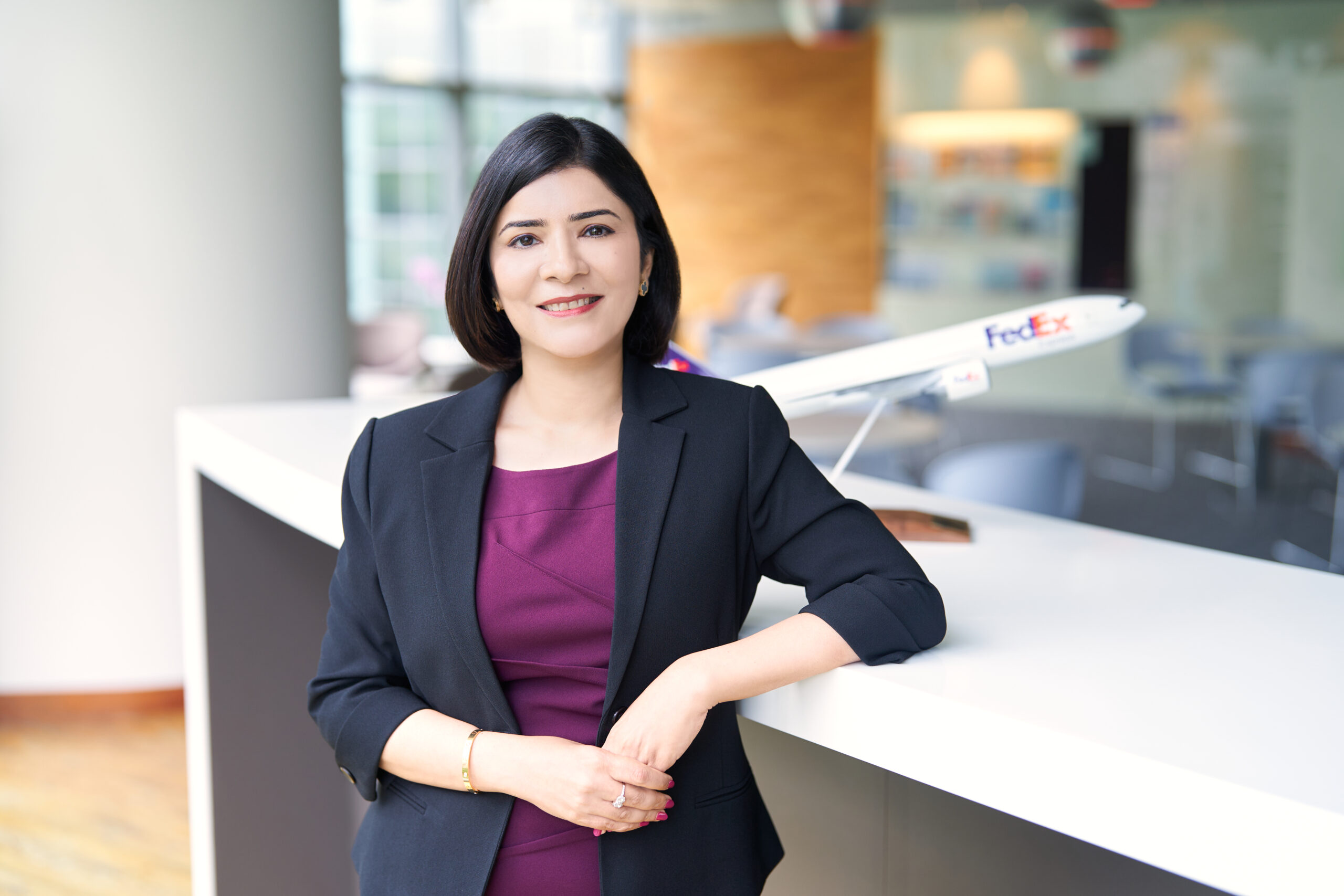
Kawal Preet, AMEA President, FedEx Express

Supply chain disruption continues to be a pain point for businesses around Asia and the world. Many industry sectors continue to experience supply chain bottlenecks, raw material and component shortages, infrastructure issues, and continued rotating lockdowns in countries still managing the pandemic.

Within this issue, however, lies an opportunity. By collecting and using data that is continuously generated within and around the supply chains, they can be made smarter, more predictable, and controllable. This benefits FedEx, as well as its customers.

“Data and technology hold the key to unlocking and building better insights, increasing visibility and improving customer experience,” says Kawal Preet, President of the Asia Pacific, Middle East and Africa (AMEA) region at FedEx Express. “It’s no longer just information about the package, but also the environment in which the package is traveling that we’re collecting to generate those insights, and ultimately giving more control to our customers.”

Connecting Physical and Digital Networks

Every day, more than 20 million packages move through the FedEx network. Each one of them is scanned around 20 times before reaching its destination, moving in a combination of aircraft and delivery vehicles. FedEx teams around the globe need to be able to act quickly and decisively to ensure packages are delivered at the right time, and to the right place.

FedEx recognized early on how data drives innovation. Today, the analytics center in Singapore works closely with FedEx Dataworks, which is steering the company’s digital transformation using data to help optimize internal operations. The teams use machine learning, artificial intelligence and other advanced analytical methods to improve complex processes, prevent problems or make decision recommendations in real time.

“We are transforming our business to operate at the intersection of physical and digital networks, and to create even more value for our customers,” says Preet.

Big Data Powering Smart Logistics

Among the solutions recently developed is a near real-time package monitoring system that enables customer service and operations teams to anticipate issues, and take action to prevent shipments from being delayed. Predictive algorithms are used to prepare customs clearance information, ensuring that shipments can be delivered as soon as they arrive in their destination country.

In addition to parcel scanning, a sensor device can be placed inside a package or a container to transmit location, temperature and other data related to the status of the package to various types of access points throughout the FedEx network. This enhanced real-time visibility helps FedEx and its customers plan the next steps in their supply chain—for example, making sure that engineers are on site at the right time, ready to receive and install a critical spare part.

As supply chain disruptions look set to continue for the foreseeable future, logistics teams need to be able to think and act with agility. Real-time visibility into the progress of shipments in transit helps to ease some of the stresses of keeping a business on track.

“Using technology and ever greater amounts of connected, continuous and contextual data, we are transforming the way we operate,” says Preet. “Tapping into the full potential of data analytics can help us improve efficiency, reduce errors, avoid problems and increase transparency. And most importantly, deliver more intelligent supply chains for our customers.”

Connecting The World Intelligently

Global technology company Qualcomm has played a key role in pushing the boundaries of what is possible for the mobile industry over the past three decades. Today, the company continues to set the pace of innovation for the mobile industry, but this Nasdaq-listed multinational is now looking to execute on its self-proclaimed “biggest opportunity”—the mission to enable everyone, and everything, to be intelligently connected.

As industries around the globe undergo digital transformation, Qualcomm is fast becoming the partner of choice to enable this transition. A key reason for this is the company’s leading technology roadmap, which was founded in mobile, but is now relevant to all industries that are looking to intelligently connect their worlds. Artificial intelligence, cameras, connectivity, audio, video, security, GPUs and CPUs are no longer technologies that are relevant only to mobile devices—now they are being used more broadly to develop next-generation automobiles, smart homes, smart cities and smart factories, among others.

One of the key enablers of this digital transformation is 5G. According to U.S.-based business consulting firm Frost & Sullivan, 5G revenue in Asia-Pacific (APAC) is expected to grow from US$2.13 billion in 2020 to US$23.89 billion in 2025. With the huge potential in 5G, Qualcomm, a leader in 5G technologies, is confident that it can grow its business in the APAC region beyond smartphones. The company has developed its flagship Snapdragon 5G-enabled platforms for mobile, but also for mobile computing and auto, as well as for networking and fixed wireless access.

“Since 5G has started to be deployed in more countries, we’ve seen various applications for it that have been impacting the way people work and live,” says Jim Cathey, Chief Commercial Officer at Qualcomm. “Given that 5G is still in its infancy, we see more developers and companies investing to create solutions that would harness the technology to improve lives and livelihoods, and we have the technologies to help them do that.”

Jim Cathey, Chief Commercial Officer, Qualcomm

A Leader in Mobile Technology

Even as it banks on 5G to drive growth in APAC, Qualcomm continues to reinforce its leadership position in the mobile space. The company’s mobile business is expected to continue expanding on the back of the 8.4 billion smartphones that global market intelligence firm IDC expects to be shipped between 2021 and 2026. Furthermore, analysts forecast that nearly 6 billion 5G smartphones will hit the market between 2020 and 2026.

Qualcomm’s success in this segment has been driven largely by its flagship Snapdragon mobile platforms, which provide consumers with a superior mobile user experience across a wide range of devices, from entry-level offerings to the latest high-end flagship devices.

S.T. Liew, Head of APAC, Qualcomm

“Snapdragon mobile platforms from Qualcomm Technologies are synonymous with premium Android. With leading-edge innovation and breakthroughs, they are designed to offer the most immersive, intelligent and connected mobile user experiences deployed in some of the world’s most popular smartphones,” says S.T. Liew, Qualcomm’s Head of APAC.

Apart from Snapdragon’s exceptional performance and features, OEMs are also able to benefit greatly from the platform’s seamless integration, which can help reduce the time and cost to develop devices. As Qualcomm offers different tiers of Snapdragon platforms, OEMs are also able to offer mobile devices across different price points.

“The technological leadership, design flexibility and power efficiency of Snapdragon mobile platforms come from relentless research and development [R&D], proven engineering expertise, superior global customer support, and a user-centered design approach. Consumers can enjoy immersive experiences, lightning-fast connectivity and cutting-edge performance with devices powered by Snapdragon,” explains Liew.

Always On, Always Connected

The PC market is yet another key growth driver for Qualcomm in APAC. The traditional PC market, made up of desktops, notebooks and workstations, registered a 15.9% year-on-year increase, reaching about 120.3 million units in the region.

Qualcomm is making its mark in this space through the use of its groundbreaking Snapdragon compute platforms, which power Always On, Always Connected PCs by combining the best of mobile phones with the performance of PCs. The pandemic accelerated demand for such devices, as more people worked from home, and schools conducted classes remotely.

“The Snapdragon compute platforms equip mobile PCs with powerful performance and efficiency, delivering the ability to connect to fast and secure cellular network connectivity, and boast advanced camera and audio features that enable devices perfect for use for enterprise and for education,” says Liew.

Even as pandemic restrictions ease, an IDC study among APAC working professionals found that more than 56% of employees still prefer flexible work arrangements that allow them to operate remotely.

In the education space, some countries continue to conduct distance learning as they adjust to a post-pandemic normal. Through its partnership with The Dariu Foundation, Qualcomm witnessed firsthand the positive impact that its devices had for more than 100,000 students learning remotely across 80 beneficiary schools.

To thrive in this new normal, workers and students are seeking mobile experiences that match the capabilities of their smartphones and PCs; keeping them securely connected to their organizations while enhancing their output. Snapdragon powered devices are able to deliver the connectivity, security and productivity that users seek in a world of remote work.

Says Cathey: “With all of these in mind, we see a lot of opportunities to further strengthen our foothold in the APAC region.”


Qualcomm’s Market-leading Solutions

Qualcomm 5G Industrial IoT

Qualcomm is at the forefront of wireless R&D on the road to 5G Advanced and beyond, developing technologies to meet the demanding requirements for Industry 4.0, and collaborating with leading industrial automation companies today to advance industrial efficiency with the power of 5G.

Qualcomm Automotive Solutions

Qualcomm provides advanced scalable cloud connected platforms for automotive telematics and connectivity, cockpit and driver assistance & autonomy solutions from leveraging its one technology roadmap spanning low-power, high performance compute, multi-modal connectivity, and AI to deliver the Snapdragon Digital Chassis.

Snapdragon mobile platforms

Synonymous with Premium Android, Snapdragon mobile platforms are designed to offer the most immersive, intelligent, and connected mobile user experiences so consumers can enjoy the most immersive experiences, lightning-fast connectivity, and cutting-edge performance with devices powered by Snapdragon.

Snapdragon compute platforms

Combining the best of the smartphone with the performance of Windows PCs and Chromebooks, delivering speed, power, and performance with multi-day battery life, 4G LTE and 5G connectivity experiences; enterprise, education, and everyday end-users can have the freedom to connect, compute, and communicate from anywhere.


www.qualcomm.com

Building Resilience And Forging Connections For Asia’s Wealthy

Asia continues to generate wealth at an impressive pace, even as headwinds continue to moderate economic growth. According to HSBC Global Research, wealth in Asia excluding Japan could outstrip the U.S. by 2025. The number of millionaires across Asia is projected to jump from roughly 30 million to over 76 million by 2030, with Singapore expected to overtake Australia’s millionaire population.

However, managing these expanding pools of wealth has become more complex due to a confluence of factors, from the effects of the pandemic and inflation to heightened geo-political tensions and recession risks.

In particular, fears over stagflation have adversely impacted both bond and equity markets in the first half of 2022. Rising consumer prices have forced central banks around the world to tighten monetary policy, resulting in challenging conditions for bonds. Equities, too, have been hit by concerns over a slowing economy and the threat of inflation denting the bottom line.

Annabel Spring, CEO, Global Private Banking and Wealth, HSBC

“This complexity impacts our clients, their current investments and long-term wealth goals, so we have been focused on providing the advice and services they need during these challenging times, both with respect to managing the risks and taking advantage of opportunities,” says Annabel Spring, CEO, Global Private Banking and Wealth, HSBC.

In light of these challenges, clients are currently focused on increasing the resilience of their portfolios, as well as managing their legacy and succession plans. A younger
generation of affluent investors is also demanding mobile convenience when it comes to managing their wealth, and incorporating environmental and social purpose into their investment decisions.

In terms of diversification, investors should seek out alternative assets such as private equity or credit, hedge funds and commodities to potentially reduce the overall risk in a portfolio, and to uncover uncorrelated opportunities.

Clients should also consider building multiple income sources, with cash flows that can reset higher in the event of rising inflation. Such income streams include infrastructure, private credit, real estate, floating rate bonds and dividend growers. Finally, investors should favor the stocks of high-quality companies that have the capacity to maintain profit margins even as costs rise.

“In an uncertain world, it is wise to build resilient portfolios to weather the likely bouts of volatility and not to ignore the wide range of opportunities,” explains Siew Meng Tan, Regional Head of Global Private Banking, Asia Pacific, HSBC.

Siew Meng Tan, Regional Head of Global Private Banking, Asia Pacific, HSBC

“Our investment strategy specifically focuses on quality earnings, resilient income and multi-asset diversification to dampen market volatility and help clients to stay invested and capture opportunities. A focus on quality means selecting companies and areas with the most resilient fundamentals. Looking at income allows investors to take advantage of increased yields and helps mitigate market volatility. Lastly, diversification helps uncover opportunities in alternative assets.”

Sustainable investments are another way to build long-term resilience and capture future growth opportunities. On this front, the bank is able to deliver innovative ESG (environmental, social, and governance) solutions to its clients. These include, among many others, a biodiversity thematic discretionary mandate, sustainable core multi-asset solutions and private equity impact funds.

Leveraging a Global Footprint
Investors should not only pursue asset class diversification, but also geographical diversification, in an effort to reduce portfolio risk. With its global footprint, HSBC is well-positioned to offer international opportunities and capabilities that span numerous markets around the world.

“Our international network and connectivity across the Group are particularly valuable for our ultra-high net worth (UHNW) clients, whose complex needs and objectives are typically global in scope and span personal, family and business interests,” says Spring.

HSBC has a unique client servicing model, where a primary relationship manager leads the global coverage team of relationship managers across Global Private Banking (GPB) offices to look after clients’ global portfolio and needs. With the client’s consent, HSBC is then able to work closely with the client and their representatives globally.

“We onboarded a new client in Hong Kong recently who was impressed by our smooth introduction and onboarding process in the UK for his child, who is studying overseas, as well as our capabilities across different GPB offices to meet his asset diversification and wealth-planning needs to align with his family’s global lifestyle,” explains Tan.

As the needs of UHNW individuals extend to their families and businesses, HSBC’s universal banking model enables the private bank to provide their clients with access to capabilities in Insurance and Asset Management, Commercial Banking and Global Banking and Markets.

These capabilities are increasingly being delivered through a hybrid service model that combines advanced digital platforms with value-added human engagement. This approach, which proved to be especially effective during the pandemic, addresses a broader shift in how clients want to interact with their private bankers.


Committed to Philanthropy
In an environment where wealthy families are increasingly concerned about addressing social issues, HSBC GPB actively supports its clients in their pursuit of driving long-lasting change in their communities.

“As our clients think about their legacy and leaving sufficient resources for their children and grandchildren to enjoy, they are aligning their family business, philanthropy and sustainable investment activities so that they are reflective of the family’s values,” says Spring.

“They want to realise the synergies across all three parts of the family enterprise to amplify the impact of their work. In terms of investments, they are increasingly interested in impact investing.”

HSBC GPB is one of the first international banks in Asia to set up a philanthropy advisory team, which aims to help clients navigate a complex landscape to achieve their philanthropic goals.

A Leader in Succession Planning
As affluent Asian families expand their global reach, their wealth and succession planning needs can also become more complex. HSBC helps clients on this front through their trust business, which was established in 1946.

HSBC Trustee offers clients global coverage in Hong Kong, Singapore, Jersey and the U.S., particularly in Delaware and New York. With constant regulatory changes across jurisdictions, HSBC has the experience and expertise to not only provide best-in-class solutions, but also to ensure wealth structures remain compliant.

HSBC Trustee also creates opportunities for wealthy families by connecting them to other parts of the Group, whether for their everyday banking, credit and investment needs, or to assist them with their wealth structuring planning.

Looking ahead, HSBC GPB is set to continue to expand its capabilities and presence in Asia. HSBC unveiled its new private banking business in Thailand in 2021 and earlier this year launched a differentiated onshore private banking business in mainland China, where HSBC is the largest foreign bank offering comprehensive wealth management solutions. The bank is also looking to India as its next market for the private banking business.

Says Tan: “Capturing the massive opportunity from Asia’s fast-growing wealth creation and what is expected to be among the world’s biggest intergenerational wealth transfer events is core to the HSBC Group’s strategic pivot to Asia, where it aims to be the leading international wealth manager.”

privatebanking.hsbc.com


Disclaimer

The information contained in this article has not been reviewed in the light of your individual circumstances and is for information purposes only. It does not purport to provide legal, taxation or other advice and should not be taken as such. No client or other reader should act or refrain from acting on the basis of the content of this article without seeking specific professional advice. Issued by The Hongkong and Shanghai Banking Corporation Limited.