From A Southeast Asia Vantage Point: Stepping Out Of The Comforts Of Home-Bias Investing

We’ve all heard stories of entrepreneurs becoming very successful because of large, concentrated bets in a particular sector or asset class. Their success can be attributed to a strong local knowledge of their country and sector. However, their strength could turn out to be a weakness when it comes to investing.

Many entrepreneurs, whilst successful in their business, may not have segregated their business risk sufficiently from their investments. When it comes to their investments, they tend to gravitate towards the sectors and countries they are familiar with.

Home bias, especially in a Southeast Asia context, remains a major impediment for investment returns when it comes to wealth preservation for the long haul.


Why People Prefer to “Stay Home”
A home bias is driven by behavioural traits and occurs when investors over-invest due to familiarity with their home assets, potentially missing out on better global opportunities from a risk-reward perspective.

For many entrepreneurs in Southeast Asia, their wealth was amassed through a strong knowledge of the local business conditions. For them, applying their local knowledge made sense, and their past experience honed their instincts when it came to assessing domestic assets. However, it is a double-edged sword, which may lead them to overestimate their judgements.

Home bias seemingly gives investors a sense of control, hence they may attach more risk to investing globally than is deserved simply because overseas opportunities are less understood.

However, is this behavioural bias justifiable?

Benefits of Stepping Out
Academic studies show home bias is prevalent across the world and more importantly, it is not optimal when one invests with home bias.

Home bias will likely lead to heavy exposure to certain sectors in the local economy. The implication of a higher concentration in a portfolio is increased risk, as well as a possible drag on returns over the long haul.

By being overly concentrated on one region versus another, an investor can miss out on particular sectors that play an important role in global economic growth.

The evidence is stronger when we apply it from a Southeast Asian investor context.

For example, investing in a typical global market index today will provide exposure to more than 1,000 stocks; however, the Indonesia market index, for example, will only have about 20 stocks.

Specifically, if an investor bought into a global equity index a decade ago, they would have gained by more than 113%. However, if that same investor bought into an Indonesia equity index, that investor would only be up by 21% (Chart 1).

The divergence in performance becomes stark when we look over longer periods of time such as over the past three decades (Chart 2).

Clearly, if there is a stronger Indonesia home bias, it would likely have resulted in lower-risk adjusted returns when we look at five to 10 years’ time frames.

It is important to note that home bias for Southeast Asia fixed income investors can be detrimental for investment returns.

Over the past few decades, Southeast Asian currencies are highly sensitive to the global economic cycle. Historically, Southeast Asian currencies typically suffer while USD outperforms during periods of global market turmoil and stress. Therefore, Southeast Asia fixed income investors without a USD-biased currency overlay tend to underperform when it comes to investment returns. This is due to the extreme exchange rate volatility of Southeast Asian currencies that historically underperforms the dollar over long periods of time. Hence, for Southeast Asia investors, there is a need to consider dollar-biased diversification for their currency overlay strategy (Chart 3).

2024 and Beyond: Multi-Speed and Global Diversification
Looking at 2024 and beyond, the impact of ever-changing growth-inflation dynamics will play out at different speeds among countries.

It seems that inflation has peaked, while growth is going to slow down for most of the developed world. The extent of this slowdown remains uncertain and will vary across economies.

The gradual decline in inflation means that central banks are unlikely to come to the rescue quickly to revive growth. Major central banks are at the end of their tightening cycles but will likely proceed judiciously with rate cuts even in 2024. Clearly, there is plenty of room for monetary policy divergence, especially between the developed markets and emerging world. Therefore, there will be greater differentiation in terms of investment returns across countries.

Historically, global diversification has led to higher returns per unit of volatility. This is especially important looking to 2024 and beyond, given the divergence in expected returns and the range of possible economic outcomes.

Step Out of Home and Go Global
Diversification across geographies is just as important as diversification across asset classes.

While over- or under-exposure to a region may boost returns for some time, for reasons specific to that time period that are likely to be clear only in hindsight, this is unlikely to be in the best interests of long-term investors.

Benefits of global diversification are particularly evident for investors based in Southeast Asian markets that are either relatively small (in terms of market capitalisation), or under-diversified (in terms of sector concentration).

Geographical diversification is important, but this should be considered in relation to a company’s wider exposures, such as the location of its customer base and supply chain, rather than the location of its stock exchange.

Southeast Asian investors, for example, not only achieve better diversification across economic sectors but also broaden the opportunity set by expanding the number of eligible securities when moving from local to global markets.

While home bias may provide a sense of comfort and security, it can hinder the optimisation of investment portfolios. Neglecting international opportunities may result in missed chances for higher returns and exposure to industries and sectors not available in the domestic market.

Global diversification is not just about returns, it is grounded in the adage “don’t put all your eggs in one basket,” emphasising the importance of spreading risk. Diversification acts as a risk management tool, aiming to reduce the impact of poor-performing assets on an investment portfolio.

Despite the benefits of diversification, home bias often creeps into investment decisions. Investors must strike a balance between the benefits of diversification and the allure of familiar domestic investments.

Clearly, there is a need to step out of the comforts of home-bias investing and go global.

James Cheo, Chief Investment Officer for Southeast Asia at HSBC Global Private Banking and Wealth

About James Cheo
James Cheo is a member of the Global Investment Committee for Global Private Banking and Wealth and also a member of the Regional Investment Committee in Asia. In his role, he spearheads the development of investment strategies across all asset classes for HSBC Global Private Banking & Wealth clients in Southeast Asia and India.

With his knowledge and wealth of experience, his investment views are frequently sought after, with appearances on notable financial media including BBC, Bloomberg, CNBC, and Channel News Asia.


privatebanking.hsbc.com


Disclaimer

The information contained in this article has not been reviewed in the light of your individual circumstances and is for information purposes only. It does not purport to provide legal, taxation or other advice and should not be taken as such. No client or other reader should act or refrain from acting on the basis of the content of this article without seeking specific professional advice. Issued by The Hongkong and Shanghai Banking Corporation Limited.

Indonesia: A Wealth Of Opportunities

Indonesia’s economy continues to record growth in the third quarter of 2023, with gross domestic product expanding by 4.94%, primarily driven by strong private consumption. Investment continues to demonstrate a noteworthy performance, with a growth rate of 5.77% in the third quarter, surpassing the 4.63% recorded in the second quarter. While the growth of real exports has decelerated due to softer external demand, the services exports sector maintains its momentum, propelled by a surge in international travelers.

Given these dynamics, Indonesia’s Finance Minister Sri Mulyani Indrawati anticipates that economic growth for 2023 will hit 5.04%, with expectations of acceleration in 2024.

Promising Destination for Investors

With its abundant natural and human resources, coupled with anticipated robust economic growth and diverse potential, Indonesia emerges as a promising destination for investors. President Joko Widodo affirmed the nation’s commitment to fostering a conducive and competitive investment climate during the 2023 Asia-Pacific Economic Cooperation (APEC) Summit.

Key investment opportunities lie in priority sectors, notably the industrial downstream sector. Capitalizing on its large nickel reserves, Indonesia harbors ambitious plans for the expansion of its electric vehicle industry. In just three years, Indonesia has inked agreements worth more than US$15 billion for battery and electric vehicle production with multinational manufacturers. The country aims to produce 600,000 electric vehicles by 2030, kicking off production next year.

The energy transition sector stands as another pivotal area that requires investment, knowledge and cutting-edge technology. Indonesia currently boasts a renewable energy potential of 3,600 GW and is actively engaged in the development of a Green Industrial Park covering 30,000 hectares. Moreover, Indonesia’s new capital city, Nusantara, presents diverse investment opportunities across sectors such as infrastructure, transportation, technology, education, energy, finance, tourism, health and housing.

Against this backdrop, the president urged investors to seize opportunities more aggressively and quickly, emphasizing that the current environment presents an ideal time to invest in Indonesia.

Startup Ecosystem Has Room to Grow

In the realm of digitalization, the country has fostered a vibrant tech ecosystem, producing multi-billion-dollar tech platforms, super apps and tech startups. A leading investor in the tech startup space is Alpha JWC Ventures. The Indonesia-based venture capital firm has established a remarkable track record for grooming some of the region’s most successful tech companies. Despite a sluggish global economy that has led to declines in tech company stocks, the region, and in particular Indonesia, continues to attract heightened interest from international investors, according to the venture capital firm.

Compared to mature markets like Silicon Valley or Europe, ASEAN’s tech industry and its startup ecosystem have plenty of potential to grow. In the long term, Alpha JWC’s vision is to help place Indonesia and the wider ASEAN region firmly on the global tech scene.

Manufacturing Sector a Driving Force

In the meantime, Indonesia’s manufacturing sector continues to stand out as one of the primary contributors to the national economy. An exemplary player is Jakarta-based paint and coating manufacturer, PT Mowilex Indonesia (Mowilex), which has effectively maintained its position as one of the market leaders in the country. Niko Safavi, CEO of Mowilex, says, “What has enabled our company to remain competitive in an industry dominated by multinationals and strong domestic players is not only our environmental stance or thought leadership, but also our relentless pursuit of delivering high-quality products to the market.”

The company was the first domestic paint and coating manufacturer in Indonesia to produce water-based paints in the 1970s, back when lead-based and solvent-based paints, known for their potential long-term health risks and emissions, were widely used. More recently, Mowilex has reinforced its commitment to environmental sustainability by launching Indonesia’s first plant-based paint, reflecting its aspiration to be at the forefront of eco-friendly innovation.

Another manufacturer driven by a culture of innovation is PT Nippon Indosari Corpindo Tbk. (Indosari), the company behind Indonesia’s leading bread brand, Sari Roti. Within the manufacturing sector, the food and beverage industry stands out as one of the engines of growth in the country, and Indosari has demonstrated resilience by deliver ing profits amid challenging conditions.

The company plans to work with a leading milk producer to enter the beverage category with a new product, Sari Choco Milk. It will also expand into the spreadable space with Choco Spread, as it seeks to enrich its product portfolio and reduce its reliance on packaged bread.

Coal Exports Continue to Surge

Notably, Indonesia’s exports of thermal coal surpassed 413 metric tons over the first 10 months of 2023, cementing its position as the world’s largest coal exporter. This marked an impressive 11.5% surge compared to the same period in 2022, reflecting that coal exports remain a cornerstone of Indonesia’s economic momentum. Geo Energy Resources, a low-cost coal producer in Indonesia, has recently made strategic investments to increase its coal reserves, ensuring the sustainability of its business for the next 20 years. The low sulphur and low ash content of its coal reserves will attract strong demand from domestic and international markets, particularly Asia, and command a premium above market price, the company says.

As Indonesia strides forward, balancing innovation across sectors with traditional strengths in global trade, it solidifies its standing as a formidable force on the world economic stage.

Thailand’s Path To Responsible Tourism

Promthep Cape in Phuket

Thailand’s tourism sector is making a steady comeback, having welcomed over 15 million tourists between January and July 2023. The total revenue from tourism reached 1.08 trillion baht (US$29.38 billion), with international visitors contributing 638.16 million baht (US$17.37 million). This resurgence is primarily driven by tourists from Malaysia, China, South Korea, India and Russia.

To further bolster tourism, various initiatives have been implemented this year, including a temporary visa-free program for select target markets, a focus on promoting lesser-known cities in Thailand and an emphasis on longer stays.

Leading the charge in these efforts is Tourism Authority of Thailand (TAT). Under the stewardship of its new governor, Thapanee Kiatphaibool, who officially assumed office on September 1, TAT has set ambitious goals. It aims to generate 1.92 trillion baht (US$52.92 billion) from 35 million foreign tourists and an additional 1.08 trillion baht (US$29.38 billion) from 200 million domestic trips in 2024.

“Under my tenure,” says Kiatphaibool, “TAT will focus on creating and delivering meaningful experiences tailored to meet the diverse demands of discerning travelers.” The sector is shifting its attention from quantity to quality, both in terms of its target audience and the offerings it provides.

Leading Reopening Efforts 

Kiatphaibool played a pivotal role in Thailand’s post-Covid-19 reopening efforts. For example, she initiated the Special Tourist Visa (STV) scheme, which paved the way for subsequent entry programs such as Villa Quarantine, Yacht Quarantine, Golf Quarantine and the Phuket Sandbox, regarded internationally as a model for the country’s reopening.

She was also recognized for her leadership in initiating the Amazing Thailand Safety and Health Administration (SHA) certification program that enabled hotels and services to meet specific health and safety standards. The program subsequently became mandatory for hotels seeking registration as quarantine facilities during the period of stringent Covid-19 control measures.

Thapanee Kiatphaibool, Governor of Tourism Authority of Thailand

Building Strength From Within

Having been with TAT since 1999, Kiatphaibool has observed the evolution of Thailand’s tourism sector over the years. She says, “The sector now places a strong emphasis on building strength from within—uplifting and supporting local businesses and communities.” 

“Furthermore,” she adds, “there’s a growing commitment to the management of tourist attractions and destinations to ensure the preservation and conservation of our natural resources. Today, many attractions limit daily visitor numbers to align with their carrying capacity, and national parks are periodically closed to allow nature time to recover.”

For instance, Maya Bay, which gained international fame through the Hollywood film The Beach, was closed for nearly four years due to overtourism, resulting in the destruction of coral reefs and its marine ecosystem. Since the park reopened in 2022, it has capped tourist numbers to about 4,000 a day and swimming in the bay is no longer allowed.

Other attractions such as the Thi Lo Su Waterfall in Tak’s Umphang Wildlife Sanctuary will take advantage of the monsoon season from July to August each year to close, providing the ecosystem with an opportunity to heal.

Chiang Khan Walking Street in Loei Province

Shaping the Future of Tourism

During Kiatphaibool’s four-year term as governor, she will implement a strategic vision called PASS to shape Thailand’s tourism future. The strategy focuses on these four priorities:

P: Partnership 360—Foster collaboration with industry partners to enhance Thailand’s appeal to international and domestic travelers.
A: Accelerate Digital Access—Utilize innovation and technology for sustainable tourism growth, including leveraging digital content and virtual influencers to lure Generation Y and Z travelers.
S: Subculture Movement—Target influential subculture groups to drive impactful travel trends through online platforms.
S: Sustainably Now—Promote sustainability through the Sustainable Tourism Goals (STGs), aligned with the UN Sustainable Development Goals, featuring the STAR (Sustainable Tourism Acceleration Rating) system to certify businesses for sustainability.

Organic agriculture project in Sukhothai

Additionally, the Thai government’s Bio-Circular Green economy (BCG) model has found its way into various tourism segments, including health and wellness, responsible tourism and gastronomy. For instance, TAT partnered with the Thai Organic Consumer Association to establish a marketplace that connects farmers directly with mid-stream consumers, including hotels and restaurants that serve downstream consumers and tourists.

This not only reduces carbon emissions but also expands the benefits of the circular economy. Initially launched in Phuket, the project has since expanded throughout Thailand.

Local products made from native Papyrus trees in Chanthaburi

Balancing Tourism and Environmental Goals

Indeed, TAT has undertaken a commendable effort in advancing the cause of sustainable tourism throughout the country, spanning both its major and secondary cities. This endeavor stands as a pivotal force in the revitalization of Thailand’s tourism sector.

Kiatphaibool states, “Sustainability principles encompass environmental, economic and socio-cultural aspects of tourism development. Striking a harmonious balance among these three aspects is paramount for ensuring the long-term viability of tourism. Yet, the pursuit of sustainability in tourism must not compromise the overall satisfaction of tourists, but rather should enrich their experiences by fostering a heightened awareness of sustainability issues.”

Rock climbing at Railay Beach, Krabi

Notably, TAT has recently introduced 20 low-carbon routes across the country with the aim of reducing greenhouse gas emissions and the ecological footprint. The success story of Koh Mak, recognized as Thailand’s first low-carbon destination, serves as an exemplary model for promoting responsible and sustainable tourism practices. Nestled within the pristine expanse of Trat province, Koh Mak has preserved its idyllic charm by embracing development practices that have minimal impact on the environment and local community. Visitors to the island are actively encouraged to engage in activities that minimize their carbon footprint and support local businesses.

Ultimately, the balance between tourism and environmental stewardship remains a paramount goal, and Thailand, through TAT, is leading the way toward a more sustainable and enriching travel experience for all.


www.tourismthailand.org

Malaysia: A Sustainable Growth Journey

Malaysia’s economy expanded by 3.3% in the third quarter of 2023, according to advance estimates by the Department of Statistics Malaysia, up from 2.9% in the second quarter. This growth is primarily driven by the services sector, notably in wholesale and retail trade, transportation and storage and business services. The construction sector saw modest growth, while agriculture rebounded slightly after a previous decline.

In the first half of 2023, Malaysia attracted a total of RM132.6 billion (US$27.8 billion) in approved investments across services, manufacturing and primary sectors, according to the Ministry of Investment, Trade and Industry. Domestic direct amounting to RM69.3 billion (US$14.5 billion). Foreign direct investments totaled RM63.3 billion (US$13.2 billion), with the largest inflows coming from Singapore, Japan, the Netherlands, China and British Virgin Islands. This is attributed to the government’s probusiness policies, strategic location in Asia, trusted ecosystem for supply chains and talent and growing innovation capabilities.

Toward a Greener, More Prosperous Future

In July, Prime Minister Anwar Ibrahim unveiled the Madani Economy Framework, a comprehensive roadmap geared to drive sustainable growth and enhance the overall well-being of the people. This initiative has come at a crucial time, serving as a strategic response to bolster Malaysia’s economy amidst a backdrop of a global economic slowdown and ongoing geopolitical uncertainties.

Central to Madani is the principle of sustainability, underscoring the importance of responsible progress in energy transition and sustainable development. Malaysia is on the path to achieving net zero emissions by 2050, as outlined in the National Energy Transition Roadmap. This transition involves shifting away from a traditional fossil fuel-based economy toward a high-value economy, aligning with the nation’s commitment to environmental stewardship and a greener, more prosperous, future.

PETRONAS, Malaysia’s national energy conglomerate, has aligned its business goals with the nation’s vision as well as global sustainability principles. In fact, carbon reduction has been its pursuit for a decade. Since 2013, PETRONAS has cumulatively reduced 18.1 million tonnes of carbon dioxide equivalent (MtCO2e) of greenhouse gas (GHG) emissions from the implementation of decarbonization activities throughout PETRONAS Group-wide operations.

Building on this momentum, the company has set its own pathway to net zero emissions by 2050 (NZCE2050 Pathway), with clear and solid short-, medium- and long-term targets. PETRONAS is racing to decarbonize to meet these targets, starting with aiming to cap GHG emissions at 49.5 MtCO2e by 2024, covering Scope 1 and Scope 2 emissions for its operations in Malaysia. Additionally, PETRONAS aims to enhance its role in energy transition by focusing on both energy security and the responsible delivery of energy solutions. “It is our commitment to deliver our ‘Amanah,’ or trust, to safeguard and manage the nation’s hydrocarbon resources responsibly for the people and the country,” says Datuk Bacho Pilong, Senior Vice President of Project Delivery and Technology, PETRONAS.

Digitalization Crucial to Economic Growth

The digital economy is another crucial pillar of economic growth under the Madani Economy Framework. It is one of the fastest growing sectors in Malaysia, representing 23.2% of the nation’s gross domestic product (GDP). Malaysia Digital Economy Corporation (MDEC), the nation’s lead digital economy agency, has been leading Malaysia toward becoming a globally competitive digital nation through the development and execution of the Malaysia Digital initiative, which aims to ensure that people, global companies and investors will conduct business in Malaysia.

“The idea of Malaysia Digital is to attract good, purposeful and contextual digital opportunities that will be strategic to Malaysia,” says Mahadhir Aziz, CEO of MDEC.

“Additionally, we aim to create local champions and drive the digitalization of Malaysian society, starting with businesses and eventually extending to individuals. This is the crux of Malaysia Digital—we are here to do business, so we invite global giants to invest in Malaysia.”

One remarkable tech champion leading the charge is Silverlake Axis, an enterprise technology, software and services company that has been intensifying its efforts toward developing innovative financial solutions to facilitate the digitalization journey of the financial services sector.

With the ongoing disruption caused by next-generation technologies, such as cloud computing, artificial intelligence, big data and machine learning, Silverlake Axis has expanded its capabilities and expertise to better serve its clients and secure a competitive advantage in the ever-evolving landscape. The company has a strong presence in Southeast Asia and serves 40% of the top 20 largest banks in the region.

Innovation Increases Global Competitiveness

Meanwhile, innovation remains a priority as Malaysia strives to compete on the global stage. The nation is committed to intensifying its efforts in nurturing local innovation and technological advancements, with the overarching goal of establishing itself as a formidable global contender.

BookDoc, a local healthtech startup, has innovation at its core. Initially established to help individuals find healthcare providers, the company has evolved into a prominent player in the area of corporate wellness programs. These programs cover physical wellness, mental wellness, nutrition and teleconsultations. What’s different about such programs is the use of smart technology to gamify healthy behavior while incentivizing individuals through personalized rewards schemes—all through its superapp.

Over the years, BookDoc’s corporate wellness program has gained significant traction, finding adoption among large multinational corporations. With the corporate wellness solutions market projected to reach US$94.6 billion by 2026, there are plenty of opportunities for BookDoc to seize.

All this bodes well for the overall economy. As Malaysia aims to become one of the world’s top 30 largest economies in the next decade, the implementation of the new economic reforms will bring it closer to achieving this goal.

Expanding Beyond Connectivity

Khairul Liza Ibrahim, Executive Vice President of TM Global

The global telecommunications landscape has been in a state of transition for the last decade. Once primarily associated with facilitating domestic and international connections, they now play pivotal roles in shaping our interconnected world, offering a myriad of services that encompass more than just bandwidth for voice and data.

TM Global, the wholesale business arm of Malaysia’s telecommunications company, TM, has long recognized this trend and has broadened its horizons in the last few years to become an integrated player in digital innovation and advanced connectivity. This has led the company to develop a comprehensive range of cutting-edge wholesale communications services and solutions for a global market.

“While maintaining and growing our connectivity infrastructure remains our core focus, we are centered on creating value for our stakeholders by developing new innovations. We also embarked into a new age of wholesale business where we expand our offerings toward enabling the diversification of edge and platform play services in supporting hyperscalers
and digital players for greater customer experience,” says Khairul Liza Ibrahim, Executive Vice President of TM Global.

TM Global’s transformational journey involved the company venturing into a holistic and comprehensive assessment of its current businesses. This included conducting due diligence exercises aimed at determining where the targeted business opportunities lay.

Concurrently, the company ensured it augmented desirable skill sets, particularly in new business ventures, so that it was able to understand and address customers’ needs effectively.

The company began focusing on how market conditions were evolving in the digital space and ensured that it remained up-to-date with the latest technologies so that it could accelerate the development of new digital solutions. Realizing no one company can do it all, it also fortified its market position by expanding its partnership ecosystems while providing mutual benefits to all parties involved.

A Trusted Wholesale Provider 

TM Global’s advanced connectivity and digital infrastructure solutions include a vast fiber cable network, submarine cable systems, points-of-presence, content delivery networks, TM Internet Exchange, Edge Facility, data centers, as well as its regional of fices worldwide to support these services.

Recognizing that gaming will largely benefit from edge and 5G technology, with APAC as the world’s largest gaming hub, TM Global has delivered a broader range of edge services that can be tailored to each vertical’s needs for low-latency and high-bandwidth utilization. The ultimate goal is to further strengthen its position through innovative approaches that foster exceptional customer experience, maximize cost-effectiveness, and drive profitability for its customers. 

“While maintaining and growing our connectivity infrastructure remains
our core focus, we are centered on creating value for our stakeholders by
developing new innovations.”

Khairul Liza Ibrahim

In Malaysia, TM Global will continue to play the role of the trusted wholesale infrastructure provider by driving the digital industry and 5G ecosystems through nationwide infrastructure deployment. Internationally, TM Global remains focused on positioning itself as the preferred digital hub for ASEAN via strategic collaborations with hyperscalers and global service providers.

“We are continually on the lookout for cutting-edge platform solutions that enable various type of applications, such as multiaccess edge computing, artificial intelligence, the Internet of Things and many more that will lead to our next phase of growth. This is parallel to market needs while enhancing the customer experience for all our stakeholders,” says Khairul Liza.


tmglobal.com.my

A Successful Energy Transition Begins With The Right Partner

Yaoyu Zhang, Global Head of LNG and New Energies, PetroChina International

As a wholly-owned subsidiary of PetroChina Company Ltd, PetroChina International (PCI) is the main supplier of gas to China. In 2022, PCI imported more than 80 billion cubic meters (bcm) of natural gas, which accounts for approximately 60% of the total gas import to China. It also reliably delivered 10 million tons per annum (MTPA) of liquefied natural gas (LNG) to its global customers.

“Ensuring security of supply is at the heart of what PCI does,” says Yaoyu Zhang, Global Head of LNG and New Energies at PCI. “Our global reputation has been built on the core value of honoring long-term relationships and contracts over short-term gains.”

PCI is committed to working with its partners through driving deep process simplification, utilizing automation and digital solutions and making its operating platform efficient and effective. It also continues to foster a culture of inclusiveness while investing in respectful business partnerships and focusing on customers’ needs.

In its journey to become a major player in the energy market, Yaoyu says having the right partner is one of its key success factors. This is where PETRONAS and its customer-centric solutions have played a key role in supporting the continued growth of PCI.

“Any attempt to address the energy challenges would require a global and multilateral approach. PETRONAS’ ability to innovate and its customer focused leadership are key in ensuring a sustainable and economic supply of LNG to PCI and our domestic and international customers.”

Yaoyu Zhang, Global Head of LNG and New Energies, PetroChina International

“PETRONAS has been operating in the Chinese market since 2009, providing energy for China’s rapid economic development. China’s natural gas demand is expected to grow, with a potential of reaching 550 to 600 bcm per annum by 2030, and this bodes well for our partnership,” Yaoyu says.

A Symbiotic Relationship

Today, PETRONAS is one of China’s largest LNG suppliers and one of the most recognizable brands in the gas market. In 2022, PETRONAS delivered 7.5 million tons of LNG to China, accounting for around 10% of the total LNG exports to China.

Building on their strong and stable relationship, PCI and PETRONAS collaborated closely under the Joint Commercial Committee, which extends the success of their spot trading partnership. This has led to the signing of a long-term LNG sales and purchase agreement, which will see PETRONAS delivering LNG to PCI well past 2030.

“In 2021, China imported close to 80 million tonnes of LNG, becoming the largest importer in the world. We expect LNG to continue to play a vital role in ensuring China’s energy security and economic stability,” says Yaoyu.

Despite the growing importance of LNG, the market has experienced some price volatilities and supply uncertainties in recent years, posing a threat to the recovery of both the Chinese and global economies.

Undeterred by the challenges of restricted travel during the pandemic, PCI was able to ensure that its entire LNG supply chain was uninterrupted, averting the risk of a major supply shock for both China and the global market.

Vessel berthing at Singapore Universal Storage

PCI also faced another challenge: it had insufficient capacity in its LNG terminal to fulfill annual contractual quantities and meet downstream gas demand in one of China’s southern provinces.

“PETRONAS’ commercial team identified a customized LNG vessel that would seamlessly fit our terminal requirements, and our operations team worked together to ensure the compatibility of the vessel,” says Yaoyu.

“Any attempt to address the energy challenges would require a global and multilateral approach. PETRONAS’ ability to innovate and its customer-focused leadership are key in ensuring a sustainable and economic supply of LNG to PCI and our domestic and international customers,” he adds.

International trading team in PCI America’s office

Gearing Up for the Future

As one of the world’s largest energy providers, PCI has transformed its portfolio with the supply of lower carbon energy sources such as natural gas, biofuel and green power, while working with its customers across different sectors to decarbonize their use of energy.

PCI has also built a world-class carbon portfolio that helps its global customers offset emissions. Since 2021, PCI has delivered more than 10 carbon-neutral LNG cargoes, making it one of the top carbon-neutral LNG suppliers globally.

PCI and PETRONAS, however, are not taking anything for granted and are forging deeper ties with the aim of addressing market challenges and contributing to the world’s sustainable energy solutions.

In the last few years, the increased fragility and interdependence of the energy systems have contributed to the rising cost of living globally. Consequently, there is a need to balance the goal of achieving net zero emissions while ensuring a secure and affordable energy supply.

“As growth is occurring across sectors, demand for natural gas—a relatively clean fossil fuel and a crucial bridge toward China’s dual carbon goals—is poised for a rebound. We must continue to evolve to protect and enhance our energy systems for supply security and, in the future, try to meet the objective of net zero emissions,” says Yaoyu.

To ensure success, all parties within the energy ecosystem must play their part, whether they are involved in supply, demand or policymaking. The transition to greener gases, such as ammonia and hydrogen, currently requires direct government support, and regions around the world are supporting this drive differently.

“The U.S. is offering favorable tax breaks under the Inflation Reduction Act, while the Europeans are offering Contracts for Difference. The partnership between PCI and PETRONAS is a good example of two capable and trusted partners working together to drive the changes that the industry needs,” says Yaoyu.

“In Asia, PCI and PETRONAS can collaborate to promote new energy sources such as ammonia and hydrogen as global and mainstream fuels, while keeping the cost competitive. We can also work more closely to decarbonize the gas supply chain and proactively look at how to reduce direct and indirect emissions. This includes working with our downstream partners to reduce emissions by using carbon capture and storage,” he adds.


PCI’s Business
PetroChina International Company Limited (PCI), established in 2002, functions as the international trading arm for PetroChina, which is responsible for China’s imports and global commodities trading, including crude, oil products and natural gas. With 59 branches globally, PCI’s business covers more than 120 countries and regions around the world; it has established three Energy Trading Hubs in Asia, Europe and the Americas.

www.petrochina.com.cn


www.petronas.com

Going Beyond Silk

From its humble beginnings in Bangkok during the 1950s, Jim Thompson has grown into an iconic lifestyle brand renowned for its exceptional silk fabrics, home furnishings, as well as food and beverage offerings.

Jim Thompson Group CEO Frank Cancelloni, who took over the helm in 2021, believes the brand has the potential to achieve greater heights. He says, “With all its unique attributes and roots in arts, fashion and hospitality, along with its distinctive heritage, Jim Thompson is on track to become, in the mid-term, the first truly global Asian lifestyle brand, akin to the status of Ralph Lauren in the U.S. or Giorgio Armani in Europe.” 

Jim Thompson has grown into an iconic lifestyle brand renowned for its exceptional silk fabrics, home furnishings, as well as food and beverage offerings.

Unique Attributes

Many successful global fashion and lifestyle brands have one thing in common: they have a rich history. In Jim Thompson’s case, the brand’s heritage can be traced back to 1951, when James H.W. Thompson, a former operative for the U.S. Office of Strategic Services (now known as the CIA), founded the Thai Silk Company. His vision was to support the traditional livelihoods, culture and dignity of local weavers and silk farmers.

The brand’s success was attributed to Thompson’s focus on creating designs that seamlessly blended both Asian and Western elements while maintaining an unwavering commitment to quality. The brand gained prominence when its silk fabrics were featured in the Broadway production of The King and I, and it earned early patronage from Queen Sirikit.

Despite Thompson’s mysterious disappearance in Cameron Highlands, Malaysia, in 1967, the company and the Jim Thompson brand of silk products continued to grow from strength
to strength.

Exponential Growth

Today, Jim Thompson has 21 stores under its fashion business unit spread across Thailand, with celebrities, politicians and diplomats counting as regular clients. The business is focused on the tourist market as well as the growing middle- and upper-class segments of the local population.

Its home furnishings business unit, on the other hand, has a presence in more than 60 countries worldwide, with showrooms in Atlanta, New York and Paris. The food and beverage arm of the company comprises Jim Thompson, a Thai Restaurant, Silk Café and Jim’s Terrace—all under one roof in the Jim Thompson House in Bangkok. The soon-to-open The OSS Bar will pay homage to Thompson’s affiliation with the Office of Strategic Services, embodying his legacy.

Beyond Silk

The company recently embarked on a “Beyond Silk” strategy to position itself as a dynamic and innovative lifestyle brand, offering a diverse product portfolio that goes beyond traditional silk products to include materials such as linen and cotton. It also employs innovative technologies to develop high-performance and “Easy Care” silk to cater to different customer needs and preferences.

Until recently, Jim Thompson was perceived as a tourist-oriented brand while locals see it as a gifting option. “With our renewed focus on contemporary design, a thoughtfully curated assortment of products and strategic collaborations, we are experiencing a significant shift in perception,” says Cancelloni. “Our well-targeted digital campaigns have played a crucial role in this transformation. As a result, we are now successfully attracting a growing number of local, younger customers who are purchasing our products for themselves, while still retaining a strong presence in the tourist market.”

This positive momentum is a testament to the brand’s adaptability and resonance with diverse audiences.


www.jimthompson.com

Found In Translation: Minor Hotels’ Winning Global Strategy

Anantara Palazzo Naiadi Rome Hotel

The Asia-born Minor Hotels is having a European moment. And if the recent launch of Anantara-branded hotels in Nice, Amalfi and Dublin, as well as several Avani-branded properties on the continent are anything to go by, that moment won’t be ending any time soon.

Across the world, a similar story is emerging, only in reverse, as two of Europe’s best-known hotel brands—NH Hotels and NH Collection—make inroads into Asia and the Middle East.

It’s a sign the global growth strategy of Minor Hotels, led by CEO Dillip Rajakarier and the group’s Founder and Chairman, William E. Heinecke, is bearing fruit.

Seeds of that plan were planted five years ago with the acquisition of Madrid-based NH Group, which added three brands with strong presence and consumer awareness in Europe—NH Hotels, NH Collection and nhow Hotels—to Minor Hotel’s portfolio. With eight distinct brands under its umbrella—including Anantara Hotels, Resorts & Spas, Avani Hotels & Resorts and Tivoli Hotels & Resorts—Minor is aiming at further growth.

“The NH properties have unlocked parts of the world that we never had access to before,” says Heinecke, who has been in the hotel business since 1978. “Importantly, it allows us to leverage the huge potential of the outbound Asian travel market to our brands in Europe, while also bringing some of Europe’s best-known hotel brands to Asia and the Middle East to capture inbound demand.”

Riding Asia’s Outbound Wave

Minor is not shy about its ambitions to become the world’s most profitable hotel company, aiming to open 50 new properties by 2024, adding more than 10,000 rooms.

The group opened Anantara Plaza Nice Hotel and Anantara Convento di Amalfi Grand Hotel this year, and now has eight Anantara properties in the region, while Avani expanded its European footprint in Madrid and Milan in July.

European brands NH Collection and NH Hotels debuted in the Middle East and Asia with the opening of NH Collection Dubai The Palm, NH Collection Maldives Havodda Resort, NH Boat Lagoon Phuket Resort and more to come.

This growth is likely to be buoyed by significant tailwinds, as emerging market conditions look to favor the group’s unique position as a major Asia-born global player. International tourism recovery is gaining momentum, and Asia-Pacific is well-positioned for a full-fledged resurgence by 2024.

“The exchange of brands and guest segments between Asia, the Middle East and Europe is one of the key drivers of Minor Hotel’s expansion strategy aimed to increase profitability for the group, grow brand awareness, and solidify its position as a truly global player,” says Rajakarier, a key architect of the group’s growth strategy.

Avani Palazzo Moscova Milan Hotel and NH Collection Maldives Havodda Resort

Beyond Hotels: An Emerging Lifestyle Ecosystem

Minor Hotels’ cross-continental expansion extends to more than just hotels, as it looks to cement its reputation as a creator of lifestyle experiences that include restaurants, beach clubs, luxury trains and wellness clinics, as well as branded residences.

The Wolseley, an iconic London eatery acquired by Minor in 2022, is a case in point. In April, Café Wolseley began a short-term residency at Anantara Siam Bangkok Hotel, one of the brand’s flagship hotels. Minor is exploring opportunities to grow The Wolseley.

“There is always growth opportunity in introducing well-recognized brands to new markets,” Heinecke says. “Part of staying nimble is listening to what customers are asking for, and our recent acquisitions are enabling us to meet those needs in new destinations worldwide.”

www.minorhotels.com


QSR Brands Charts A New Path

Business transformation has its challenges, but with the right organizational culture in place, the journey can be smoother. Nehchal Khanna, CEO and Managing Director of QSR Brands Holdings Bhd. (QSR Brands), a privately owned food-technology company in Malaysia, is resolute in his pursuit to lay down a fresh and robust foundation for the company.

As a franchisee of KFC and Pizza Hut in Malaysia, Singapore, Brunei and Cambodia, QSR Brands has established itself as a prominent food chain brand in the market.

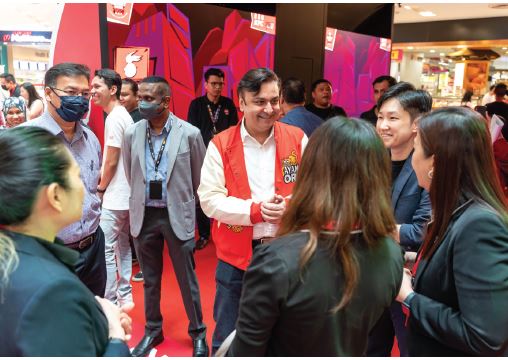
Nehchal Khanna at the launch of Kentucky Town at Sunway Pyramid in July.

The company introduced a new “flywheel” model a year ago, says Khanna, which sets the tone for the newfound culture and encapsulates the distinctive QSR approach to operations. This flywheel is underpinned by four core values: growing people as builders; daring to innovate boldly; never giving up; and putting customers first.

“One of the first priorities was to transform people and their attitudes,” Khanna says. “We knew we needed a set of principles and a culture to which everyone could subscribe. We wanted everyone to behave in a more entrepreneurial way by taking ownership.”

The transformation was imperative, says Khanna, as it would help the company scale and enhance its agility in tackling prevailing market challenges, such as hyperinflation, supply chain disruptions, rising interest rates and evolving consumer demands.

Catalyst for Change

Looking back at the events over the past few years, Khanna notes that the pandemic has played a pivotal role in reshaping the company’s perspectives, fostering better adaptability.

“In some ways, the pandemic has served as a springboard and a catalyst for change for QSR Brands,” he says.

The nationwide lockdowns in Malaysia and the rest of Southeast Asia had an impact on the company’s business, which derived on average 40% of its revenue from dine-in services. “We made a bold decision to pivot very early on, turning to e-commerce and digital channels,” says Khanna.

The decision paid off as QSR Brands successfully concluded the year 2020 with revenue that was “closely comparable” to that of 2019 despite the widespread challenges faced by numerous businesses. 

Khanna also emphasized that none of these changes could have taken off without the strong backing of the board, especially the Chairman, Tan Sri Jamaludin Ibrahim, and the shareholders. “I am really grateful that the board and shareholders gave me the support and confidence to carry these initiatives through. That made all the difference,” he says.

Nehchal Khanna, CEO and Managing Director of QSR Brands Holdings Bhd.

Growth Momentum

Today, QSR Brands has over 1,400 KFC and Pizza Hut restaurants across Malaysia, Singapore, Brunei and Cambodia, and employs over 30,000 people across these markets.

QSR Brands has seen positive growth momentum since the start of 2023, says Khanna, adding that the company has achieved double-digit growth in the first half of the year.

He attributes this success to three key drivers, namely, the company’s people and culture, its new business model and technology.

People at its Core

One of the key initiatives QSR Brands undertook was to further empower its employees, as the company believes that its future success depends on the “scalability of cultural change across the organization.”

Khanna says, “The leadership team is entirely empowered; they have a great deal of autonomy and they are able to pass that down through the ranks.”

The company also emphasizes continuous employee support, exemplified during the pandemic when it chose not to retrench any of its 30,000 employees, in contrast to industry trends.

The company has also set up a special talent development initiative—GROW— grooming around 100 high-potential individuals as next-generation leaders through an in-house MBA-like initiative.

Customers enjoyed Pizza Hut’s newest product range, Melts, at the Genshin Impact fan event.
Take-away kiosks were installed at Pizza Hut to minimize contact post-pandemic

Continuous Innovation

As part of the efforts to refine its business model, Khanna has dedicated substantial time to crafting proprietary frameworks. Notably, the transaction velocity strategy, comprising eight levers, emerged as a standout framework. Khanna says, “Sales growth is really about transaction growth, serving as a direct sales indicator.”

Another lever is menu innovation, an area where QSR Brands excels. New menu items such as the Juicy Whole Chicken, Satay Burger and Melts have not only enticed new customers but also increased repeat visits.

To further enhance the customer’s digital experience, the company launched a new KFC Malaysia mobile app last year, offering e-commerce, gamification, loyalty programs and digital vouchers. Within 11 months post-launch, the app has garnered an impressive 1 million subscribers.

Customers at KFC’s self-ordering kiosks

Looking Ahead

Recognizing that QSR Brands plays an important role in the area of food sustainability, Khanna says the company takes Environmental, Social and Governance (ESG) matters seriously.

“Having a strong governance in place is crucial as it will be the key pillar that supports the group’s environmental and social initiatives,” he says. “We have a new head of governance, and he is taking the lead so that everyone is putting the firm first when making any decisions.”

Looking ahead, QSR Brands aspires to improve its ranking among restaurant operators worldwide, aiming to secure a spot in the top five within the next three to five years. This objective aligns seamlessly with its overarching vision of becoming the foremost food-technology company in ASEAN.


qsrbrands.com


Change Today, Shape The Future

Leading Aboitiz Group’s journey toward becoming the Philippines’ first techglomerate is Sabin M. Aboitiz, Group CEO and Aboitiz Foundation Chairman.

With its current “Great Transformation” to become the Philippines’ first “techglomerate,” Aboitiz is redrawing its Environmental, Social, and Governance (ESG) blueprint by placing people at the center of everything. This approach to “One New Aboitiz” is not a mere strategy; it is a holistic shift that harmonizes technology, business, and humanity. And never has this been more evident than in the work of its corporate citizenship arm, Aboitiz Foundation Inc. (AFI), which is celebrating 35 years of transforming lives for the better.

With its myriad of ESG initiatives spanning digitalization and inclusion, renewable energy, water and forest management, health and safety, climate action, and corporate social responsibility (CSR), Aboitiz Foundation has always been dedicated to sustainability. And the group’s recent focus on becoming a techglomerate amplifies the foundation’s commitment to this cause. By harnessing data science and artificial intelligence, it is not only seeking to solve problems faster and on a larger scale but also striving to shape a sustainable future for mankind.

After more than three decades of primarily building sustainable communities, the foundation now promises to change through three flagship pillars: Future Leaders, Enterprise and Jobs, and Climate Action. Future Leaders centers on STEM education for emerging scientists, engineers, data specialists, forward-thinking leaders and entrepreneurs—people adept at addressing urgent challenges, something the Philippines urgently needs. Enterprise and Jobs aims to reduce the digital divide for MSMEs and cooperative advancement, promoting wealth creation, future-oriented upskilling, and employment. Finally, Climate Action concentrates on co-creating climate-resilient ecosystems through nature-based solutions, encompassing carbon and waste management, adaptation, mitigation, biodiversity oversight and habitat conservation.

Aligning with Global Goals
AFI’s ESG ambitions align with the UN Sustainable Development Goals (SDGs). But what sets it apart is its commitment to addressing these objectives not in isolation, but as an ecosystem of interconnected goals. This synergetic approach combines environmental preservation, social impact, and sound governance to benefit people and communities above all.

Consider the case of biodiversity management, a responsibility in the “E” of ESG. By plugging community involvement into the equation, AFI ensures that the beneficial ripples of ecological preservation reach the communities surrounding these protected areas. This person-centric perspective, coupled with technological advancements, is emblematic of the group’s promise to advance business and communities.

President and CEO Sabin Aboitiz never fails to remind team members that sustainability is always and ultimately about people. From generating employment opportunities and nurturing entrepreneurial growth to bolstering education, the endeavors of the Aboitiz Foundation over the last 35 years mirror this belief. And the foundation’s future collaboration with global partners, such as integrating solutions like plastic waste management technologies, hopes to further underscore this commitment to humanity.

Furthermore, according to Aboitiz, ESG is not a responsibility that should rest solely on corporate shoulders. Individuals play a crucial role in driving sustainable change as much as benefiting from it. “Every choice we make, whether as consumers, investors, or as members of society, has the potential to impact our environment, communities and governance structures,” says Aboitiz. “By understanding and acting upon this, we can pick up the pace of sustainable transformation.”

Putting People First
But what truly sets the foundation apart from many other sustainability programs is its sharp focus on empathy. It seeks to understand the experiences and pain points of its stakeholders, be they employees, shareholders, communities, or beneficiaries of their ESG initiatives. By putting itself in the shoes of those it serves, the foundation uncovers effective and expedient solutions to pressing issues. This is what they call a “techglomerate in action,” which refers to a conglomerate that leverages technology to improve society.

The first batch of women from Toledo City graduated from the Aboitiz Foundation and Connected Women’s Elevate AIDA Program, which aims to train 300,000 women by 2025 by partnering with both public and private institutions. Photo courtesy of the Toledo City Public Information Office.

“It isn’t just about mitigating climate change,” says Aboitiz. “As a techglomerate, we are trying to reshape our past understanding of ESG by putting a unique emphasis on the “S.” The foundation’s belief is clear: people are the heart and soul of all its endeavors, making Aboitiz’s Great Transformation (GT) a cultural revolution for corporations in the Philippines to join.

Through its Future Leaders pillar, the Aboitiz Foundation is nurturing tomorrow’s leaders through its education programs.

Under Sabin Aboitiz’s leadership, the GT is preparing the organization’s employees to address sustainability challenges innovatively and effectively. Just like its business model, the company’s transformation is customer-, stakeholder- and human-centric, reflecting the principle that everything in this world is interconnected through and for human beings. They are both the driving force behind the GT, as well as its ultimate beneficiaries.

Leveraging Technology
As it celebrates this momentous anniversary and journeys forward, Aboitiz Foundation strengthens its commitment to using technology as a lever to fuel its sustainability agenda and ensure better lives for Filipinos. A “Great Transformation” sounds audacious, but it is grounded in the belief that true sustainability can only be achieved when solutions are designed with people at the core. “The challenges of sustainability are a collective responsibility that can be surmounted through collaboration, empathy and innovation,” says Aboitiz Chief Reputation and Sustainability Officer Ginggay Hontiveros-Malvar.

A farmer from one of Aboitiz’s community beneficiaries goes digital through the Foundation’s Enterprise and Jobs project Byaheng Digiskarte.

The techglomerate model is more than just a new operational framework for the foundation. It’s a clarion call for other corporations to reload their sustainability strategies and raise the bar. By embracing the convergence of technology and humanity, businesses can accelerate the journey toward a world where environmental conservation, social responsibility and good governance coalesce for the betterment of people and the planet.

The Aboitiz Foundation story is really about the sustainability of the human race, and it serves as a compelling manifesto for other foundations and corporations to take a page out of. The foundation’s approach hopes to help illuminate the path to a future where corporations do not just contribute to a better world but actually co-create it.

In the ever-evolving realm of ESG, the foundation’s 35-year-old history serves as a strong reminder that businesses have a fundamental role to play in societal change. As the foundation moves forward, the group seems fairly convinced that the GT will not just reshape the way it thinks and acts, but also redefine the very contours of sustainable corporate practice in the Philippines.

https://aboitiz.com/