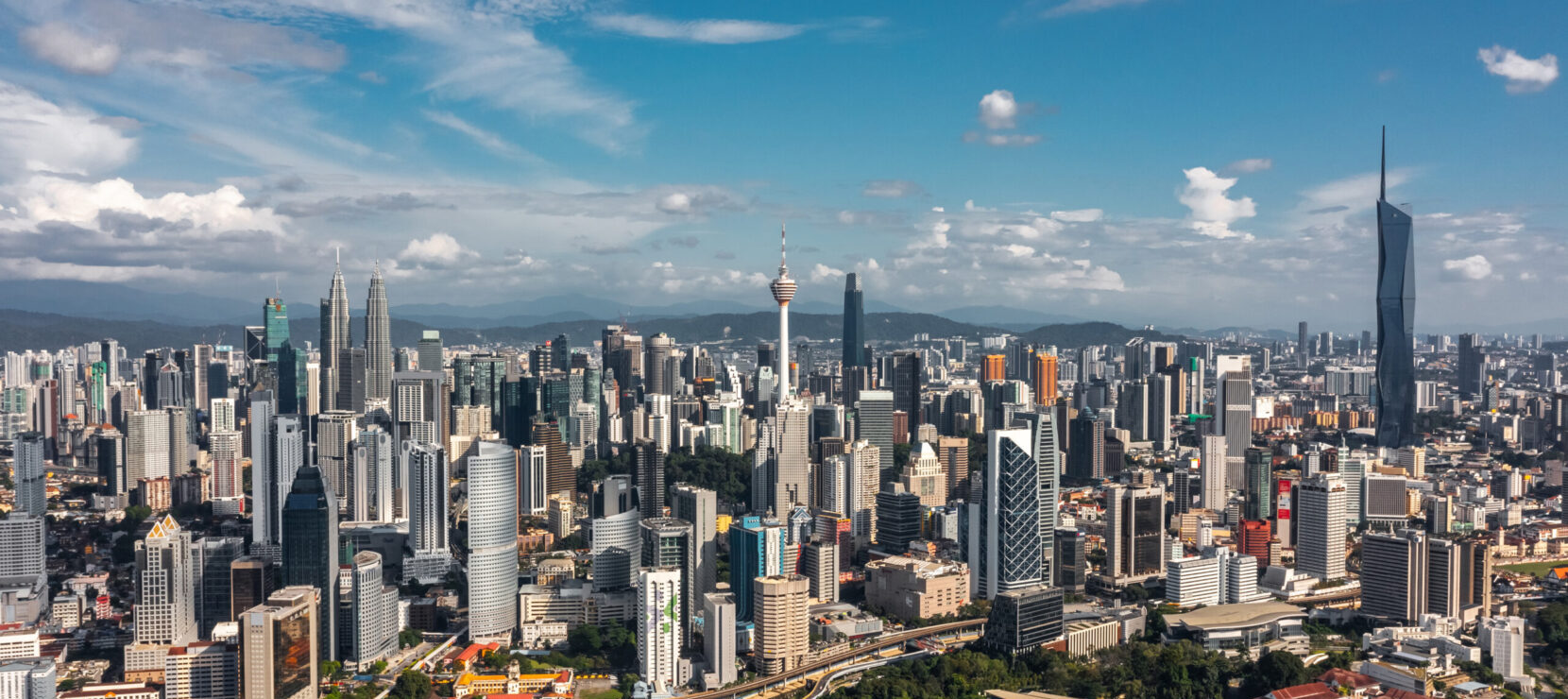
The Malaysian economy remained resilient in the second quarter of 2025, recording 4.4% growth driven by strong domestic demand. Private and public investments expanded on the back of new and ongoing initiatives, including digital and construction projects. The services, manufacturing and construction sectors also posted solid performances.
In July 2025, the government unveiled the 13th Malaysia Plan, an economic roadmap for 2026 to 2030. The five-year blueprint outlines a strategic path toward building a resilient, inclusive and sustainable economy, with a projected GDP growth of 4.5% to 5.5% annually. Backed by a total investment commitment of RM611 billion (US$145 billion), the plan targets the development of high-growth, high-value industries, with a focus on advancing key sectors such as digital, renewable energy and semiconductors. It also aims to increase Malaysia’s exports of electronic and electrical products to RM1 trillion (US$238 billion) by 2030, reinforcing the country’s push for “Made by Malaysia” products and services while creating new avenues for growth amid global economic headwinds.
Meanwhile, AI remains a critical enabler for Malaysia’s future. Malaysia Digital Economy Corporation (MDEC) is leading the nation’s ambition to become an “AI Nation” by integrating AI across the economy, government and society. MDEC envisions AI as the foundation for smarter public services, predictive policymaking, and ethical, people-first applications. Supporting this vision is the development of a thriving ecosystem encompassing research, talent development and industry adoption. This core strategy aims to transform Malaysia into a hub for AI innovation and investment in Southeast Asia.
Sustainable, Future-Ready Cities
The Johor-Singapore Special Economic Zone (JS-SEZ) is well-positioned to spur economic growth, create skilled jobs and strengthen regional competitiveness.
The JS-SEZ builds on the foundation of Iskandar Malaysia, the country’s first economic corridor established in 2006. Iskandar Investment Berhad (IIB), the investment holding arm behind Iskandar Malaysia, is committed to creating an inclusive and sustainable metropolis at Iskandar Puteri, a flagship zone within the economic corridor. IIB is developing Iskandar Puteri into one of Malaysia’s most future-ready townships, a smart city featuring a net zero carbon central business district (CBD) and advanced tech hubs. A 2,270-acre area of Medini has been rebranded as Medini Innopolis, a planned smart city and CBD for 65,000 residents by 2030.
As sustainable urban development becomes more crucial than ever, property developers like Eastern & Oriental Bhd (E&O) integrate ESG principles into their development philosophy. E&O’s developments—Andaman Island in Penang and Conlay by E&O in Kuala Lumpur—incorporate practical elements such as ecological buffers, rainwater harvesting and renewable energy systems, lowering operating costs for residents and attracting ecominded buyers. By prioritizing enduring value, rigorous design standards and environmental responsibility, E&O aims to create communities built to last for generations.
Energy Transition Journey
As ASEAN Chair this year, Malaysia is uniquely positioned to unite member states in advancing the region’s energy security and transition goals. In line with this leadership role, PETRONAS is serving as a catalyst for regional collaboration, bridging policy with projects and aligning national ambitions with shared regional objectives.
PETRONAS is approaching the energy transition journey not just as an operator of assets, but as a partner in building an integrated, future-ready energy ecosystem. At the recent Energy Asia 2025, 14 MoUs were signed, covering upstream partnerships, LNG supply and other initiatives, highlighting that a successful energy transition hinges on strategic alignment of capital, innovation and execution.
As Malaysia charts its path toward developed nation status by 2030, its commitment to resilience, innovation and inclusive growth remains clear. The nation continues to strive for excellence, shaping a future that is competitive and sustainable.