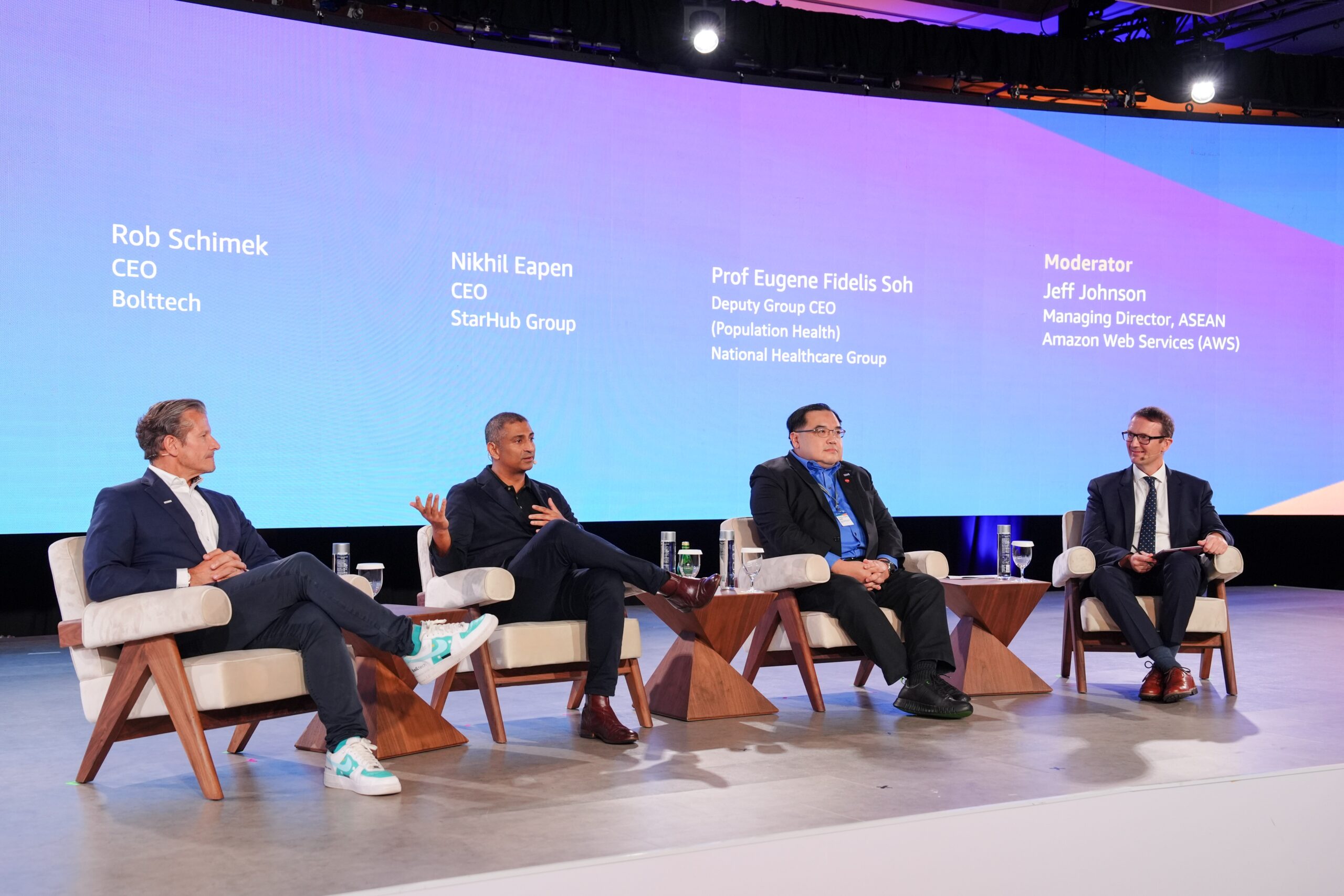

(L-R): Rob Schimek, CEO, bolttech; Nikhil Eapen, CEO, StarHub Group; Prof Eugene Fidelis Soh, Deputy Group CEO (Population Health), National Healthcare Group; Jeff Johnson, Managing Director, ASEAN, AWS
AWS ExecLeaders Singapore, held in conjunction with AWS Summit Singapore on May 29, 2025 at the Sands Expo & Convention Centre, brought together prominent business leaders and senior executives to explore how they are leveraging technology to drive their organizations forward. Themed “From Possibility to Practice,” ExecLeaders is the dedicated executive forum of AWS Summit, offering C-suite leaders and industry experts a platform for strategic dialogue on digital innovation, leadership and the critical business imperatives of transformation, agility and resilience.
Priscilla Chong, Country Manager at AWS Singapore
Priscilla Chong, Country Manager of AWS Singapore, opened her welcome address at the summit by reflecting on Singapore’s transformation into a global powerhouse, as the nation celebrates 60 years of independence. Chong highlighted that this journey has been driven by three key pillars: people and culture, governance and process, and technology.
“Singapore succeeded because of its unique cultural DNA—rooted in multiculturalism, meritocracy and the relentless pursuit of excellence,” she said. “Today, teaching hard skills alone is no longer enough. We must combine the human touch with the capabilities of AI and technology.”
To support this vision, AWS has committed S$12 billion (US$9.3 billion) to strengthen Singapore’s digital infrastructure through 2028, expanding cloud and AI adoption. The company is also partnering with the Singapore government through various initiatives, such as SkillsFuture, to help prepare the workforce for the future.
“With the recent launch of Amazon Bedrock and the expansion of other AI services in Asia-Pacific and Singapore, we’re not just helping organizations deploy AI—we’re also taking a sector-specific approach to support key industries such as manufacturing, financial services and retail,” she added.
Miriam McLemore, Enterprise Strategist at AWS
Elevate, Energize, Envision
Miriam McLemore, Enterprise Strategist at AWS, emphasized during her keynote that agility is crucial to driving innovation. She encouraged businesses to view constraints not as obstacles but as accelerators of progress. With a strong foundation in place, leaders can drive transformation by adopting three key practices: elevate, energize and envision.
McLemore said that to elevate, organizations must break free from traditional governance structures that slow innovation. For example, decentralizing by default can help avoid bottlenecks. To energize teams, leaders should equip them with the right skills, capabilities and tools. Having small, empowered teams with a clear mission can be incredibly powerful for any organization. Creating an environment of continuous feedback also fuels learning, sparks innovation and builds collective intelligence. She encouraged companies to reimagine how they onboard new capabilities as well.
“Think about different ways of introducing new capabilities to your organization so that you drive ownership, curiosity, mastery and clarity of purpose,” McLemore said.
Finally, to envision real transformation, leaders must step up and be bold. “Transformation is about having a clear vision,” she noted.
Lead the AI Transformation
The first panel, titled “Navigating the GenAI Revolution: Strategies for Executive Leadership,” was moderated by Jeff Johnson, Managing Director, ASEAN, AWS. The panel featured Nikhil Eapen, CEO of StarHub Group; Rob Schimek, CEO of bolttech and Professor Eugene Fidelis Soh, Deputy Group CEO (Population Health) of National Healthcare Group.
Eapen shared insights on how StarHub modernized its digital infrastructure by adopting a hybrid multi-cloud approach to enhance customer and user experiences across different end customers. The telco is utilizing agentic AI to unify technical data for deeper insights into customer behavior.
Meanwhile, the National Healthcare Group, serving 1.5 million residents in central and northern Singapore, is harnessing data and AI to improve the quality of life of an aging population and “return the ‘health’ to healthcare,” said Prof Soh. He noted that Singaporeans have one of the longest life expectancies in the world at 85 years but spend the last decade in poor health. The challenge is to close the gap between lifespan and healthspan by eliminating those 10 unhealthy years per individual, collectively adding 15 million healthy years to the population.
“AI has helped the organization better understand population needs, develop risk segmentation models and more precisely target screening efforts,” Prof Soh said. “It also enables timely interventions. The data we bring together supports an integrated model of care we call the ‘river of life’—and AI powers this journey.”
Schimek explained that bolttech, as an insurtech, operates at the intersection of insurance and technology. “AI is transforming every part of the insurance value chain—from sales and risk assessment to underwriting and customer service,” he said. Technology enables bolttech to offer dynamic pricing and hyper-personalization, delivering tailored, affordable and accessible products to its clients.
(L-R): Mai-Lan Tomsen Bukovec, VP of Technology, AWS; Lai Pei-Si, Group CEO, GXS Bank; Rana Wehbe Watson, Editorial Director, Forbes Asia
Adapt to Stay Resilient
The second panel, titled “Breaking the Code: The Role of Women Leaders in Advancing Organizations and Technology” and held in partnership with Forbes Asia, was moderated by Rana Wehbe Watson, Editorial Director at Forbes Asia. The panel featured Mai-Lan Tomsen Bukovec, VP of Technology at AWS and Lai Pei-Si, Group CEO of GXS Bank.
Bukovec noted that AI innovation is accelerating at an unprecedented pace, making AI proficiency essential for everyone as AI assistants become embedded in nearly every workflow. Leadership is also evolving, she noted, with C-suite executives across industries now deeply engaged with AI to stay ahead and lead their organizations from the front.
Agreeing with Bukovec, Lai emphasized that leadership must be proactive in navigating what could be the most significant technological shift in a decade. She highlighted that adaptability and an open mindset are crucial for future resilience. As a digital bank, GXS Bank focuses on driving financial inclusion, with AI playing a critical role in helping solve real-world problems, such as addressing underserved needs in Southeast Asia.
In response to how women leaders could create more opportunities for other women to advance in the tech industry, Bukovec said, “I’m a big believer of human potential being everywhere, regardless of one’s background or gender. Anyone who comes through the door is coming through based on the merits of their inherent talent.”
She highlighted that the next generation of AI with speech capabilities will lower barriers to entry, allowing people to engage with technology without needing deep technical knowledge. “I think that’s going to have an incredible effect on the workforce of tomorrow; it will bring everyone through the door,” Bukovec added.
The AWS Summit Singapore was the second installment in the AWS 2025 ASEAN Summit series, following the first event in Bangkok and ahead of the next in Jakarta.
Across Asia-Pacific, more than 350 million people have limited access to electricity, while 150 million have none at all. Southeast Asia’s (SEA) power needs will more than double by 2050 compared to 2022, while global electricity use from data centers is expected to exceed twice the current levels by 2030.
The convergence of electrification, industrialization and digitalization means Asia faces a potential energy crisis: how to expand access while simultaneously decarbonizing. The region cannot meet this challenge through government action alone. While the private sector has both the capital and the capacity to accelerate solutions, it must work hand-in-hand with policymakers.
Anderson Tanoto, Managing Director at RGE, with global operations in the bio-based resources and energy sectors, explains: “No single country, company or institution can deliver the energy transition on its own. The private sector brings innovation, capital and speed; governments provide vision and enabling frameworks. Together, we can build an energy system that is sustainable, inclusive and built to last.”
RGE and TotalEnergies signed an MoU to develop a utility-scale solar project in Riau, Indonesia.
Partnerships That Scale Impact
Energy transition requires collaboration that crosses industries and borders. RGE’s joint venture with TotalEnergies, Singa Renewables, shows what is possible. Supported by the governments of Indonesia and Singapore, the partnership is developing a utility-scale solar and battery energy storage system in Riau, Indonesia.
When operational, the project will supply green electricity to both Indonesia and Singapore while stimulating investments, creating skilled jobs and strengthening regional energy security. The collaboration marries RGE’s deep local roots with TotalEnergies’ global expertise in utility-scale renewables.
Singapore’s Energy Market Authority has already granted Singa Renewables a conditional license for up to 1 gigawatt (GW) of solar energy from Indonesia, a step aligned with Singapore’s target of 6 GW of low-carbon imports by 2035. Building on this, RGE and TotalEnergies signed an agreement with Singapore Energy Interconnections to co-develop a subsea interconnector, a vital step toward the ASEAN Power Grid, which aims to strengthen cross-border electricity trade and accelerate an equitable transition.
A rendering of Apical’s sustainable aviation fuel facility in Spain
Innovation Beyond Electricity
The transition extends beyond power generation. RGE is advancing a waste-to-value strategy by transforming waste and residues from its agribusiness Apical’s global supply chain into sustainable aviation fuel (SAF). Through Apical, it has partnered with Spain’s Moeve to build Southern Europe’s largest SAF plant. Scheduled to be operational in 2026, the facility will produce 500,000 tonnes of SAF annually, reducing carbon emissions by up to 80% compared to conventional jet fuel.
In parallel, RGE is investing in liquefied natural gas (LNG) as a transition fuel. Together with Canada’s Enbridge Inc., it is developing Woodfibre LNG, the world’s first net zero LNG export facility, in British Columbia.
Tanoto notes: “The toughest sectors to decarbonize demand innovation and collaboration on multiple fronts—and the private sector can scale and share expertise across regions.”
Unlocking SEA’s Renewable Potential
The International Renewable Energy Agency (IRENA) estimates SEA’s renewable potential to be 40 to 50 times greater than its current electricity generation. But scale requires more than ambition. Derisking large-scale projects is critical to attracting capital and accelerating deployment.
Governments hold the keys by setting clear, consistent policies that endure beyond political cycles, establishing supportive regulations and cross-border agreements, and designing mandates and targeted subsidies to overcome first-mover risks.
Private players, meanwhile, must manage risks within their control: access to land, building enabling infrastructure, proving technical feasibility, and ensuring benefits flow equitably across markets. Shared value is essential for regional buy-in.
From Ambition to Action
Asia’s energy transition is not just an environmental imperative; it is an economic one. Reliable, low-carbon energy underpins growth, competitiveness and social inclusion.
RGE’s experience shows that commercial viability and long-term impact can go hand in hand. With scale, innovation and cross-border collaboration, the private sector can unlock the capital and expertise to complement government leadership.
Says Tanoto: “Energy is the foundation of progress. If Asia can expand access while decarbonizing, we won’t just meet demand. We will define how economies can grow sustainably, inclusively and competitively for generations to come.”
The Malaysian economy remained resilient in the second quarter of 2025, recording 4.4% growth driven by strong domestic demand. Private and public investments expanded on the back of new and ongoing initiatives, including digital and construction projects. The services, manufacturing and construction sectors also posted solid performances.
In July 2025, the government unveiled the 13th Malaysia Plan, an economic roadmap for 2026 to 2030. The five-year blueprint outlines a strategic path toward building a resilient, inclusive and sustainable economy, with a projected GDP growth of 4.5% to 5.5% annually. Backed by a total investment commitment of RM611 billion (US$145 billion), the plan targets the development of high-growth, high-value industries, with a focus on advancing key sectors such as digital, renewable energy and semiconductors. It also aims to increase Malaysia’s exports of electronic and electrical products to RM1 trillion (US$238 billion) by 2030, reinforcing the country’s push for “Made by Malaysia” products and services while creating new avenues for growth amid global economic headwinds.
Meanwhile, AI remains a critical enabler for Malaysia’s future. Malaysia Digital Economy Corporation (MDEC) is leading the nation’s ambition to become an “AI Nation” by integrating AI across the economy, government and society. MDEC envisions AI as the foundation for smarter public services, predictive policymaking, and ethical, people-first applications. Supporting this vision is the development of a thriving ecosystem encompassing research, talent development and industry adoption. This core strategy aims to transform Malaysia into a hub for AI innovation and investment in Southeast Asia.
Sustainable, Future-Ready Cities
The Johor-Singapore Special Economic Zone (JS-SEZ) is well-positioned to spur economic growth, create skilled jobs and strengthen regional competitiveness.
The JS-SEZ builds on the foundation of Iskandar Malaysia, the country’s first economic corridor established in 2006. Iskandar Investment Berhad (IIB), the investment holding arm behind Iskandar Malaysia, is committed to creating an inclusive and sustainable metropolis at Iskandar Puteri, a flagship zone within the economic corridor. IIB is developing Iskandar Puteri into one of Malaysia’s most future-ready townships, a smart city featuring a net zero carbon central business district (CBD) and advanced tech hubs. A 2,270-acre area of Medini has been rebranded as Medini Innopolis, a planned smart city and CBD for 65,000 residents by 2030.
As sustainable urban development becomes more crucial than ever, property developers like Eastern & Oriental Bhd (E&O) integrate ESG principles into their development philosophy. E&O’s developments—Andaman Island in Penang and Conlay by E&O in Kuala Lumpur—incorporate practical elements such as ecological buffers, rainwater harvesting and renewable energy systems, lowering operating costs for residents and attracting ecominded buyers. By prioritizing enduring value, rigorous design standards and environmental responsibility, E&O aims to create communities built to last for generations.
Energy Transition Journey
As ASEAN Chair this year, Malaysia is uniquely positioned to unite member states in advancing the region’s energy security and transition goals. In line with this leadership role, PETRONAS is serving as a catalyst for regional collaboration, bridging policy with projects and aligning national ambitions with shared regional objectives.
PETRONAS is approaching the energy transition journey not just as an operator of assets, but as a partner in building an integrated, future-ready energy ecosystem. At the recent Energy Asia 2025, 14 MoUs were signed, covering upstream partnerships, LNG supply and other initiatives, highlighting that a successful energy transition hinges on strategic alignment of capital, innovation and execution.
As Malaysia charts its path toward developed nation status by 2030, its commitment to resilience, innovation and inclusive growth remains clear. The nation continues to strive for excellence, shaping a future that is competitive and sustainable.
FedEx delivers swift, reliable shipping solutions for businesses worldwide.
As businesses recalibrate their supply chains in response to geopolitical shifts and regulatory changes, the Asia-Europe trade lane is gaining importance.
Europe is ASEAN’s third-largest trading partner, with trade volumes driven by sectors such as healthcare, retail fashion, high-tech and industrial goods, fueling both B2B and B2C flows between the two regions.
Looking ahead, ASEAN’s exports are projected to increase by around 90% by 2031, far outpacing global trade growth of under 30%. Meanwhile, Asia’s share of global GDP is expected to rise from around 55% today to nearly 58% by 2030.
Much of the growth is being driven by key manufacturing and innovation hubs across Southeast Asia. Vietnam has emerged as a leading exporter of electronics, while Malaysia plays a critical role in the global semiconductor supply chain.
These markets, along with Thailand’s strong automotive production and Singapore’s advanced logistics and biomedical sectors, are anchoring Southeast Asia’s contribution to the region’s export growth.
This robust trade activity along the Asia-Europe lane will continue to fuel growing demand for reliable cross-continental shipping solutions. FedEx is positioning itself at the heart of this momentum, off ering a faster, more connected logistics network to help businesses respond to changing market dynamics and capitalize on emerging opportunities.
“By leveraging our agile network, we’re enabling businesses across Asia to tap into faster, more direct access to key European markets.” – Kawal Preet President, APAC, FedEx
“Trade flow patterns are never static. We’re constantly monitoring how supply chains are shifting so we can anticipate what’s next and stay ahead of our customers’ needs. Trade between Asia and Europe is becoming more diverse and multidirectional. Asia is not only exporting a broader range of high-value goods—it’s also emerging as a significant consumer of European products. By leveraging our agile network, we’re enabling businesses across Asia to tap into faster, more direct access to key European markets,” says Kawal Preet, President, APAC, FedEx.
To meet growing demand, FedEx introduced a new flight route last year connecting its Asia-Pacific hub in Guangzhou to Bengaluru, through to the UAE, Liège and Paris, further enhancing connectivity between China, India, the Middle East and Europe. Operating five times a week, the route offers greater flexibility and faster delivery for customers across this critical trade lane.
FedEx has also streamlined the export clearance process for high-value shipments from South China, improving delivery speed and operational efficiency across the region.
Within Europe, businesses can take advantage of FedEx’s integrated air-and-road infrastructure. Anchored by key logistics hubs in Paris, France; Cologne, Germany; and Liege, Belgium, the network supports over 550 pick-up and delivery stations across 45 countries and territories, and facilitates the sorting of more than two million packages every day. The company’s road network is also one of the fastest in Europe, enabling quick deliveries across the region.
“Our European network is a powerful backbone for global trade, designed for speed, scale and reliability,” Preet adds.
Amid shifting trade dynamics between Asia and Europe, businesses are seeking faster, more reliable ways to move goods across borders. FedEx is meeting this demand with expanded routes, integrated infrastructure, and by helping customers reimagine their supply chains through digital transformation and AI tools. These tools, including touchless, frictionless clearance, drive unparalleled resilience, efficiency and scalability for businesses. From pickup to delivery, FedEx embeds intelligence and automation into its air and ground network, making logistics smarter and more predictable. With advanced technology, FedEx is creating a flexible and efficient system that helps customers adapt to changing market conditions and opens doors to new growth.
Preet says: “Customers today demand end-to-end visibility, flexibility and control. That’s why we’re continuously advancing our network and leveraging technology to meet these expectations. We are building smarter, more resilient logistics infrastructure that enables sustainable growth and seamless trade between Asia and Europe.”
It took decades of grit, deal-making and sacrifice for many of Asia’s first-generation entrepreneurs to build their family empires. Yet despite the scale of these fortunes, history shows that most family wealth doesn’t survive beyond the third generation.
A 20-year study by US consultancy The Williams Group, involving over 3,000 wealthy families, found that 70% lost their wealth by the second generation, and 90% by the third.
This should raise alarm bells in Asia, where a massive generational wealth transfer worth US$5.8 trillion is underway—and many families are woefully underprepared.
Navigating Wealth Transfer Complexities
One of the key challenges during this transition is how the older generation can transfer their wealth to the next without jeopardizing family harmony. There are likely going to be differing views on how to run the family business or preserve the family legacy.
These complexities have reshaped the role of wealth managers. Today, wealth management goes beyond growing a portfolio—it’s about tailoring financial plans to the needs of each key family member. Additionally, high net worth (HNW) families are increasingly demanding sophisticated investment products and strategies.
Jeffrey Yap, Managing Director and Regional Head of Wealth Management at Hong Leong Bank
Wealth managers are also the “bridge” that connects each family member, helping HNW families to better understand their assets, capital structure, values and vision for the future. All of this will help HNW families structure their wealth to meet their goals.
Jeffrey Yap, Managing Director and Regional Head of Wealth Management at Hong Leong Bank (HLB), says families building generational wealth often grapple with “complex financial considerations like intricate tax laws and sophisticated estate planning.”
He adds, “Beyond finances, they face the delicate task of managing family dynamics, which include fostering communication, preventing entitlement and preparing the next generation for responsible stewardship. Protecting privacy and reputation also becomes a significant concern amid their affluence.”
A Strategic Alliance With A Shared Philosophy
In 2025, HLB, the Malaysian financial services powerhouse with a strong regional presence, joined forces with Lombard Odier, Switzerland’s oldest private bank, in a strategic alliance to serve the growing wealth segment under HLB Private Bank, the bank’s private banking arm. This collaboration combines HLB’s extensive understanding of the Southeast Asian market, including its operations in Singapore (HL Bank Singapore), Hong Kong, Vietnam and Cambodia, with Lombard Odier’s two centuries of global wealth management expertise.
Commenting on this partnership, Yap says, “We want to be our clients’ strategic partner in legacy building because for HNW families, wealth isn’t just about assets, it’s about a lasting purpose and future generations.”
Vincent Magnenat, Asia Group Regional Head and Global Head of Strategic Alliances at Lombard Odier
Vincent Magnenat, Lombard Odier’s Asia Group Regional Head and Global Head of Strategic Alliances, says the partnership with HLB was the right fit as they share common wealth management vision and values.
“We resonate with HLB’s 120-year legacy and culture of innovation and technology adoption in financial services,” says Magnenat. “Our strategic alliance provides a holistic, ‘glocal’ proposition—strong global expertise paired with local insights and perspectives to empower leading onshore HNW clients to achieve their financial ambitions and aspirations.”
Yap says, “We hope the partnership through HLB Private Bank will benefit clients with thoughtful, responsible and compelling solutions for multi-generational wealth transfer and legacy planning, drawing on Lombard Odier’s expertise and first-hand experience.”
Thailand is positioning itself for the next wave of economic growth by harnessing opportunities in innovative, high-potential sectors. While manufacturing remains a cornerstone of the economy, the country is increasingly shifting its focus toward areas such as data centers, artificial intelligence, electric vehicles, precision agriculture and food technology. This strategic pivot is vital to enhancing Thailand’s global competitiveness amid evolving global dynamics.
The Thai economy is projected to expand by 2.3% in 2025, with export growth supporting manufacturing and related service sectors in the first half of the year. Thailand continues to draw strong foreign investment, reflecting investor confidence in its robust infrastructure, integrated supply chains, skilled workforce, regional connectivity and pro-business policies. In the first half of 2025, foreign investment reached approximately 111.5 billion baht (US$3.5 billion), a 30% increase compared to the same period in 2024. Of that amount, 56% was directed to the Eastern Economic Corridor (EEC). These investments spanned a range of sectors, including retail trade, R&D services for engineering plastics, data center services, digital platform development and contract manufacturing.
Shift to a Low-Carbon Future
A central part of Thailand’s industrial reform lies in its push toward a green and circular economy. The country is committed to transitioning toward a low-carbon future, aiming to achieve carbon neutrality by 2050 and net zero emissions by 2065.
B.GRIMM, one of Thailand’s largest private energy producers, plays a key role in the nation’s energy transition and pursuit of net zero goal. More than a business, B.GRIMM has contributed to Thailand’s technological, scientific, cultural and social advancement. At the hear t of B.GRIMM’s operations is its vision of “Empowering the World Compassionately,” reflecting an ethos that business can thrive in harmony with nature and community. This philosophy underpins the company’s GreenLeap – Global and Green strategy which drives sustainable growth guided by four core values: positivity, partnership, professionalism and pioneering spirit.
Another leading Thai conglomerate, Siam Cement Group (SCG), is also contributing to a low-carbon future through its innovations. In 2023, SCG introduced Thailand’s first certified low-carbon cement. Together with coordinated policies, the company believes that its broader adoption can accelerate decarbonization in construction and unlock socio-economic value, not just in Thailand but also in developing countries. SCG also invests in R&D to develop other solutions such as green polymers and recyclable packaging that help reduce environmental impact across industries.
Real Estate Recovery
Meanwhile, the real estate sector, one of the key drivers of the Thai economy, is showing signs of recovery. Investments in the EEC are creating spillover effects, driving residential demand alongside industrial growth. Luxury developments and branded residences in Bangkok and beyond continue to attract interest from both local and international buyers.
SC Asset’s latest development, SONLE Residences, located on a rare freehold plot in Bangkok’s Ratchadaphisek area, reflects the demand in the ultra-luxury market. Comprising five exclusive homes, SONLE Residences is a manifestation of SC Asset’s long-term vision. These homes are designed with intentionality, sustainability and craftsmanship, and are meant to serve as lasting legacies for their owners. In a market of ten marked with uncertainty, SONLE Residences embodies prudent assurance, offering clarity, permanence and a home that reflects thoughtful living beyond wealth.
With market watchers optimistic about the real estate outlook, the sector is expected to support economic growth as Thailand continues to pursue opportunities amid global uncertainty and domestic challenges. By embracing innovation and investing in future-ready industries, the country is charting a path toward long-term growth.
Jaime Vallés, Vice President of AWS Global Sales, Asia Pacific and Japan
The most successful organizations aren’t the ones with the most ideas, but the ones that can turn ideas into measurable business impact, fast. Across Asia-Pacific, we have seen this play out time and again; businesses that build innovation into their operating model are better equipped to respond to change, serve customers and lead in their industries.
At AWS, this has been our experience as well. Innovation is in our DNA. And it doesn’t start with a whiteboard or a brainstorming session, but with a customer problem. Every new feature, service or capability we have built in the region stems from a real customer need, whether explicitly stated or not.
More than 90% of new AWS features come directly from customer feedback. If something doesn’t address a real challenge or improve the customer experience, we don’t pursue it. This customer-first approach has resulted in a practical, repeatable methodology that organizations of all sizes can adapt and scale. The challenge is while technology can unlock possibilities, it’s culture and people that turn this potential into tangible business outcomes.
Building an Innovation Engine
At AWS, we’ve developed a powerful engine that turns customer feedback into continuous innovation. This engine runs on four essential components: our culture of innovation, our experimental builder mindset, our proven mechanisms and our flexible architecture. Together, these elements help organizations make innovation part of their daily rhythm, not an afterthought.
Turning ideas into results consistently takes more than good intent. At AWS, we use defined mechanisms that ensure clarity and accountability. One example is our “Working Backwards” concept, written narratives that start with the customer and work backward to create solutions. This sharpens the focus on customer outcomes and transforms vague ideas into concrete solutions.
We have also designed our technical and organizational systems to keep this engine running smoothly and enable rapid innovation. Our use of microservices and APIs lets teams test, build and launch without waiting for large-scale system overhauls. This architecture allows us to test hypotheses quickly, learn from failures and iterate rapidly.
Cultivating a Day 1 Culture
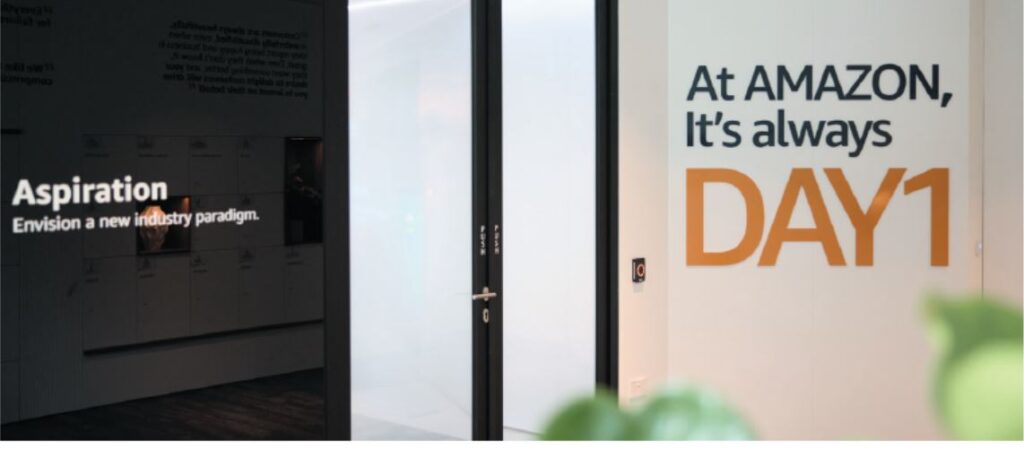
At Amazon, we often say it’s always Day 1, meaning we maintain the agility and customer obsession of a startup, even at our scale. This mindset shapes how we approach innovation. While mechanisms and architecture provide the foundation, culture is what determines whether innovation actually happens. We cultivate builders who think long-term, have an enormous level of curiosity and aren’t afraid to push boundaries. Our culture empowers teams to take intelligent risks, experiment, learn fast and fully own their ideas – including their failures.
“While it’s a huge tech company, it’s not actually the tech, but the culture and the people that were Amazon’s single most significant contribution to our transformation. They really live the culture and the values, and definitely we would not be where we are today without them,” says Dennis Omila, Executive Vice President and Chief Transformation Officer, UnionBank of the Philippines.We encourage experimentation – even if it means getting things wrong sometimes. Intelligent failure is a critical part of the learning process. What matters is whether a team can extract insights and pivot quickly on what they learned.
Finally, we have designed our organization to support innovation at scale. Leaders own specific outcomes with full accountability. Meanwhile, our “two-pizza team” model (small teams that can be fed with just two pizzas) ensures that groups remain small and agile, enabling them to make decisions quickly and own their outcomes. Most importantly, our organizational structure puts decision-making authority as close to the customer as possible.
Clear ownership, fast decisions and alignment around customer outcomes help us move from ideas to results quickly – and help our customers do the same.
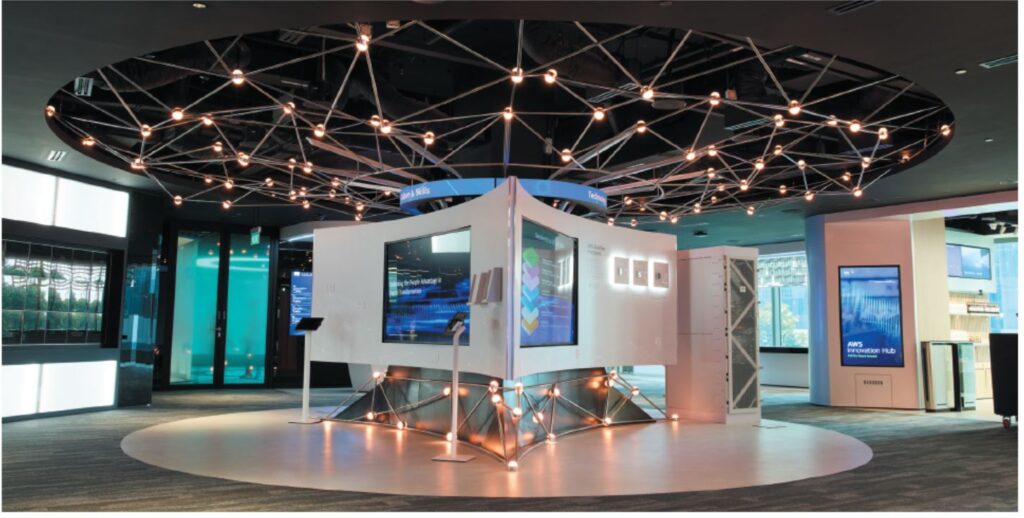
AWS Innovation Hub
Bringing Innovation to Life
The ability to respond to change by leveraging innovation has become table stakes in today’s environment, where digital-native competitors are disrupting established players, customers expect more and wait less, and technology cycles are accelerating.
Our customers tell us that while they realize the imperative, they are struggling to find a catalyst to accelerate their transformation. Working backward from this, we created the AWS Innovation Hub in Singapore. Rather than another corporate showcase, it’s a hands-on workspace where leaders from across the region experience how innovation happens at Amazon and develop concrete next steps for their own transformation journeys. Visitors practice using our mechanisms, experiment with our frameworks and witness our customer-obsessed innovation in action.
Through industry-specific use cases, we demonstrate how AWS is helping transform businesses across the region. More than 90,000 startups in Asia-Pacific are using AWS to solve complex challenges, scale rapidly and stay ahead. Our real-world examples demonstrate the best of Amazon, AWS Partner Network and customer co-innovation with real-world solutions to solve real-world problems. We highlight locally optimized solutions with proven business and societal value: from financial services applications that expand access for the unbanked to healthcare solutions that improve access in remote areas. Rather than leaving with just inspiration, customers leave with a clear action plan of what they can do next and how to do it.
Amazon’s Day 1 culture drives innovation.
Innovation That Lasts
The journey doesn’t stop when a customer leaves the Hub. We continue working with organizations to build internal capability, refine their processes and keep moving them forward. In addition to business transformation, we’re focused on helping organizations use technology to solve meaningful challenges across the region to create lasting positive impact in our Asia-Pacific and Japan communities.
The Innovation Hub is much more than a collection of demos; it’s where we bring together our culture of innovation, cutting edge technology and proven mechanisms to solve real challenges. We co-innovate with customers and partners to build practical solutions, bridge essential skill gaps, prototype and validate ideas rapidly, and create responsible approaches to scalable digital transformation.
For CEOs and business leaders ready to transform their business and reimagine customer experiences, the AWS Innovation Hub offers a path forward. It’s where visionaries come together to build the capabilities needed to pull the future forward, creating meaningful impact that extends beyond business to benefit billions of people across Asia-Pacific and Japan.
The AWS Summit Bangkok, held on April 29 at the Queen Sirikit National Convention Center, drew over 5,000 attendees. As the first event in the 2025 ASEAN Summit series, it explored the theme “From Possibility to Practice,” offering insights into key drivers of change and how innovation and transformation can be accelerated across the region.
The Bangkok Summit is also a celebration of the AWS Thailand Region, launched in early 2025, and the organization’s 10th year in the country. AWS has committed to investing US$5 billion in Thailand by 2037 to drive innovation and boost cloud infrastructure, offering local businesses, startups and public sector organizations access to advanced cloud computing services.
Vatsun Thirapatarapong, Country Manager, Thailand, AWS
Among the notable speakers at the ExecLeaders was Ben Cabanas, WW Director of Technology and Customer Solutions at AWS. Cabanas noted the AI transformation sweeping across industries, citing how AWS customers are leveraging tools such as Amazon Q and Amazon Bedrock to improve customer service, execute complex workflows, analyze data and boost productivity. He emphasized the importance of improving AI literacy and building fluency in the workforce, “as AI will evolve more rapidly than any other transformative technology.”
He said those who can harness the power of AI, and do so quickly, will be an asset to any organization. He noted that agentic AI systems have quickly become the next step change, and it will further drive significant transformation.
Navigating the AI Journey
The first panel discussion, moderated by Jeff Johnson, Managing Director, ASEAN, AWS, delved into how executive leaders can effectively steer their organizations through the generative AI (GenAI) revolution.
Surachai Hirannitichai, EVP of Digital Technology & Transformation at Big C, shared that the company is prioritizing AI transformation this year. Big C has successfully integrated AI into its e-commerce operations, boosting the add-to-cart rate by 20% and reducing the workload for its contact center staff while improving operational efficiency. The company is now leaning further into the use of agentic AI, which has the ability to execute more complex, goal-oriented tasks with minimal human supervision.
True Corporation is working with AWS to develop an AI-powered business network intelligence center, a 24/7 network monitoring center that helps to improve the organization’s network services, said Prathet Tankuranun, True Corporation’s Chief Technology and Information Security Officer. He added that the vision is to link business data to this monitoring center to extract new customer insights, increase sales sites, upgrade capacity and more.
(L-R): Jun Hasegawa, Founder & Group CEO, Omise; Surachai Hirannitichai, EVP Digital Technology & Transformation, Big C; Prathet Tankuranun, Chief Technology & Information Security Officer, True Corporation; Jeff Johnson, Managing Director, ASEAN, AWS
Omise Founder & Group CEO Jun Hasegawa said, “As a fintech company, we are always innovating. We have a lot of rich data but at the same time, we also struggle with how we can utilize this data to benefit our end users.”
Omise is now using AWS Bedrock and QuickSight to speed up processes and customer onboarding. These tools help analyze data and simplify payment routing systems for its customers. Hasegawa said that Omise staff are encouraged to use AI tools to improve efficiency, especially for repetitive tasks, so they can focus more on creative work that only humans can do.
Shifting the focus to the future, Johnson asked the panelists to predict the technological possibilities they see on the horizon.
“I think most of the digital transformation initiatives will rely heavily on GenAI or even agentic AI in the future,” said Surachai. “We need to choose the right solutions but most critical is a clear direction in the organization.”
Prathet said, “AI will help us, not replace us. It will do the things that we hate to do, like repetitive and mundane tasks.”
Hasegawa predicted that the second half of 2025 will see the rise of artificial general intelligence, followed by artificial superintelligence in 2027. “People may not necessarily be aware of AI, but it will be embedded in every aspect of our lives in the next couple of years,” he said.
Guests take a swing at the golf simulator.(L-R): Tippamas Achalakul, Head of Commercial Industries, AWS; Thapanee Techajareonvikul, CEO & President, Berli Jucker; Kobkarn Wattanavrangkul, Chairperson, Toshiba Thailand; Rana Wehbe Watson, Editorial Director, Forbes Asia
Women Driving Change
The second panel, held in partnership with Forbes Asia, explored the theme “Breaking the Code: The Role of Women Leaders in Advancing Organizations and Technology.” Moderated by Rana Wehbe Watson, Editorial Director at Forbes Asia, the panel featured Kobkarn Wattanavrangkul, Chairperson, Toshiba Thailand; Thapanee Techajareonvikul, CEO & President, Berli Jucker and Tippamas Achalakul, Head of Commercial Industries, AWS.
Reflecting on their leadership styles, the panelists shared insights into how they navigate challenges and drive impact within their organizations.
Kobkarn, who previously served as Thailand’s Minister of Tourism and Sports, highlighted the importance of continuous learning and collaboration. “My mom taught me that every day is a new learning curve,” she said. “When I was appointed to oversee tourism and sports, I learned to adapt—to work not by controlling, but by collaborating with government officials and civil servants to achieve shared goals.”
Thapanee emphasized that fostering a learning organization—grounded in humility, openness to new ideas and a willingness to learn from others—is essential for navigating volatility and overcoming challenges.
Kobkarn said, “In crisis, there is always opportunity.” Amid the trade war and economic uncertainty, Toshiba used the opportunity to adapt and improve. By leveraging data, the company gained insights into younger generations, helping it identify and reach new customer segments.
“Technology can help businesses bounce back,” said Tippamas. In her role, she helps companies identify the right services to enhance their operational efficiency. “We work with customers to determine the best use cases and how they can be leveraged,” she explained. “Every company has its own unique characteristics, so it’s up to the leader to shape the organizational culture.”
Touching on diversity and inclusion, Thapanee shared that 60% of Berli Jucker’s workforce is female, with women holding 50% of management positions. She noted that the company has long embraced diversity and inclusion, which has become one of its key strengths.
The AWS 2025 ASEAN Summit series aims to bring together industry pioneers and visionary leaders to explore the future of technology. This year’s series consists of three events held in Bangkok, Singapore and Jakarta.
Indonesia continues to demonstrate economic resilience despite global challenges, registering a 4.95% GDP growth year-on-year in the third quarter of 2024. The manufacturing and construction sectors were among the key drivers of this growth. As the largest economy in Southeast Asia, Indonesia is an attractive destination for investors, thanks to its political stability, favorable government policies, an abundance of natural resources and a large workforce. The country continues to attract domestic and foreign investment in diverse sectors, from construction and manufacturing to telecommunications and transportation.
Between January and September 2024, Indonesia attracted nearly US$81 billion in investment, mostly from foreign investors. The nation’s robust recovery in tourism is also boosting investor confidence. Indonesia attracted 10.37 million international tourists in the first nine months of 2024, marking a 20.28% increase compared to the same period in 2023. This positive trajectory in tourism has contributed to an increase in hotel investment. In June 2024, the Pan Pacific Hotels Group unveiled Pan Pacific Jakarta in Central Thamrin. The 158-room property reinforces the hotel’s role as a high-profile destination for both business and leisure travelers. It is the second of three properties that the hospitality group plans to open in Jakarta.
Startup Ecosystem Remains Vibrant
Meanwhile, Indonesia’s startup ecosystem remains vibrant, despite funding challenges due to global economic headwinds. In the first half of 2024, fintech, insurtech and enterprise applications emerged as the top sectors to secure funding, highlighting key areas of strategic growth within the industry.
Alpha JWC Ventures (Alpha JWC) remains one of the top venture capital firms in Southeast Asia, playing a key role in supporting some of the region’s most dynamic entrepreneurs in 2024. Locally, Alpha JWC is helping Indonesia strengthen its AI capabilities in a competitive global economy that is increasingly driven by technology. In August 2024, the firm officially launched the Artificial Intelligence Institute for Progress in collaboration with nonprofit organization Pijar Foundation, bringing industry players together to advance AI adoption in Indonesia.
Net Zero Commitment
Indonesia has made steady progress in energy transition as part of its commitment to achieve a net zero economy by 2060 or sooner. Over the span of almost a decade, the country’s new and renewable energy mix grew from around 5.35% in 2014 to 13.1% by the end of 2023.
At COP29, Indonesia reaffirmed its commitment to the Paris Agreement, unveiling plans to build 75GW of renewable power in the country in the next 15 years. The renewable projects will include solar, hydro, geothermal and nuclear power.
Pertamina, a state-owned energy company, is at the forefront of the country’s transition to a low-carbon future. The company is actively developing carbon capture and storage (CCS) and carbon capture utilization and storage (CCUS) technologies to boost oil and gas production while reducing greenhouse gas emissions.
In the downstream business, Pertamina continues to develop biofuels as part of its commitment to energy transition efforts. Its partnership with Toyota during an international auto show earlier this year showcased the potential of bioethanol as a sustainable transportation fuel.
Astra Group, one of Indonesia’s largest public companies, is also playing a part in Indonesia’s climate goals. The company is exploring new technological innovations and sustainable practices that could further enhance its environmental and social impact. One of the group’s flagship initiatives is its investment in electric vehicle infrastructure as part of its Future Mobility plan. It is also expanding its Future of Mines initiative to transition away from coal dependence by exploring non-coal mineral mining.
Indonesia’s pro-business climate is set to continue under the country’s new leadership. A new investment institution, Danantara, is designed to optimize the management of state assets outside the national budget and is projected to accelerate economic growth in the next five years. As Indonesia approaches its 80th year of independence, the nation is poised to embark on the next chapter with a clear vision and steadfast commitment to sustainable economic growth.
Suphachai Chearavanont, Senior Vice Chair and CEO of CP Group
From its humble roots, Charoen Pokphand Group Co., Ltd. (CP Group) has grown to become Thailand’s largest private multinational company, with businesses spanning agriculture, food, retail, telecommunications, pharmaceuticals, finance and banking. For over a century, the group has managed to survive and thrive, adapting to changing business realities along the way.
Today, as new technologies and customer expectations redefine the business landscape globally, CP Group is not only embracing these changes but turning them into opportunities for growth and diversification. By fostering innovation on all fronts and utilizing technology in a meaningful way, the company recognizes that rapid evolution is key to its competitiveness in the long run.
Leading these efforts is CP Group’s Senior Vice Chair and CEO Suphachai Chearavanont. “Businesses today are facing the trends of digitalization, decarbonization and deglobalization, which are testing how quickly they can adapt,” he says. “These are having a profound impact on every aspect of our lives and business operations.” In response, CP Group is investing in artificial intelligence (AI) and data capabilities, reducing carbon emissions and deepening regional ties to support resilient supply chains.
“Technology is critical for remaining competitive and ensuring future growth and resilience. We invest in and develop innovative technologies to enhance our customer experience, create meaningful value for the communities we serve and increase our efficiency,” Chearavanont says. “This is core to who we are.”
This references the company’s long-standing and deeply embedded “Three Benefits Principle,” which states that the business benefits first the communities it engages with, then the countries it operates in and finally the company itself.
“To drive meaningful change, digital initiatives must align with the strategic direction of the group and of our individual businesses,” he adds, stressing the need to balance the company’s immediate needs with its long-term vision. “We have progressed well because we are adopting technology with purpose—in a way that is clearly aligned with the business we want to build.”
Innovation at its Heart
Innovation has always been central to the company’s strategy, dating back to its humble beginnings as a small seed trading company in 1921. The Airplane brand seeds sold at the shop were the first agricultural products to carry a quality guarantee. In 1959, the business started vegetable seed experimental farming, and by 1970, it had pioneered the use of rearing house management technology and poultry farming with Arbor Acres chickens, then considered the world’s best chicken breed. In 1973, it built Southeast Asia’s largest and most modern feed mill. This spirit of innovation has endured over the years, leading it to achieve one milestone after another.
Today, CP Group has eight business lines across 14 business groups. Over 60% of its revenue comes from overseas operations in 21 countries, where it has manufacturing plants, livestock farms, retail stores, distribution centers, hypermarkets, supermarkets, mini supermarkets, and research and development centers. In 2023, the group reported total revenue of 3.32 trillion baht (US$100 billion).
“We are continuously learning, evolving and embracing change. Over the past century, we have been fortunate to grow and adapt to changing consumer needs across our lines of business,” Chearavanont says. “The digital evolution is the next chapter and one that we have been embracing and championing across the group and across society.”
AI and Advanced Technologies
AI and advanced technologies have a crucial role to play in both social and economic development. CP Group has been exploring the potential applications of AI for some time now, leveraging the technology across several essential areas of its business—ranging from precision farming and supply chain optimization to customer insights and predictive analytics in retail and finance.
In retail, for instance, AI helps CP Group understand customer preferences better, resulting in personalized products and services that resonate with individual needs. In healthcare, AI is improving access to healthcare and outcomes for communities. The MorDee telehealth app by CP Group’s telecom-tech arm True Corporation (True) demonstrates this by using AI to connect users with doctors best suited to their symptoms, analyze health data for personalized treatment options, and help patients obtain prescriptions and file their insurance claims quickly.
At CP Foods, a CP Group subsidiary, AI is utilized in agriculture to provide data-driven insights that help the company increase crop yields, manage resources sustainably and reduce waste. This aligns with its broader goals of improving food security and addressing climate challenges.
The use of AI in animal husbandry is also a transformative step for CP Foods. For example, AI helps detect health issues in animals early, reducing the need for antibiotics and improving food safety and quality.
Chearavanont believes that the most impactful technologies in the food sector will be those that contribute to solving global and local challenges like food security by addressing specific issues across the food value chain, from farm to table. “I think these will be related to advanced data analytics, automation, biology and energy,” he says.
Sustainability and innovation go hand in hand.
Blockchain, for instance, enables the company to securely trace its fresh poultry, pork and shrimp products at every step of their journey to the consumer. This enhances food safety and supply chain efficiency while allowing the company to verify sustainability compliance. Innovative concepts in food, such as probiotic-fed and chemical-free animal products, are also paving the way for safer, more nutritious options and more sustainable production.
Furthermore, zero-waste systems, like converting waste into fertilizer, and the Internet of Things, such as sensors and smart cameras to monitor animal health and optimize feeding, help the company move closer to achieving a circular economy.
“We are deploying innovative ways to create a regenerative business model that builds sustainability, resource efficiency and waste minimization across our food supply chain,” says Chearavanont.
This includes improving equipment and manufacturing processes to reduce food loss and repurpose byproducts, such as making fishmeal from fish trimmings not fit for human consumption and producing organic fertilizers from eggshells generated by its poultry business, which would otherwise be disposed of. By using this organic fertilizer produced in its crop farming, the company reduces the need for chemical fertilizers and enhances soil health.
Chearavanont adds: “We are also moving toward recyclable, biodegradable and reusable packaging materials and making significant investments in renewable energy, including solar and biomass, for our operations.”
In 2023, Chearavanont introduced the Sustainable Intelligence (SI) principle within CP Group. “SI ensures that we are wise and purposeful when embracing advanced technologies. We must make sure that we remain rooted in ethical principles with a deep sense of responsibility to society. To do this, we must focus on preparing our people. This isn’t just about upskilling our own employees, but it’s also about educating underserved communities to ensure that no one is left behind,” Chearavanont says.
For CP Group, the private sector has a collective responsibility to work in partnership with the government and society to achieve this vision, and drive a digital transformation guided by a human-centered approach.
“By focusing on SI and AI, we can build a more just and equitable society, equipped to tackle global challenges and create lasting, positive impact,” he adds.
Through CONNEXT ED, CP Group is committed to supporting the younger generation.
Promoting Financial Inclusivity and Digital Literacy
Also gathering momentum is Ascend Money, a fintech firm established in 2013 under CP Group that has evolved from a digital wallet into a multi-service digital financial platform empowering people across the region.
“We recognized the critical need for greater financial inclusion and equitable economic growth in the region, and the powerful role that technology can play in tackling related challenges” says Chearavanont of its launch.
Ascend Money provides digital financial services to individuals and small businesses across the country, giving them the chance to take control of their financial future. This helps to reduce financial disparities, foster social mobility and alleviate poverty, which is aligned with CP Group’s “Three Benefits Principle” and demonstrates how the company is leveraging technology with clear purpose.
Meanwhile, the True Money app, offered by Ascend Money, is an e-wallet platform available in Thailand, Cambodia, Indonesia, Myanmar, the Philippines, Malaysia and Vietnam. With over 50 million users, the platform connects individuals and small businesses to the financial system across the region. These developments are essential as they allow businesses to grow beyond their domestic markets, facilitating smoother trade and boosting the digital economy.
For Chearavanont, cross-border financial solutions are key to unlocking the potential of Southeast Asia’s rapidly expanding digital economy, which has the potential to reach US$1 trillion by 2030.
“I believe that CP Group’s role in these developments goes beyond being a service provider. We are a partner in fostering a more inclusive and integrated regional economy,” Chearavanont says. “We will continue to work with governments and stakeholders to ensure that our technologies support the growth and sustainability of ASEAN’s digital financial infrastructure.”
The public is encouraged to report burning incidents through the F-Farm app.
The Path to Sustainability
Sustainability and innovation go hand-in-hand, and integrating them is essential for the group’s future growth and resilience. This year, True aims to reduce greenhouse gas emissions and energy consumption by up to 15% per network site, thanks to predictive AI. Additionally, True plans to install solar panels at up to 11,200 sites and data centers, saving an estimated 64,000 MWh of electricity annually.
CP Foods is also set to reduce 100,000 tons of carbon dioxide equivalent each year through a reformulated animal feed, following the Food and Agriculture Organization’s Climate Smart Agriculture Framework. Its Thai Rice NAMA project, in collaboration with the governments of Thailand, Germany and the United Kingdom, has trained tens of thousands of Thai rice farmers in low emission farming techniques, significantly reducing methane emissions. CP Foods has also mobilized multiple stakeholders to address PM 2.5 dust pollution—caused by fine inhalable particles with diameters that are generally 2.5 micrometers or smaller—by using satellite imaging to monitor crop burning while encouraging the public to report burning incidents through its F-Farm app.
“Our goal is to be carbon neutral by 2030 and net zero by 2050. There is still some way to go but we believe we are making good progress,” says Chearavanont.
Workforce of the Future
Key to CP Group’s vision of being a leading technology-driven company known for pioneering innovative solutions to global and local challenges is the ability to nurture a culture of continuous learning and innovation.
In Chearavanont’s words, “We must stay open and curious—internally and externally, empowering our people through training and educational initiatives that develop their tech fluency and entrepreneurial capabilities.”
Through its talented workforce, CP Group has more than 7,500 patents registered for innovations and inventions, furthering its impact globally. It is also collaborating with a growing network of partners and together they are continuously exploring ideas and technological solutions to address critical issues such as food security, financial inclusion, sustainability initiatives and healthcare access.
CP Leadership Institute trains thousands of employees every year.
One of its flagship internal initiatives is the establishment of the CP Leadership Institute, where 4,000 employees are trained annually. The program emphasizes not only technical skills but also critical thinking and problem-solving capabilities. It also connects the organization’s leaders with its people across the group, helping to prepare them for a future at CP Group while encouraging a deeper sense of engagement.
As the Senior Chairman of the Digital Council of Thailand (DCT), Chearavanont also recognizes that digital literacy is key to not only CP Group’s long-term competitiveness but also the country’s. To accelerate Thailand’s digital transformation, DCT focuses on initiatives that enhance the nation’s digital infrastructure, support government digital ecosystems and nurture a digitally skilled workforce. The council is advocating for the establishment of a national board of transformation to help Thailand stay competitive and to oversee and integrate digital transformation policies across sectors. This will bolster the country’s growth, from digital literacy across the workforce to strengthening Thailand as an innovation hub.
“It’s a combined effort. Our partnerships with public and private sectors, as well as educational institutions and tech companies, will help accelerate our progress into Thailand’s 5.0 era,” says Chearavanont.
CP Group’s entrepreneurial roots give it a natural inclination to support innovation and industry disruption. True Digital Park, one of Southeast Asia’s largest tech and startup hubs, brings together more than 5,800 players from around the world in an integrated ecosystem, convening investors, innovators and industry leaders to collaborate and share knowledge. This fosters talent growth and the development of innovative solutions.
CP Group also champions CONNEXT ED, a nationwide public-private partnership set up to address educational challenges in the country. Chearavanont emphasized that the group is committed to supporting the younger generation—the driving force for the future of the nation and the world.
Guided by its “Three Benefits Principle” and a vision for sustainable innovation, CP Group is not just poised to help take Thailand into the 5.0 era, but to shape a future where technology and responsibility go hand in hand—creating lasting value for communities, countries and the world.