Trusting In Wealth Management

Today’s trust business is booming amid technological innovation and an unprecedented intergenerational transfer of wealth. As part of HSBC Global Private Banking, HSBC Trustee has evolved to support client wealth needs as it marks 75 years of operations in Asia in 2021.

Having seen the passage of wealth across multiple generations, HSBC Trustee is well versed with managing family dynamics and well placed to support clients. Its platform has grown to include services such as family governance, family office advisory and philanthropic advisory.

The traditional role of the trustee is taking the legal ownership of assets held in trust and managing them for the beneficiaries. But as asset classes become more complex and families grow and evolve, modern trustees such as HSBC Trustee find that the settlor—the person who sets up the trust—wants and can often have substantial powers at their discretion.

“I think one of the key aspects of a successful trustee is having some of the ‘softer’ skills,” says Brent York, Global Head of Trust and Fiduciary Services at HSBC Global Private Banking. “It’s about understanding the settlors’ wishes as to their legacy. Who do they want to benefit and when? What are the values they want to pass on?”

For Cynthia Lee, Head of Wealth Planning and Advisory for Asia at HSBC Global Private Banking, being a trustee means being more than a financial adviser. “I see the trustee as a confidant for the family,” she says. “When the patriarch or matriarch of a family is looking to find a trustee, our job is to understand the assets that are held in trust. Very often these are the core, could be the business, could be the core investments, could be everything. Most importantly, we understand the family wealth ambition and needs.”

Intergenerational Transfer

HSBC estimates there will be an intergenerational wealth transfer of US$1.9 trillion in Asia over the next decade. “We’re seeing a lot more first to second generation and second to third generation change happening now,” says York. “And that’s going to continue over the next 10 to 15 years in Asia, whereas in Europe and the U.S., they have experienced more succession through multiple generations.”

Family offices in Asia can be quite different from those in Europe or North America for several reasons. “The rise of the family office is a fairly new concept in Asia,” York adds. “A lot of activity is currently focused on investment diversification. We are also seeing rapid wealth creation from the younger entrepreneurs who are moving into a phase of protecting and growing that wealth.”

Technological, environmental, generational and social changes are defining the future of wealth and legacy planning. Many clients recognise that their wealth is not measured purely by its monetary value today and tomorrow, but by the positive change that it can make in the world.

“The succession of wealth is also about the preservation and transfer of the family values, the heritage, the vision to the next generation and these are the key areas which our clients in Asia are talking about,” says Lee. “Identifying and preparing the next generation, preservation of family harmony, uniting the family, continuing the family dynasty are all common themes with our clients. This is how HSBC sets itself apart—our tools and services are focused on both the financial and non-financial aspects of wealth succession.”

Asia is quite diverse, with Japan, Hong Kong, Singapore and Taiwan considered as established wealth markets. “That’s where we have family offices that have been around for 35 years,” Lee says. “The oldest one, in Hong Kong is celebrating 70 years in 2022.” Then there are emerging wealth markets, which Lee describes as “super exciting.” China is the most obvious example, where technology and the new economy have created new entrepreneurs. Countries such as Indonesia and the Philippines have also been part of the tech revolution.

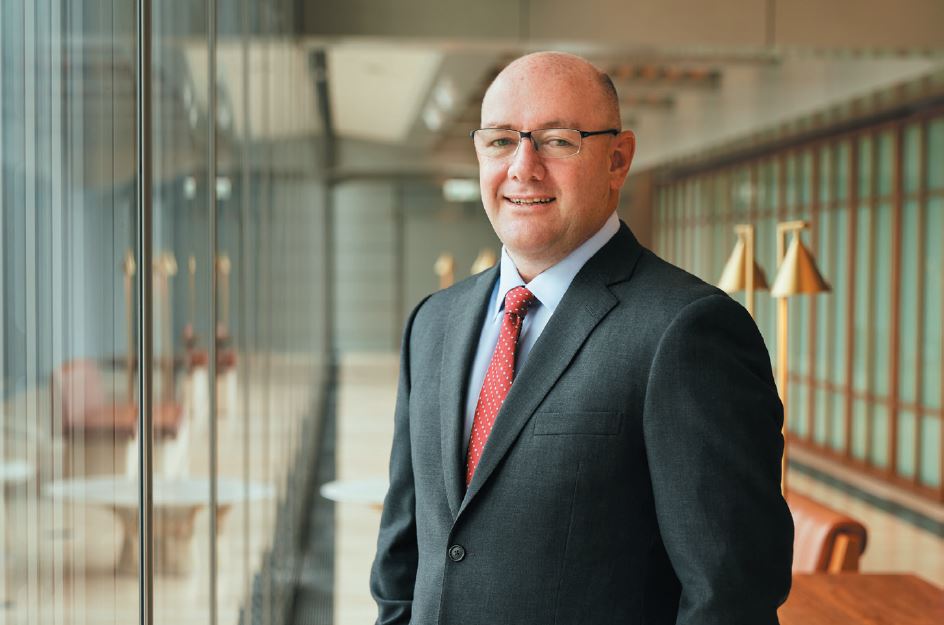
Brent York, Global Head of Trust and Fiduciary Services, HSBC Global Private Banking

Booming Philippine Market

HSBC’s presence in the Philippines dates back 146 years. In 1875, the bank opened an office in Binondo—Manila’s Chinatown—to offer trade finance services to the community’s exporters and merchants. Today, the Southeast Asian country remains a vibrant market for HSBC, despite its financial ups and downs over the past two decades.

“The Philippines is one of the few countries that came out well from the 1997 Asian financial crisis,” says Lee. “Over the past 10 years, it has been a booming domestic market.” She says HSBC Global Private Banking clients come from all walks of life. “It could be a local food and beverage business, it could be retail industry, a biochemical plant, a hotel chain.”

York points out that families are relatively larger in the Philippines. “Often there’s a lot of concerns around the family business and the succession similar to many other Asian countries,” he says. “There might be multiple parties involved and they are also interested in looking at how we can help them with their access to non-Philippine investments and assets.”

Due to Covid-19, HSBC teams have not been able to visit clients in the Philippines—and many other countries—since 2019. “Through the pandemic, clients have had to adapt,” says York. “They’ve had to change business model or retrench, particularly some of those in hospitality and tourism, while others have seen it as an opportunity to invest.”

HSBC had to adjust as well. “Pre-pandemic, a team would arrive in Manila with a packed agenda over three days,” says Lee. “Now it’s two-hour Zoom calls spread over three half days. On the plus side, the team held a meeting with a Philippine family of almost 30 people, via Zoom, even though they were spread across the globe. Some travel is no longer necessary but some engagement by their nature has to be done face to face.”

Cynthia Lee, Head of Wealth Planning and Advisory, Asia, HSBC Global Private Banking

Managing A Faster Pace

HSBC Trustee often finds that younger family members are less conservative than their elders. “The basics of the trust solution is still valid for them to safeguard their wealth,” York observes. “But being able to give them the powers to manage the assets is important.” The younger generation of business leaders is more agile, he notes. “They want things to happen at a faster pace. And that can be a little bit challenging when we need to give advice.”

The bank has adopted new technology and new ways of communicating. “With some of the more dynamic and younger clients, technology is going to become more important because they don’t use emails,” says York. “They communicate with different social media platforms and we have embraced some of that new technology.”

Additional considerations when making investments such as environmental, social and governance (ESG) and social impact investing are another important trend. “Some families might be more ambitious and more liberal, and decide to deploy a higher percentage of their asset allocation altogether into investments which incorporate ESG and social impact outcomes,” says Lee. “They might entrust the younger members of the family to make some of these decisions.”

HSBC Global Private Banking aims to build a long term and trusted relationship with clients. Its wealth planning, philanthropy and family governance service teams have been highly recognised by the industry with awards from Asian Private Banker and Wealth Briefing Asia in 2020 and 2021.

“While we don’t have a magic wand to fix all family challenges, our job is to ensure that within that established framework agreed between us and the family, we’re able to provide all the options that are on the table,” she says. “We are here to help them to preserve their wealth and leave a legacy for the next generations.”

privatebanking.hsbc.com


Disclaimers
The information contained in this article has not been reviewed in the light of your individual circumstances and is for information purposes only. It does not purport to provide legal, taxation or other advice and should not be taken as such. No client or other reader should act or refrain from acting on the basis of the content of this article without seeking specific professional advice. Issued by The Hongkong and Shanghai Banking Corporation Limited and HSBC Trustee (Hong Kong) Limited.


Singapore Is Key To HSBC’s Asia Wealth Ambition

As HSBC moves confidently towards its ambition of becoming Asia’s leading wealth manager, the bank is leveraging on Singapore as an international wealth hub to unlock new growth opportunities for its clients in the region.

HSBC’s history in Singapore dates back to 1877, when it opened its first branch on the island. As one of the earliest banks to establish presence in Singapore, HSBC has been able to tap on its long and storied heritage to build a legacy of trust with clients in the city-state.

“HSBC has always been focused on helping our clients in Singapore capture opportunities—from supporting the country’s rubber exports in the 1880s, to its post-war rebuild, through to the 1970’s technology push,” Wong Kee Joo, CEO of HSBC Singapore, says.

As Singapore enters a brave new world—moulded by digital and ESG adaption, shifting trade and supply chains, and rising wealth—we will continue to help our clients turn these transitions into opportunities.

A Distinctive “One Bank” Approach

Widely recognised as a centre of excellence in trading and finance, Singapore is ideal for businesses and investors in the region to both grow and preserve wealth.

Philip Kunz, Head of Global Private Banking, South Asia HSBC Private Banking

“We are seeing greater interest from Asian clients who are setting up and expanding family offices. They adopt institutional approaches to build continuity, diversification and resilience in their investment portfolios.” 

– Philip Kunz, Head of Global Private Banking, South Asia HSBC Private Banking

“Singapore is at the heart of HSBC’s expansion,” says Philip Kunz, HSBC’s Head of Global Private Banking for South Asia. “The city’s wealthy population continues to rise, as it establishes itself as one of the leading private banking and wealth management centres globally.”

Driving HSBC’s comprehensive wealth capabilities is the bank’s universal banking platform, underpinned by its extensive global footprint and strong balance sheet. HSBC stands apart by bringing the full breadth of the group’s capabilities across transactional, corporate and investment banking to clients with this “one bank” approach.

In particular, HSBC’s strong presence in the world’s top eight wealth hubs, including Singapore, enables the bank to deliver transactional banking and wealth management services in the most relevant markets to affluent customers looking for international opportunities.

Family Office Specialists

As wealth accumulates rapidly in Asia, more private banking clients are choosing to set up specialised family offices in Singapore to manage their financial affairs. These organisations offer clients dedicated and tailored services in a variety of areas; from trust and estate planning to investment management and governance.

The city-state ticks the right boxes in terms of what wealthy families should consider when deciding where to establish their family offices, says Kunz.

“The choice of where to set up a family office can have significant consequences,” says Kunz. “It’s not simply choosing a location for wealth management, but also a place where the interests of the family can be best served and safeguarded.”

To better serve its clients, HSBC Private Banking in Singapore established a Family Office Advisory team to provide structuring and inter-generational wealth planning services. It also recently launched a dedicated Independent Asset Managers (IAM) desk to meet the needs of family offices and independent advisors managing wealth on behalf of their clients.

Increasingly, UHNW clients appoint IAMs to oversee their wealth assets and in turn partner with private banks to deliver wealth management advisory and execution. Unsurprisingly, the bank has seen strong uptake in the service since its launch in Singapore late last year.

“We are seeing greater interest from Asian clients who are setting up and expanding family offices. They adopt institutional approaches to build continuity, diversification and resilience in their investment portfolios.”

HSBC is also evolving to better serve clients’ needs. “As wealthy individuals and businesses professionalise the management of their family wealth, this new model combines the full strength of advisory and structuring capabilities in our private banking and investment banking teams to meet our clients’ increasingly sophisticated investment and family needs,” adds Kunz.

A Sustainable Finance Leader

HSBC is helping clients from across the wealth continuum to not only build sustainable wealth, but also understand the impact of environment, social and governance (ESG) issues in their investment decisions.

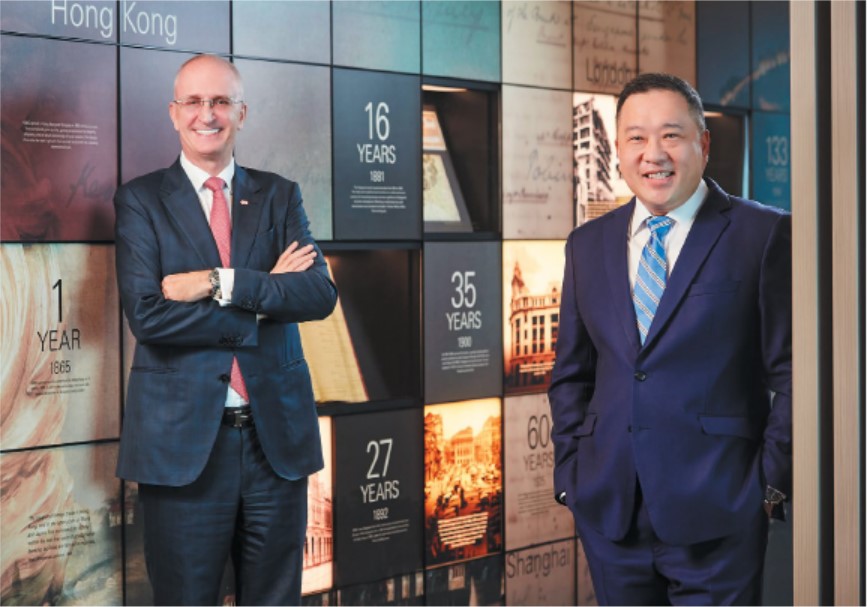
First office, HSBC built its first Singapore premises at Collyer Quay in 1892. The site had been the location of HSBC’s Singapore headquarters ever since, before moving officially to its current location at Marina Bay Financial Centre in April 2020.

With HSBC’s “one bank” approach, clients can explore innovative ways to invest sustainably in partnership with HSBC’s investment bank, a leading force in sustainable finance and ESG investing. The bank has delivered a range of landmark sustainability solutions for its clients.

“We have executed market-leading transactions and launched innovative sustainable finance solutions,” says Wong. “We are also driving industry groups to embed sustainability into banking practices within Singapore. We are committed to become a Net Zero bank, by reducing our carbon footprint in our operations, supply chain and financing portfolio.”

Reflecting its success in this area, HSBC was named Best Bank for Sustainable Finance Asia 2020 at the Euromoney Awards for Excellence 2020 and Investment Bank of the Year for Sustainability 2020 by The Banker.

“At the end of the day, the goal of our climate ambition is to support our clients and the communities in which we operate into thrive in the low carbon transition and build a more sustainable future,” Wong adds.

Wong Kee Joo, newly appointed CEO for HSBC Singapore, has more than 26 years of banking experience across different markets including the U.K., Thailand, Hong Kong and China. Previously, he was the Asia Pacific head for Global Liquidity and Cash Management at HSBC, developing digital solutions for wholesale clients and supporting the trade and investment flows between China and ASEAN, which has become the world’s most important commercial corridor.

“Our over 140-year history in Singapore gives us an advantageous position. Given our commercial heritage, on-the-ground expertise, digital capabilities and international connectivity, we are uniquely placed to open up a world of opportunity for our clients.” 

 – Wong Kee Joo, Chief Executive Officer, HSBC Singapore

Investing For Growth

HSBC will continue to invest in building its wealth capabilities in Singapore and the rest of Asia as it progresses towards its goal of becoming the leading wealth bank in the region. The bank has committed to invest over US$3.5 billion in the next five years to accelerate the growth of its Wealth and Personal Banking business in Asia.

These investments will focus on expanding distribution capabilities in Singapore, Hong Kong, and China. It will also enhance the bank’s digital wealth capabilities and develop new products that will deliver a distinctive customer experience.

“Singapore plays an integral role in our Asian wealth growth strategy,” says Wong. “Our over 140-year history in Singapore gives us an advantageous position. Given our commercial heritage, on-the-ground expertise, digital capabilities and international connectivity, we are uniquely placed to open up a world of opportunity for our clients.”

Sparrow: A Trusted Digital Asset Wealth Management Specialist

Sparrow has emerged as a trusted digital asset partner of financial institutions and wealth managers in Singapore. Wealth management including digital assets requires prudence to thrive.

“Technological reliability and security are paramount,” says Kenneth Yeo, CEO of Sparrow. “The Sparrow platform is built with multi-layered security measures to industry-leading standards by adopting a pro-active approach to dealing with vulnerabilities and cyber-attacks. In addition, the proprietary platform, products, and solutions are designed to make it easy for our customers to trade with confidence”.

With cryptocurrencies evolving rapidly, Yeo says “The digital currency market is moving at high speed, so we must constantly evolve and create products and solutions that are compelling for our customers.”

He adds: “We believe that cryptocurrencies are here to stay for a long time and the growing penetration is a sign of continued growth for the industry. We are confident that more comprehensive regulations and requirements will kick in as regulators and institutions gain a better understanding of the ecosystem.”

Investors typically fall into two distinct types, says Alvaro Patron, Sparrow’s Head of Institutional Sales. “They are the crypto believers and the traditional finance.” Patron believes in reassuring the traditional customers. “There are some critical aspects or essentials when it comes to digital asset wealth management among institutional investors,” he says. “This include a need for more transparency, less counterparty risk, and a deeper market.”

Investment Misconception

Patron says one myth is that cryptocurrency is a one-size-fits-all plan for every financial institution and wealth manager. “That’s not true,” he says. “There is a misconception among many that bitcoin is an asset class that requires a large investment and to take unlimited risks.”

“Yes, it can be volatile and contains risks, but investors have the ability to own a fraction and use derivatives to manage their risk to their own risk capacity. This way, they can diversify their wealth management by right-sizing the asset allocation, according to their comfort and needs,” says Patron.

Patron notes that uncertainties are best mitigated with the use of advanced tools, trading strategies and risk management frameworks. “We are seeing the rise and stabilization of a new asset class,” he says. “Like emerging market bonds in the 1990s, there are progressive changes in the marketplace.”

Kenneth Yeo, Chief Executive Officer

“Sparrow is the bridge between traditional finance and digital asset wealth management.”

– Kenneth Yeo, CEO, Sparrow

Another important factor is that regulators are focusing on digital assets’ growth and development. “There is and we foresee more oversight and regulation coming into market which we see as a positive development as it allows for more solid compliance, transparency and helps to level the playing field,” says Patron.

“Better standards are something we welcome in the cryptocurrency space,” he adds. “While most are concerned with short-term negativities and volatility, these interventions are beneficial in the long-term as it serves as a catalyst to the market’s growth.”


Increasing Recognition

Globally, cryptocurrencies, decentralized finance, and blockchain technologies are increasingly included in financial ecosystems. We believe the used cases are growing exponentially,” says Patron.

Nevertheless, Patron accepts that potential investors may be hesitant to allocate funds to the digital asset class. “When compared with traditional finance, the cryptocurrency space still lacks clarity on legal and regulatory compliance, technological safeguards, and Sparrow is actively working on bridging those needs.”

He said Singapore for example took “much-needed steps” to engage with industry players. “A robust and sensible regulatory framework is the foundation of a vibrant financial system,” says Patron. “We in the industry need to do our part too—providing customer education, compliance frameworks, and forging strong partnerships to ease these institutions’ concerns.”

Alvaro Patron, Head of Institutional Sales

“Sparrow’s wealth management solution is designed to address financial institutions’ common pain-points.”

– Alvaro Patron, Head of Institutional Sales

Institutional Focus

“While there is an active penetration within the retail market space, Sparrow is committed to meeting the needs of institutions and wealth managers by bridging the gaps” says Patron.

He says Sparrow has invested significant resources to serve institutions by providing quality institutional products, financial and performance reporting, as well as trading application programming interfaces, or APIs—the lines of code that connect different software. “We also believe in robust compliance, and technology risk management—these are critical to institutions having the confidence to trust the space.”

Sparrow was established in 2018 in Singapore to offer innovative financial products and solutions for digital wealth management. Backed by renowned investors, its digital asset trading platform complies with optimal regulatory and cybersecurity standards. The team of experts at Sparrow provides compelling structured products, white labeled products, and treasury management solutions.


Risk warning on digital payment token services

The Monetary Authority of Singapore (MAS) requires Sparrow Tech Private Limited (Sparrow) to provide this risk warning to you as a customer of a digital payment token (DPT) service provider.

Before you pay Sparrow any money or DPT, you should be aware of the following.

1. Sparrow is exempted by MAS from holding a licence to provide DPT services. Please note that you may not be able to recover all the money or DPTs you paid to Sparrow if Sparrow’s business fails.

2. You should not transact in the DPT if you are not familiar with this DPT. Transacting in DPTs may not be suitable for you if you are not familiar with the technology that DPT services provide.     

3. You should be aware that the value of DPTs may fluctuate greatly. You should buy DPTs only if you are prepared to accept the risk of losing all of the money you put into such tokens.

Disclaimer:

The information provided here is for informational purposes only and is not to be construed as a recommendation or advice to any prospective investor in relation to any legal, tax, financial investment or any other matters. You should consult with an attorney or other professional advisors to determine what may be best for your individual needs.

Content contained on or made available through any of our communication channels is not intended to and does not constitute legal advice or investment advice and no attorney-client relationship is formed. Your use of the information on any of our communication channels is at your own risk.


www.sparrowexchange.com

HSBC Private Banking Extends Footprint To Thailand

Based in Hong Kong, Tan Siew Meng is the Regional Head of Global Private Banking for Asia-Pacific. Prior to this, she was most notably the CEO of HSBC Thailand.

HSBC Private Banking recently established an onshore private banking presence in Thailand as it strives to become Asia’s leading wealth manager. With a significant wealth pool and investor friendly regulations, the country is a key market in the bank’s goal of capturing a larger share of the high net worth (HNW) and ultra-high net worth (UHNW) market across Southeast Asia.

The new private bank in Thailand is HSBC’s second onshore private bank in Southeast Asia after Singapore. It will facilitate clients’ access to international capital markets by leveraging the group’s existing infrastructure in advisory, investment methodologies, controls and systems in Asia.

HSBC is focusing on Southeast Asia, which is rapidly becoming an economic powerhouse with a fast-growing HNW and UHNW population. Capgemini’s 2017 Asia Pacific Wealth Report estimated that the assets of HNW investors in the region will reach US$40 trillion by 2025, up from US$18.8 trillion in 2017.

Within the region, Thailand had the second highest growth, up 12.4% to US$548 billion in 2016. The number of UHNW individuals in Thailand will increase by 30% in the five years through 2023, it added.

“Thailand is key to HSBC’s ASEAN and Asia growth strategy,” says Philip Kunz, Head of Global Private Banking for South Asia at HSBC. “I believe we are strongly placed to meet the evolving private banking needs in the region with the group’s international and business connectivity.”

Philip Kunz is the Singapore-based Head of Global Private Banking for South Asia, responsible for driving and executing HSBC’s strategy for private banking and wealth management across the region.

Global connectivity and expertise

Thailand’s rising affluence is driving new aspirations and changing the behaviour of investors. Against this backdrop, HSBC has a unique opportunity to leverage its global network and expertise to tap into the market’s vast potential. “Thailand has a wealth pool that is large and impactful,” says Kunz. “We need to have the right operating model to effectively manage these assets.”

Establishing an onshore presence in Thailand is crucial, with about 80% of HNW individuals’ wealth in Asia held onshore with local banks. HSBC Private Banking’s team in Thailand will cover client management and advisory services, while clients’ assets will be booked in Singapore, a preferred wealth management hub for the region’s affluent individuals.

The onshore model will allow clients to transfer their wealth to Singapore and give them access to international capital markets, with the added advantage of onshore proximity and deep relationship management at their doorsteps.

HSBC is also leveraging the Bank of Thailand’s moves to relax foreign exchange regulations and encourage greater flexibility in financial markets to better meet the needs of its clients.

Saranya Arunsilp leads the onshore private banking team in Thailand. Supported by local relationship managers and investment counsellors—who work closely with the Singapore office—the team aims to deliver best-in-class wealth management.

“With greater flexibility in the financial markets, supported by regulations that welcome more offshore investments, we believe that now is the right time for HSBC to offer a distinctive onshore experience to serve the growing needs of our Thai clients”

– Saranya Arunsilp, Country Head of Global Private Banking, HSBC Thailand

Serving family-owned businesses

The vast majority of Thailand HNW and UHNW clients have accumulated their wealth from running successful businesses. Family-run enterprises in Thailand have a combined net worth of THB30 trillion (US$939 million), with around 80% of all businesses in Thailand family-owned or controlled, according to a study by Deloitte published in January 2020.

HSBC is well-positioned to serve the corporate requirements of family enterprises as well as their wealth management needs, particularly in succession planning. This is an area of increasing importance as owners of maturing businesses naturally start handing over the reins to the next generation.

“Most family-owned companies struggle to survive beyond a single generation,” says Tan Siew Meng, Regional Head of Global Private Banking for Asia-Pacific at HSBC. “We can utilise our expertise in wealth planning and offer advice on topics such as family governance, succession planning, even their philanthropic intentions.”

Thailand’s HNW individuals are also more inclined towards wealth creation than wealth preservation. They are shifting from traditional deposits to more diversified portfolios in the recent years, including funds, offshore investments and increasingly, ESG-linked products.

To meet these and other needs, HSBC is tapping its unparalleled international footprint and bringing the full breadth of the group’s capabilities to its clients via a “one bank” approach. These capabilities include market-leading expertise in wholesale banking, private banking, insurance and asset management.

An illustrious heritage

As the first commercial bank in Thailand, HSBC is backed by a long and trusted history dating back over 133 years. The bank supported the country throughout its economic development. It introduced the country’s first bank notes, financed the nation’s first foreign loan and most recently launched the market’s first sustainability-linked loan and green deposits.

“Our 133 years in Thailand puts us in an advantageous position,” says Tan. “Many people know who we are and the HSBC name sits well with wealthy families here. As they grow their wealth, these families are looking for a bank that they are confident will be here to serve their future generations.” Reflecting its achievements and status in the country, Finance Asia named HSBC as the Best International Bank in Thailand this year.

Looking ahead, HSBC will build on its expansion in Thailand and continue to invest in its capabilities to better serve wealthy clients in Southeast Asia. The bank will work to strengthen its UHNW proposition with specialised investment advisory, enhanced wealth planning and bespoke products for its most sophisticated clients.

Supporting The Transition Into A Net Zero World

The unprecedented events of the past year underscores the daunting challenges posed by climate change. As the pandemic upended the global economy, governments around the world put sustainability issues to the top of their agenda, particularly in Southeast Asia.

While businesses are accelerating efforts to adapt to the new normal, consumers are increasingly turning to services and products that leave a smaller carbon footprint. They’re also actively seeking to support companies that demonstrate superior ESG (Environmental, Social, and Corporate Governance) standards.

The role of green financing

The urgency to reduce carbon emissions has spilled into financial markets. Financial institutions are accelerating the push towards a low-carbon world by employing the right financing and investment tools to influence the ways companies operate.

Indeed, investor demand for ESG-linked financing solutions has grown rapidly in recent years. Green, social and sustainability bond issuance climbed 5.2% to a record high of US$12.1bn in 2020 across Southeast Asia, compared to the previous year.

According to HSBC, 82% of individual investors consider sustainability, environmental or ethical issues to be important when managing their investments. Another 46% of individual investors believe their portfolios will comprise 100% sustainable investments in the next three to five years.

To address the growing demand for ESG-linked investment products, HSBC is mobilising its global resources to spur and lead the transition to a global net zero economy. In addition to transforming the bank’s own operations and supply chains, HSBC also aims to support its customers with green financing to reduce their emissions to net zero by 2050 or earlier.

Achieving ESG outcomes

The transition to a low-carbon environment often begins with conversations about awareness and improvisation.

“We have built a deep understanding of both our individual and corporate clients, many of whom have the ability to influence and inspire positive change as we embark on this collective journey,” says Philip Kunz, Head of Global Private Banking for Southeast Asia at HSBC.

This is where HSBC’s global network comes to the fore, connecting clients who are seeking ESG outcomes to like-minded individuals with the experience and know-how to help them succeed.

HSBC Private Banking is pooling investment expertise across the entire group to collectively accelerate ESG offerings. Its core portfolio approach imbues high-conviction themes aligned with the United Nations Sustainable Development Goals and the Paris Agreement.

“We strongly believe that sustainable investing does not detract, but instead is accretive to performance. It is a strategic priority for us to expand our range of products in order to find solutions that meet our clients’ evolving needs,” says Lavanya Chari, who oversees the private bank’s investment product strategy to deliver on the ESG agenda.

In April 2020, HSBC introduced its first private equity fund that seeks to achieve positive social and environmental impact, while providing competitive returns.

Its latest joint venture, HSBC Pollination Climate Asset Management, intends to establish a series of natural capital funds which invests in activities that preserve, protect and enhance the environment over the long term and address climate change.

“In addition, we will continue to be rigorous in our fund selection, hone our research and insight capabilities to better spot interesting opportunities in this space,” she adds.

Philip Kunz, Head of Global Private Banking, Southeast Asia at HSBC

Bringing more of HSBC to clients

As part of its net zero strategy, HSBC is utilising its international reach to proactively facilitate collaboration on two fronts.

One is to promote sustainability among public and private players. This involves working with investors, governments, nongovernmental organisations, other financial institutions and its suppliers to support long term investments in environmentally sustainable projects.

The other, and much closer to the heart of the organisation, is through its client relationships.

“With our global network and 150 years of heritage, I believe there is no other bank that is as well-positioned as HSBC to help customers embrace sustainability at every stage of their wealth creation journey. We also understand the impact of ESG issues on the community and the role that they can play,” says Kunz.

For instance, HSBC Private Banking works closely with HSBC’s Commercial Banking division to better identify specific areas that business owners can improve on.

“Rather than telling them to exit their business, we help these clients to continue pursuing their business, but in a far more sustainable way. And ultimately, helping them understand that while the path to sustainability may increase costs at the start, these (costs) will turn into an investment that brings huge benefits in time to come,” affirms Mr Kunz.

Another major factor that is driving interest in sustainable finance is unsurprisingly, the rise of younger entrepreneurs and investors. Studies have shown that the next generation, commonly referred to individuals between age 25 and 40, often have more progressive value systems than previous generations, and are hence drawn to investments that have direct social or environmental impacts.

Apart from providing thought leadership and innovations with sustainable financing, HSBC also takes a hands-on approach to engage the next generation. For more than three years, HSBC Private Banking has been running its Sustainability Leadership Programme, a platform built for the next generation to explore climate change and sustainability. The programme encourages them to apply sustainable practices to their own business and investment decisions.

Lavanya Chari, Global Head of Investments and Products Group, Private Banking and Wealth Management at HSBC

Finding purpose

While much progress has been made on the sustainable financing front, it may take a longer time for portfolios to truly reflect ESG objectives. That further reinforces HSBC’s commitment to its climate ambition, and Kunz echoes this sentiment.

“We aim to get every client on board this journey. It’s really about what HSBC represents and why we exist – and that is to work in partnership with our clients to realise the opportunity to build a more sustainable, resilient, and prosperous future. So, why stop here?”

Connect with us today


Citi Private Banking: A Pivot In The Post-Pandemic World

For Steven Lo, Citigroup’s announcement in April that it would exit retail consumer banking in major Asia-Pacific markets was not a retreat but a repositioning for future growth.

The U.S. bank said it would focus on wealth management in one of the world’s fastest-growing regions. According to McKinsey data, personal financial assets in the Asia-Pacific totaled US$34 trillion at the end of 2019, representing compound annual growth of 10% since 2014, about twice the 5% to 6% pace in Europe and North America over the same period. Managed assets account for only 15% to 20% of the total, signaling enormous potential.

Lo and his team, which has expanded with the recent formation of Citi Global Wealth by combining Citi’s Consumer Wealth and Private Bank businesses, expect to more than double their current staff of 1,765 by adding more than 2,300 positions across the platform by the end of 2025. Their aim is to secure a high proportion of unmanaged assets in the region and make Citi one of the top wealth management banks in Asia-Pacific.

He notes that the challenges facing the industry are not limited to the Covid-19 pandemic, and that their impact on global growth requires new strategies to overcome. “We have been in Asia for a very long time, since 1902, so exiting consumer banking in 13 markets was not a simple decision,” Lo says.

Focusing on wealth management makes sense given that it is a “superfast growth area in the region,” according to Lo. Citi will establish four “wealth hubs” outside its core operating area of North America: Hong Kong, Singapore, the UAE and London. Lo, who has been at Citi for 30 years, says the new direction is exciting. “We have a lot to offer, and we can win in a big way.”

REGIONAL DIFFERENCES

Private bankers have to account for the different investment preferences within Asia-Pacific, Lo points out. “Chinese investors are very comfortable with risk and willing to [be] overweight in equity,” he says, adding that Hong Kong and Taiwan investors have similar preferences. “They understand that much better than anything else, however, we have [also] seen growing interest in other asset classes such as fixed income and alternatives such as hedge funds and private equity.”

But in Southeast Asia, Lo notes, foreign exchange is a key preference, reflecting the export-oriented nature of some countries. “If you are in Indonesia, you know the rupiah, but the nature of your business may require exposure into Australian dollars or Canadian dollars, for example. People really know their currencies there,” Lo says, adding that crafting a portfolio for an individual client means “we have to look into the local flavor.”

Citi Global Wealth starts with clients having a minimum of US$200,000 to invest and extends all the way up to the region’s billionaire tycoons. While asset allocation is an important consideration in wealth management, Lo explains that its benefits are best enjoyed when a more substantial amount, say US$10 million, is available to work with. “Although US$5 million sounds like a lot of money, you can’t do any meaningful asset allocation as the amount limits how much you can actually diversify,” he says.

However, clients with US$10 million to invest “would be in a position to make good use of our capabilities,” Lo says, as Citi’s global reach comes into play at that level. “They demand more sophisticated financial help and tend to have a global perspective. They might be thinking about major real estate in London, [and] see the Citi franchise as highly coordinated and well positioned to help them achieve their financial goals.”

NATURAL PROGRESSION

Under Citi’s new direction, Lo says the key segments of its banking operations, including Citigold Private Client and Citi Private Bank, are linked in a kind of natural progression as clients’ wealth grows. “In the past there was a drop off point where clients left, so by unifying the whole platform we would have a higher degree of client retention as they climb the wealth ladder. That’s the beauty of an integrated network,” says Lo.

In addition to the clarity that an integrated network would provide, Lo says private banking clients appreciate that, on top of the products and services they enjoy at the private bank, they can also access other parts of the bank to “create a total solution.”

Through its Citigold level, the bank seeks to “capture the flow of our customers at the early stage of their wealth creation cycle,” which also enables Citi to train its younger employees on more straightforward portfolios, Lo explains. “We allow them to learn the true meaning of being a wealth adviser.”

Lo says Citi’s two Asia-Pacific “wealth hubs”—Hong Kong and Singapore—will cater to different client groups. “Hong Kong will continue to be able to capture the flow of newly minted multi-millionaires from North Asia,” and China-related capital market activities will continue to take place in Hong Kong. This flow should not be surprising since Hong Kong has become a major capital markets hub in the region.

Many potential clients operate in the technology sector. “If you look at recently listed companies from China which have been in the news, they are mainly on the technology side where you can command a much higher [price-to-earnings] ratio, which translates into a much bigger initial public offering,” says Lo. Many such companies desire a presence or tie to Silicon Valley, and Citi is “one of the few banks here that can provide a link to the U.S., and that’s a really important connection for them.”

While Hong Kong remains “highly Chinacentric,” he says, other economies are more important for Singapore. “Indonesia is a fairly important trading partner for Singapore, as is Malaysia, and for Australia and New Zealand clients, Singapore is where the first stop is going to be.” Singapore will also see more family offices as its “government makes things a lot easier for family offices to set up there,” he adds.

“If you’re in the banking industry, it’s not about how much studying or reading you have done. The real value comes from apprenticeships, what you learn from people, that in-person dialogue. I’m missing that.”

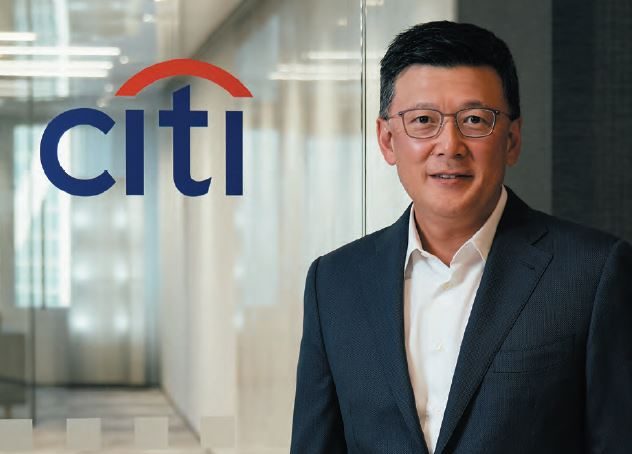
– Steven Lo, Co-Head of Citi Global Wealth Asia and Region Head of Citi Private Bank Asia-Pacific

ADAPTING TO THE ‘NEW NORMAL’

Lo acknowledges that the past year has been intense. The “new normal” stemming from the pandemic has prompted many questions from clients. With the prospect of interest rates rising, fixed income could go out of favor, and “the conversation has changed to what we can do to hedge loan exposure,” he says. In addition, “more clients are asking about cryptocurrency.”

Lo’s short-term goal is to steer the private bank through Covid-19 and into the post-pandemic era. He says his own travel and client interaction has dwindled, but the biggest effect is on junior staff, who work at home, often in Hong Kong’s tiny apartments. “When we allow people to come into the office, I give priority to our junior staff. They are so happy,” Lo says. That said, he is impressed at how clients have adapted to the new normal. “I have clients in their 70s telling me to arrange a Zoom call,” he says with a laugh.

Despite his team adapting to work within pandemic-related restrictions, Lo maintains that private banking is a deeply personal endeavor. “I’m a believer that if you’re in the banking industry, it’s not about how much studying or reading you have done. The real value comes from apprenticeships, what you learn from people, that in-person dialogue. I’m missing that,” he says. “We have to get people back to the office: human interaction, that’s the endgame right there.”

www.citiprivatebank.com

Fit For The Future

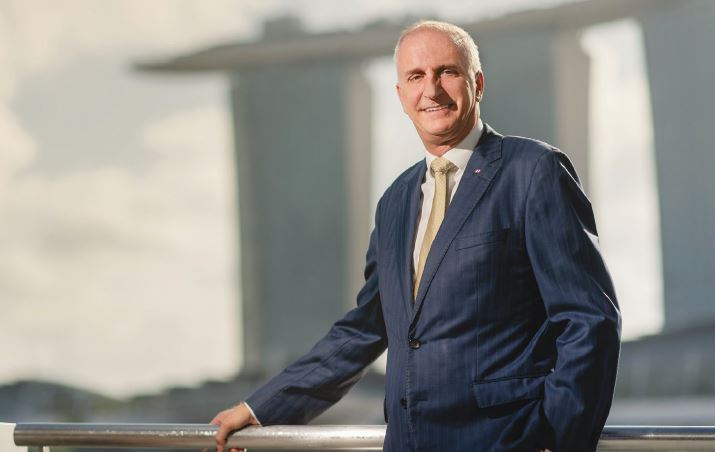
Philip Kunz, Head of Global Private Banking, Southeast Asia, HSBC Private Banking

The Covid-19 pandemic is rapidly changing the way we live and work, even as longer-term megatrends such as technological advancements and climate change continue to alter the global landscape. Amid this shifting environment, the needs of high net worth individuals and their families are evolving faster than ever.

Against this backdrop, HSBC Private Banking is transforming itself to stay relevant to its clients by leveraging its strengths as an international financial institution; one that combines talent with technology.

“Our ambition is to build a better and different Private Bank. Harnessing our international network, our role is to illuminate opportunities, ideas, places and people not known yet,” says Philip Kunz, Head of Global Private Banking, Southeast Asia, at HSBC.

This is part of a broader strategic transformation programme announced by the HSBC Group, which will involve reshaping and reorganising the organisation to improve efficiency, investing in new skills and creating a simpler and better digital experience. Simply put, HSBC aims to be a “bank fit for the future”.

Part of this strategic transformation programme involves a significant investment in accelerating HSBC’s growth in Asia over the next few years. Singapore is a key market for the HSBC Group, and the bank will continue to invest to grow its presence and market share in the city-state.

On its part, HSBC Private Banking will continue to steer towards growth by expanding in its areas of strength in the wealth management space.

Sustainable Solutions

HSBC Private Banking is focused on addressing the growing demand amongst its clients to integrate environmental, social and governance (ESG) factors into their investment decision-making processes. In particular, next generation private banking clients expect to see more from their investments beyond just financial returns. These young investors want to help better society and the environment through their investments.

The pandemic is likely to accelerate this movement towards investing in businesses that focus on impact and purpose, as the scale of the crisis prompts a rising wave of urgency when it comes to sustainability.

“I think what has been happening in the world has triggered a deep reflection about how we can change the way we live for a better world. This has resonated with clients in our conversations. We want to support our clients by inspiring and helping them to make positive changes,” says Kunz. 

Thus, HSBC is taking a hands-on approach to this ethos, providing sustainability-related thought leadership and innovations with capital financing. “Integrating ESG into investing isn’t just about doing good, it also makes good business sense. Companies that are synonymous with ESG have shown to be agile enough to adapt, and therefore resilient and sustainable,” he adds.

In April this year, HSBC moved into its new head office at Marina Bay Financial Centre Tower 2, where it is the anchor tenant. The new office is part of an island-wide upgrade and investment of its branches across Singapore.

“Our ambition is to build a better and different Private Bank. Harnessing our international network, our role is to illuminate opportunities, ideas, places and people not known yet.”

– Philip Kunz, Head of Global Private Banking, Southeast Asia, HSBC Private Banking

Family Legacy

Legacy planning has always been a complexity for wealthy families, and the ongoing pandemic has led many to reflect on this important issue. HSBC Private Banking believes that one needs to take a holistic approach to legacy, which should go beyond financial wealth. More importantly, it should encompass ensuring the happiness and prosperity of future generations to come.

Among other things, this will require the senior generation of families to have open and constructive conversations regarding the paths that their heirs can take. This includes discussions around setting up a philanthropic trust or foundation in the family name that they can run in the future, and practical advice on establishing and running businesses of their own.

HSBC Private Banking is no stranger in this area. It has been supporting some of the world’s most influential families with wealth transition and legacy matters for generations, from trusts and estate planning to philanthropic and family office advisory.

“We’ve had several meaningful conversations with our clients to address what is close to their hearts. Good communication is essential to successfully navigate the storm and protect the wealth and sustainability of family businesses,” Kunz says.

Succession Planning

Closely related to family legacy is the topic of succession planning. The massive disruption wrought by Covid-19 puts in sharp relief the need for family businesses to invest in a proper succession plan. Indeed, the current uncertainties can be a catalyst for family members to conduct discussions about their future.

While every family business is unique in their makeup, what remains unchanged is their desire to avoid the curse of shirtsleeves to shirtsleeves in three generations—the very real risk of declining wealth.

“We have consistently seen that family businesses are better prepared for the future when they have a well-thought-out approach to communicating about succession,” Kunz says.

The world is changing rapidly, and perhaps irrevocably, as a result of the pandemic. Amid this sea of uncertainty, HSBC Private Banking is transforming itself for the future to ensure it remains capable of serving the group’s clients in supporting their sustainable ambitions for their family, business and legacy.

This article is issued by The Hongkong and Shanghai Banking Corporation Limited and its wholly owned subsidiary, HSBC Trustee (Singapore) Limited.

ICBC: Leading The Way In Private Banking In China

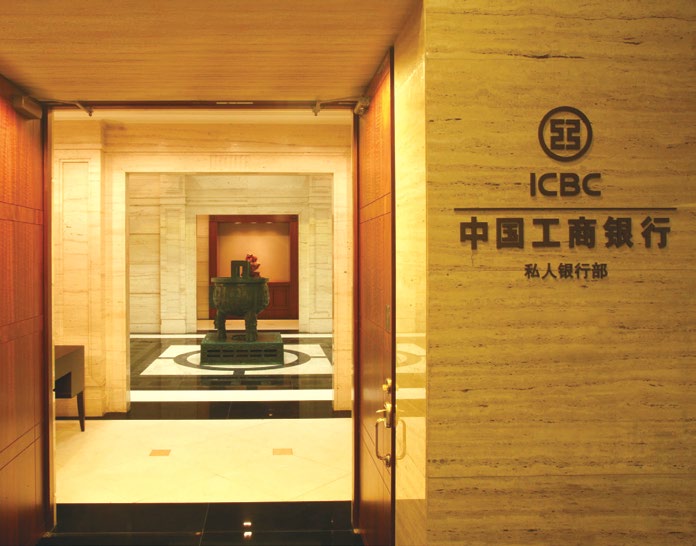
ICBC Private Banking’s headquarters in Shanghai

Industrial and Commercial Bank of China Limited (ICBC) has grown its private banking business over the past decade to become one of the leading players in China, with an expanding presence abroad. Headquartered on the banks of Shanghai’s historical Huangpu River, ICBC became the first financial institution to be granted a license specializing in the private banking business by the China Banking Regulatory Commission in 2008.

Since then, the bank’s private banking team has developed assets under management (AUM) to more than RMB 1 trillion (US$145.05 billion) as it capitalized on the country’s rapidly growing wealth in that period.

As of the end of June, ICBC Private Banking’s AUM stands at 1.6 trillion RMB (US$232.08 billion). It serves more than 90,000 high-net-worth clients and 400 service institutions, covering main cities and regions in mainland China. Internationally, the private bank has established sub-branches in more than 20 countries and regions, forming a global network in Asia, Europe, North and South America as well as in Australia and New Zealand. 

Exclusive and Integrated Services

As part of a global banking group, ICBC Private Banking is able to leverage on the integrated resources of the entire bank—from investment banking and corporate finance to credit cards and insurance—to offer a holistic service and better meet the increasingly complex needs of its clients.

Internally, ICBC Private Banking continues to build its brand by adding new exclusive services, such as concierge services and emergency assistance, that are designed to serve its clients’ needs in a wide range of areas, including healthcare, education and business travel.

Embracing a Digital Strategy

ICBC Private Banking is also investing in fintech solutions such as big data and artificial intelligence to improve efficiency and customer service. For instance, it offers an AI-advisor service that helps financial advisors quickly provide clients with investment portfolio and asset allocation strategies.

Meanwhile, ICBC’s various online and mobile services platforms help to deepen and improve the interaction between HNWI clients and the bank, promoting security and efficiency in the process.

Committed to Philanthropy

Throughout its growth journey, ICBC Private Banking has been committed to giving back to the less privileged in the community. Last year, for instance, it collaborated with clients to promote better living conditions for children in remote regions. Together with professional charitable foundations, ICBC Private Banking raised money to donate water heaters to nearly 50 primary and secondary schools in Sichuan province.

Grooming Talent

Over the years, ICBC Private Banking has built a team of professional talent with the necessary knowledge and skill sets to serve the high-net-worth segment in China. To achieve this, it has put in place a training system that caters to different levels of expertise. The system is made up of various components—including online classes, remote learning platforms, case studies and overseas training opportunities—to help its people develop transferrable skills.

Leveraging both internal and external resources, ICBC Private Banking will continue to develop its services platforms across markets, institutions and products, and provide its clients with exclusive services with integrity, professionalism and passion.


https://www.icbc.com.cn/ICBC/EN/Others/PrivateBanking/default.htm

HSBC Private Banking: Harnessing Asian Wealth Today For Tomorrow

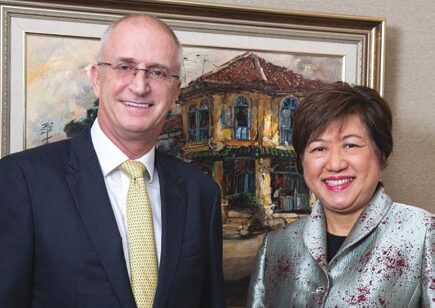
(Right) Siew Meng Tan, Regional Head of HSBC Private Banking, APAC; (Left) Philip Kunz, Head of HSBC Private Banking, Southeast Asia

Long-term survival takes courage, wisdom and flexibility. One of the biggest hurdles is readying a family business to pass on to the new generation, marrying the cornerstones of the business with new visions and practices.

Forging the right partnerships as these developments unfold is key. HSBC Private Banking understands what it takes to create companies that last generations. It has worked with family-run empires across Asia for 154 years and combines deep knowledge with global connectivity—benefits that few others can match. “The experience in having led actual generational transfer is an experience not every bank has,” says Siew Meng Tan, Regional Head of HSBC Private Banking, APAC.

Engineering Enduring Success

Through its trust company, Private Wealth Solutions, HSBC Private Banking offers tailored solutions for sustained wealth, helping families understand and shape a continued and prosperous legacy. HSBC Private Banking guides a company as it makes decisions on how to apportion wealth across a family network, or restructure the business for an evolving family and marketplace. “We advance prosperity for wealthy families with a desire and duty to succeed by helping them engage with the world outside their world,” says Philip Kunz, Head of HSBC Private Banking, Southeast Asia.

The second or third generation of entrepreneurial families may want to branch out and embark on their own endeavors. Over decades of working with ultra-high-net-worth clients, the bank has witnessed a desire in the younger family members to move beyond mere impact investing and has responded in innovative ways. Organized trips into the Borneo rainforest, for instance, provide clients with a first-hand look at environmental issues as well as actionable ideas for how they can make an impact on their businesses, investments and communities based on sustainable principles. Such expeditions resonate well with today’s rising entrepreneurs, says Tan, and often reveal further awakenings. “They provide additional insight into the role of sustainability in family businesses and family wealth,” Tan says.

Connecting to a World of Opportunity

HSBC Private Banking’s “one bank” approach ensures today’s global families are not limited to just local or regional geographies. HSBC Private Banking is one of the four global businesses around which the HSBC Group is structured, and its worldwide network affords clients accessibility across all corners of the globe. HSBC offers strong connectivity and collaboration across the bank to support even the most international and complex of client needs, whether family or business.

Imagine a Hong Kong family with ASEAN business interests. They easily transact in Singapore, Thailand and Malaysia for their business using commercial banking, while their personal wealth is managed by HSBC Private Banking in Hong Kong and Singapore. They have mortgages for their U.K. properties that are provided by HSBC Private Banking in the U.K., and their children study at U.S. universities supported by services from HSBC’s U.S. retail bank. This ease is a reality with HSBC Private Banking. Connectivity is seamless.

As part of a global universal bank, the advantage is clear. Through close collaboration, HSBC Private Banking provides its clients with the benefit of end-to-end solutions from across an entire portfolio of services, supplying specialist coverage for a client’s individual needs, no matter how complex. The bank is adept in tailor-made, winning solutions whatever the challenge.

Create a Lasting Legacy

With wealth in Asia rising at a faster rate than in any other region, ultra-high-net-worth clients increasingly require sophisticated and tailored solutions for investing, financing and hedging, and turn to HSBC Private Banking for guidance. Using an institutional approach, HSBC Private Banking connects clients to a wealth of opportunity, wherever they are in their succession plan, helping businesses to prosper today, tomorrow and long into the future.


The information contained in this article has not been reviewed in the light of your individual circumstances and is for information purposes only. It does not purport to provide legal, taxation or other advice and should not be taken as such. No client or other reader should act or refrain from acting on the basis of the content of this article without seeking specific professional advice.

Issued by The Hongkong and Shanghai Banking Corporation Limited.


Banking On Diversity

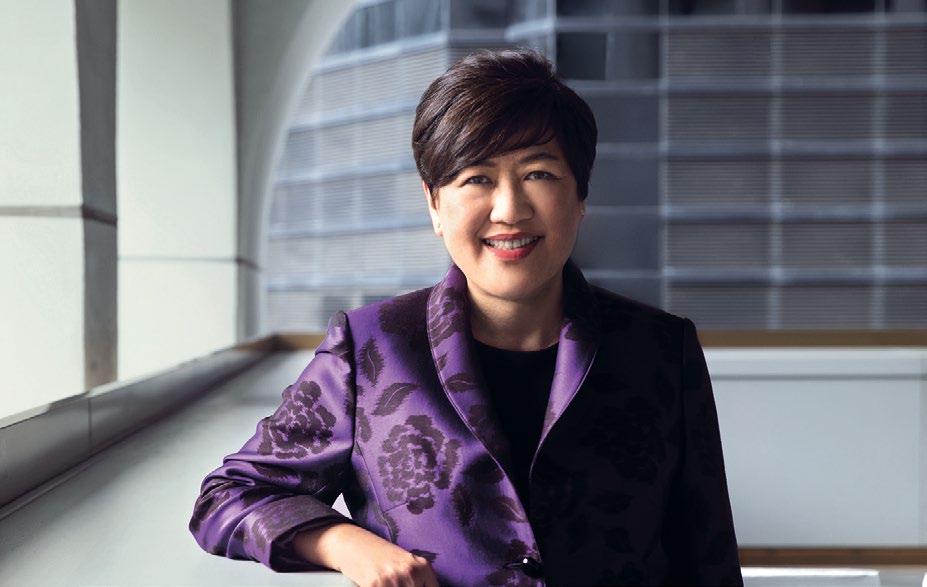
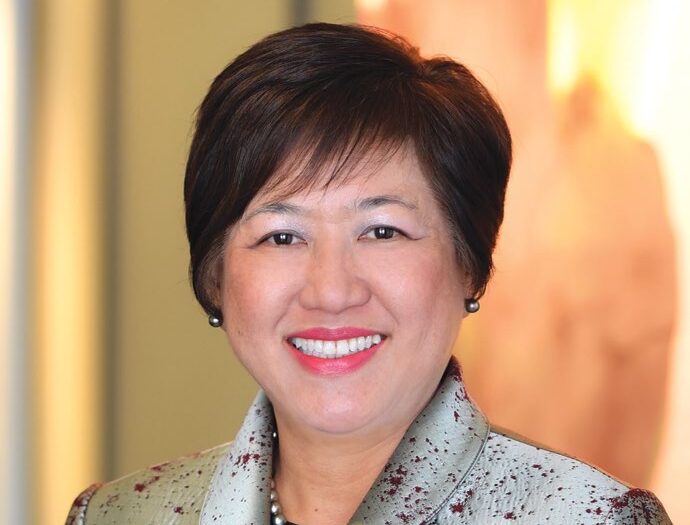
Siew Meng Tan, Regional Head of HSBC Private Banking in Asia-Pacific

Q: You joined HSBC 14 years ago—from starting out in corporate banking in Singapore to taking on the CEO role in Mauritius and Thailand, and now you’re the Regional Head of HSBC Private Banking in Asia-Pacific. What are some of the biggest challenges you’ve encountered in taking up a leadership role in the highly competitive finance industry?

It’s no secret that the finance industry is traditionally male-dominated, so there have been times in my career where I’ve had to work very hard on being visible and ensuring my voice is heard. The way I look at it, I always pursue roles that I enjoy so it makes it easier to transition from one position to another. Having the right drive and confidence has helped me to put myself forward and speak up. Rather than seeing them as a challenge, I look at every new assignment as a great learning experience. For example, moving from Singapore, known for having comprehensive regulations versus other countries that may be less so, I had to navigate through that as well as learn how to deal with different people from different cultures so it taught me a lot. In those roles—be it in Hong Kong, Mauritius, Singapore or Thailand—the common thread has been the opportunity for me to interact with clients to understand their businesses and needs in order to serve them better.

Why is gender diversity important in business? How does it benefit your clients?

Having led teams for a long time, I found that when you work with diverse teams—be it gender, nationality or background—you’re going to get more creative ideas and different perspectives in looking at things. And when your business is about finding solutions, diversity becomes even more important.

As for private banking in particular, it’s critical to have a diverse team because we’re dealing with very successful individuals and families, and increasingly more women who might prefer dealing with and learning from other women. Having diversity at our end ensures we are able to better cater for all our clients by having the right people to engage with them, be it different gender or individuals with different communication styles. It’s about having the right level of chemistry and, more importantly, trust.

What are you and HSBC management doing to promote gender diversity in the company?

As a group, we have given ourselves a target of 30% in terms of female leadership where it currently stands at 28%. However, in our private banking division, women account for 45% of the leadership posts at the moment. It is a good position to be in but ideally we’d like to set to 50-50.

It all starts with hiring where we are making a conscious effort to ensure that every time we create a shortlist of candidates to interview, it is balanced and well-represented. Same goes for when we’re considering promotions within the company as we don’t want to just leave it to chance.

We’re also looking at providing the younger female talents more opportunities through programs where they have mentors or sponsors, to make sure they get any support they may need to progress their career.

“We’re also looking at providing the younger female talents more opportunities through programs where they have mentors or sponsors, to make sure they get any support they may need to progress their career.”

– Siew Meng Tan, Regional Head of HSBC Private Banking in Asia-Pacific

In what ways does HSBC Private Banking support women entrepreneurs and business leaders?

I believe we’re in a very fortunate place to support women entrepreneurs and we do that through programs that aim to engage and educate our clients.

Last year we hosted a forum called ‘Invest Like A Woman’ where we invited successful female leaders in the investment space—CIO’s, portfolio managers at big fund houses—to speak and share their experiences and insights with our clients. The audience was a mix of women and men whom we feel are important to include in the conversation so that they may be more supportive of their children, siblings and spouses.

We also hosted our thought-leadership Women’s Forum earlier this year where we invited successful women leaders to share their insights and inspiring stories in driving transformation across various industries. We found that creating this kind of platform to share not just successes but also challenges resonates really well with clients.

This year HSBC Private Banking has also put its support behind AllBright, a networking club for women, with the aim of connecting and supporting entrepreneurial women. While they started in London, they are quickly expanding across the US and now looking at Asia. And HSBC is well-placed given our global footprint, our in-house expertise and our connectivity to contribute to the development of these future leaders.

One of the challenges aspiring entrepreneurs face is funding. This is where we come in with guidance on how to better attract investors. Same goes for the younger generation of family business leaders who might want to step out and set up a new venture, or need advice to better manage their family business and family wealth.

What advice would you share with other young female managers and entrepreneurs today?

My advice is that if you want to be successful it has to be a continuous learning process. I personally continue to learn and draw inspiration from successful women, who have made remarkable achievements in driving change and transformation on an individual, business and community level as well as striking the work-family balance. Speaking with them, you’ll be amazed at how each one has a different formula to success and ways to overcome challenges that they face.

I also believe that another key to success for everyone, regardless of their gender, is to be driven by passion for what they’re doing, which will eventually turn challenges into opportunities.

For me personally, what keeps me happy is the fact that I enjoy the role I can play in the banking industry, whether it is seeing development opportunities for my team or working with clients to support their ambitions.


The information contained in this article has not been reviewed in the light of your individual circumstances and is for information purposes only. It does not purport to provide legal, taxation or other advice and should not be taken as such. No client or other reader should act or refrain from acting on the basis of the content of this article without seeking specific professional advice.

Issued by The Hongkong and Shanghai Banking Corporation Limited.