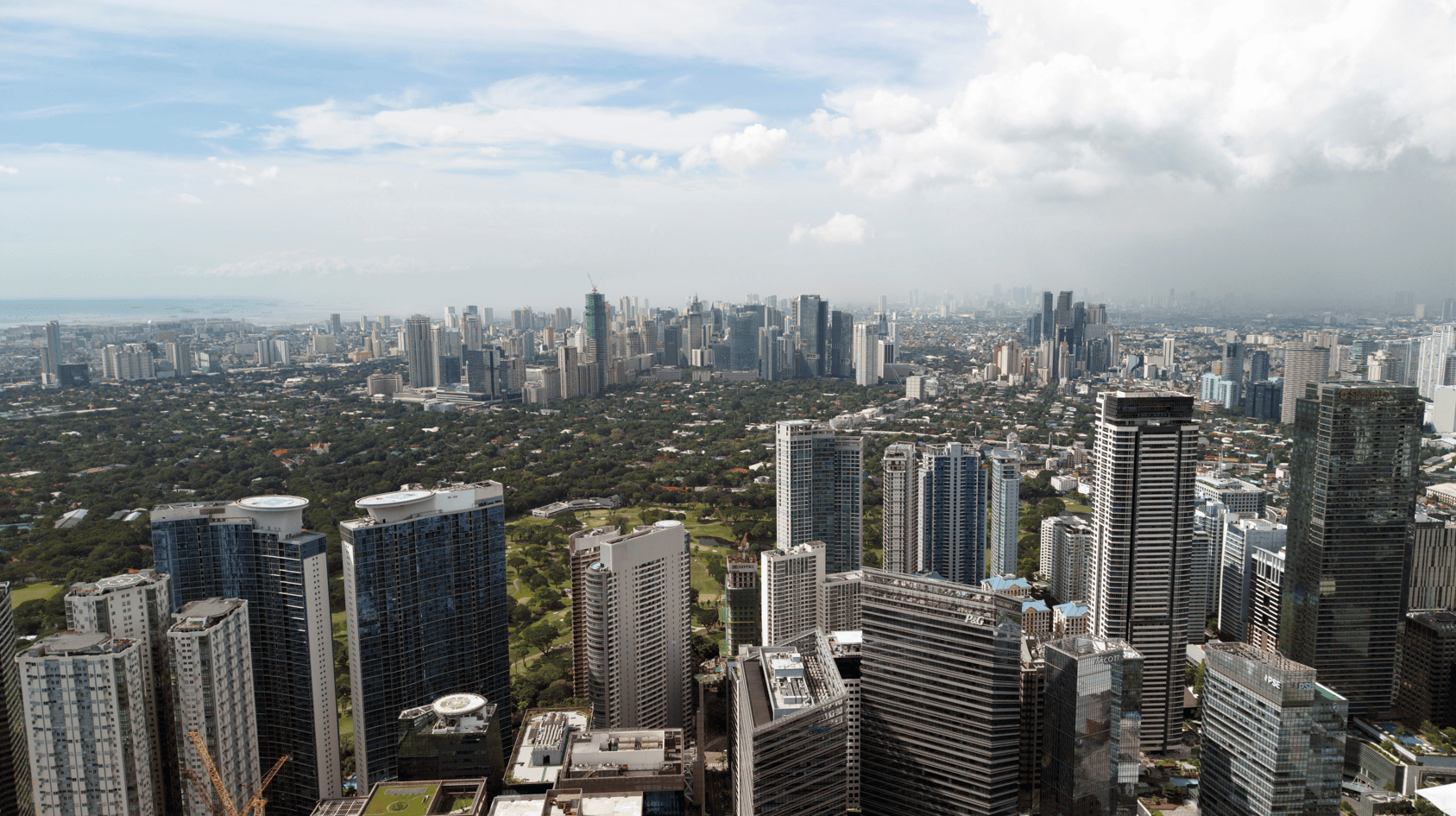
Against a shifting regional growth landscape, the Philippines is drawing on its strengths in tourism, technology, digital finance and premium property, while tapping into emerging opportunities.
October 7, 2026
This year, the Philippines holds the chairmanship of the Association of Southeast Asian Nations (ASEAN), hosting over 600 meetings centered on a theme of regional resilience and shared progress. The timing is significant as the role carries real economic weight, positioning the country at the center of trade and investment discussions at a time when growth across Southeast Asia has become more uneven amid ongoing geopolitical disruptions. The chairmanship also boosts official business and travel activity around the country, creating opportunities for local destinations, hospitality, transportation and other service providers to level up.
The government is taking advantage of the spotlight to showcase sectors that continue to perform well, from tourism and technology to digital finance and premium property. Together, these areas highlight how the Philippines continues to grow and build momentum amid a changing global environment.
Breaking Through Business as Usual
Tourism is one of the clearest examples of that resilience. The Philippines recorded 6.48 million total tourist arrivals in 2025, generating an estimated 694 billion pesos (US$11.1 billion) in international visitor spending. The Department of Tourism is now focusing on higher-value tourism, stronger air connectivity and developing more destinations beyond the country’s established gateways.
The private sector is aligning itself with this strategy. Developer Megaworld is expanding its footprint around key coastal locations anchored by hospitality, leisure and event-related infrastructure and attractions. This is part of a general shift in Philippine real estate and other industries to look beyond conventional areas and approaches for development.
The Philippine property market continues to show resilience at the higher end. While the broader sector works through existing inventory, the luxury and upscale segment, led by longstanding players such as Shang Properties Inc., continues to show an upward trajectory. Developers in this space are responding by sharpening their focus on prime locations, design and specifications as buyers become increasingly discerning.
The country’s technology sector is delivering standout performance. Electronics exports rose 20.7% in the first half of 2026 to US$26.1 billion, prompting the Semiconductor and Electronics Industries in the Philippines Foundation (SEIPI) to raise its full-year growth forecast to 10%, which would put exports at a record high of US$54 billion. Driven by the global surge in artificial intelligence (AI) and data center infrastructure, local suppliers of key hardware components are positioned for sustained demand across AI, automotive and telecommunications markets.
In tandem, the country’s digital economy continues to ramp up rapidly. The rise of mobile wallets and fintech platforms, Mynt’s GCash chief among them, complements the population’s increasing financial and online activity.
These are all bright spots amid this year’s headwinds. The government is now working to build momentum through the second half of 2026, building on established strengths, adopting fresh strategies and adapting to more complex challenges.
Beach Townships: The Growing Trend In Philippine Real Estate
Philippine property giant Megaworld spent three decades carving out bustling townships from emerging urban spaces and growth areas. Now it’s applying that successful approach to beachfront properties as well, with an ambitious portfolio of coastal developments taking shape throughout the Philippines.
Consistently recognized among the world’s best islands, Boracay Island is renowned for its powdery white-sand beaches, crystal-clear turquoise waters and idyllic tropical setting.
Shifting trends in Philippine real estate are drawing investors toward the islands’ coastal towns. Increasingly sophisticated Filipino buyers are seeking more laid-back environments away from congested urban centers. Developers are taking their cue, shifting from busy urban towers to beachside townships in areas traditionally known as vacation or retirement destinations. Beyond their inherent natural attractions, these emerging coastal destinations are now also considered desirable places to live, work, invest and build businesses. By bringing the conveniences and connectivity of the cities to towns with already established potential for tourism and leisure, savvy developers are responding to the demand for new residential and commercial projects in these budding hotspots.
The southern province of Batangas offers pristine coastal waters, vibrant coral reefs and rich marine biodiversity, making it a favored destination for ocean adventures.
Going Coastal
At the forefront of the coastal charge is Megaworld, a company that has spent more than three decades refining the model for master-planned communities in the Philippines. The company marked its 35th anniversary in 2024 by winning a record-breaking 35 awards at the PropertyGuru Philippines Property Awards, including its first ESG awards for sustainability design and energy efficiency. Since breaking ground on Eastwood City in Quezon City in the early 1990s, Megaworld has built 37 townships and lifestyle estates spanning more than 7,000 hectares nationwide, encompassing more than 800 residential developments and 22 hotel properties.
Rather than just building stand-alone resorts or subdivisions, the company is now applying its successful integrated model to the Philippines’ extensive coastline, developing townships that bring homes, hotels, offices, retail, dining and tourism facilities together within a single beachfront destination.
Boracay Newcoast: The Flagship
Leading its resort portfolio is the 150-hectare Boracay Newcoast. Located on the popular vacation island’s more private northeast side facing the Sibuyan Sea, the township is operated by Megaworld subsidiary Global-Estate Resorts, Inc.
Three Megaworld-operated hotels, the Savoy, the Belmont and the upcoming Chancellor, stand alongside the exclusive Newcoast Village. Guests and residents can enjoy choice views of the sea, the mountains or the township itself. Newcoast was built to function as a self-contained coastal destination, with a dedicated jetty port, the vibrant Newcoast Beachwalk commercial district, a 1,200-seat convention center, and its very own stretch of white-sand beach rounding out the estate.
Mactan Island is popular for its pristine beaches, crystal-clear waters, vibrant marine life and world-class resorts, offering travelers a seamless blend of leisure, water adventures and easy access to Cebu’s cultural and historical attractions.
Cebu: A Beach with Global Reach
In Lapu-Lapu City, part of Metro Cebu, the country’s second most prominent metropolitan area, Mactan Newtown extends the live-work-play model to the waterfront. Just 15 minutes from Mactan-Cebu International Airport, the 30-hectare township features residential condominiums, office towers and hotels, including the Savoy Hotel Mactan and Mercure Mactan Cebu. Anchored by Mactan Expo, Megaworld’s first stand-alone convention center, the hub boasts its own beach and a range of event, retail, and dining options, including two Gordon Ramsay concept restaurants.
The township also hosts two of Cebu’s most anticipated annual gastronomic festivals: one for Cebu lechon in August and another for Cebu mangoes each May. That combination of capacity, convenience and connectivity was fully demonstrated when Mactan Newtown hosted the 48th ASEAN Summit and the Ironman 70.3 race, reinforcing Megaworld’s position as a key player in the large-scale sports, meetings, incentives, conventions and exhibitions (S-MICE) industry.
Palawan is best known for its dramatic limestone cliffs, crystal-clear turquoise waters, rich marine biodiversity and emerging coastal destinations such as San Vicente, home to some of the Philippines’ most pristine beaches.
Palawan: Ecosystems and Economics
Megaworld’s most ambitious coastal venture on the horizon is Paragua Coastown, a 462-hectare township in San Vicente, Palawan. The area is famed for its 14-kilometer white-sand beach, said to be the longest in the Philippines and the second-longest in Southeast Asia.
Envisioned as the company’s first eco-tourism township, the 40-billion-peso (US$639.4 million) development will harmonize with Palawan’s uniquely rich ecology. Its master plan integrates a beachside village, beachfront hotels, residential condominiums, a mangrove forest park and flood-resilient infrastructure. It’s a long-term bet on one of the country’s most promising tourism corridors, built around creating local economic opportunities, as well as shaping a sustainable resort worthy of the location.
From tranquil coves and white-sand shores to some of the Philippines’ richest underwater ecosystems, Batangas offers a diverse coastal landscape within easy reach of Manila, perfect for those looking for a quick seaside escape.
Batangas: The Next Waves
A smooth drive down the expressways south of Manila leads to Batangas, where Megaworld is at work on two distinct coastal experiences. Lialto Beach and Golf Estates in Lian carves a private retreat around a residential village, an 18-hole golf course, a beach clubhouse and nearly a kilometer of coastline, with a 20-meter-tall lighthouse standing as its signature landmark. Expansive residential lots, from 300 square meters up to 1,200 square meters, offer the irreplaceable luxury of breathing space.
In nearby Nasugbu, Nascala Coast spans 116 hectares of residential villages, beachside condominiums and commercial space overlooking Nasugbu Bay. The community’s centerpiece is Villa Scala, featuring a cliffside clubhouse designed with a contemporary take on Positano-style Mediterranean architecture.
Laoag City offers expansive beaches, rugged coastal landscapes and sweeping views of the West Philippine Sea, providing a scenic gateway to the sun-drenched shores and natural beauty of Ilocos Norte.
Ilocos: Leading North
At the northern edge of the island of Luzon, Ilocandia Coastown in Laoag City marks Megaworld’s first township in the region. The 84-hectare, 15-billion-peso (US$239.8 million) development is anchored by the Ilocandia Beach Village, a seaside community combining homes, leisure and hospitality in one destination. Beachfront areas, landscaped grounds, dining and retail offerings will serve residents and visitors alike. Its planned beach club, inspired by Singapore’s Sentosa Island and Sydney’s Manly and Bondi beaches, would be the first of its kind for the province.
Sunrise on the Shores
Megaworld is investing close to US$1 billion into its coastal expansion, with projects spread across more than 800 hectares of land throughout the Philippine archipelago. This expansive investment reflects Megaworld’s confidence in tourism and retirement properties pulling more growth beyond Metro Manila and its immediate environs. Megaworld built its name on the results of its master-planning methodology, one township at a time. The coast is where it finds out how well the formula travels.
Finance For All: How Mynt's GCash Factored Inclusion Into The Philippines' Growth Equation
The Philippines’ largest digital finance platform shows how bridging the country’s low-hanging financial access gaps can unlock high-value business, accelerating an entire population’s fintech transformation.
For generations, most Filipinos had limited access to formal ways to save, borrow or move money beyond cash. That gap has narrowed rapidly in recent years, driven by the rise of homegrown digital platforms such as GCash. Launched in 2004 as a simple SMS-based way to send funds between mobile numbers, the super app has become the default financial platform for tens of millions of Filipinos that the conventional banking system had overlooked. What began as a mobile wallet for the economically underserved is now a foundation of the country’s digital economy, proof that innovation and inclusion can grow together.
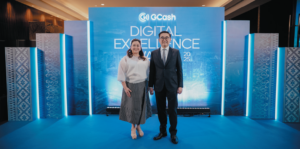
Martha Sazon, President and CEO of Mynt
The Math of Inclusion
As of March 2026, GCash counted 40.4 million monthly active users, about 55% of the Philippines’ adult population and roughly four times the reach of its nearest competitor. Payment volume alone reached 17 trillion pesos (US$271.8 billion) in gross transaction value in 2025, with 4.75 trillion pesos (US$76 billion) processed in the first quarter of 2026 alone, up 23% from the same period a year earlier. Beyond payments, Mynt’s lending arm Fuse Financing has become one of the country’s largest providers of credit for Filipinos who previously faced hurdles to accessing any.
By the first quarter of 2026, Fuse had disbursed more than 406 billion pesos (US$6.5 billion) in loans to over 11.1 million unique borrowers. Fuse is also extending that reach to entrepreneurs, but with a deliberate emphasis on social and economic equity. In 2025, it secured a US$30 million loan facility from the Asian Development Bank, with 60% of the funding specifically targeting women-owned small businesses and MSMEs in provinces with a high incidence of poverty.
Doing Good Business by Doing Good
Mynt’s financial performance has grown alongside its efforts to foster financial inclusion, thus expanding the market for its services in a positive feedback loop. The company’s adjusted revenues climbed from 33.6 billion pesos (US$537.3 million) in 2023 to 79.7 billion pesos (US$1.3 billion) in 2025, with net income more than doubling to 17.2 billion pesos (US$275 million) over the same period. That momentum carried into 2026, with first-half revenue reaching 43.3 billion pesos (US$689.4 million), up 10.4% from 39.2 billion pesos (US$624.2 million) a year earlier.
The pattern holds across Mynt’s wider portfolio of products as well. Its stock trading platform, GStocks PH, grew registered users to 1.7 million in 2025, up 65% from the year before, while GInsure sold nearly triple the insurance policies it had the year prior, reaching 132.6 million life-to-date on a user base that grew 45% to 20.6 million.
Martha Sazon, President and CEO of Mynt, says, “We built GCash with the vision that access to a bank account, a loan, investments or insurance should be an easy transaction for all. Digital financial services serve as an entry point for Filipinos into digital tools for their everyday lifestyle needs. For us, financial inclusion isn’t just a corporate social responsibility initiative; it flows from our belief that there is good business in doing good.”
Beyond the Wallet
GCash is now woven into everyday Filipino life across the archipelago, reaching beyond the country’s major urban centers and middle class. Mynt says 92% of GCash users come from lower socioeconomic segments, while 78% are based outside Metro Manila.
In 2025, its mobile wallet operator, G-Xchange, Inc., partnered with the national government to bring QR, card and NFC payments to buses and rail lines. Tools like Pera Outlet Plus have turned neighborhood stores and eateries into local hubs for cash-in, cash-out, bills payment and other everyday transactions, giving small business owners an additional source of income. Its Virtual U.S. Account, launched in late 2025, allows Filipino freelancers and remittance recipients to have U.S. dollar payments deposited directly into their e-wallets. Each product targets a friction point that has previously gatekept Filipinos out of traditional brick-and-mortar banking.
Martha Sazon and Frederick Go, Finance Secretary, Department of Finance, Philippines
The broader market bears this out. According to a survey commissioned by the Philippines’ central bank, the share of Filipino adults with a formal financial account jumped to 58% in the first quarter of 2026, up from 48% a year earlier. This surge was attributed largely to e-wallet adoption. As the country’s most-used finance app, GCash is at the forefront of that shift.
Navigating the Future
“No matter how the market moves, we’ll remain true to our goals,” Sazon says. “To get more people to use a safe, seamless platform that works for them, that they can trust. What hasn’t changed is our purpose. ‘Making Filipinos’ Everyday Lives Better’ remains central to everything that we do at GCash.”
As the Philippines chairs ASEAN this year under the theme “Navigating Our Future, Together,” GCash’s rise offers the region a working model worth emulating. By filling the gaps in a country’s financial infrastructure and looking out for the otherwise overlooked, the company has built an indispensable platform that is both globally competitive and profitable. For a nation betting its future on digital transformation, that may be Mynt’s most valuable achievement yet.
Mynt is the parent company of GCash, the Philippines’ #1 Finance Super App, advancing its vision of “Finance for All” by making financial services more accessible to Filipinos. Its portfolio includes G-Xchange, Inc., which handles GCash’s digital payments and e-money operations, and Fuse Financing, Inc., which provides fair, digitally enabled credit. Mynt is a committed supporter of the UN Sustainable Development Goals, with particular focus on financial inclusion, safety and security, diversity and equity, and climate action.
Resort Living Redefines The Philippines' Property Landscape
Even as Philippine buyers grow more selective while the rest of the market works through prevailing challenges, Shang Properties is finding that restraint, not volume, is the better strategy for luxury real estate.
Laya by Shang Properties
The Philippine property sector has entered a period of adjustment, with buyers weighing location, build quality and a developer’s track record more heavily than before.
Shang Properties, Inc. has navigated this more prudent landscape by continuing to develop for clearly defined markets, at a pace set by actual demand and construction progress rather than sales targets. The results back up the astuteness of that approach. Unit sales rose to 697.3 million pesos (US$11 million) in the second quarter of 2026, up from 469.6 million pesos (US$7.5 million) a year earlier, helping lift revenue by 9.3% to 2.73 billion pesos (US$43.7 million) and attributable net income 30.4% to 981.8 million pesos (US$15.7 million).
The luxury and upscale tier has proven more resilient than the broader condominium market. Pre-selling take-up in the segment reached 85.2% in Metro Manila, according to Jones Lang LaSalle’s 2025 year-end data, even as some developers elsewhere have leaned on discounts and extended payment terms to move inventory.
Resilience, for Shang Properties, comes from being responsive to the market, particularly in how projects are positioned. By staying attuned to customers’ evolving priorities, developers can adapt to shifting needs and expectations.
Precision Development: Targeting Demand Where It Matters
Three developments launched over the past three years account for much of Shang Properties’ momentum. Each was built around a strategic location and a distinct target market.
The company is building Shang Summit, two towers rising 250 meters amid the bustling South Triangle area of Quezon City, a hub for major media companies, leading universities and commercial centers. Designed for multigenerational families, the project is positioned near key rail and subway connections.
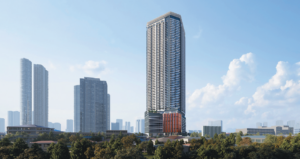
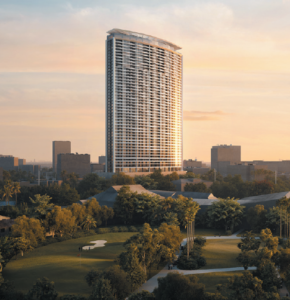
Laya in Pasig City stands close to the established Ortigas and BGC business districts, home to major corporations and institutions. The project targets younger professionals and international buyers, with a 67-story tower offering flexible layouts and price points.
Shang Bauhinia Residences in the dynamic tourism and business hub of Cebu is the company’s pioneering development outside Metro Manila. Marketed as the city’s first luxury vertical gated village, the project features a 4,000-square-meter clubhouse. Shang Summit and Shang Bauhinia Residences both earned top honors at the Asia Pacific Property Awards in 2025, while Laya bagged an award at this year’s event.
Shang Bauhinia Residences
Strong Track Record, Higher Standards
As buyers become more discerning, reputation carries greater weight. Shang Properties has been developing premium projects in the Philippines since 1987, banking on decades of consistent quality and service spanning an impressive portfolio that includes Shangri-La Plaza, The Enterprise Center, The Shang Grand Tower, The St. Francis and One Shangri-La Place.
Recurring income from diversified businesses across its commercial, retail and hospitality interests affords Shang Properties the luxury of taking a more measured and disciplined approach to expansion. Moving into Quezon City and Cebu was a decision made not just for the sake of scale, but with the strategic conviction that the company could create meaningful value in those markets.
Sustained investment and growth in higher tier segments reflect the industry’s confidence in the long-term potential of Philippine real estate. Shang Properties expects to further its success by focusing on more select locations for well-defined targets, delivering at the highest standards that discriminating buyers will continue to seek out.