While recent years have been defined by headlines about tariffs, geopolitical tensions and supply chain disruption, companies across Asia continue to invest heavily in industries expected to drive the region’s next phase of growth.
As production networks become more international and technologically advanced, the ability to move high-value equipment, components and materials quickly and reliably is becoming a critical competitive advantage.
Three sectors stand out in particular: semiconductors, aerospace and automotive. Asia sits at the center of all three. Taiwan and South Korea are critical hubs in the global semiconductor ecosystem. China remains the world’s largest electric vehicle (EV) market, while Vietnam and Indonesia are attracting investment in automotive manufacturing and battery production. Aerospace activity is also expanding as airlines add capacity and aviation demand recovers.
Investment across semiconductors, aerospace and electric vehicles continues to reshape the industrial landscape. From AI-driven demand for advanced chips to growing aircraft order backlogs and rising EV adoption, companies are expanding production capacity and supply networks across Asia.
While these industries serve different markets, they share a common opportunity: increasingly interconnected supply chains that enable companies to scale production, access global markets and accelerate innovation.
“Asia is becoming the growth center for advanced industries. As companies expand across markets, supply chains are becoming a key driver of growth, innovation and competitiveness,” says Salil Chari, Regional President, FedEx Asia Pacific.

The New Centers of Industrial Growth
Few industries illustrate this trend more clearly than semiconductors. Manufacturing, testing and packaging are spread across Taiwan, South Korea, Malaysia and China. The machines used to manufacture advanced chips are among the world’s most sophisticated industrial assets, with some systems costing hundreds of millions of dollars. Yet they can be highly sensitive to even minor shock, vibration or environmental fluctuations during transit.
At the same time, semiconductor production operates on tightly coordinated schedules, with equipment, components and materials often required to arrive within narrow delivery windows to keep fabrication lines running efficiently. Precision logistics therefore plays a critical role in protecting product integrity and maintaining production continuity.
“Semiconductor supply chains move some of the world’s most valuable and sensitive components, requiring highly specialized handling, stringent security protocols and precise coordination across multiple stages of production. As manufacturers balance speed-to-market with resilience, they are increasingly looking for logistics providers that can manage complexity while safeguarding product integrity,” says Chari.
When Every Hour Counts
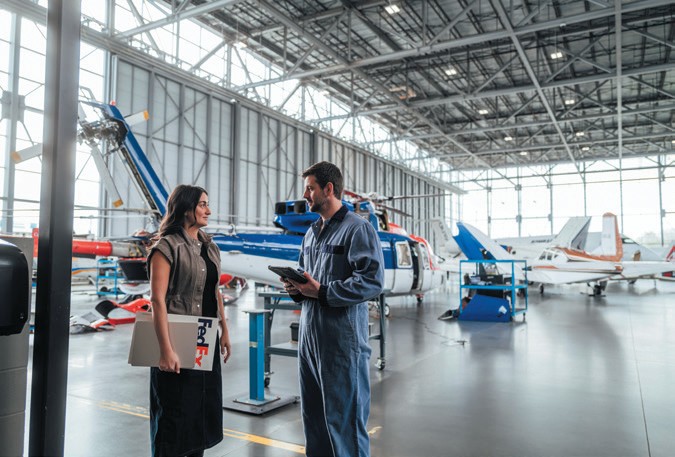
In aviation, an aircraft waiting for a replacement component can disrupt schedules, affect customer experience, and increase operating costs. The automotive industry faces similar pressures, with increasingly international production networks requiring components to move seamlessly across multiple countries before final assembly.
“As production networks become more distributed, automotive manufacturers need greater predictability, visibility and operational reliability. They also require the capability to move oversized and heavy freight, from factory equipment to critical components, without disrupting production schedules,” says Chari.
Logistics as a Competitive Advantage
Across Asia’s advanced manufacturing sectors, supply chains are becoming a critical determinant of business performance. Companies need to move critical equipment, components and materials with speed and reliability.
In semiconductors, logistics helps ensure sensitive equipment and production-critical components arrive safely and on schedule. In aerospace, minimizing downtime often depends on the rapid delivery of replacement parts. In automotive manufacturing, increasingly regionalized production networks require seamless cross-border coordination to keep assembly lines running efficiently.
As a result, logistics is evolving beyond transportation and fulfillment. It is increasingly central to how companies manage risk, maintain continuity and respond to changing demand.
“The most successful companies today recognize that supply chains have become a source of competitive differentiation. The ability to anticipate disruptions, maintain visibility across complex networks and execute with speed and precision can help businesses strengthen resilience, unlock growth opportunities and respond more effectively to changing market demands,” says Chari.