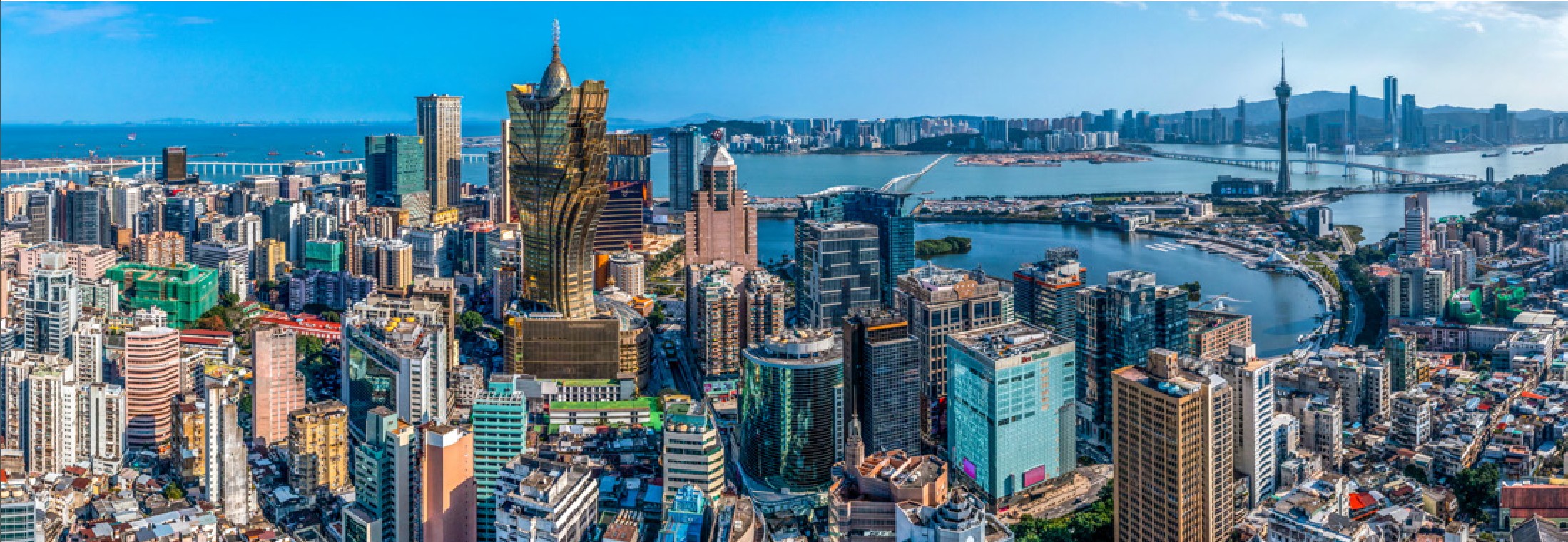
In a world where borders blur and industries converge, Macao is quietly becoming one of Asia’s most compelling places to do business. Long known for its rich cultural tapestry and cosmopolitan flair, this Special Administrative Region (SAR) of China is now drawing the attention of global investors—not just for what it is but for what it’s becoming.
With a low-tax regime, modern infrastructure and a bold strategy to diversify its economy, Macao is positioning itself as a gateway to the Greater Bay Area and a bridge to Portuguese-speaking markets across the globe. As the officially designated commercial and trade cooperation service platform between China and Portuguese-speaking countries (PSCs), Macao connects enterprises to a combined market of over 1.7 billion people—1.4 billion in China and 300 million across PSCs.
A Truly Connected City
Macao’s location isn’t just convenient—it’s strategic. As one of four core cities in the Greater Bay Area, it anchors a region of over 87 million people with a combined GDP of 14 trillion yuan (US$1.97 trillion). Just 30 minutes from Hong Kong International Airport via the Hong Kong–Zhuhai–Macao Bridge, Macao offers both proximity and possibility.
Yet this enhanced connectivity isn’t just physical. It’s cultural. With Chinese and Portuguese as official languages, and English widely used in commerce, the city offers a rare blend of East and West. It’s also notably visa-friendly. As of mid-2025, nationals from 87 countries and regions enjoy visa-free access, while Macao passport holders benefit from entry privileges in 148 countries and regions.
Business, Beautifully Done
Macao’s appeal lies in its simplicity. The city offers one of Asia’s most straightforward tax systems, with profits tax capped at just 12% along with generous exemptions for small and medium-sized enterprises (SMEs). There are no foreign exchange controls, and incorporation procedures are the same for local and international investors.
The Commerce and Investment Promotion Institute (IPIM) of the Macao SAR provides a “one-stop service” to guide investors—from company registration to licensing and beyond. This is a concierge-style setup, backed by an interdepartmental Investment Committee that ensures projects move smoothly and swiftly.
For investors from PSCs, Macao’s legal system—based on the Portuguese civil law tradition—offers a familiar framework. With Portuguese as an official language and legal conventions aligned, Macao provides a seamless bridge for cross-border business, arbitration and compliance.
A New Chapter in Growth
Above all, Macao isn’t just open for business—it’s reinventing it. The city’s “1+4” diversification strategy is reshaping its economy around five pillars:
- Tourism and leisure
- High technology
- Traditional Chinese medicine and big health
- Modern financial services
- Conventions, exhibitions, commerce and culture
These aren’t just buzzwords. In 2024, Macao welcomed nearly 35 million visitors, with a total spend of 75.36 billion patacas (US$9.4 billion). Meanwhile, the Traditional Chinese Medicine Science and Technology Industrial Park of Co-operation between Guangdong and Macao (GMTCM Park) is home to 233 enterprises, including 89 Macao-based firms.
The financial sector is equally dynamic. Macao is developing its own digital currency (e-MOP), expanding wealth management services, and building a bond market that has already listed over 938 billion patacas (US$117 billion) in sovereign and green bonds.
To accelerate growth in high technology, Macao has introduced a suite of new policy incentives. These include a tax incentives regime for enterprises engaged in scientific and technological innovation, a technology enterprise certification program to recognize and support qualified firms, and a funding scheme for enterprise innovation and R&D. Together, these measures create a fertile environment for startups and established players alike, reinforcing Macao’s ambition to become a hub for cutting-edge industries.
Building the Future: Innovation on the Ground
Across the territory, a new generation of industrial and technology parks is taking shape to support high-value sectors and attract global talent.
At the same time, the city is opening new doors in finance. A fresh Investment Fund Law offers attractive tax incentives, encouraging fund managers to set up in Macao. Work on a new Securities Law is also underway, laying the groundwork for a local bond market that connects seamlessly with both the Chinese mainland and international investors. Together, these reforms aim to bring a wider mix of bonds—from sovereign and municipal to corporate and innovative products—into Macao’s financial hub.
Digital innovation is part of the story, too. Through the development of the Digital Macao Pataca (DMP), the city is encouraging financial institutions to participate in building central bank digital currency infrastructure. Meanwhile, new tax breaks for corporate treasury centers give multinational companies smarter ways to manage cash and risk.
Beyond finance, Macao is investing in science and industry. The GMTCM Park is emerging as a major base for pharmaceuticals, biomedicine and medical devices, supported by advanced production platforms and cross-border research. The city also hosts leading institutions such as the State Key Laboratory of Quality Research in Chinese Medicine and the Macau Institute for Translational Medicine and Innovation, alongside a growing network of university research centers. Together, they are helping Macao build a reputation as a rising hub for biotech and high-end manufacturing.
The vision is clear: to create a smart, sustainable economy rooted in research, creativity and global connectivity. And these reforms are already attracting global attention, with leading companies moving quickly to establish partnerships and projects in Macao.
Confidence in Action
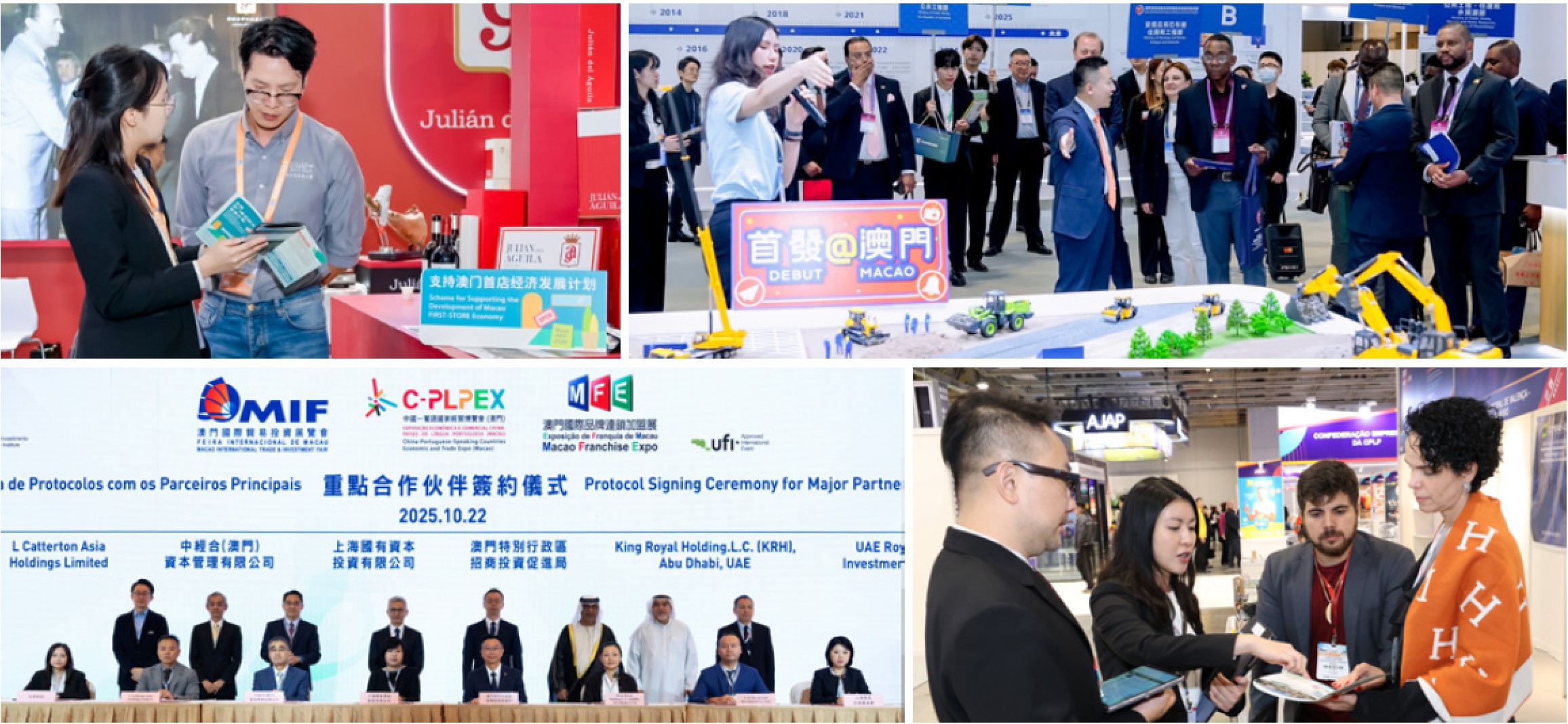
At recent exhibitions in Macao, industry leaders including Huawei, AstraZeneca, China Unicom, Alibaba Cloud and WI Harper Group signed 13 cooperation agreements with Macao-based partners and the Macao government. These partnerships span biotech, digital infrastructure, investment and advanced manufacturing.
One standout example is Kingdee International, a Chinese enterprise cloud service provider that chose Macao for its first office outside the mainland in July 2024. The company has launched a flagship AI-powered service and is working with local partners—from integrated resorts to SMEs—on digital transformation projects. What makes Macao particularly valuable, executives say, is not just the supportive policy environment but its role as a meeting point between China and PSCs. Kingdee is using its base there to explore exchanges with Brazil and other PSC markets—evidence that Macao’s bridge role is translating into real opportunities.
Together, these initiatives are helping Macao cultivate integrated industry clusters across upstream, midstream and downstream segments, strengthening the city’s ability to support end-to-end innovation and production.
Work Smart, Live Well
In the global competition for talent and capital, cities like Singapore and Dubai promise efficiency while Hong Kong offers scale. Macao offers something rarer: synergy—where business blends effortlessly with culture and creativity.
Its compact scale means less commuting and more living. Safe, multilingual and home to top-ranked universities, Macao offers seamless access to five international airports across the Greater Bay Area—making it both globally connected and eminently livable.
For builders, creators and innovators, Macao is more than a place to invest. It is a foundation for lasting growth, rooted in a vibrant community where commerce and culture reinforce one another.