Cities everywhere are wrestling with challenges that unfold over decades: Infrastructure wears out. Climate change arrives with a bill attached. In Singapore, one in four citizens will be aged 65 or older by 2030, illustrating the scale of the demographic shift reshaping mature cities.
For leaders across every sector, these macro trends are not isolated. The built environment is the very ground where shifting demographics, rising property costs and decarbonization commitments meet. How real estate is built, owned and operated then becomes a strategic question.
The industry’s dominant model is to buy, execute, sell and move on. It is built for speed, and it delivers returns quickly. A different kind of return comes from being involved across the whole asset lifecycle, where operating experience shapes what gets designed next and value compounds over the decades a place is lived in.
Working that way means designing a place from the outset together with governments, businesses and communities. Those conversations shape what gets built, not just what gets approved. Done well, real estate becomes a vehicle for positive-sum outcomes: commercially viable projects, governments meeting policy goals, and communities gaining livable, inclusive spaces.
Singapore-headquartered Frasers Property, with S$40 billion (US$31 billion) in assets across Southeast Asia, Australia, Europe and China, takes an integrated approach to real estate. As an investor, developer and long-term operator, the group looks beyond transactional build-and-sell cycles, combining quality development builds with deep operational expertise. This end-to-end model allows investments in accessibility, community infrastructure and energy efficiency to deliver near-term commercial returns while also creating resilient, long-term value across an asset’s lifecycle.
“As investor, developer and operator, we see the full asset lifecycle. Capital spent on decarbonization or on how a place works for the people using it earns its return twice, in performance now and in what the asset is worth in the future,” says Wanshi Zheng, Group Chief Strategy and Sustainability Officer, Frasers Property.
Malls as Social Infrastructure
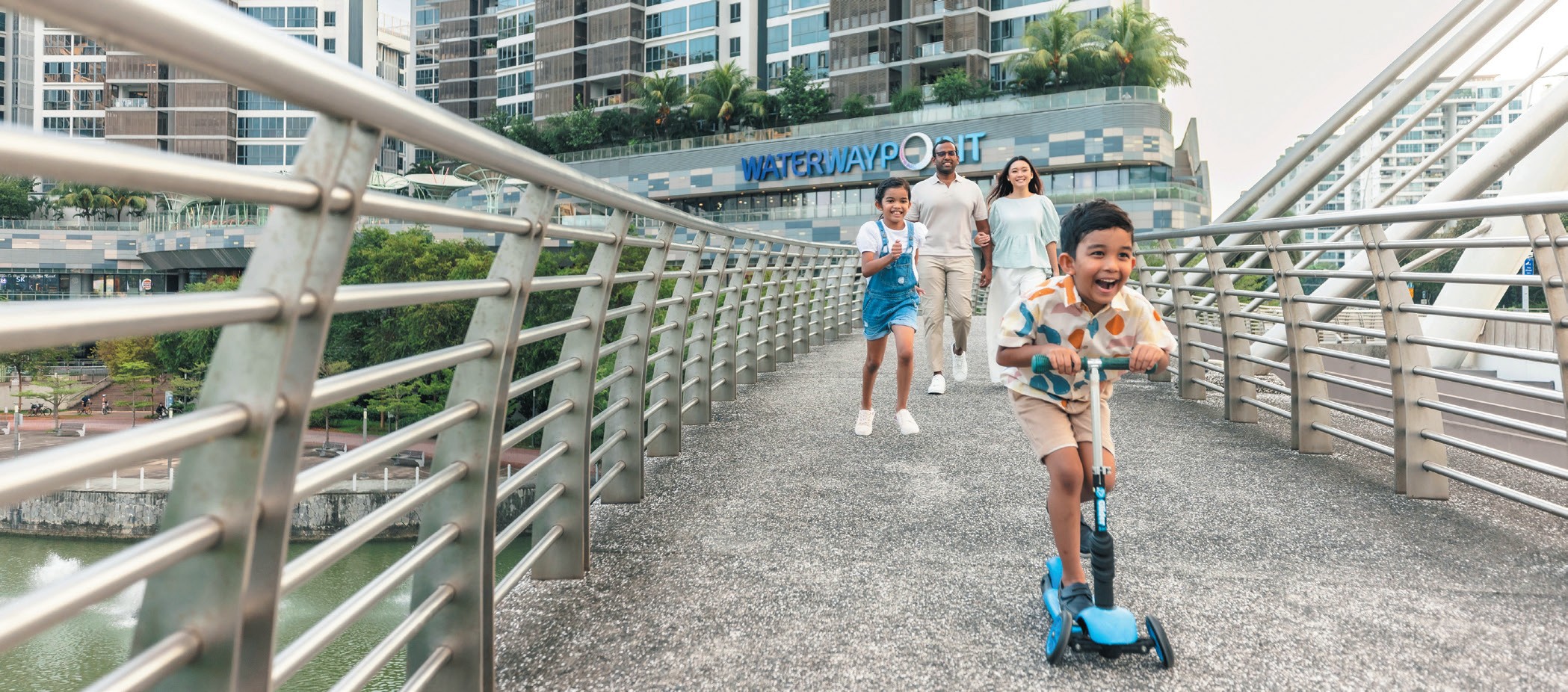
This integrated approach is perhaps most evident in how Frasers Property is reimagining how suburban malls serve an aging population in Singapore. In a study partnering the Singapore Management University Centre for Research on Successful Ageing (SMU ROSA), it was found that 61.2% of older shoppers surveyed visit their neighborhood mall weekly, and two-thirds visit with companions, highlighting how physical assets double as social infrastructure. For urban planners, policymakers and real estate developers, designing for these spaces offers a blueprint for fostering inclusive, engaged communities.
“As Singapore moves toward becoming a super-aged society, the question is how our everyday environments adapt to these demographic changes…familiar neighborhood spaces, including suburban malls, have a meaningful and growing role to play but realizing that potential requires intentional design and programming,” says Professor Paulin Straughan, Director, SMU ROSA.
For Frasers Property, this reinforces the importance of creating inclusive, welcoming retail environments that cater to different generations and abilities. Through its Inclusion Champions program, Frasers Property equips frontline staff and retail tenants with skills to better meet diverse community needs. Its malls have in place dementia go-to points and low-sensory Calm Hours, alongside initiatives such as FRx50+ and Silver Social Spaces that encourage seniors to connect and participate in everyday community life. These initiatives help build shopper loyalty, increase footfall and strengthen tenant retention, creating long-term commercial and operational resilience.
Designing Neighborhoods, Not Buildings
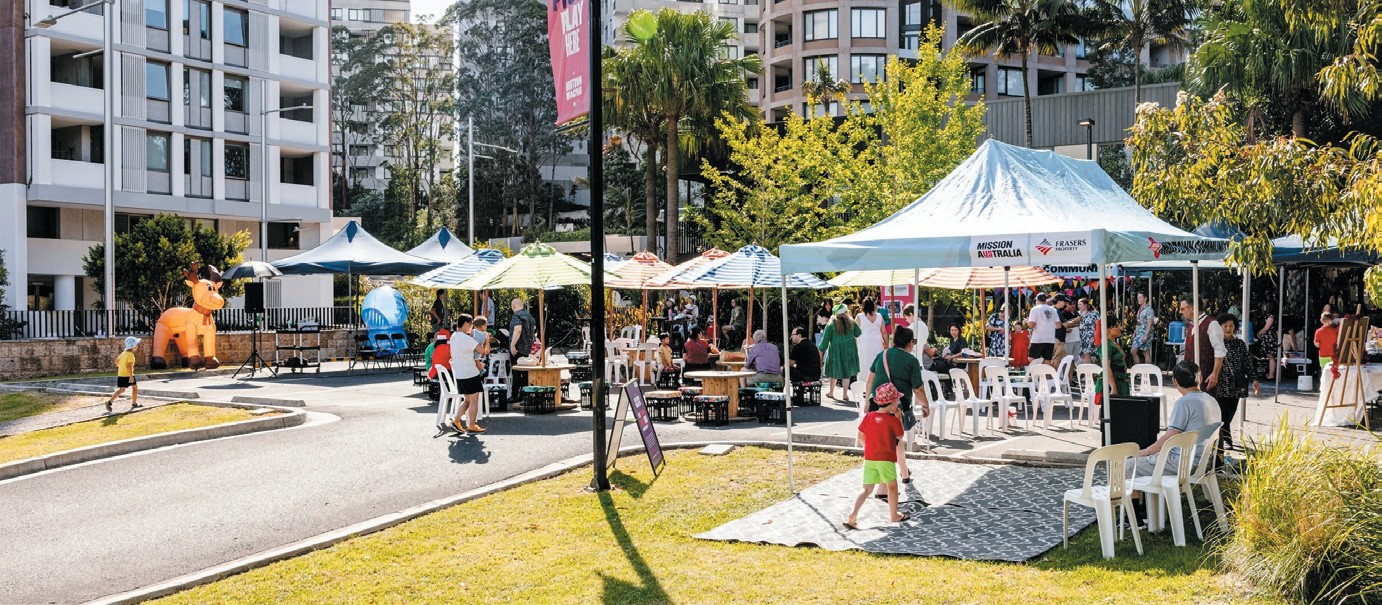
The same principle scales up to the level of a masterplan. In Sydney, the A$2.2 billion (US$1.6 billion), 8.2-hectare Midtown MacPark project shows what becomes possible when a developer collaborates with different levels of government from the early planning stages.
Instead of treating public amenities as secondary additions, the masterplan integrates social, affordable and market-rate housing within a single cohesive neighborhood alongside shared schools, parks, and community hubs. Of its 3,300 planned apartments, more than 1,000 are earmarked as community and affordable housing, embedding civic infrastructure directly into the residential fabric.
This approach supports critical public policy goals across income groups while keeping the development commercially viable. By moving away from a transactional model, early alignment creates value for all stakeholders instead of redistributing it among them. Ultimately, this produces long-term, positive-sum outcomes for governments, residents and investors alike.
Decarbonizing a District, One Connection at a Time
A third example shows this collaborative logic applied to infrastructure. In support of Singapore’s climate targets, utilities provider SP Group launched the country’s first brownfield Distributed District Cooling (DDC) network. In the established town center of Tampines, Frasers Property’s retail assets Tampines 1 and Century Square serve as two of the three chilled-water supply nodes for the network. Rather than requiring each building to operate its own isolated cooling infrastructure, the DDC network connects seven participating buildings to a shared chiller via underground pipelines.
By aggregating cooling demand across several properties, the network optimizes energy usage, lowers carbon emissions and significantly reduces operational costs. This initiative demonstrates that the most impactful decarbonization possibilities happen not building by building but when neighboring properties operate as a shared network.
Since launching in March 2025, the network has cut annual carbon emissions by roughly 1,000 tonnes and annual energy use by over 2.3 million kWh. For building owners, connecting to the network reduces unutilized cooling capacity by 42%, freeing valuable floor area that would otherwise be occupied by chiller plants and enabling the space to be repurposed and monetized.
For utility partners, this approach offers long-term recurring income stream from cooling services and a proof of concept for retrofitting mature town centers.
Frasers Property has since applied the same thinking at a larger scale at One Bangkok, home to Thailand’s largest district cooling network, serving an area of 1.83 million square meters. What works across an established town center also works as a design principle for a new district.
A Different Kind of Return
Across malls, neighborhoods and district cooling networks, the lesson is clear: value is realized when real estate players engage governments and communities as long-term partners, working in alignment from concept to operation. This collaborative approach uncovers untapped opportunities, creating lasting commercial and social value long after a project is built.
“The myriad challenges of decarbonization and urban renewal cannot be solved in silos. The collaborative approach treats public and private interests as complementary, and designs around what each side needs. By sharing risks and combining our collective expertise, we can expand the pie for everyone at the table. That is how our investments deliver both resilient financial returns and meaningful public good,” says Zheng.
For leaders outside real estate, the same logic applies. People are living and working longer, and most environments have not caught up with what that requires. Longer lives and the climate transition are opening new demands in how buildings are used, designed and operated. The returns go to whoever moves early. Treat the built environment as a strategic asset, and the result is cities that are profitable, resilient and inclusive over the long run.