Asia-Pacific faces an unusual energy challenge: it must expand its energy system while transforming it.
Artificial intelligence, data centers, advanced manufacturing and electrification are adding to electricity demand across the region. At the same time, governments and businesses are seeking lower-carbon energy without compromising the reliability and affordability that underpin economic growth.
The question is therefore shifting from how much clean energy can be built to how effectively it can be delivered.
That puts energy certainty—the ability to provide reliable, scalable and increasingly lower-carbon energy—at the center of the region’s next phase of growth.
From Capacity to Certainty
Renewable energy capacity remains fundamental. But capacity alone does not create an effective energy system.
Variable generation must be supported by storage, stronger grids, flexible demand and technologies that help balance supply and consumption. Emerging energy vectors such as hydrogen will require infrastructure, credible demand and commercially viable supply chains. Electric mobility depends not only on vehicles, but on accessible charging networks and increasingly integrated digital services.
Increasingly, these elements must work as a system.
This is the environment in which Gentari, PETRONAS’ clean energy arm, has been building its regional platform across renewable energy, hydrogen and green mobility.
Malaysia, Thailand, Singapore and India.
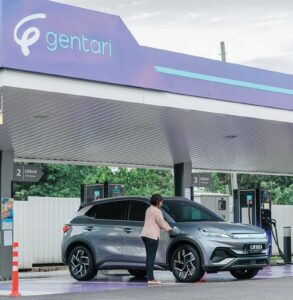
Four years after its establishment, Gentari has 9.1 gigawatt of renewable energy and storage capacity installed and under construction. Its footprint ranges from utility-scale solar and battery energy storage in Malaysia and Australia to wind projects in India and offshore wind off the Changhua coast. Its hydrogen business is developing supply and offtake opportunities across Asia and Europe, while Gentari Go connects drivers to more than 18,000 charging points through roaming partnerships across Malaysia, Thailand, Singapore and India.
The significance is not simply the number of assets. It is the ability to connect different technologies, markets and partners around customer and system needs.
Collaboration as Infrastructure
That becomes even more important as energy systems become increasingly interconnected.
Initiatives such as the ASEAN Power Grid reflect a broader recognition that energy security and resilience cannot always be addressed within national borders. Cross-border electricity trade can allow markets to draw on complementary resources, diversify supply and potentially strengthen regional energy resilience.
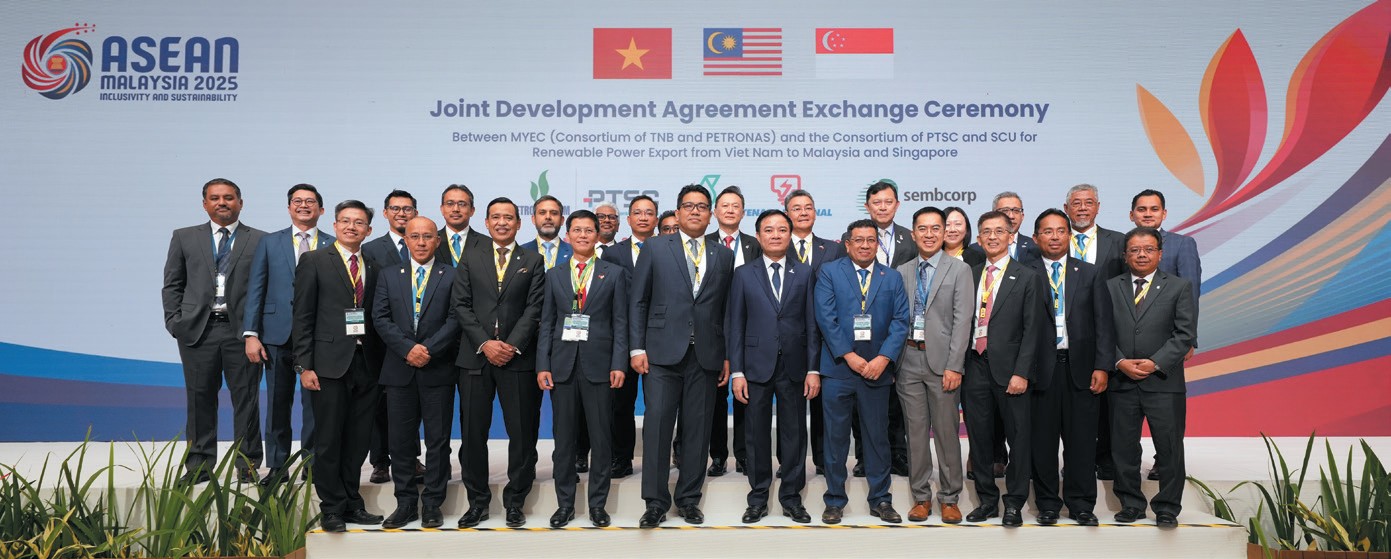
Project VMS, a proposed renewable electricity connection between Vietnam, Malaysia and Singapore involving PETRONAS and Tenaga Nasional Berhad through the MY Energy Consortium, PetroVietnam and Sembcorp, illustrates how business-led collaboration can help translate regional ambition into tangible opportunities for cross-border energy cooperation.
Similar collaboration will be required across renewable energy, hydrogen, storage, mobility, grids, finance and technology. Governments can create enabling frameworks, but businesses must ultimately convert those frameworks into investable projects, infrastructure and services.
For Asia-Pacific, the next phase of the energy transition will therefore be measured by more than gigawatts installed.
It will be measured by whether clean energy can be delivered where it is needed, when it is needed and at a scale that supports economic growth.
That is the shift from clean energy ambition to energy certainty, and increasingly, from ambition to action.