
For decades, the Indian diaspora has been one of the world’s most influential economic forces. Today, however, a new generation of Global Indians is emerging, one that is changing what affluent clients expect from their banking relationships.
Many of these individuals lead increasingly international lives. They may build businesses in Mumbai, invest in Singapore, educate their children in London and acquire property in Dubai, all while maintaining strong personal and commercial ties to India. As their wealth becomes more international, so too do their expectations of financial institutions.
India’s rise as an economic powerhouse is accelerating this trend. Despite global economic uncertainty, India remains among the fastest-growing major economies. According to Boston Consulting Group’s (BCG) Global Wealth Report 2026, emerging markets are expected to add close to US$7 trillion in financial wealth by 2030, with India alone contributing more than US$2 trillion of additional wealth over the period.
The report also projects that emerging markets will add more than one million new dollar millionaires by the end of the decade. This expansion is creating a sizable cohort of high net worth individuals whose ambitions increasingly extend beyond national borders.
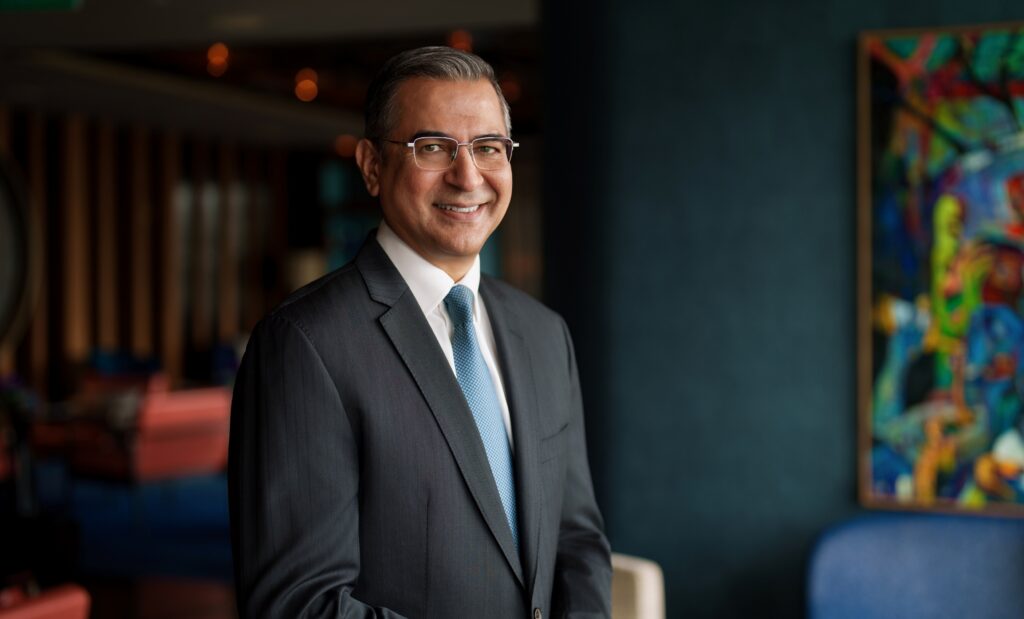
“There is a generational shift in India as it has become a dynamic powerhouse for wealth creation,” says Vinay Gandhi, Global Head of South Asian Community and Regional Head for Europe, Middle East and Africa at Standard Chartered Global Private Bank.
“We are seeing a strong surge in entrepreneurial and technology-driven wealth, with more Global Indians seeking cross-border wealth opportunities and intergenerational planning.”
Beyond Investing
Historically, wealth management relationships often centered on investment portfolios. For today’s Global Indians, that is no longer sufficient.
Many are looking to diversify their assets internationally amid heightened geopolitical uncertainty and market volatility. BCG estimates that global cross-border wealth grew 8.4% in 2025 to reach US$15.7 trillion, driven by strong market performance and increased demand for geographical diversification.
At the same time, wealth is becoming increasingly intertwined with broader family and business considerations. A business owner may be expanding operations overseas while supporting children studying abroad.
As wealth spans multiple jurisdictions, complexity rises significantly. Issues such as wealth structuring, liquidity management and succession planning have become increasingly important. Given that many Global Indians are also entrepreneurs, they are looking to have one single conversation that covers both personal and business wealth.
As a result, conversations are moving beyond portfolio construction toward more holistic discussions around family governance and long-term wealth preservation.
For wealth managers, this represents a significant shift. Rather than offering isolated products, institutions increasingly need to act as integrated advisors capable of bringing together wealth, lending, business banking and specialist advisory services.
One Relationship Across Borders
The growing international mobility, with families and assets spread across different jurisdictions, also means Global Indians are increasingly expecting their banking relationships to move with them across borders. Yet many affluent individuals still maintain separate relationships for their domestic and offshore needs.
The challenge of such cross-border lifestyles opens an opportunity for a banking partner to seamlessly connect across the markets where they live, invest and do business.
Standard Chartered, for instance, combines its deep onshore presence and capabilities in India with teams in its international wealth hubs—Singapore, Hong Kong, the United Arab Emirates and the U.K.—to bridge the gap.
Beyond traditional investment management, the bank’s proposition encompasses cross-border lending, India-linked investment opportunities, family-office-style capabilities and international banking solutions designed to support clients through different stages of their wealth journey.
Through specialist partnerships, Standard Chartered also aims to help Global Indians navigate broader life priorities such as children’s education, relocation and real estate. Clients can also access curated experiences and networking opportunities, including market outlook events, next-generation and family programs, as well as exclusive experiences through the bank’s partnerships with Formula One and Liverpool Football Club, designed to foster connections within the Global Indian community.
“We connect everything together in a seamless way for our Global Indian clients, whether it’s investments, business liquidity solutions or family wealth advisory, so they can confidently manage their wealth across borders, with one trusted partner,” explains Gandhi.
The Next Generation of Global Indians
With a growing number of younger Global Indians becoming more internationally mobile and increasingly digital-first, the expectations of wealth managers are also changing. Digital capabilities are now essential rather than differentiating. Yet even as technology continues to transform the wealth management industry, human advice remains central, particularly as wealth structures become more sophisticated and family dynamics more complex.
Standard Chartered’s research highlights this dynamic. While 76% of ultra-high net worth families surveyed are comfortable using technology and artificial intelligence to support investment decisions, they still expect human oversight. At the same time, 84% believe next-generation involvement is essential to successful legacy planning.
“Clients expect both digital and human advice to be seamlessly integrated to complement each other,” says Gandhi. “Digital advice enables convenience, speed and transparency while trusted advisors deliver judgment, context and bespoke solutions.”
This suggests that the future of wealth management is unlikely to be defined by technology alone. Instead, the institutions best positioned to serve the global wealthy need to be adept at combining digital capabilities with deep advisory expertise, while maintaining strong connectivity across geographies.
For a generation whose ambitions increasingly transcend borders, this ability to bring together global reach, local understanding and trusted advice may prove to be invaluable.”
