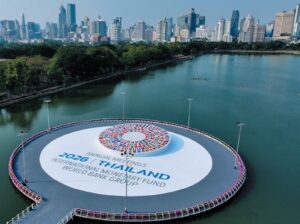
Thailand is repositioning itself as a high-value industrial partner as it unveils its latest national investment strategy, focusing on advanced technology and AI, the green transition and the longevity economy.
October 7, 2026
Thailand’s economy is projected to grow by 2.0% to 2.5% in 2026, supported by strong private investment, continued growth in household consumption, favorable merchandise export growth and government spending.
In the first half of 2026, foreign and domestic investment applications in Thailand surged to US$43.6 billion, up 37% year-on-year, driven largely by strong capital inflows into digital infrastructure and data centers. Investment applications in the digital sector alone reached US$33 billion, followed by commitments in other high-value industries. This strong investment momentum reflects growing investor confidence in Thailand’s potential as a hub for the industries of the future.
Shaping the Economic Agenda
Amid geopolitical tensions and global market realignment, Thailand is deepening economic cooperation and seeking new market opportunities by accelerating free trade agreement negotiations with key trading partners. A new national investment strategy was unveiled recently to reposition Thailand as a high-value industrial partner for international investors. The strategy focuses on investment in three key areas: advanced technology and artificial intelligence (AI), clean energy and sustainable infrastructure, and the longevity economy. The government will review existing business regulations and introduce reforms to attract foreign capital.
Thailand will have the opportunity to share its economic vision and experience on the global platform when it hosts the Annual Meetings of the International Monetary Fund (IMF) and the World Bank Group (WBG) in Bangkok in October 2026. As a middle power, Thailand aims to play a more active role in shaping the global economic agenda. The country also seeks to use the occasion to open new markets, deepen cooperation with economies of all sizes, accelerate development financing and progress toward the UN Sustainable Development Goals and contribute to reforming the global financial architecture.
Responding to Change
Rapid AI adoption continues to disrupt businesses. At the same time, companies are looking beyond the disruption to identify new opportunities, from adopting emerging technologies to reshaping supply chains and tapping into new growth areas.
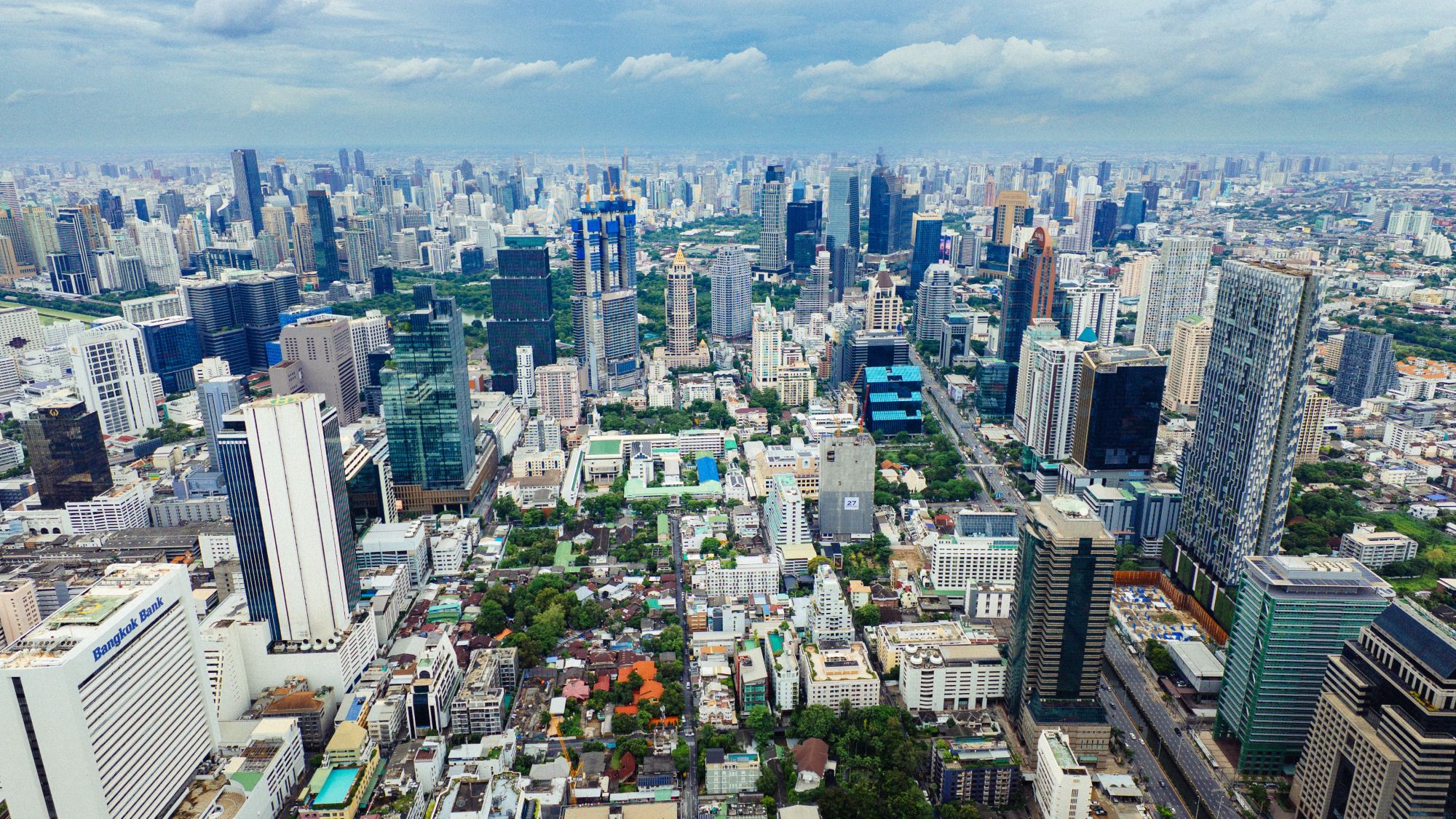
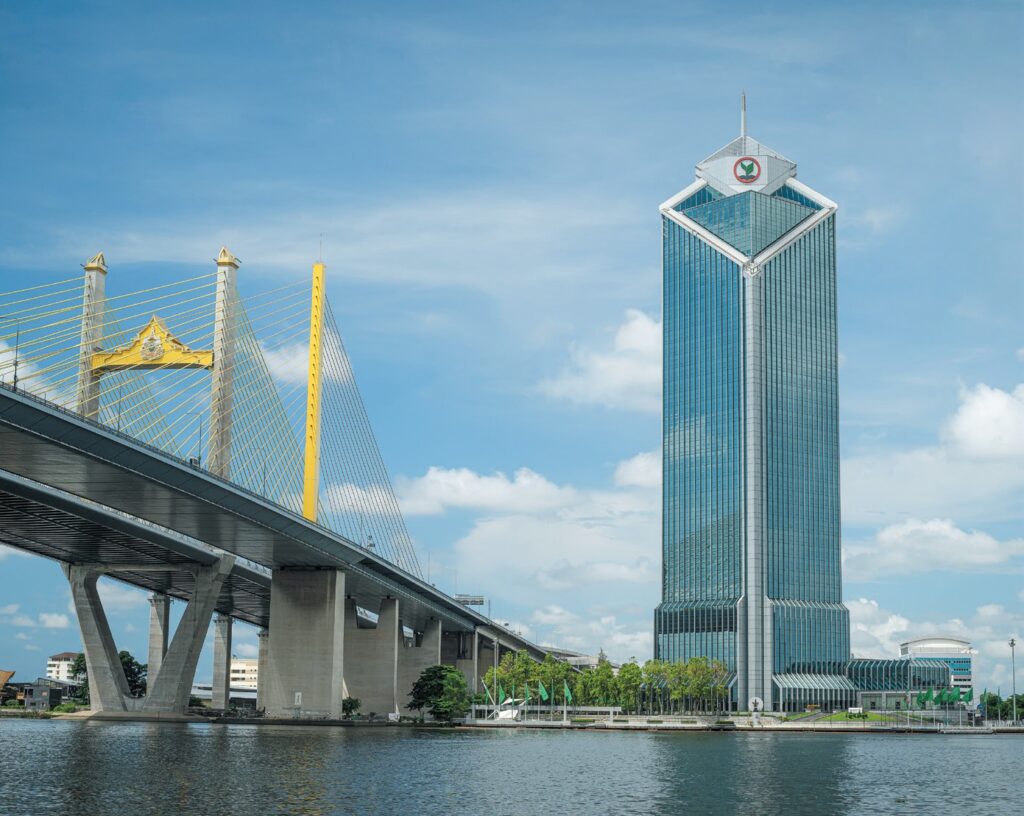
KASIKORNBANK (KBank), one of Thailand’s largest banks serving about one-third of the country’s population, has weathered crises, technological disruptions and economic cycles with resilience over the past 80 years. KBank continues to reinvent itself by recognizing important shifts early and responding to customers’ evolving needs.
Meanwhile, a broader shift in the global economy, driven by aging demographics, is creating significant opportunities across the healthcare sector. Healthcare providers are tapping into the longevity economy by developing new care models and leveraging predictive analytics and smart technologies to meet the growing needs of aging populations.
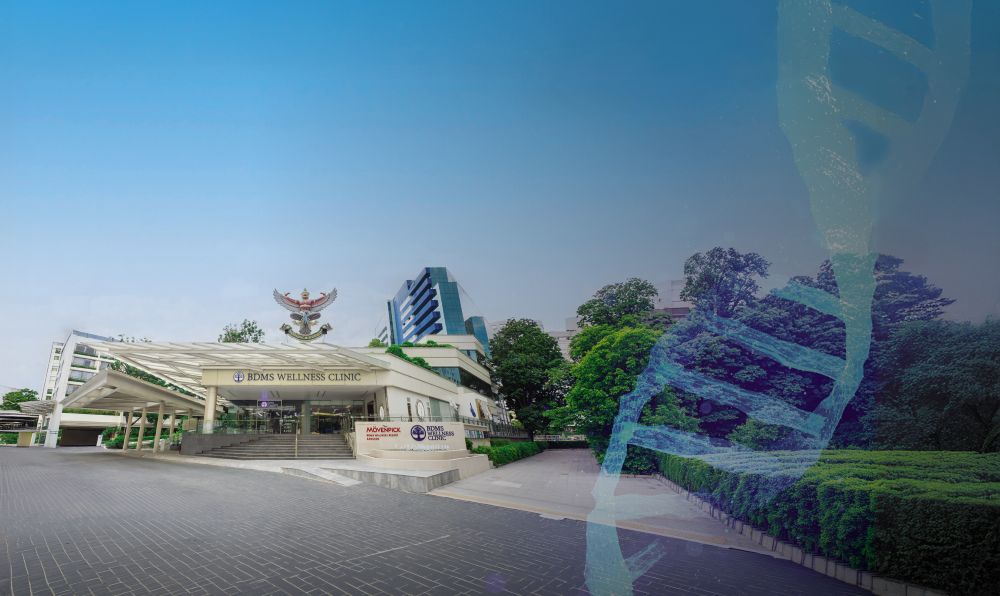
BDMS Wellness Clinic, the flagship preventive arm of Bangkok Dusit Medical Services (BDMS), believes in combining evidence-based preventive medicine with personalized wellness programs to support long-term health and performance. Recently, the company unveiled WellEra, an integrated wellness ecosystem comprising four components: BDMS Wellness Clinic, a 262-unit Capella Residences Bangkok, a 168-room Urban Wellness Retreat and lifestyle retail spaces. Scheduled to be fully operational in 2030, WellEra represents BDMS’ vision of bridging medical science, environmental design and world-class hospitality to create a new model of healthy living.
As Bangkok prepares to welcome delegates to the IMF–WBG Annual Meetings, Thailand is embarking on its next phase of economic transformation—with the goal of becoming a high-income economy by 2037.
The Art Of Preemptive Disruption: How KASIKORNBANK Drives The Future Of Resilient Banking
As one of Thailand’s largest banks, KBank serves about one-third of the country’s population.
One of the greatest risks facing any successful business is assuming that yesterday’s success will secure tomorrow. As global trade and supply chains are disrupted by geopolitical developments and technology evolves faster than its impact can be understood, Thailand’s companies are adopting new ways to stay ahead. These shifts are not only creating opportunities to build on past achievements but also prompting companies to strengthen resilience to succeed in an increasingly uncertain operating environment.
Businesses that have endured across generations demonstrate that resilience is not built only in response to disruption. It is built well before disruption arrives, even while the business is thriving.
KASIKORNBANK (KBank) is a standout Thai company that has turned that belief into a defining philosophy, navigating every crisis, technological disruption and economic cycle over the last 80 years. As one of Thailand’s largest banks, serving nearly one-third of the country’s population and facilitating around 30% of its online payment volume, KBank has clearly earned the trust of its customers, shareholders and the public.
Leadership That Moves Before It Has To
“True leadership isn’t about adapting to survive,” says Kattiya Indaravijaya, KBank’s CEO, who made Forbes Asia’s Power Businesswomen list in 2025. “It’s having the courage to rethink and reinvent before circumstances force you to.”
She views KBank’s market leadership not simply as an achievement but as a responsibility for its leaders—one that demands continuous reinvention driven by the conviction that organizations that intentionally disrupt themselves are better prepared to succeed when the world changes unexpectedly.
For KBank, reinvention is not an end in itself. In a world shaped by rapid technological change, economic uncertainty and evolving customer expectations, the bank believes its role extends beyond providing financial products. It aims to be a trusted partner that helps customers navigate change, capture new opportunities and build long-term resilience. To do so, KBank continually challenges its own assumptions, recognizes important shifts early and responds decisively to customers’ evolving needs.
This mindset has been embedded in KBank’s culture and shapes strategic decisions at every level of the organization.
Kattiya Indaravijaya, CEO of KBank
Growth by Design, Not by Default
Driving resilient performance today while building new engines of growth for tomorrow is what KBank excels at. This approach is part of a program the bank calls its “3+1 and Productivity” strategy. It strengthens core businesses through proactive risk management, intelligent use of data, advanced technology and AI, prudence and a strong capital position. At the same time, it enhances fee-based income by extending KBank’s leadership in payments and being a trusted investment advisor, deepening customer engagement through its digital platforms, particularly K PLUS and K BIZ, and creating sustainable new revenue streams.
Technology is a vital enabler of this ambition, but human judgment remains the ultimate key. KBank’s emphasis is on harnessing AI and technology to sharpen human judgment and improve decisionmaking. It aims to combine human insight with digital innovation to deliver better customer experience, where AI can bring speed, scale and greater analytical capabilities. However, KBank believes the human element remains critical when financial decisions require context and empathy, with trust underpinning every stakeholder interaction.
K PLUS, its primary mobile banking app, is the clearest proof point. The app currently serves 24.7 million users and is on track to reach 24.9 million by year-end; it is the most widely used banking app in Thailand by a significant margin. K PLUS’ popularity is attributed to KBank’s early decision to invest in advanced technology during the nascent stages of the mobile banking revolution. That early and substantial investment prioritized high security, “always-on” stability, as well as the delivery of an intuitive user interface. Together, these factors ensured the app was the first to earn user trust at a time when consumers were still unfamiliar with technology.
The bank says it continues to combine human insight and technology to improve its performance and help customers navigate uncertainty. “It’s something that will help create sustainable growth for our customers and the community, too, and thereby help us deliver on the bank’s ‘long goals’ around resilience,” Kattiya says.
From Trusted Bank to Lifelong Partner
KBank believes that the long-term strength of Thailand’s economy is built on the success of its people and businesses. When individuals become more financially secure and businesses become more productive and competitive, they invest, create jobs, drive innovation and generate opportunities for others.
This belief shapes the way KBank approaches customer relationships. Rather than starting with products, the bank starts with understanding its customers’ goals, challenges and aspirations. By supporting customers through different stages of life and business, KBank aims to help them build and protect their wealth, enable entrepreneurs and businesses to grow through integrated financial and business solutions, and move beyond transactions to become a trusted partner in their transformation and long-term success.
This commitment has translated into sustained financial strength, customer trust and market leadership. KBank has a strong presence across Thailand’s financial industry. It is ranked first in digital payments with approximately 30% market share, ranked first in credit card spending with 19.4% market share, ranked first in mutual fund assets under management with 22.4% market share and ranked first in NielsenIQ’s overall brand Net Promoter Score, a measure of customer loyalty and advocacy. The bank points to these across-the-board positions as a reflection of its ability to evolve alongside its customers, through cycle after cycle.
Southeast Asia is entering a new phase of transformation driven by AI, a massively upgraded digital infrastructure, cross-border investment and major demographic shifts, all of which will affect the role of financial institutions. The success of banks and financial institutions will be measured less by product lineups and more by how well they help customers anticipate and manage the change that will follow these shifts, seize new opportunities and build strength in anincreasingly complex world. KBank believes that the future belongs to institutions that can demonstrate their capability and willingness to grow together with their stakeholders.
The Next Chapter of Reinvention
KBank recognizes that the future will always bring new uncertainties, markets will shift, technologies will evolve and new challengers will emerge.
The future may be impossible to predict, but the bank’s core remains unchanged: staying close to customers, understanding their needs and helping them succeed will always be the clearest guide to the decisions it makes and the future it helps shape.
Learn more about KASIKORNBANK’s exciting story of transformation and resilience in The Visionary Playbook, a Discovery Channel documentary that shows how the bank has lived through seismic disruptions that posed existential threats and adopted first-of-a-kind solutions, including reinventing itself and how its business is done, from the ground up. Scan the QR code below to watch or go to https://www.youtube.com/watch?v=QXbn8bfexGc.
The Rise Of Thailand’s Next Wellness Era: Where Science, Hospitality And Everyday Life Converge
As global healthcare pivots from reactive treatment to proactive prevention, BDMS Wellness Clinic is establishing the clinical foundation for healthy longevity that extends scientific wellness into the fabric of daily life through WellEra.
Artist’s rendering of WellEra, developed by BDMS with Capella Hotel Group as its residential partner
Modern healthcare is approaching an inflection point with economic and human costs mounting. Across the globe, an unsettling gap has opened between how long we live and how well we live. Global figures show an average lifespan of 71.4 years against a healthspan of just 61.9 years—leaving nearly a decade lived in declining vitality. In Thailand, the numbers reveal a similar disparity, with an average lifespan of 75.3 years compared with a healthspan of 65.8 years.
This gap represents more than lost potential; it has implications for economic resilience and national healthcare systems. In response, a broader shift in the global economy is underway. Driven by aging demographics and the global surge in non-communicable diseases, the global wellness economy has grown to US$6.8 trillion and is well on track to reach US$9.8 trillion by 2029. For global business leaders, investors and mobile families, the conversation has moved past life expectancy alone. The new benchmark is human performance, cognitive clarity and sustained vitality across every decade of life.
Thailand sits at the epicenter of this shift with established private medical infrastructure, deeply rooted service heritage and a national wellness market already valued at over 1.4 trillion baht (US$42.7 billion). As government initiatives target scaling the health economy to 1.98 trillion baht (US$59.5 billion)—over 11% of national GDP—Thailand’s competitive edge lies where clinical precision meets high-touch hospitality.
The Clinical Engine: Scientific Wellness in Practice
Driving this evolution is BDMS Wellness Clinic, the flagship preventive arm of Bangkok Dusit Medical Services (BDMS)—Thailand’s private hospital network with over five decades of clinical leadership. BDMS has long laid the groundwork for preventive healthcare, evolving its early work at RoyalLife Wellness Clinic into a sophisticated platform for scientific wellness.
Scientific wellness discards the traditional “sick care” paradigm of waiting for illness to manifest. Instead, it treats health as an ongoing, measurable asset to be optimized.
Dr. Poramaporn Prasarttong-Osoth, Chairperson of the Executive Committee and President of BDMS
“We believe the true value of medicine lies not only in treating disease but also in preventive healthcare, enabling people to stay healthy, live to their full potential and enjoy a good quality of life at every stage of life,” says Dr. Poramaporn Prasarttong-Osoth, Chairperson of the Executive Committee and President of Bangkok Dusit Medical Services (BDMS).
At BDMS Wellness Clinic, this philosophy is grounded in scientific precision. Advanced genomic sequencing, biomarker analysis and metabolic profiling provide a deeper understanding of each individual’s health profile, revealing patterns and potential risks that conventional assessments may not capture. These insights are interpreted through a multidisciplinary approach, bringing together expertise across preventive medicine, sports medicine, dermatology, obstetrics, dentistry, nutrition, physical therapy and other allied health fields.
The goal is precision intervention. Whether mitigating cardiovascular risk decades before symptoms appear or optimizing energy levels for high-performing executives, BDMS Wellness Clinic turns health intelligence into daily practice. This evidence-led framework has built an international reputation, earning the trust of patients across more than 150 nationalities and demonstrating how preventive care can operate at institutional scale with international authority.
Crossing the Threshold: From Clinic to Environment
BDMS Wellness Clinic’s approach to preventive healthcare goes beyond a single appointment. Through personalized health plans, ongoing follow-up, teleconsultations and tailored nutritional support, the clinic helps individuals turn health insights into sustainable daily habits.
Yet health is also shaped by the environments in which people live, work and rest. This raises a broader question for BDMS: how can preventive healthcare principles be integrated more fully into everyday life?
Dr. Tanupol Virunhagarun, CEO – Group 8, Bangkok Dusit Medical Services Public Company Limited
“Scientific evidence has demonstrated that lifestyle behaviors and surrounding environments play a role in determining health that is no less important than genetics,” says Dr. Tanupol Virunhagarun, CEO – Group 8, Bangkok Dusit Medical Services Public Company Limited. “As people place greater value on healthy longevity, preventive healthcare must extend into the rhythms and environments of everyday life.”
People spend most of their time indoors, where air and water quality, lighting, noise, temperature and access to nature can affect sleep, stress and overall well-being. If health is shaped not only by clinical care but also by the conditions of daily life, preventive health must extend beyond the clinic.
WellEra: The Ecosystem of the Future
To bridge this gap, BDMS is taking its clinical foundation and expanding it into the built environment through WellEra, a 29-billion-baht (US$877 million) wellness-integrated ecosystem spanning two million square feet in Bangkok’s Lumphini district, scheduled for full opening in 2030.
Located alongside Lumphini Park, WellEra applies BDMS’ preventive science to the urban environment. The development will link four components: BDMS Wellness Clinic, a 262-unit Capella Residences Bangkok, a 168-room Urban Wellness Retreat and lifestyle retail spaces.
Once operational, WellEra will translate BDMS’ clinical experience into daily life through its “6S+ Strategy: The Science of Living Well”—focusing on Sleep, Strong, Soul, Smart, Social and Span. This framework is built directly into the physical infrastructure via “6S+ Surrounding.”
The development is targeting LEED Gold, Fitwel 3-Star and WELL Platinum certifications, bringing together some of the most demanding standards for environmental performance, health and well-being. Plans for the development include ICU-grade MERV-14 filtration systems, which filter fine particulates (PM2.5) with up to 95% efficiency. Water systems are designed to combine carbon and UV filtration with microplastic removal. Circadian-tailored lighting will protect biological sleep cycles while high-performance acoustic walls (STC- 60) reduce street noise by up to 60 decibels. Indoor air humidity will be actively maintained at 50% to 65% RH to inhibit viral survival.
Residents will also benefit from “Healthcare Humanware Supported by BDMS,” which provides 24/7 access to medical professionals, evolving lifetime health tracking and direct emergency helicopter medical transfer.
Setting the Benchmark for Asia’s Health Economy
WellEra represents the next expression of BDMS’ vision: extending the established clinical foundation of BDMS Wellness Clinic into an integrated urban ecosystem. By bridging medical science, environmental design and world-class hospitality, Thailand is positioning itself at the forefront of the next generation of healthy living.
Thailand Showcases Its Vision For Economic Resilience On The Global Stage
As host of the 2026 IMF-WBG Annual Meetings, regarded as the “Olympics of Finance,” Thailand has the opportunity to advance economic diplomacy, address emerging global challenges and showcase its readiness as a regional hub for investment and finance.
Thailand will take center stage in the global financial community when it hosts the Annual Meetings of the International Monetary Fund (IMF) and the World Bank Group (WBG) from October 12 to 18.
The occasion will mark the return of the global gathering to Thailand 35 years after the country first hosted the meetings in 1991. The global landscape has changed markedly since then, with countries now facing a more fragmented and uncertain environment shaped by heightened geopolitical tensions, shifting global supply chains, economic volatility, climate change, energy and food security concerns, demographic shifts, and the rapid development of artificial intelligence (AI) and other emerging technologies.
Thailand’s Deputy Prime Minister and Foreign Affairs Minister Sihasak Phuangketkeow
Against this backdrop, Thailand aims to play a more active role in shaping the global economic agenda. As host of the Annual Meetings, it can use the platform to open new markets, deepen cooperation with economies of all sizes, accelerate development financing and the implementation of the Sustainable Development Goals, as well as contribute to the reform of the global financial architecture.
Thailand’s Deputy Prime Minister and Foreign Affairs Minister Sihasak Phuangketkeow argued that “the future is Asia,” with deeper integration, connectivity and regional cooperation critical to the region’s success. More recently, he called for “resilient openness”—an approach that keeps Asia open to trade, investment and international cooperation while strengthening its capacity to navigate risks and uncertainty.
Thailand’s Deputy Prime Minister and Finance Minister Ekniti Nitithanprapas
Thailand’s Vision for a New Economic Future
The Annual Meetings will give Thailand a platform to share its development vision and experience under the country theme, “Thailand’s New Horizons: Empowering People, Building Resilience.”
“The theme reflects Thailand’s belief that sustainable growth is built on the quality of its people, the resilience of its economic and financial systems, and the strength of its international cooperation,” says Deputy Prime Minister and Finance Minister Ekniti Nitithanprapas.
Discussions will focus on four common challenges facing countries around the world: building a new financial architecture for climate adaptation; navigating demographic change and the longevity economy; harnessing digital and AI transformation for inclusive and resilient growth; and exploring opportunities for middle powers in a fragmented world.
Climate change is increasingly an economic challenge, not just an environmental one. Governments and businesses need to invest in adapting to its impacts and managing the energy transition. At the same time, growing energy concerns are adding pressure on economies and making it more urgent to find new ways to finance these investments. It is imperative to explore how innovative fiscal and financial mechanisms can mobilize investment for climate adaptation and support a balanced energy transition.
Opportunities for Middle Powers in a Fragmented World
In a world increasingly divided by geopolitical competition, Thailand does not see its opportunities as being limited to one bloc or another. It continues to maintain relationships across markets, create connections between competing interests and provide a platform where different partners can engage.
That ability to bridge different parts of the global economy is particularly valuable at a time when businesses are rethinking supply chains, investment destinations and market access. The IMF-WBG Annual Meetings provide an opportunity for Thailand to strengthen its position as a trusted connector while attracting new investment.
For investors, Thailand’s strategic location, established infrastructure, supply chain connectivity and growing digital economy provide access to opportunities across Southeast Asia and beyond. An expanding network of free trade agreements broadens that reach, while its ef forts to join the Organization for Economic Co-operation and Development (OECD) are bringing the country closer to international standards.
Add political stability, resilience and continued investment in human capital, and Thailand’s pitch becomes clearer: a trusted hub that can attract investment and engage partners from different parts of the global economy. Hosting the Annual Meetings puts that middle-power role into practice.
Longevity Economy as the Next Frontier
Longer lives are reshaping economies in very practical ways, changing what people buy, how they save, where they live and how they access healthcare. They are also forcing businesses to rethink the products and services they offer.
As an aging society, Thailand is seeking to turn demographic change into a new source of economic opportunity. The longevity economy is an emerging frontier, creating new markets and opportunities around the changing needs, preferences and aspirations of older consumers.
But longer lives also bring financial and social risks. As people live longer, they need to be better prepared financially for retirement and protected from financial insecurity and increasingly sophisticated online scams. The challenge is to ensure that the benefits of longer lives are matched by greater financial security and well-being.
Bangkok Blueprint to Address Digital and AI Risks
Thailand’s “Digital and AI Transformation for Inclusive and Resilient Growth” agenda draws on the country’s experience in developing digital public infrastructure that makes everyday transactions easier and more inclusive.
PromptPay and Cross-Border QR, for example, have made digital payments more convenient for consumers, tourists and businesses, while data and AI offer further possibilities for improving public services.
At the regional level, Thailand has successfully chaired negotiations on the ASEAN Digital Economy Framework Agreement (DEFA), which was completed in May 2026. Expected to be signed in November 2026, the agreement represents a major step toward deeper digital integration and a more connected and adaptable digital economy across ASEAN.
Greater connectivity also creates new vulnerabilities. Thailand plans to present its Bangkok Blueprint at the meetings as a global reference for combating cybercrime, particularly digital fraud and scams, while advancing safe and inclusive digital finance.
Bangkok is gearing up to host the IMF-WBG Annual Meetings in October.
Looking Ahead
The IMF-WBG Annual Meetings mark a turning point in Thailand’s economic diplomacy, and their significance will ultimately extend beyond a week of meetings. In the near term, the arrival of international delegates is expected to benefit tourism, hospitality and related services. Beyond the event itself, the global attention on Bangkok offers Thailand an opportunity to raise its profile among investors and reaffirm its position as a regional investment hub.
Thailand aims to build on the momentum from the meetings as it prepares to assume the ASEAN Chairmanship in 2028, carrying forward ideas and partnerships developed in Bangkok to advance regional cooperation.
When delegates gather in Bangkok from October 12 to 18, the significance of the conversations will lie in what follows: whether the ideas exchanged can shape policies, partnerships and investment long after the meetings have ended.
For Thailand, that is also an opportunity to demonstrate what resilience can look like in practice: an economy that adapts to change, equips its people and businesses for what comes next, and creates new opportunities even as the world becomes more uncertain.

 K PLUS, its primary mobile banking app, is the clearest proof point. The app currently serves 24.7 million users and is on track to reach 24.9 million by year-end; it is the most widely used banking app in Thailand by a significant margin. K PLUS’ popularity is attributed to KBank’s early decision to invest in advanced technology during the nascent stages of the mobile banking revolution. That early and substantial investment prioritized high security, “always-on” stability, as well as the delivery of an intuitive user interface. Together, these factors ensured the app was the first to earn user trust at a time when consumers were still unfamiliar with technology.




 The development is targeting LEED Gold, Fitwel 3-Star and WELL Platinum certifications, bringing together some of the most demanding standards for environmental performance, health and well-being. Plans for the development include ICU-grade MERV-14 filtration systems, which filter fine particulates (PM2.5) with up to 95% efficiency. Water systems are designed to combine carbon and UV filtration with microplastic removal. Circadian-tailored lighting will protect biological sleep cycles while high-performance acoustic walls (STC- 60) reduce street noise by up to 60 decibels. Indoor air humidity will be actively maintained at 50% to 65% RH to inhibit viral survival.