In a rapidly changing world, impact and stewardship are reshaping how organizations create value—balancing growth with responsibility for people and the planet.
April 16, 2026
Organizations are increasingly shifting away from traditional models focused on maximizing financial returns for shareholders and owners toward approaches centered on impact and stewardship. While impact refers to economic, social and environmental outcomes, stewardship is the responsibility of leadership to manage those outcomes sustainably. The role of leadership in driving meaningful, long-term impact has never been more crucial in a rapidly changing world.
In Asia-Pacific, home to over 2.2 billion urban dwellers according to the United Nations Economic and Social Commission for Asia and the Pacific (UNESCAP), environmental issues are a growing concern. With six of the world’s 10 most climate-vulnerable countries located in the region, the population faces increasing risks such as air pollution, water scarcity, urban heat islands and biodiversity loss. Rapid urbanization will continue to put a severe strain on infrastructure and resources unless the region embraces sustainable urban planning, technological innovation and social inclusion.
Governance plays a crucial role in building urban resilience, according to UNESCAP. Stronger regional cooperation on climate action, promoting low-carbon transport solutions and investing in climate-resilient infrastructure will be critical for the region’s future.
A Model for Sustainable Governance
Sarawak, Malaysia, one of Borneo’s most biodiverse states, is turning rainforests, festivals and youth summits into models for sustainable governance. Sarawak Tourism Board has spent the last several years building institutional plat forms such as Rainforest World Music Festival (RWMF) and Rainforest Youth Summit (RAYS) to reflect the state’s commitment to environmental conservation and cultural diversity.
Held within the rainforest landscape of Sarawak Cultural Village, RWMF integrates sustainability into its program and operations. For instance, RWMF has consistently diverted over 30% of waste from landfills and aims to plant 10,000 trees by 2027 through the ecoGreen Planet initiative. Meanwhile, RAYS is designed to bring together youth delegates, policymakers, sustainability advocates and community voices to exchange ideas and develop practical responses to environmental and social challenges.
Through these events Sarawak positions itself as a regional case study in how biodiversity protection, cultural continuity and intergenerational leadership can operate within the same system, offering ASEAN a practical example of conservation in practice.
Sustainability in Real Estate
The real estate sector plays a central role in urban planning, shaping how cities grow and respond to climate risks. Megaworld, one of the Philippines’ largest real estate companies and currently the country’s biggest hotel developer and operator, is behind the development of Mactan Expo, a new two-story standalone convention center in Lapu Lapu City, Cebu.
Mactan Expo is designed to meet the requirements of the Philippine Green Building Council, integrated with sustainability features such as energy-efficient lighting and a sewage treatment plant. The convention center also highlights Cebuano art, culture and environmental stewardship. Its strategic proximity to the airport and transport terminals, along with walkable access to hotels, offices, beach resorts and leisure destinations, allows events to be staged more efficiently with less reliance on transportation. From its lobby to its main halls, Mactan Expo incorporates Cebuano cultural motifs and design elements inspired by the island’s natural environment. Together, these features highlight Megaworld’s long-term commitment to environmental stewardship, aligned with the United Nations Sustainable Development Goals.
Ultimately, environmental stewardship relies on collective efforts across sectors, stakeholders and communities to ensure a sustainable future for generations to come.
Sarawak Plays The Long Game
One of Borneo’s most biodiverse states is turning rainforests, festivals and youth summits into a model for sustainable governance.
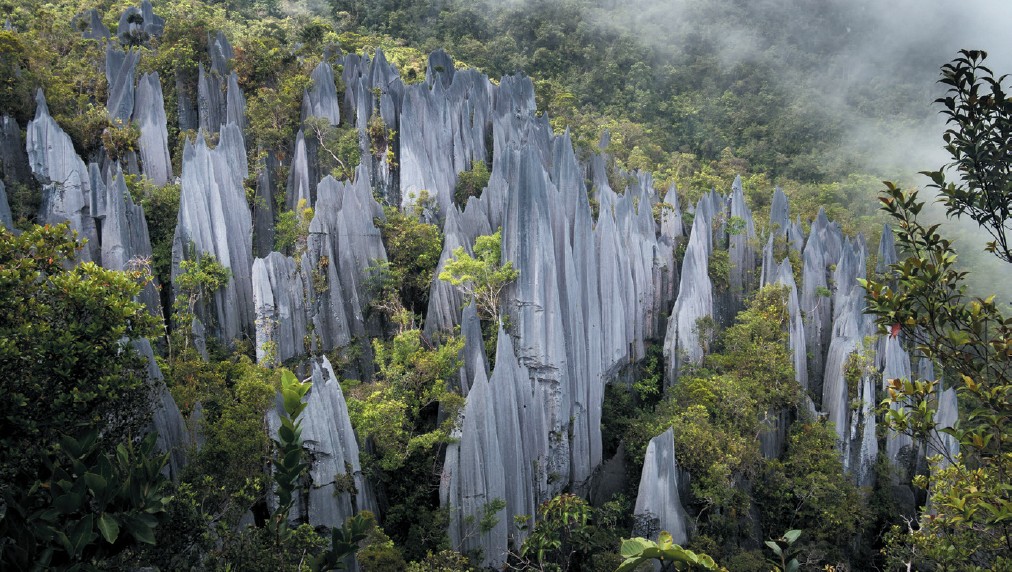
Gunung Mulu National Park in Sarawak is a UNESCO World Heritage Site.
Imagine negotiating a climate treaty in the shadow of one of the world’s oldest rainforests, knowing the forests outside the window are among the most effective carbon sinks on the planet. That is precisely the experience Sarawak is designing for the next generation of sustainability leaders.
In June 2026, more than 700 young people from all 11 ASEAN countries will gather in Kuching for the third edition of the Rainforest Youth Summit (RAYS), before crossing town to attend the opening day of the Rainforest World Music Festival (RWMF).
For visitors and delegates alike, the week offers two distinct experiences in the same city. RAYS brings together young leaders, policymakers and sustainability advocates for workshops, dialogue and policy discussions on climate and conservation.
Just days later, the RWMF will draw global audiences to Sarawak Cultural Village for three days of music set against the backdrop of the Bornean rainforest, where international performers share the stage with local communities and celebrate the region’s cultural traditions. Together, the two events position Kuching as a convergence point for culture, music and youth-led sustainability conversations.
The setting for these events is not incidental. Sarawak is Malaysia’s largest state, occupying the northwestern portion of Borneo. Its ecological credentials are formidable, encompassing 67 gazetted Totally Protected Areas, 47 national parks and five wildlife sanctuaries.
The state also boasts two UNESCO World Heritage Sites—Gunung Mulu National Park and Niah National Park—as well as the Sarawak Delta Geopark, which has received UNESCO Global Geopark green card status. Collectively, these achievements reflect the international recognition that Sarawak has garnered in conservation and geodiversity.
The state is also home to 34 ethnic groups, representing one of the richest concentrations of living cultural diversity in Southeast Asia. Biodiversity and cultural identity are woven together here, where conservation means something broader than protecting forests. It also means safeguarding the Indigenous knowledge systems and heritage practices that exist within them.
Sarawak Tourism Board (STB), the state’s o fficial destination marketing organization, has spent the past several years building institutional platforms such as RWMF and RAYS that reflect this broader definition of conservation.
A Music Festival That Counts Its Waste
Founded in 1998, the inaugural RWMF at the Sarawak Cultural Village in Kuching drew just a few hundred attendees. In recent years, this number has consistently surpassed 20,000 attendees, with over 26,000 in 2024 and 22,000 in 2025.
Significantly, there was a notable increase in family and multi-generational travelers, a demographic shift that STB reads as a sign of the festival’s growing role as an inclusive, culturally immersive platform.
RWMF 2026 is scheduled for June 26 to 28, under the theme “Regenerations: Roots and Rhythms.” This theme reflects how culture and nature are intentionally integrated into the festival’s design, with performances, workshops and community participation taking place within the rainforest landscape of Sarawak Cultural Village.
Local communities, cultural practitioners and international artists are part of the program, reinforcing the link between heritage, environment and shared stewardship.
In line with its theme, RWMF is also recognized as a green event, reflecting Sarawak’s broader commitment to sustainability and clean energy. Indeed, sustainability is integrated into the event’s operations at a practical level. For instance, RWMF has consistently diverted over 30% of waste from landfills, with 37% in 2024 and 31.3% in 2025.
“RWMF has always celebrated the connection between music, culture and the rainforest that surrounds us. Our aim is to ensure that the festival reflects the same values of responsibility and respect for nature that define Sarawak itself,” says Dr Sharzede Datu Haji Salleh Askor, CEO of Sarawak Tourism Board.
Complementing the festival’s sustainability efforts is the ecoGreen Planet initiative, launched in May 2023 in collaboration with Sarawak Forestry Corporation. The program has a target of planting 10,000 trees by 2027, a goal that aligns with the festival’s 30th anniversary. This initiative is another example of how sustainability is integrated into RWMF’s approach to long-term event management.
ecoGreen Planet is linked to RWMF’s carbon offset mechanism, where contributions are calculated based on ticket sale proceeds. It is a structure that ties environmental restoration to the success of the event.
(L-R): The Drum Circle, a key interactive highlight of the Rainforest World Music Festival; local and international performers sharing the stage at the 2025 festival; delegates in discussion at the Rainforest Youth Summit 2025
Youth at the Center
Preceding RWMF is RAYS 2026, which runs from June 24 to 26. The summit is designed as a platform for youth leadership, bringing together young delegates, policymakers, sustainability advocates and community voices to exchange ideas and develop practical responses to environmental and social challenges.
RAYS participants receive access to RWMF’s opening day, completing a journey that moves from structured sustainability dialogue to cultural experience within a single week.
Funded by the State Government of Sarawak and endorsed by ASEAN, the Pacific Asia Travel Association and UN Tourism, RAYS was created to equip young leaders with the knowledge, skills and connections needed to protect critical ecosystems, and to build a regional community united around a sustainable future.
Over its first two editions, the event has attracted more than 1,700 participants, featured over 50 speakers and engaged representatives from more than 80 organizations across 37 countries. The 2026 summit is expected to bring together over 700 youth delegates under the theme “Youth: Many Ways, One Planet.”
“RAYS reflects Sarawak’s conviction that youth must not be placed at the edge of sustainability conversations, but firmly at the center of them,” says YB Dato Sri Haji Abdul Karim Rahman Hamzah, Minister for Tourism, Creative Industry and Performing Arts Sarawak.
YB Dato Sri Haji Abdul Karim Rahman Hamzah, Minister for Tourism, Creative Industry and Performing Arts Sarawak and Minister for Youth, Sports and Entrepreneur Development, together with YB Datuk Sebastian Ting Chiew Yew, Deputy Minister for Tourism; YB Datuk Snowdan Lawan, Deputy Minister for Creative Industry and Performing Arts; YB Dato Gerald Rentap Jabu, Deputy Minister for Youth and Sports; and YB Datuk Dr Ripin Lamat, Deputy Minister for Entrepreneur Development, posing for a group photo with delegates during the Rainforest Youth Summit (RAYS) 2025.
“Through this summit, Sarawak positions itself as a convening hub for youth-led climate leadership in the region, a space where ASEAN’s diverse voices converge, where collaboration is nurtured and where shared responsibility is strengthened,” he adds.
The 2026 program includes workshops and plenary sessions, along with youth-led labs and offsite excursions to Sarawak’s protected rainforest sites. A new addition this year is the Planet Futures Forum, a collaborative climate simulation that places delegates in scenario-based negotiations, requiring them to balance environmental, social and economic trade-offs.
The Fellowship Programme, also new for 2026, extends the work beyond the three-day summit. A cohort of 10 to 15 young leaders will be selected for a 12-month journey focused on collective climate governance.
One of the recurring challenges for regional youth summits is that financial barriers end up determining which voices are heard. RAYS addresses this through the ASEAN Access Fund, which provides financial support to offset travel and accommodation expenses for ASEAN youth delegates aged 18 to 30, ensuring that committed young leaders across the region can participate regardless of financial barriers.
A Regional Model Worth Watching
Through platforms like RWMF and RAYS, Sarawak is building a framework that links cultural celebration, environmental accountability and youth leadership.
In doing so, it positions itself as a regional case study in how biodiversity protection, cultural continuity and intergenerational leadership can operate within the same system, offering ASEAN a practical example of conservation in practice.
RAYS 2026 runs June 24 to 26, while RWMF 2026 runs June 26 to 28, both in Kuching, Sarawak. Registration for RAYS 2026 is open at rainforestyouthsummit.com. Tickets for RWMF are available for purchase at rwmf.net.
Mactan Expo, located within the 30-hectare The Mactan Newtown township in Cebu, is among the few convention centers in the region with direct beach access, complemented by hospitality and resort amenities, and leisure options.
With its mix of history, cuisine, culture and access to some of the Philippines’ most beautiful beaches and dive sites, Cebu has emerged as one of Southeast Asia’s fastest-growing tourism hubs, welcoming more than 5 million visitors annually.
But beyond its reputation as a leisure destination, the island paradise in the central Philippines is increasingly positioning itself as a hub for meetings, incentives, conferences and exhibitions (MICE). Supported by expanding infrastructure, improved connectivity, and a growing pipeline of hotels and integrated resorts, Cebu offers event organizers a blend of modern facilities and island experiences, demonstrating how business and leisure can coexist in a single destination.
Cebu: A Modern Tropical Gateway Rooted in Heritage
Consistently ranked among the world’s best island destinations, Cebu is directly accessible from major regional hubs including Hong Kong, Tokyo, Seoul, Singapore, Taipei, Kuala Lumpur and Brisbane, with additional connections to Nagoya, Fukuoka, Macau and Dubai.
Its main gateway, Mactan-Cebu International Airport, was named Best Airport in Asia-Pacific (in the 5-15 million passenger category) at the 2025 Airports Council International (ACI) Airport Service Quality Customer Experience Awards, underscoring Cebu’s growing role as an international entry point for both tourists and business travelers.
Cebu is the Philippines’ second-largest metropolitan area after Manila. Modern skyscrapers now shape its skyline, while major infrastructure projects—including expressways, a bus rapid transit system and planned elevated monorail and subway lines—are improving mobility across the city and surrounding urban areas.
Despite its rapid modernization, Cebu remains deeply rooted in heritage. Widely regarded as the cradle of Philippine history, Christianity and Spanish colonization, the city is often called both the “Oldest City in the Philippines” and the “Queen City of the South.” Historic landmarks such as the Basilica del Santo Niño, Magellan’s Cross, Fort San Pedro and the historic Parian District continue to draw visitors.
The island is also a culinary destination in its own right. It is best known for lechon Cebu, often described as the “best pig in the world,” but its food culture extends far beyond that—from street favorites like ginabot (deepfried pork intestines) and puso (hanging rice) to fresh sutukil seafood and a distinctive blend of Filipino-Chinese cuisine.
Beyond its heritage and food, Cebu’s coastline remains its biggest draw. The province is home to some of the country’s most beautiful beaches, including those on the islands of Mactan, Bantayan, and Malapascua. It also hosts several of the Philippines’ premier dive destinations, such as Moalboal with its famous sardine run, Malapascua, one of the few places in the world to see thresher sharks and Oslob, known for whale shark encounters.
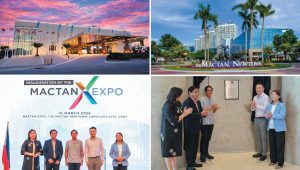
Philippine President Ferdinand R. Marcos Jr., together with Megaworld and local government officials, led the inauguration of Mactan Expo. The 3,000-seat Mactan Expo is the official venue for the 48th ASEAN Leaders’ Summit, which the Philippines is hosting this year.
Growing Cebu’s MICE Potential
Cebu’s growing reputation as a tourism and MICE destination has drawn investment from major developers, including Megaworld, one of the Philippines’ largest real estate companies and currently the country’s biggest hotel developer and operator.
Within its 30-hectare The Mactan Newtown township in Lapu-Lapu City, the company developed its first standalone convention facility, Mactan Expo. The venue is among the few convention centers in the region with direct beach access, complemented by resort amenities and leisure options—an increasingly important factor in global MICE site selection.
Its surrounding hospitality ecosystem includes the Accor-managed Mercure Mactan Cebu and Megaworld’s Savoy Hotel Mactan, along with the Philippines’ only Gordon Ramsay Fish & Chips and Gordon Ramsay Street Burger outlets.
Located just 10 minutes from the airport, the convention center also benefits from relatively uncongested access routes—an operational advantage for international delegations and large-scale events.
Reflecting its strategic role, Mactan Expo was officially inaugurated by Philippine President Ferdinand R. Marcos Jr. ahead of its scheduled hosting of this year’s 48th ASEAN Leaders’ Summit opening ceremonies. This follows its successful hosting of the ASEAN Travel Exchange (TRAVEX) under the ASEAN Tourism Forum 2026 where it welcomed hundreds of tourism officials, organizations and delegates from ASEAN member countries.
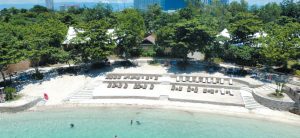
Mercure Mactan Cebu
Elevating the MICE Space in the Region
Designed with sustainability in mind, Mactan Expo highlights Cebuano art, culture and environmental stewardship. Its strategic proximity to the airport and transport terminals, along with walkable access to hotels, offices, beach resorts and leisure destinations, allows events to be staged with greater efficiency and less reliance on transportation.
From its lobby to its main halls, Mactan Expo incorporates Cebuano cultural motifs and design elements inspired by the island’s natural environment, blending a strong sense of place with the scale and functionality expected of international convention venues. Seashells gathered from Cebu’s shores are embedded in the walls, while artworks by local artists add subtle cultural character throughout the space.
At its center is a pillar-free main hall designed for flexibility, allowing event organizers to divide or combine spaces depending on the scale of events. A 280-square-meter meeting room, which can be split into two, is complemented by a veranda-style pre-function area that opens to natural light and outdoor views.
The venue also integrates features expected of global events infrastructure, including separate male and female prayer rooms with ensuite ablution facilities and fully furnished VIP rooms for high-level meetings. Behind the scenes, a banquet kitchen built for high-volume service and an efficient back-of-house layout support large-scale events.
Together, these elements reflect a broader ambition: positioning Cebu as a destination capable of hosting world-class business gatherings while retaining its distinct local identity.