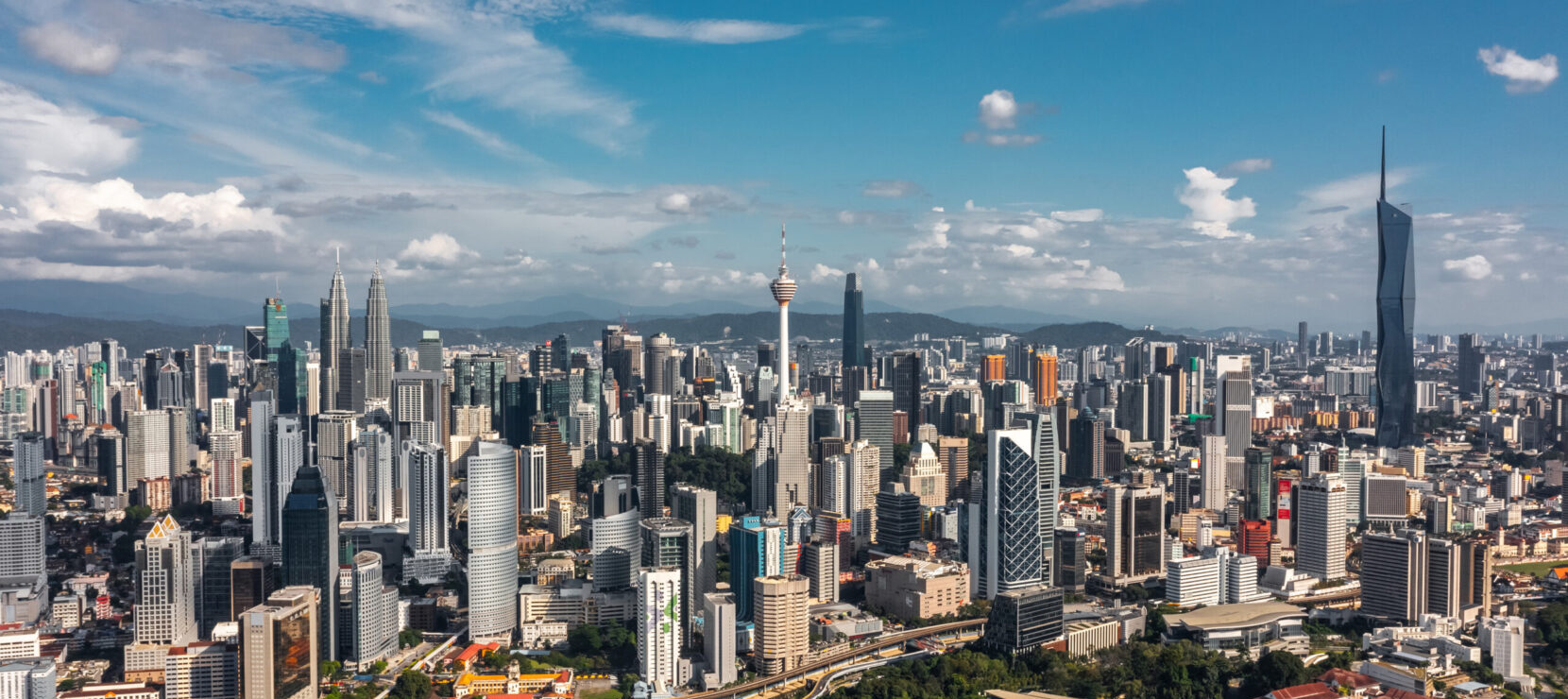
With its new economic roadmap, Malaysia is charting a strategic path toward a resilient, inclusive and sustainable future.
October 10, 2025
The Malaysian economy remained resilient in the second quarter of 2025, recording 4.4% growth driven by strong domestic demand. Private and public investments expanded on the back of new and ongoing initiatives, including digital and construction projects. The services, manufacturing and construction sectors also posted solid performances.
In July 2025, the government unveiled the 13th Malaysia Plan, an economic roadmap for 2026 to 2030. The five-year blueprint outlines a strategic path toward building a resilient, inclusive and sustainable economy, with a projected GDP growth of 4.5% to 5.5% annually. Backed by a total investment commitment of RM611 billion (US$145 billion), the plan targets the development of high-growth, high-value industries, with a focus on advancing key sectors such as digital, renewable energy and semiconductors. It also aims to increase Malaysia’s exports of electronic and electrical products to RM1 trillion (US$238 billion) by 2030, reinforcing the country’s push for “Made by Malaysia” products and services while creating new avenues for growth amid global economic headwinds.
Meanwhile, AI remains a critical enabler for Malaysia’s future. Malaysia Digital Economy Corporation (MDEC) is leading the nation’s ambition to become an “AI Nation” by integrating AI across the economy, government and society. MDEC envisions AI as the foundation for smarter public services, predictive policymaking, and ethical, people-first applications. Supporting this vision is the development of a thriving ecosystem encompassing research, talent development and industry adoption. This core strategy aims to transform Malaysia into a hub for AI innovation and investment in Southeast Asia.
Sustainable, Future-Ready Cities
The Johor-Singapore Special Economic Zone (JS-SEZ) is well-positioned to spur economic growth, create skilled jobs and strengthen regional competitiveness.
The JS-SEZ builds on the foundation of Iskandar Malaysia, the country’s first economic corridor established in 2006. Iskandar Investment Berhad (IIB), the investment holding arm behind Iskandar Malaysia, is committed to creating an inclusive and sustainable metropolis at Iskandar Puteri, a flagship zone within the economic corridor. IIB is developing Iskandar Puteri into one of Malaysia’s most future-ready townships, a smart city featuring a net zero carbon central business district (CBD) and advanced tech hubs. A 2,270-acre area of Medini has been rebranded as Medini Innopolis, a planned smart city and CBD for 65,000 residents by 2030.
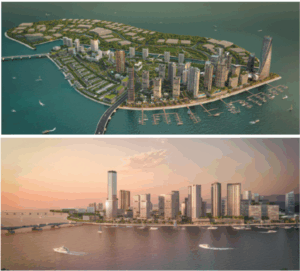
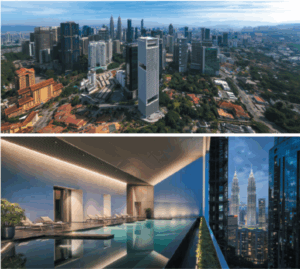
As sustainable urban development becomes more crucial than ever, property developers like Eastern & Oriental Bhd (E&O) integrate ESG principles into their development philosophy. E&O’s developments—Andaman Island in Penang and Conlay by E&O in Kuala Lumpur—incorporate practical elements such as ecological buffers, rainwater harvesting and renewable energy systems, lowering operating costs for residents and attracting ecominded buyers. By prioritizing enduring value, rigorous design standards and environmental responsibility, E&O aims to create communities built to last for generations.
Energy Transition Journey
As ASEAN Chair this year, Malaysia is uniquely positioned to unite member states in advancing the region’s energy security and transition goals. In line with this leadership role, PETRONAS is serving as a catalyst for regional collaboration, bridging policy with projects and aligning national ambitions with shared regional objectives.
PETRONAS is approaching the energy transition journey not just as an operator of assets, but as a partner in building an integrated, future-ready energy ecosystem. At the recent Energy Asia 2025, 14 MoUs were signed, covering upstream partnerships, LNG supply and other initiatives, highlighting that a successful energy transition hinges on strategic alignment of capital, innovation and execution.
As Malaysia charts its path toward developed nation status by 2030, its commitment to resilience, innovation and inclusive growth remains clear. The nation continues to strive for excellence, shaping a future that is competitive and sustainable.
Malaysia Pushes Next-Gen Technologies To Lead ASEAN’s Digital Future
Malaysia is attracting billions from tech giants as MDEC sharpens its strategy to transform the nation into ASEAN’s leading hub for digital innovation.
Malaysia is charting a bold course toward becoming a digitally empowered, innovation-driven economy. Spearheaded by the Malaysia Digital Economy Corporation (MDEC), the nation is experiencing a new surge in digital investments backed by government initiatives and strong private sector confidence, which has become a catalyst for driving unprecedented growth in the economy.
In 2024, Malaysia attracted RM163.6 billion (US$38.8 billion) in digital investments—43.2% of the national total and over three times the previous year, signaling strong global confidence in its pro-business environment and talent. This momentum continued in 2025 under the Malaysia Digital (MD) initiative, with investments surging 125% in the second quarter and MD companies securing RM44.6 billion (US$10.6 billion) in approved investments as of August. By that time, foreign direct investment (FDI) reached RM24.98 billion (US$5.9 billion) and domestic direct investment (DDI) RM19.63 billion (US$4.7 billion), with Singapore (RM14.26 billion, US$3.4 billion), the U.S. (RM6.44 billion, US$1.5 billion), and China (RM2.99 billion, US$710.6 million) as the top contributors. DDI growth was driven by major players like YTL Power International, which invested RM10 billion (US$2.4 billion) in AI and infrastructure, launching Malaysia’s first multimodal AI, ILMU.
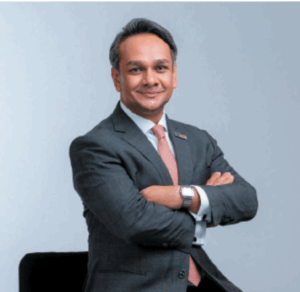
Anuar Fariz Fadzil, CEO of MDEC
“Malaysia has evolved from an industrial-focused to a digitally driven economy to gear up for a digital future,” says Anuar Fariz Fadzil, CEO of MDEC. “Malaysia must now accelerate its digital infrastructure, talent development and tech adoption among its citizens to position itself as a competitive and inclusive digital economy.”
Toward an AI Nation
Underpinning Malaysia’s ambition to become an “AI Nation” is its strategy to embed AI across the economy, government and society in a bid to drive competitiveness and inclusive growth.
MDEC believes AI should be the foundation for smarter public services, predictive policymaking, ethical and people-first applications. Adding to this is the promotion of a thriving ecosystem comprising research under takings, talent development and industry adoption. This core strategy aims to transform Malaysia into a hub for AI innovation and investment in Southeast Asia.
Central to making Malaysia an AI Nation is the need to build and nurture a robust ecosystem, which helps to encourage the growth and usage of AI technologies across the nation. There is also a need to increase investments in digital technology research and innovation aimed at strengthening the country’s commercialization pipeline.
To boost talent, both students and workers need to upgrade their AI skills through micro-credentials and workforce upskilling programs, especially broadening access for marginalized groups. Finally, there must be efforts to accelerate AI use cases across micro, small and medium enterprises (MSMEs), government services and export-oriented sectors.
Measurable Outcomes
Since coming on board on October 2024, Anuar has been focused on taking a strategic approach to advancing the national digital economy through the country’s 13th Malaysia Plan.
“MDEC’s mission now is to translate national aspirations to impact all levels of society and businesses through a whole-of-nation approach, leveraging strategic public-private collaboration to catalyze the digital economy,” he says. “MDEC will ensure the momentum reaches every business, every community and every Malaysian who wants to thrive in the digital economy.”
Anuar revealed that MDEC is closely coordinating digital investments through the Digital Investment Office, a joint initiative between MDEC and Malaysian Investment Development Authority. These joint facilitations include the Malaysia Digital Incentives Scheme, Digital Ecosystem Acceleration Scheme, Talent Development and support for the Digital Nomads ecosystem.
Meanwhile, Malaysia’s digital exports, which are market gateways for high-technology companies, are also ramping up. In 2025, MDEC, through its edition of DEX CONNEX, secured more than RM1 billion (US$237 million) in estimated opportunities. A total of 55 memorandums of understanding and memorandums of agreement were exchanged with 219 partners across high-potential markets in Indonesia, the Philippines, Thailand and Vietnam. These agreements spanned strategic sectors including AI, cloud services, digital platforms, smart city solutions, cybersecurity, fintech, data centers and agricultural tech.
“By connecting local technology companies with global markets, we are creating high value opportunities that empower businesses, nurture talent and position Malaysia as a leading digital ecosystem leader,” Anuar says.
Besides digital exports, Anuar says MDEC is also focused on adoption of technology through its Business Digitalization Initiative, which helps MSMEs embrace digital tools, particularly in underserved and rural areas.
“This opens up the doors for MSMEs to have greater access to the various types of digitalization tools covering front, mid and back-end business functions. Apart from that, it is also an opportunity for MSMEs to adopt more advanced technologies, integrating AI functionality into their business operations and thus, helping businesses increase their profitability and scale,“ he says.
MDX 2025 focused on Next-Gen Data, Computing, Trust, Creativity and Talent.
“The country is positioning itself as an AI nation by driving systematic digitalization, while simultaneously building an inclusive and ethical AI ecosystem—an aspiration strongly supported by next-gen tech such as the metaverse and quantum computing. These efforts are expected to strengthen national competitiveness and sustainability by boosting productivity, efficiency and innovation across sectors,” he adds.
Anuar says building this vision involves shared responsibility across several government agencies such as the Ministry of Digital and the National AI Office for policy leadership, MDEC for ecosystem development and enablement, and the Ministry of Science, Technology and Innovation for conducting research and innovation.
“The academic community needs to pitch in talent and the private sector needs to be adopters and solution providers. Also, civil society plays a role in ensuring inclusivity, and ultimately, Malaysians remain both co-creators and beneficiaries of technology,” Anuar says.
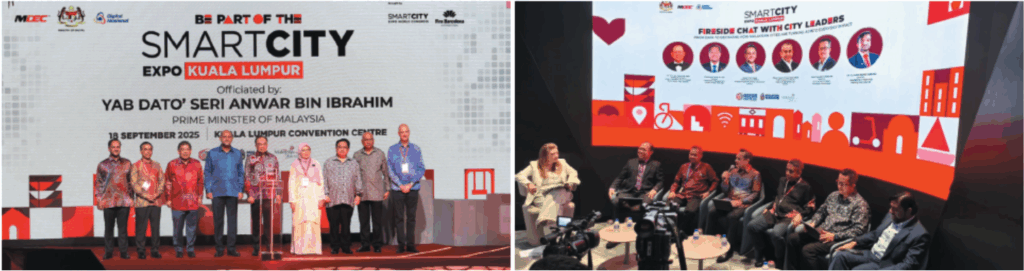
Smart City Expo Kuala Lumpur 2025 brought together thought leaders and innovators from around the world.
The ASEAN Advantage
As Malaysia forges ahead with its digital economy agenda, it has been able to capitalize on its ASEAN Chairmanship by positioning itself as a digital economy leader and prioritizing inclusive growth, sustainable advancement and purposeful digital transformation.
One highlight of being ASEAN Chair was the privilege of hosting the Smart City Expo Kuala Lumpur 2025 (SCEKL25) in September. This international event brought together global thought leaders and innovators to explore how digital technologies and AI are transforming ASEAN cities, particularly for businesses, citizens and governments. SCEKL25 played a key role in advancing the ASEAN Master Plan on Connectivity 2025, which strengthens physical, institutional and people linkages across the region.
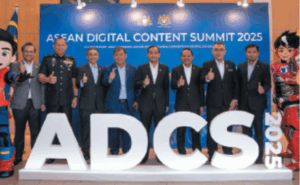
ASEAN Digital Content Summit 2025 aimed at promoting cross-border collaboration in animation, games and creative technology.
Another event held in September was the ASEAN Digital Content Summit 2025, co-organized by MDEC and the Johor State Government. Aimed at promoting crossborder collaboration in animation, games and creative technology, it witnessed renowned creators and young talent from across ASEAN, who showcased the region’s most promising creative intellectual properties.
Complementing these two conferences was MDEC’s flagship event MDX 2025, which showcased Malaysia’s intent to be a leading AI and data economy hub in ASEAN. The event focused on five strategic pillars: Next-Gen Data, Computing, Trust, Creativity and Talent. It brought together about 5,000 participants, who experienced live tech showcases, strategic panels and cross-sector networking.
Anuar says: “These initiatives have demonstrated our commitment to positioning Malaysia at the forefront of developing smart, inclusive, resilient and sustainable AI cities, acting as a catalyst for the region’s creative economy and ensuring that Malaysia is on the right track to benefit from becoming an AI nation.”
Medini Innopolis Emerges As A Sustainable City Of The Future
From a net zero carbon central business district and cutting-edge tech hubs to special economic zones and seamless cross-border commuting, Iskandar Puteri sets new standards for livable, future-ready cities in Malaysia and the region.
Medini Innopolis has the capacity to support a population of 65,000 by 2030.
People move to cities to pursue their dreams and aspirations. Modern cities are expected to provide economic opportunities, a clean environment for a healthy lifestyle, and a safe neighborhood to raise a family, with easy access to schools and healthcare. But livability is only part of the equation—cities may also seek to align with the U.N. Sustainable Development Goals and the Paris Agreement.
One company navigating this challenge is Iskandar Investment Berhad (IIB), the investment holding arm based in Medini within Iskandar Puteri, Flagship Zone B of Iskandar Malaysia. At three times the size of Singapore, the Iskandar Malaysia economic corridor has several city zones, with Iskandar Puteri as the main focus.
Dato’ Idzham Mohd Hashim, President and CEO of IIB
Iskandar Puteri: A Future-Ready Township in Malaysia
“At IIB, we carry the mandate to build an inclusive and sustainable metropolis at Iskandar Puteri,” says Dato’ Idzham Mohd Hashim, President and CEO of IIB.
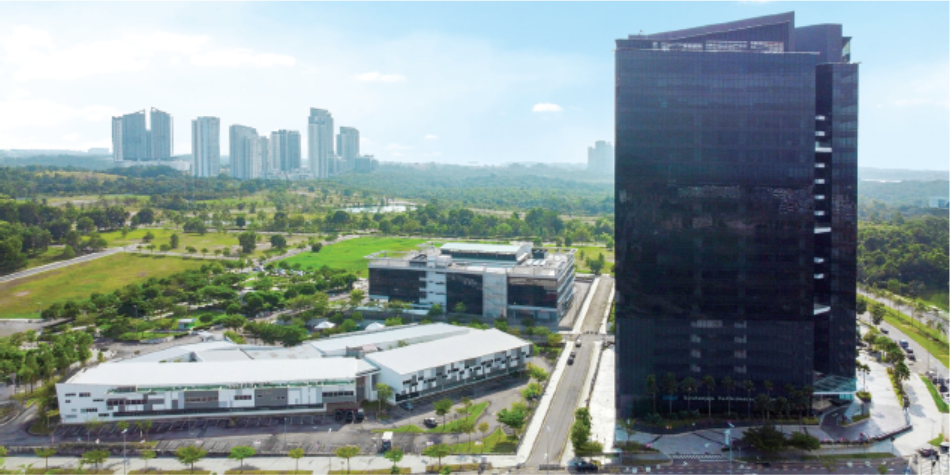
In terms of infrastructure, Iskandar Puteri is one of Malaysia’s most future-ready townships. Built as a smart and connected city with an initial investment of over US$800 million, it features high-speed broadband for tech companies and data-driven industries, and Grade-A commercial and MSC-status buildings, enabling companies such as Malaysia Digital Economy Corporation, HRD Corp, Johor Talent Development Council, Deluxe Games, Okakichi, and Edotco to tap into the digital backbone.
Next year, IIB will celebrate 20 years of establishment and will move into a new phase focusing on sustainability, beginning with a net zero carbon central business district (CBD) within Medini, located at the heart of Iskandar Puteri.
Medini Innopolis: New Smart City in the Making
A 2,270-acre segment of Medini—about 1.5 times the size of New York’s Central Park—has been rebranded as Medini Innopolis, envisioned as a smart city and CBD with capacity for a population of 65,000 by 2030. Three flagship projects are set to take off: Medini International Convention City (MICC), Net Zero Carbon Central Business District (NZCCBD) and Tech Medini.
When completed, MICC will be the largest convention hub of its kind in Johor, ready to host international events and investors.
NZCCBD: Paving the Way Toward Net Zero
The NZCCBD will reflect IIB’s pledge to create a low-carbon city powered by smart infrastructure and sustainable technologies. To achieve the net zero carbon goal, IIB has partnered with MayBank and Malaysia Green Technology and Climate Change Corporation to champion nature-based solutions to protect land, lower carbon footprints and generate green jobs. The project earned 5 Diamonds under Malaysia’s Low Carbon Cities 2030 Challenge, a top-tier recognition for sustainable urban design.
Since 2023, IIB has worked with partners to expand renewable energy solutions and promote electric-based mobility in Iskandar Puteri with more charging stations. This effort aligns with Malaysia’s National Energy Transition Roadmap (NETR).
“We have outlined five strategic pathways in our decarbonization roadmap to achieve carbon neutrality in Iskandar Puteri: energy, such as energy efficiency and renewable energy; circularity, such as waste management and product life cycle; built environment, which includes green building and materials; mobility, such as electric vehicles and last-mile connectivity; and land use and biodiversity that look into green spaces and climate resilience,” explains Idzham.
By 2030, half of Iskandar Puteri’s energy is expected to come from solar power, waste will be reduced by 30%, flood mitigation measures will be implemented, rainwater will be harvested and most new buildings will be certified green.
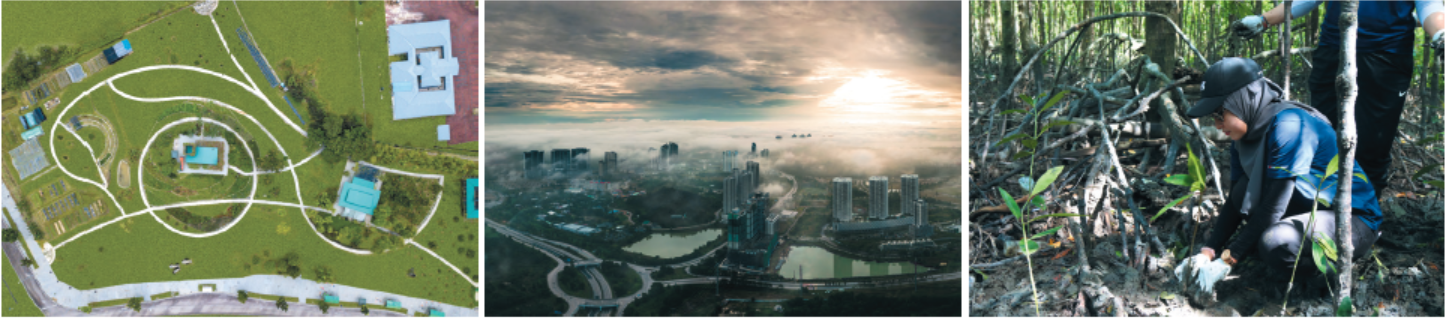
(L-R): Edible Park promotes sustainability and healthy living; Medini Innopolis is positioned as a future-ready city integrating innovation, sustainability, and economic prosperity; and a mangrove tree planting activity was carried out as part of an environmental sustainability initiative.
Tech Medini: Spearheading the Digital Front
Tech Medini—spanning 160 acres or 120 football fields—will be developed as a digital-first ecosystem supporting AI, autonomous drones, robotics, cybersecurity, bioengineering, quantum computing, immersive reality and space technology.
Within Tech Medini, specialized zones are driving innovation. Blockchain Village @ Medini invites tech professionals to share knowledge and train talent in blockchain, Web 3.0 and metaverse applications. The Drone & Robotics Zone Iskandar advances robotics and automation technologies.
Attracting Global Investors
The Johor-Singapore Special Economic Zone (JS-SEZ) focuses on manufacturing, logistics, data centers and cross-border trade facilitation—enabling the movement of people and goods with fast-track immigration clearance. The newly implemented QR-based customs clearance system will accelerate trade, cut waiting times and strengthen Johor’s role as Singapore’s complementary base.
Within the JS-SEZ, Iskandar Puteri functions as a hub for digital services, education and meetings, incentives, conferences and exhibitions (MICE).
The second zone, the Special Financial Zone, located near the Malaysia-Singapore Second Link at Forest City and spearheaded by the Malaysian federal government, focuses on financial services, talent attraction and international investment. The two zones complement each other, boosting Johor’s economy while strengthening Singapore ties.
Businesses in these zones benefit from tax breaks, reduced income tax for skilled foreign workers and streamlined regulations, including faster approvals for company setup and work permits.
Global companies are taking notice. Equinix, a Nasdaq-listed American company, has committed US$40 million to build a data center, while fintech, healthcare and biotech companies are establishing regional bases.
IIB has formed a strategic partnership with Nxera, the digital infrastructure arm of Singapore’s Singtel Group, to accelerate the digital economy and champion sustainable growth using AI.
“We are open to working with partners in property development, education, talent development, digital economy and ecosystem building,” says Idzham.
Meanwhile, the Medini Nexus soft-landing program provides ideal conditions for global business services companies to establish a strong regional presence.
Education the Key Driver
EduCity, one of Iskandar Puteri’s pioneer initiatives, is transitioning into EduCity 2.0 with an emphasis on technical and vocational education.
It houses institutions including the University of Reading Malaysia, Newcastle University Medicine Malaysia, Raffles University and the University of Southampton Malaysia. EduCity’s K-Youth Program equips Malaysian youth with skills, exposure, and career opportunities.
As an education hub, EduCity provides shared facilities such as student housing, recreation and sports, while supporting talent development.
Magnet for Leisure, Healthcare and Real Estate Investment
Just a 30-minute drive from Singapore, Iskandar Puteri attracts visitors looking to escape city pressures—whether for golf, fresh seafood or leisure. Some families relocate for easier access to international schools and healthcare, drawn by lower costs.
Since its opening, Legoland Malaysia Resort has remained a key attraction in Iskandar Puteri and continues to grow in popularity as a family destination.
IIB recently unveiled Wawari Park Homes, blending smart-home-ready features with scenic parks. To ensure inclusivity, the company plans up to 4,000 affordable housing units to meet the accommodation needs of service and support staff.
Looking at 2026 and Beyond
Johor offers incentives, including corporate tax rates as low as 5% for up to 15 years, one-stop facilitation, pro-business policies and fast-track visas. Investors also benefit from low startup costs, an English-educated workforce, favorable exchange rates, a growing green proposition and proximity to Singapore.
Connectivity will improve with the Johor Bahru–Singapore Rapid Transit System Link, on track for launch next year.
Iskandar Puteri’s population now stands at 600,000 and is expected to grow, especially in the CBD (Medini), with forecasts of US$2 billion in investments and 65,000 new jobs by 2030.
Over the past two decades, IIB has created one of Malaysia’s most future-ready townships, attracting over US$6.8 billion in investments. With new initiatives underway, Iskandar Puteri is poised to grow faster, creating opportunities for tech-savvy entrepreneurs while addressing climate concerns.
“We believe our efforts will produce a multiplier effect for Johor and Malaysia,” says Idzham. “This means stronger GDP, more jobs, growth in foreign investment and progress toward becoming a high-income nation.”
In alignment with Malaysia’s regional leadership in ASEAN, PETRONAS is delivering an energy transition grounded in infrastructure, innovation and cross-border collaboration.
PETRONAS is contributing to regional CCS development through large-scale carbon capture and storage efforts.
The global energy system is at a turning point. Nations everywhere are wrestling with the same puzzle: how to deliver energy that is secure, affordable and sustainable. The decisions taken now will shape economies and lives for decades to come.
For PETRONAS, the challenge is not only technological. It is geopolitical and long-term in nature, demanding leadership that can balance long-term resilience for the future with the urgency of today’s demands.
As a progressive energy and solutions partner, PETRONAS is committed to enriching lives for a sustainable future, transforming challenges into opportunities and leading Asia’s energy transition.
In his keynote address at Energy Asia 2025, Tan Sri Tengku Muhammad Taufik, President and Group CEO of PETRONAS, highlighted the regional challenge: “Energy security and climate action are not competing priorities but complementary agendas. As this region’s energy demand is set to nearly double by 2050, the entire ecosystem must come together for a just and equitable transition where no community is left behind.”
That conviction is charting the company’s course, moving with clarity, building partnerships and ensuring that global promises translate into tangible outcomes on the ground.
By 2035, marking 60 years of excellence, PETRONAS will be an integrated energy company serving the world’s energy and solutions needs—delivering them safely, reliably and sustainably.
From Vision to Capability
With Malaysia at the helm of ASEAN in 2025, the region faces a defining moment in energy cooperation. Carbon capture and storage (CCS) frameworks, clean hydrogen infrastructure and collective energy security have evolved from technical discussions into existential priorities that will determine Southeast Asia’s role in the global energy transition.
From its headquarters in Kuala Lumpur, PETRONAS is stepping into that role as a catalyst for regional collaboration, bridging policy with projects and aligning national ambitions with shared regional objectives. Guided by its Net Zero Carbon Emissions by 2050 Pathway, PETRONAS is translating this vision into regional momentum, anchoring initiatives that not only advance Malaysia’s transition but also strengthen ASEAN’s collective resilience.
A compelling example of this collaborative approach materialized in May 2025 when energy companies from Malaysia, Vietnam and Singapore announced a tripartite alliance to explore renewable power integration, including subsea infrastructure to export Vietnam’s offshore wind-generated electricity to neighboring markets. It reflects how collaboration across borders can turn shared ambition into meaningful progress for the region.
Shaping the Future of Energy
The energy transition is more than a shift in fuels. It is an opportunity to design a smarter, cleaner and more resilient energy system. From the molecules that power industries to the value chains that connect supply and demand, and the skills that sustain progress, PETRONAS is approaching this journey not just as an operator of assets, but as a partner in building an integrated, future-ready energy ecosystem.
Carbon Capture and Resilience: As emissions reduction becomes non-negotiable, PETRONAS is driving progress through Zero Routine Flaring, with more than 80% of its oil facilities already compliant, and by scaling CCS projects with global partners. The Kasawari CCS project, one of the world’s largest offshore developments will capture 3.3 million tons of carbon dioxide (MtCO2) annually. Complementing this, the Southern CCS Hub, now at the Front-End Engineering Design (FEED) stage with Mitsui & Co. and TotalEnergies, is establishing Malaysia as the regional hub for large-scale carbon storage.
Reinventing LNG: Liquefied natural gas (LNG) remains a cornerstone of Asia’s energy security, but PETRONAS is reengineering its role. PFLNG Satu and Dua, PETRONAS’ pioneering floating LNG facilities, have already set global benchmarks. The upcoming shore-based LNG floater and participation in LNG Canada extend that edge, positioning PETRONAS as a flexible, reliable node in the region’s evolving gas landscape. LNG here is not an endpoint but a bridge, a transition enabler between today’s demand and tomorrow’s renewables.
As part of its evolution into an energy superstore, PETRONAS delivers a full spectrum of progressive energy solutions, from LNG and renewables to future fuels like hydrogen and specialty chemicals—anchored by operational excellence and a commitment to sustainability.
First Biorefinery: At Pengerang, PETRONAS is constructing Southeast Asia’s first biorefinery with Enilive and Euglena. This project represents more than just a new infrastructure; it signals a pivot toward circular, bio-based economies. From sustainable aviation fuels to biochemicals, the biorefinery embodies PETRONAS’ move beyond traditional hydrocarbons into cleaner, renewable molecules.
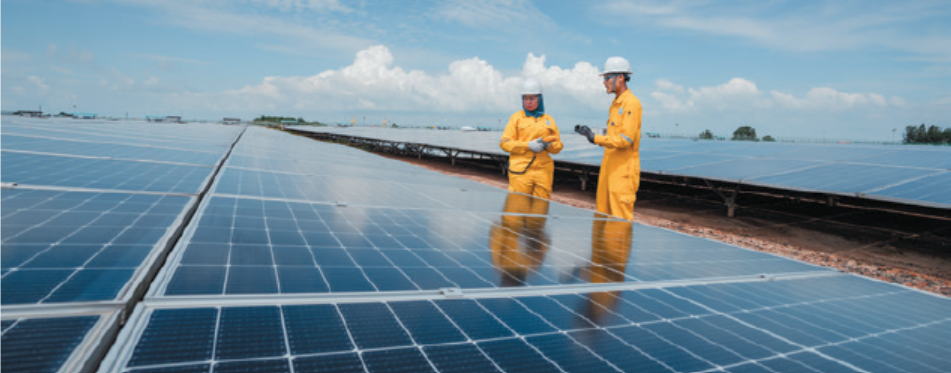
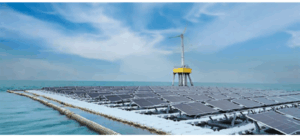
Gentari is expanding solar as the backbone of its renewable portfolio, with 4.1 GW of installed capacity and a total of 8.4 GW regionally installed and under construction.
Clean Energy Solutions: Through its clean energy arm Gentari, PETRONAS is delivering practical low-carbon solutions across the region. Its portfolio spans hydrogen, electric vehicle (EV) charging networks and solar power, marked by milestones such as a landmark offshore wind initiative and a 1,100-point EV charging network in Malaysia, Thailand and India. In parallel, Gentari’s 8.4 gigawatt (GW) renewable pipeline, including projects such as the Hybrid Hydro Floating Solar and the Kenyir Green Hydrogen Hub, strengthens Malaysia’s backbone for a just and inclusive energy transition.
Intelligence in Operations: Energy systems are becoming as much digital as they are physical. Through a growing partnership with Microsoft, PETRONAS is embedding AI into operations, from predictive maintenance in refining to smarter, safer distribution. These capabilities are not cosmetic upgrades but foundations for an energy value chain that is more adaptive, efficient and low carbon.
PETRONAS 2.0 is about building tomorrow’s energy ecosystem today, supporting renewable growth, enabling hydrogen transport and deepening partnerships to deliver integrated solutions for a lower-carbon future. Every step is guided by our purpose: to be a progressive energy and solutions partner enriching lives for a sustainable future.
Taken together, these moves are not isolated measures. They form a coherent system-wide transformation: deliberate in design, scalable in ambition and built to endure. The company is not simply adjusting to the future of energy; it is working to shape it.
Energy Asia 2025 brings together global leaders, among others, to drive Asia’s energy transition agenda.PETRONAS’ electrification initiatives connect offshore platforms to onshore power sources, supporting decarbonization of upstream operations.
From Dialogue to Delivery
PETRONAS launched Energy Asia in 2023 as a platform for dynamic exchange across the energy ecosystem. By 2025, it had evolved into a powerful catalyst for collaboration across governments, industries and investors under the theme “Delivering Asia’s Energy Transition.”
Held in Kuala Lumpur in June 2025, the summit brought together over 4,000 participants from 60 countries and 38 industries, spanning government, finance, technology and energy. More than 300 global speakers shared perspectives on geopolitics, markets, clean technologies and investment. Alongside the summit, the Energy Park, a public showcase of innovation and experiential exhibits attracted nearly 14,000 visitors, extending the event’s impact beyond the conference halls.
The results were concrete—14 MoUs were signed, covering upstream partnerships, LNG supply and initiatives such as the Energy Transition Academy and the Blue Carbon Collective. The lesson was clear: energy transition relies not on ambition alone, but on the strategic alignment of capital, innovation and execution.
Join the Movement at Energy Asia 2027
Looking ahead, Energy Asia 2027 will widen this coalition, bringing together governments, investors and innovators to shape Southeast Asia’s energy future. Once again, the summit will serve as a catalyst, driving collaboration across borders, industries and disciplines to accelerate a just and equitable transition where no community is left behind.
PETRONAS remains passionate about progress, inviting all to join the journey. Through platforms like Energy Asia, PETRONAS is not only shaping the conversation but also driving meaningful action, guided by its unwavering purpose to be a progressive energy and solutions partner enriching lives for a sustainable future.
Scan the QR code to register and join the region’s defining energy conversation.
Heritage remains the foundation of Eastern & Oriental, while the company’s future is being shaped by promise toward creating vibrant, sustainable destinations that blend quality homes, placemaking and environmental responsibility.
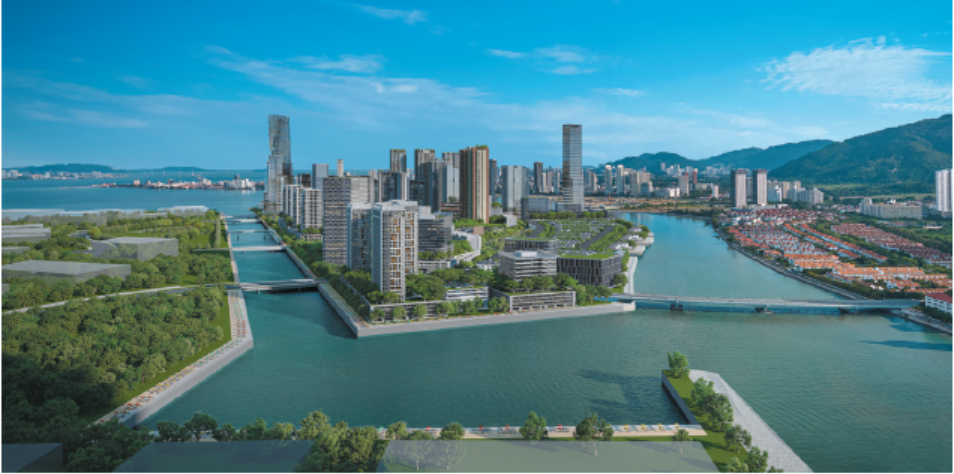
Andaman Island is a multi-decade project, reflecting E&O’s commitment to long-term stewardship.
Best known for the 140-year-old Eastern & Oriental Hotel in Penang, Malaysia’s Eastern & Oriental Bhd (E&O) has transformed that legacy into a strategic advantage: authenticity and credibility that inform how the group designs, builds and markets its projects.
Under the stewardship of majority owner and Executive Chairman Dato’ Seri Tee Eng Ho and Managing Director Kok Tuck Cheong, E&O has anchored its business around four core values—hospitality, craftsmanship, placemaking and sustainability. Those principles guide the company away from volume-driven development and toward a niche, premium positioning.
“Rather than duplicating the same concept, we see each project as a new opportunity. We carefully consider layouts that maximize natural lighting, circulation and usable space. Communal and private areas are arranged to balance privacy and social living, while also making sure that every space reflects the ethos of E&O,” says Tee, who is also the owner of Kerjaya Prospek Group, one of the companies on Forbes Asia’s Best Under A Billion (2025) list.
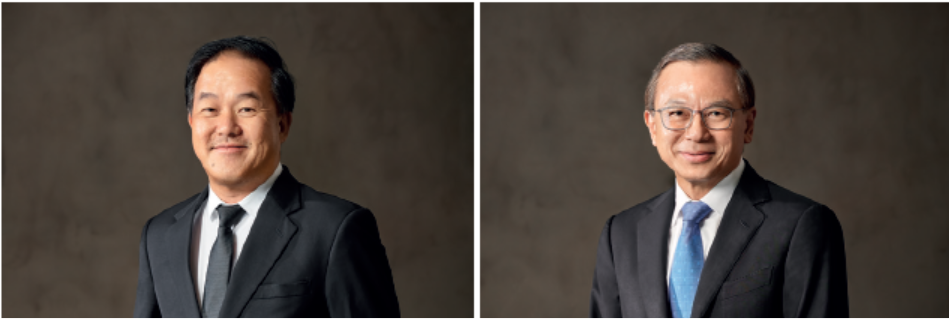
(L-R) Dato’ Seri Tee Eng Ho, Executive Chairman and Kok Tuck Cheong, Managing Director of Eastern & Oriental Bhd
A Niche but Premium Developer
E&O’s market footprint is compact and focused, yet the group consistently “punches above its weight,” as Kok puts it, by delivering projects that command price premiums and stronger appreciation.
An early illustration is the Ariza townhouses launched in 2005 at around RM700,000 (US$165,500), compared with a market norm of RM500,000 (US$118,212) at that time; those units have since more than tripled in value. For E&O, success is measured by enduring property appreciation and the lasting appeal of well-crafted places.
Building Sustainable Homes
Central to E&O’s development philosophy is sustainability by design. The group embeds Environmental, Social and Governance (ESG) principles from the outset, targeting GreenRE certification for projects and incorporating measures that reduce energy consumption, conserve water and minimize waste.
E&O’s Andaman Island township has earned provisional Platinum GreenRE recognition for islandwide sustainability measures, while Conlay by E&O holds Gold GreenRE certification. Practical elements such as ecological buffers, rainwater harvesting and renewable energy systems not only protect biodiversity but also lower operating costs for residents and attract eco-minded buyers.
“Our DNA is about connectivity, sustainability, reliability and community,” Kok says. “Each product is catered to the way people want to live, with wellness and quality as central pillars.”
Andaman Island is conceived as a “15-minute city,” where daily needs are within an easy walk or cycle.
Long-Term Ambition
Andaman Island is E&O’s most ambitious expression of its DNA and values. The 760-acre reclaimed island off Penang’s Gurney Drive is conceived as a premier, livable destination where daily needs are reachable within a short walk or cycle—a version of the “15-minute city” applied to a master-planned island. Phase 1 of the reclamation is complete, while Phase 2 is underway and slated for completion in 2028.
The scheme includes two primary bridges that connect the island to the mainland, a network of interlinking bridges across reclaimed land, housing capacity targeted for roughly 16,000 residents by 2030, a 300-berth marina intended to position Penang as a superyacht hub, and a waterfront precinct that combines residential, retail, hospitality and leisure uses.
Ecological buffers are integrated across the masterplan to protect natural systems, and phased residential launches have shown strong demand; several phases have sold out while others are close to full take-up. E&O envisages the full buildout as a multi-decade undertaking—perhaps 30 years—reflecting a commitment to long-term stewardship rather than short-term gains.
“When you play this game, you must commit to the long run,” Kok says. “We are not a one-project operator. The brand, the trust, the design standards—these are the values that carry us into the future.”
Conlay Signature Suites is designed for those seeking turnkey, serviced luxury.
Bringing Hospitality Into Homes
In Kuala Lumpur, Conlay by E&O demonstrates how E&O translates its heritage-driven, hospitality-centric approach into an urban luxury product.
Developed in collaboration with Japan’s Mitsui Group and designed by the acclaimed Kerry Hill Architects in partnership with a homegrown architect, Conlay Signature Suites occupies the top floors of the 51-story tower of Conlay by E&O and offers fully furnished residences with hotel grade services, such as 24-hour concierge, wellness floors with infinity pools and sky dining.
“Conlay Signature Suites, close to mass transit and major commercial nodes, captures urban professionals, expatriates and investors seeking turnkey, serviced luxury,” Kok says, noting that the development reflects E&O’s bold ambition to redefine Kuala Lumpur’s skyline with a landmark that sets new standards in branded urban living.
Focus on Placemaking
Across its portfolio, E&O emphasizes placemaking: developments are conceived as integrated destinations, where architecture, environmental performance and community amenities create a compelling lifestyle proposition. This human centered approach—balancing wellness, connectivity and design quality—underpins why buyers pay a premium and why properties maintain their value over time.
By blending legacy with modern sustainability practices and hospitality-driven service, E&O differentiates itself in a crowded market and supports stronger long-term outcomes for homeowners.
The iconic Eastern & Oriental Hotel boasts an oceanfront pool overlooking the Strait of Malacca.
A Legacy That Lives On
The company’s leadership frames E&O’s mission as stewardship. The brand’s continuity, Kok says, will outlast any single development: “The legacy and the story will never end. There’s always the next chapter.”
That mindset—prioritizing enduring value, rigorous design standards and environmental responsibility—is what E&O believes will sustain the business as it scales up from heritage hotel to township scale developments, building communities intended to last for generations.